How to Break Into Top Tech PM Roles When Your Background Says Otherwise.
The Two-Resume Strategy for Career Transitioners
How to Break Into Top Tech PM Roles When Your Background Says Otherwise.
The Two-Resume Strategy for Career Transitioners
If you've built deep expertise in a specific industry (hospitality, consulting, healthcare, fintech, etc.) and you're trying to land PM roles at top tech companies, you're likely facing a frustrating paradox:
Your deep expertise has become your biggest weakness.
A PM I coached was stuck between two identities. She had two pages of hospitality experience that made her a perfect fit for "Restaurant Tech" startups, but those same pages made her look "not PM enough" for the recruiters at Google or Meta.
Her resume was filled with high-level operational metrics that proved she could execute, but they were written in a language PM recruiters don't speak.
Recruiters won't do the work to "translate" your experience for you. If they have to think, you've already lost.
Here's how to reposition yourself to break into top tech PM roles when your background is in a specialized industry.

The Positioning Decision You Can't Avoid
She had been applying for 3 months with minimal success.
She was struggling to answer two core questions:
- How do I get into a pure product manager role when my history says otherwise?
- How do I leverage my industry experience when it actually matters?
Most industry experts get stuck here. You have to choose what you're optimizing for.
Path 1: Stay in industry-specific product roles. Upside: Your unique background is rare and valuable, with less competition and easier interviews. Downside: It's a smaller opportunity pool, geographic limitations, and potentially lower compensation ceiling.
Path 2: Go for pure product management at top tech.
Upside: You get a much larger opportunity pool, access to top tech companies, higher compensation ceiling, and better long-term mobility.
Downside: It's harder to break in, there's more competition, you have to downplay your strongest expertise, and you'll likely face a longer job search.
Trying to keep both paths open with one positioning doesn't work.
When you try to appeal to both audiences at once, your positioning ends up looking like someone who can't decide what they are. Recruiters move on to candidates with clearer identities.
So, you have two options:
- Pick one path and commit to that positioning fully
- Maintain two distinct positionings (which requires two distinct resumes)
Most industry experts try to split the difference.
They dilute their positioning and lose opportunities in both directions.
The ones who succeed make a clear choice.
Build Two Completely Different Resumes
I don't usually tell people to maintain multiple resume versions.
But if you want to keep both paths open (pure PM roles AND industry-specific product roles), you need two completely different resumes.
Version 1: The Pure Product Manager Resume
Target: Any PM role at any company
Length: One page maximum
Strategy: Ruthlessly eliminate industry-specific content
This version answers one question: "Can this person do product management?" Everything else is noise.
Your extensive industry-specific background?
Five lines maximum, and only if it shows transferable skills.
Your deep operational expertise?
Only if you can translate it into PM language.
Your industry awards and recognition? Gone.
I know this feels painful. You've worked hard for those achievements. But when a PM recruiter at a tech company sees two pages of hospitality content, they think "not a PM."
Recruiters aren't being picky for no reason. They're screening hundreds of resumes and looking for pattern matches.
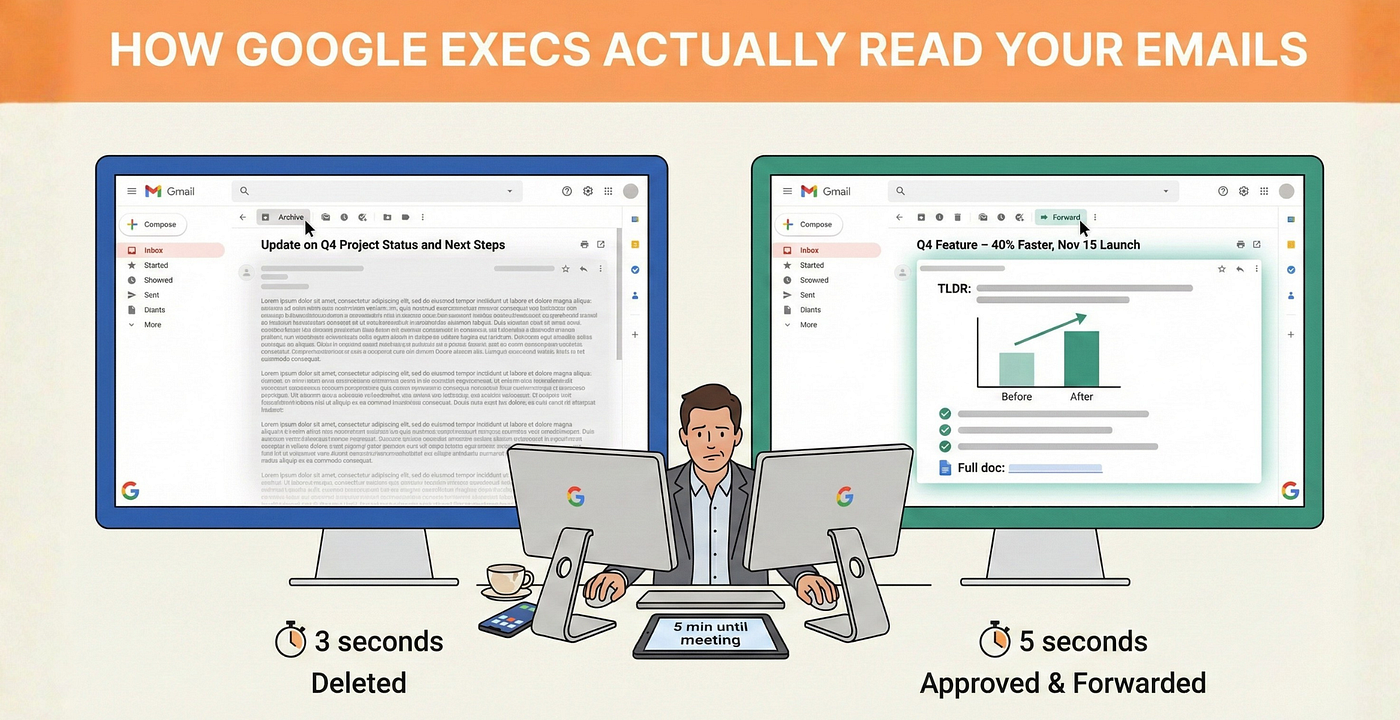
Your resume needs to scream "product manager" in the first five seconds, or it goes in the "no" pile.
How to Optimize Your Pure PM Resume
1) Target the 5-7 second scan. Recruiters look at your resume twice. First, a quick scan for pattern matches (company names, PM keywords, and numbers). Then, if you pass, a deeper read.
Optimize for that first scan: use bold strategically for big numbers and recognizable companies, keep paragraphs short, and create white space so their eyes know where to stop.
2) Cover the full range of PM skills. Don't stack five bullets about roadmap prioritization while ignoring stakeholder management or execution.
Map your bullets against the core PM skill areas (strategy, execution, leadership, analytics, discovery, and influence) and fill the gaps.
3) Include entrepreneurial experience. Side projects, volunteer leadership, or anything where you organized people and drove outcomes belongs on your resume.
Product managers are essentially entrepreneurs, and this experience proves you can create something from nothing.
Version 2: The Industry-Specific Product Resume
Target: Product roles in your industry (restaurant tech, hospitality software, etc.)
Length: Can be longer, but still needs editing
Strategy: Show the unique overlap of PM skills + industry expertise
This version answers a different question: "Can this person build products for OUR industry?"
Here, your domain expertise is valuable.
Companies in your space specifically want people who understand the industry operations, customer experience, and domain-specific challenges.
But this resume still needs to be shorter.
Your industry expertise is valuable for these roles, but volume still dilutes impact. Keep only the details that directly demonstrate you can build products for their industry.
How to Optimize Your Industry-Specific Product Resume
1) Lead with the overlap. Unlike pure PM resumes where summaries hurt you, industry-specific resumes benefit from a 2-3 line summary that immediately establishes your unique combination: PM skills + domain expertise. This tells recruiters "I speak your industry language AND I think like a PM" before they read a single bullet.
2) Balance domain knowledge with PM thinking. You can keep industry-specific context (restaurant operations, healthcare workflows, and fintech regulations), but every bullet must show PM thinking within that context.
3) Keep density high even with more space. Industry-specific resumes can run 1.5-2 pages, but that doesn't mean cramming everything in. Each additional line must prove you can build products for their specific industry.
The Ruthless Cutting Process
Your current state: 2 pages, approximately 40 lines of content, 80% industry-focused
Target state: 1 page, approximately 25 lines of content, 80% PM-focused
That means cutting nearly half your content. Most career transitioners resist this because they’ve worked hard on those achievements.
But volume kills your chances in three ways: it signals confusion about your identity, it buries your PM experience under industry details, and recruiters skip dense content during their five-second scan.
Cutting to one page forces you to keep only what proves you can do product management.
Ask for every bullet: “Does this prove I can do product management?”
- If no, cut it
- If maybe, probably cut it
- If yes, keep it and make it MORE PM-focused
Ask: “Would a PM recruiter understand why this matters?”
- If they need industry-specific context to understand, cut it or translate it
- If it’s obvious why it matters, keep it
Ask: “Am I using this to cover a PM skill gap?”
- If you’re showing PM skills through non-PM work, keep the skill, cut the industry context
The Translation Skill That Changes Everything
This is where most career transitioners fail. You keep your industry language because that’s how you think about your work. But PM recruiters don’t speak your language.
Whether you’re building a pure PM resume or an industry-specific product resume, you need to translate every bullet from your industry into PM terms.
For example:
❌ “Optimized restaurant workflow reducing table turn time by 30%”
✅ “Redesigned operational workflow, reducing cycle time by 30% and increasing capacity utilization”
❌ “Managed daily operations and staff scheduling for team of 15”
✅ “Led cross-functional team of 15, implementing resource allocation system that improved efficiency by 25%”
To translate your bullets effectively:
- Remove industry-specific nouns (vendors, tables, events, guests, and restaurants)
- Add PM-specific nouns (stakeholders, users, customers, workflows, capacity, and systems)
- Remove internal project names that mean nothing outside your company
- Cut industry jargon a PM recruiter wouldn’t immediately understand
- Focus on the thinking and framework, not the domain
- Emphasize strategy and impact, not operational execution
If a PM recruiter at a top tech company wouldn’t immediately understand it, translate it or cut it.
Most people apply with one confused resume that tries to appeal to everyone. They get silence from recruiters and wonder why their background isn’t valued.
The ones who succeed make a clear positioning choice, build the right resume for that choice, and cut ruthlessly until only PM-relevant content remains.
Ready to Position Yourself as a PM, Not an Industry Expert?
The Product Career Accelerator is my flagship coaching program for experienced PMs who want to land roles at top tech companies.
The hardest part isn’t having the skills. It’s positioning yourself so recruiters see “PM” before they see your industry background.
Inside PCA, our coaches review resumes like this every week and know exactly what separates “interesting background” from “strong PM candidate.” They’ll help you make the positioning choices that actually get callbacks.
We’ve helped 150+ members land offers at companies like Google, Meta, Amazon, Stripe, Airbnb, Netflix, and 77+ other top companies. Compensation packages range from $400K to $700K+.
If your resume isn’t getting callbacks from the companies you actually want, this is the fastest path to fix that.
**Learn more about Product Career Accelerator (PCA) →**
Want to Start With the Fundamentals?
I put together a free 5-day email course breaking down everything you need to crush L6+ interviews and receive multiple offers from top tech companies.
Inside you’ll get proven frameworks for product design, business strategy, analytical, and behavioral interviews. Plus company-specific tips for Meta, Google, and Amazon.
메타데이터
- post_id
- 2f898aa9aee6
- slug
- how-to-break-into-top-tech-pm-roles-when-your-background-says-otherwise-2f898aa9aee6
- url
- https://medium.com/@alexrechevskiy/how-to-break-into-top-tech-pm-roles-when-your-background-says-otherwise-2f898aa9aee6
- canonical_url
- https://medium.com/@alexrechevskiy/how-to-break-into-top-tech-pm-roles-when-your-background-says-otherwise-2f898aa9aee6
- author_url
- https://medium.com/@alexrechevskiy
- status
- ok
- fetched_at
- 2026-07-18 14:07:40