Why the iPhone 18 is a Paradigm Shift, Not an Incremental Update?
For the past few years, a familiar ritual has played out every September. Apple executives take the stage, showcase a slightly modified…
Why the iPhone 18 is a Paradigm Shift, Not an Incremental Update?
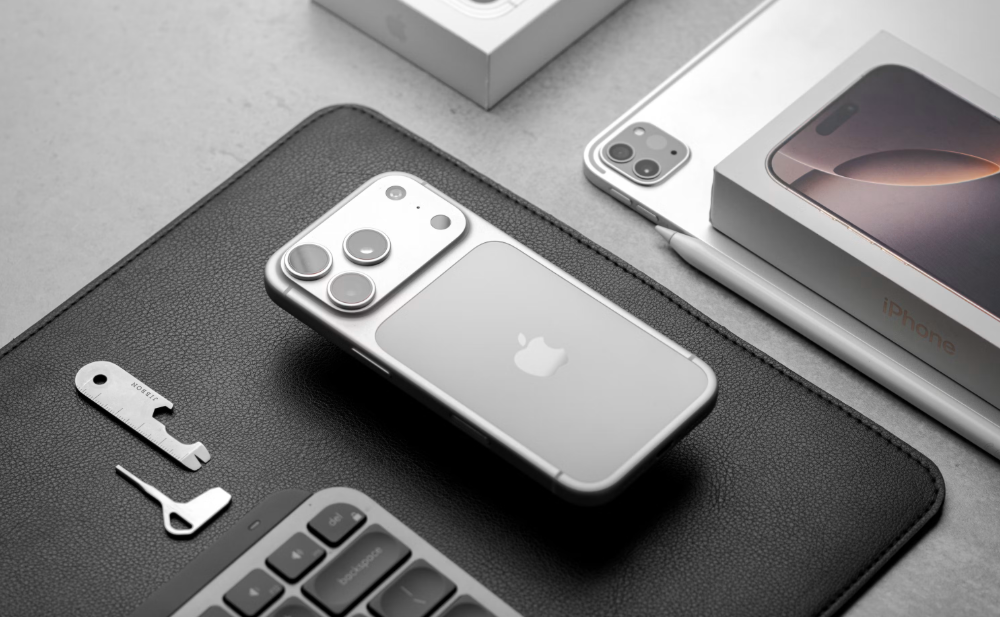
The iPhone 18 marks a true paradigm shift by replacing superficial aesthetic changes with foundational engineering breakthroughs, including 2nm GAA transistors, integrated memory packaging, a physical variable aperture camera, and context-aware on-device AI.
For the past few years, a familiar ritual has played out every September. Apple executives take the stage, showcase a slightly modified camera bump, coin a new term for a slightly faster chip, and announce a fresh titanium shade. To the casual observer, smartphone innovation has flatlined. When recent early supply-chain leaks and prototype videos of the iPhone 18 surfaced online, the collective internet response was an understandable shrug: “It looks exactly like the last one.”
But this superficial assessment completely misses the forest for the trees.
The upcoming iPhone 18 lineup — spearheaded by a unique split-launch strategy that puts the spotlight squarely on its premium Pro architecture — represents something the smartphone market hasn’t seen in nearly a decade: a genuine paradigm shift. While the physical shell remains comfortingly familiar, the engineering beneath the glass represents a fundamental rebuilding of what a mobile device can do. This isn’t a routine speed bump; it is a rewriting of silicon physics, computational photography, and user interaction.
MacRumors
The 2-Nanometer Revolution: Moving Past FinFET
To understand why the iPhone 18 is an architectural leap rather than a step forward, we have to look at the silicon at a microscopic level. For years, chip manufacturers have relied on an architecture known as FinFET (Fin Field-Effect Transistors) to power advanced processors. However, as gate sizes shrunk toward 3 nanometers, the industry hit a physical wall where controlling electrical current leakage became an absolute nightmare.
The A20 Pro chip inside the iPhone 18 tears down that wall by introducing TSMC’s long-awaited 2-nanometer process node, built entirely on Gate-All-Around (GAA) nanosheet transistors.
Think of traditional FinFET transistors like a three-sided fence trying to keep a herd of cattle contained. As things get smaller, the current tries to escape out the open side. GAA wraps the gate entirely around the channel like a complete enclosure. By tightening control over the current flow from all sides, Apple drops power leakage to near zero.
The practical outcome of this shift isn’t just a modest 15 percent bump in raw speed. The true headline is sustained thermal stability. In previous generations, playing a high-end mobile game or shooting extended 4K video caused the phone to heat up, forcing the operating system to aggressively throttle performance after 15 minutes. The 2nm architecture completely bypasses this limitation, allowing the chip to maintain peak clock speeds indefinitely without cooking the device or draining the battery in the process.
Eliminating the Memory Bottleneck: WMCM Packaging
Even the fastest processor in the world is useless if it is constantly waiting around for data to arrive from the RAM. In traditional smartphone design, the system memory sits adjacent to the processor, connected by tiny silicon bridges. This physical separation creates a microscopic delivery delay — a latency bottleneck that severely hampers on-device artificial intelligence.
With the A20 platform, Apple is shaking up internal component layout by implementing Wafer-Level Multi-Chip Module (WMCM) packaging.
Instead of placing memory alongside the main processor, WMCM integrates the RAM directly onto the exact same wafer as the CPU, GPU, and Neural Engine. By drastically shortening the physical distance data has to travel, Apple has unlocked unprecedented memory bandwidth. When you couple this lightning-fast pipeline with a baseline upgrade to 12GB of RAM across the lineup, the iPhone 18 becomes a beast at multitasking.
This memory layout is custom-tailored to handle complex, local machine learning models without constantly pinging a distant cloud server. The data stays on the chip, runs on the chip, and executes in milliseconds, all while sipping a fraction of the power required by older architectures.
Siri AI and iOS 27: The Post-App Era Arrives
Hardware is only as good as the software that unleashes it. Following the ground-breaking platform shifts showcased at WWDC 2026, the iPhone 18 is built to debut alongside iOS 27 and a completely reimagined digital assistant: Siri AI.
For years, Siri felt like an assistant that could only execute basic commands. The new Siri AI engine represents a massive evolutionary leap. Backed by a strategic integration with frontier models like Google Gemini and native on-device contextual models, Siri AI moves entirely away from standard question-and-answer prompts. It now possesses true onscreen awareness and personal context.
If you are looking at a flight confirmation inside your email, you can simply wake the device and say, “Add this to my calendar, text my brother the arrival time, and let me know if there are any highly rated coffee shops near the baggage claim.” Siri AI will read the screen, understand the implicit relationships, open the respective apps, and execute the entire sequence on your behalf — without you ever needing to copy, paste, or switch tabs yourself.
This is the beginning of the post-app era, transforming the smartphone from a simple portal for third-party programs into an active, autonomous collaborator.
True Mechanical Optics: The Variable Aperture Lens
If there is one area where smartphone manufacturers have consistently taken shortcuts, it is the camera. For a decade, mobile photography has relied heavily on computational trickery. Because physical phone bodies are too thin to house complex mechanical camera lenses, devices have used fixed apertures, depending on AI algorithms to artificially blur backgrounds or clean up low-light grain.
The iPhone 18 Pro Max challenges this paradigm by introducing Apple’s first true variable aperture system on a 48-megapixel main sensor.
Rather than sticking with a static lens opening, the main camera features a physical, moving mechanical iris that can manually adjust between broad and narrow limits (rumored to scale seamlessly between f/1.4 and f/2.8).
This means that when you shoot in bright daylight, the lens can stop down physically to capture razor-sharp details across the entire frame without overexposing the sensor. Conversely, when stepping into a dimly lit room, the iris opens wide, pulling in massive amounts of natural light without needing to rely on a synthetic “Night Mode” that artificially brightens and smooths out textures. It brings true, hardware-level depth of field and authentic optical bokeh to a device that fits easily in your pocket.
The Verdict on the Shifting Horizon
When you look at the iPhone 18 on a retail shelf, it is easy to see why critics fall back on the “incremental upgrade” narrative. The dynamic island is noticeably narrower, the bezel is a fraction slimmer, and the color options feature sophisticated new tones like Dark Cherry — but the silhouette remains deeply familiar.
True innovation in the mature tech landscape is no longer about changing the outer geometry of the object; it is about completely redefining what happens within those exact physical boundaries.
By introducing the 2nm GAA node, pioneering WMCM integrated packaging, rolling out a deeply integrated contextual AI engine, and engineering a mechanical variable aperture camera, Apple has built a device that outclasses its predecessors on an architectural level. The iPhone 18 is not just a marginally faster version of the phone you already own. It is a quiet, powerful masterclass in structural engineering that fundamentally reshapes the future of mobile computing.
메타데이터
- post_id
- 2f8bdbbccb19
- slug
- why-the-iphone-18-is-a-paradigm-shift-not-an-incremental-update-2f8bdbbccb19
- url
- https://medium.com/macoclock/why-the-iphone-18-is-a-paradigm-shift-not-an-incremental-update-2f8bdbbccb19
- canonical_url
- https://medium.com/macoclock/why-the-iphone-18-is-a-paradigm-shift-not-an-incremental-update-2f8bdbbccb19
- author_url
- https://medium.com/@gamalkotobna
- status
- ok
- fetched_at
- 2026-07-25 12:44:45