The Dollar’s Death Knell? Treasury’s Secret Reset Plan
The U.S. Treasury Secretary just dropped a bombshell: “We’re in a Bretton Woods realignment.” Translation? The rules of money are being…
The Dollar’s Death Knell? Treasury’s Secret Reset Plan
The U.S. Treasury Secretary just dropped a bombshell: “We’re in a Bretton Woods realignment.” Translation? The rules of money are being rewritten. If you don’t adapt, your savings could vanish while others get rich.
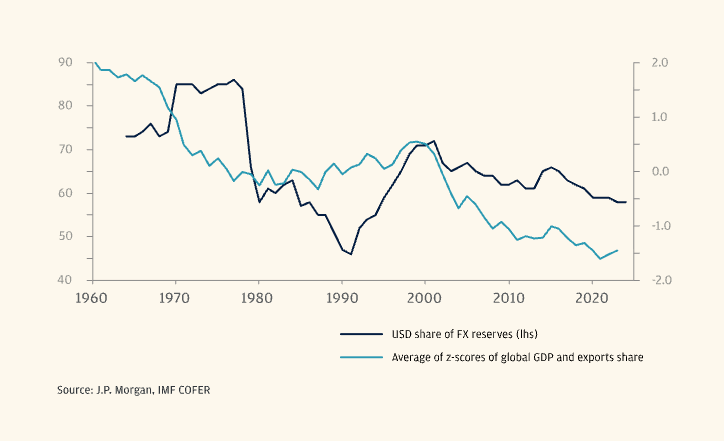
This isn’t speculation — it’s policy. The dollar’s share of global reserves has crashed from 71% to 58% in years. Central banks are hoarding gold. The national debt is on track to hit $40 trillion by 2026. The reset is happening, and history shows resets don’t favor the unprepared.
Felix from Goat Academy breaks it down: “This is the difference between generational wealth and financial ruin.” The last Bretton Woods reset created the post-WWII boom — but left many behind. The same is happening now.
[embed]
What’s Actually Happening?
Bretton Woods (1944) made the dollar the world’s reserve currency, backed by gold. Nixon ended the gold standard in 1971. Now, the dollar is backed by nothing but trust — and that trust is eroding.
The U.S. spends $7 trillion/year but collects only $5 trillion in taxes. The gap? Borrowing and money printing. More dollars chasing goods = inflation. And inflation isn’t a bug — it’s a feature. It transfers wealth from savers to asset owners.
Inflation is the quietest way to default. You don’t miss payments — you just make money worth less.
The Treasury’s reset plan likely includes:
1. A weaker dollar. The U.S. wants a 20–40% devaluation to boost exports. The 1985 Plaza Accord did this — successfully — dropping the dollar 50% against the yen.
2. Bank deregulation. Post-2008 rules are being unwound to spur lending and crypto integration. Risk? More 2008-style blowups (but bankers get bailed out).
3. Tariff-driven reshoring. The U.S. is using tariffs to bring manufacturing home. Goal: 3% GDP growth, 3% deficit, 3M more barrels/day of energy.
How to Lose Money in the Reset
1. Holding cash. Savings accounts pay 4–5%, but inflation is 3.4%. That’s a negative real return. A 20–40% dollar drop makes cash worth even less.
2. 100% U.S. stocks. The S&P 500 gets 40% of revenue overseas. A weaker dollar hurts earnings when converted back to USD.
QQQ (Nasdaq-100 ETF) could see a shakeup if SpaceX IPOs at $1.5–1.75T. That’s bigger than Meta, Tesla, and Nvidia combined. If it joins, QQQ’s top holdings could change overnight.
3. Waiting for the ‘perfect’ moment. The reset is happening now. The biggest risk isn’t bad timing — it’s inaction while others adapt.
How to Win When the Rules Change
Resets create opportunities for those who position early. Here’s how to play it:
1. Hard assets. Gold is up 20% in a year, and central banks bought 1,136 tons in 2022 — the most since 1950. Why? When money printers hoard gold, it’s a signal. Gold isn’t an investment — it’s insurance.
2. U.S. manufacturing/energy. If the reset works, domestic production will boom. The U.S. is already the world’s top oil/gas exporter — bigger than Saudi Arabia. Companies making things in America will benefit from tariffs and reshoring.
3. Global diversification. Don’t just buy U.S. stocks. Look for companies with global revenue (e.g., Microsoft gets 50% of sales overseas). Or bet on commodity exporters like Brazil, Australia, and Canada.
MPLY targets dominant platform businesses (like SpaceX, which just filed for IPO). Its five-pillar framework (market control, vertical integration, etc.) identifies winners early. Built for this reset.
4. SpaceX and the next IPO wave. SpaceX filed for IPO at $1.5–1.75T, with 30% retail allocation — unheard of for a company this size. It’s not just space; it merged with xAI (Elon’s AI company), making it a bet on space + AI.
ARKK is positioning for this. Cathie Wood’s fund bets on disruptive innovation, and SpaceX’s IPO fits its thesis on space/AI. High-risk, high-reward way to play the reset.
Don’t bet on one outcome. The reset could go two ways:
Scenario A: Soft landing. Dollar weakens gradually, manufacturing returns, system stabilizes. Hard assets and global stocks win.
Scenario B: Crisis. Currency wars, inflation spikes, markets crash. Winners? Those who own real assets — gold, real estate, companies with pricing power.
3 Frameworks to Stay Ahead
1. Passive vs. active. Passive? Dollar-cost average into low-fee ETFs. Active? Follow capital flows — right now, it’s into hard assets and global stocks.
2. Cash flow vs. appreciation. Need income? Dividends, rental properties. Playing for growth? Growth stocks, land, commodities.
3. The golden rule. “Don’t invest in what you can’t explain to a 12-year-old.” Complexity is how people get fleeced.
In a crisis, winners aren’t the smartest — they’re the prepared.
The reset is happening. The dollar’s dominance is fading. The rules are changing. Adapt now, or get left behind.
Position yourself with hard assets, global exposure, and a clear strategy. You won’t just survive the reset — you’ll thrive in it.
Want more daily market insights?
메타데이터
- post_id
- 2f985eddc54e
- slug
- the-dollars-death-knell-treasury-s-secret-reset-plan-2f985eddc54e
- url
- https://medium.com/@heshammashhour/the-dollars-death-knell-treasury-s-secret-reset-plan-2f985eddc54e
- canonical_url
- https://medium.com/@heshammashhour/the-dollars-death-knell-treasury-s-secret-reset-plan-2f985eddc54e
- author_url
- https://medium.com/@heshammashhour
- status
- ok
- fetched_at
- 2026-06-24 18:57:25




