It’s Midnight. My Kids Are Asleep. And I’m Still Working.
On childcare, corporate life, the UK tax trap, and the quiet question we don’t say out loud.
It’s Midnight. My Kids Are Asleep. And I’m Still Working.
On childcare, corporate life, the UK tax trap, and the quiet question we don’t say out loud.

Long day at work. I get home, and somewhere between the commute and dinner I tell myself: I’ll squeeze in an hour or two on this platform engineering material I’ve been meaning to get through. My one-year-old boy has other plans. He’s demanding something from daddy — something I can’t quite decode, but the arms reaching up are clear enough. I pick him up. The studying waits.
It’s half ten by the time he’s down. I drop into my chair and pull up my homelab dashboards — Elastic is reporting a problem with one of the VMs on my Proxmox node. I get my head in. Then my six-year-old daughter appears at the door. She can’t sleep. She never can on the nights I actually need her to. So I close the laptop and go read her a bedtime story. She’s out by midnight. I check the time, feel the weight behind my own eyes, and accept that the lab isn’t happening tonight. I fire a message to my Claude Telegram bot and ask it to run health checks and report back in the morning.
This is the routine. This is the life — mine, and my wife’s.
The Childcare Equation
If you’re a professional in the UK with young children, you already know the maths doesn’t work. Full-time nursery costs more than a mortgage in most cities. School drop-offs and pick-ups are designed around a working pattern that hasn’t existed for most people since the 1970s. And the system quietly assumes someone — usually the woman — will absorb the gap.
We tried the family route. In many African households abroad, bringing a grandparent over occasionally to help with childcare is a well-worn path. When you add up the visa costs, flights, keeping them comfortable, supporting them while they’re here — it came out roughly level with just putting the child in nursery. And that’s before you account for the strain of having extended family living in your home, close enough to have opinions about your marriage. It’s not healthy. We moved on.
Hybrid working has been the single most meaningful change for families like ours. The ability to do the school run, be present for the small moments, and still deliver professionally — it’s not a perk, it’s a lifeline. But let’s be honest: it’s not available to everyone. Large parts of the economy — healthcare, construction, logistics, retail — simply can’t offer it. The people who need flexibility most are often the ones who get it least.
The Tax Conversation Nobody Has Properly
I get approached by recruiters regularly. Roles and opportunities to die for. Eye-watering packages. Six figures, stock options, the works. And here’s what I’ve noticed about myself: I don’t reflexively say yes. Not because I’m not ambitious — I am — but because I’ve done the actual numbers.
In the UK, once you breach certain thresholds, the system starts taking back more than it gives. Childcare support tapers off sharply. The pension trap kicks in, pushing you to contribute more into a pot you won’t touch for decades, precisely when your household needs liquidity. The marginal gain from a higher salary starts to look a lot smaller when you model it properly. I’m not playing poor — I’m saying the incentive structure is broken, and most people in corporate life are too busy to stop and notice.
Compare this to many European neighbours, where childcare costs are largely absorbed by the state, shared parental leave is genuinely shared, and the tax system doesn’t penalise you for earning more while raising a family. The political will to address these gaps in the UK exists only at the level of speeches in Westminster. In practice, nothing moves.
The Quiet Question
There’s a conversation that happens between professionals of a certain age, usually over a drink at the weekend, usually in a lowered voice: should we just leave?
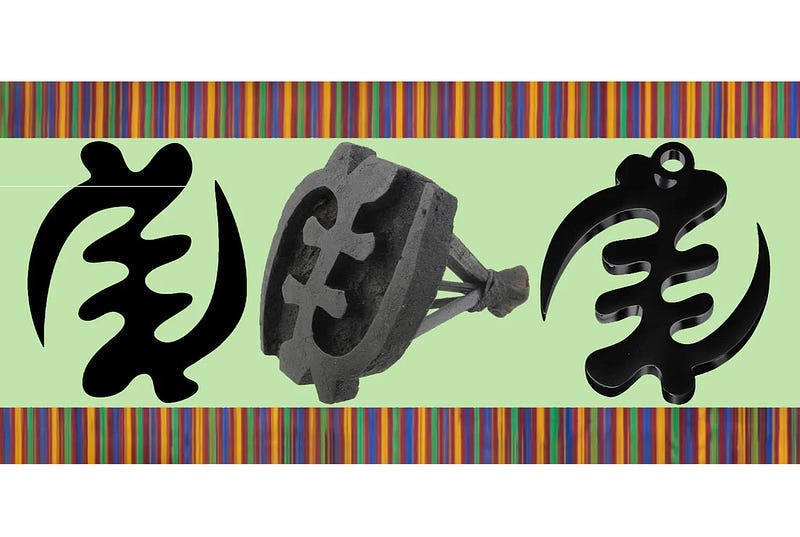
Gye Nyame — God’s supremacy over all things. A reminder that some anchors go deeper than any tax code.
I know people who have. A mate from the British Army — we did our cybersecurity MSc together at Northumbria — packed it all in and moved to Australia. He’s working as a tree surgeon now. He sends photos every week without fail. Clear skies, open space, a look on his face that the UK hadn’t put there in years. Then there’s Wiz and his wife — she’s in healthcare, he drives buses in Edinburgh. The childcare situation ground them down until they sent their two boys back to Ghana to be raised by family. Not ideal. But survivable. And in the past year alone several families in my kids’ school have moved to countries such as Canada, UAE, Saudi, and even back home to Africa for good.
The Middle East comes up in these conversations more often than not. Tax-free salaries, the ability to clear a mortgage in five to ten years if you’re disciplined. I understand the appeal. I also understand what you give up: the NHS when your child spikes a fever at 2am, the familiarity, the roots you’ve spent years putting down.
And then there’s the other tax — the one nobody puts in a government leaflet. Black tax. The expectation, implicit and sometimes very explicit, that if you’re doing reasonably well by Ghanaian standards, the extended family and community will find a way to remind you of it. Monthly transfers. Emergency calls. People you haven’t spoken to in years sliding into your DMs with problems that have somehow become your problems. I’ve had to make peace with the fact that social media is no longer neutral territory for me. You learn to manage your visibility and also their expectations.
Why I’m Still Here
Despite all of it — I’m not going anywhere. Not yet, maybe not ever. And I want to be honest about why, because I think a lot of people in similar positions feel the same and don’t say it.
I’m building something. Not just professionally — though that’s part of it — but as a father, a husband, a person trying to think clearly about the long game. I’ve got a career with genuine momentum, a homelab humming somewhere in the corner of my garage, side projects that actually excite me, and a wife who is herself building something real. The constraints are real. The juggle is real. But so is the progress.
Having children slows you down. Research backs this — and it’s worse for women, disproportionately and persistently. But it also, if you let it, clarifies what you’re actually working towards. Midnight used to feel like wasted time. Now it feels like the quiet hour where I figure out what matters.
The dashboards can wait until morning.

The corporate world keeps moving — with or without you. The question is whether you’re running towards something, or just running
Kweku Obeng is an Infrastructure Obsolescence & Security professional based in Scotland. He writes about technology, career, and the unglamorous realities of building a life in modern Britain.
Originally published at https://www.kayob.co.uk.
메타데이터
- post_id
- 2f9e9e09e7e0
- slug
- its-midnight-my-kids-are-asleep-and-i-m-still-working-2f9e9e09e7e0
- url
- https://medium.com/@kayobgh/its-midnight-my-kids-are-asleep-and-i-m-still-working-2f9e9e09e7e0
- canonical_url
- https://medium.com/@kayobgh/its-midnight-my-kids-are-asleep-and-i-m-still-working-2f9e9e09e7e0
- author_url
- https://medium.com/@kayobgh
- status
- ok
- fetched_at
- 2026-06-21 21:05:38