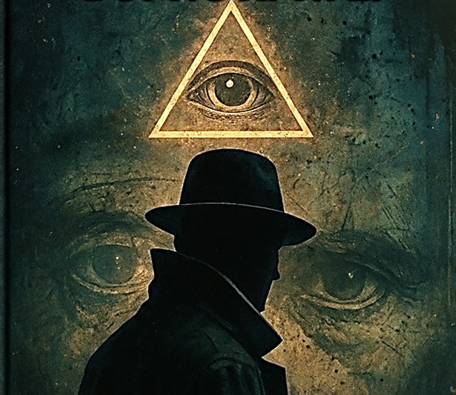
Knowledge as Self-Deception and The Collapse of Rational Systems
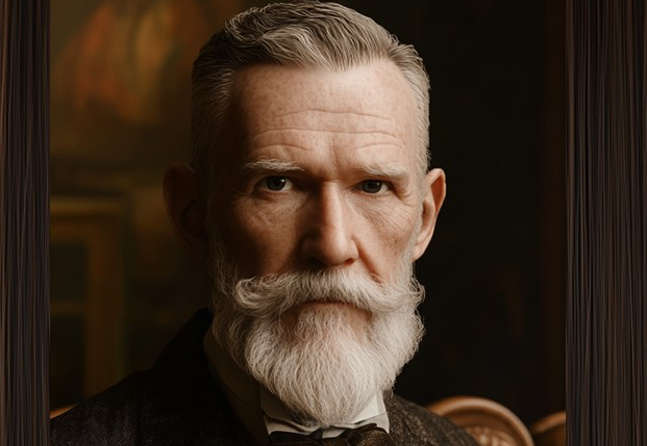
Lev Shestov Against the Grounded World
Knowledge as Self-Deception and The Collapse of Rational Systems
Lev Shestov Against the Grounded World

To stand against the grounded world is not merely to resist its structures, but to doubt the very instinct that seeks grounding in the first place. For Lev Shestov, the world as understood by reason — ordered, lawful, explainable — was a construction born of fear. Beneath its polished surfaces and reassuring consistencies, he saw a darker truth: that this world, however stable it may appear, is not the only world. Philosophy, in aligning itself so closely with necessity, had betrayed its task. Instead of freeing thought to confront the unthinkable, it had locked it within the narrow corridors of logic and causality. Shestov stood alone in saying no — not only to particular doctrines, but to the entire architecture of certainty.
In this refusal, he waged war against what he called the self-evidence of reason. From ancient Athens to the rationalist heights of Enlightenment, the philosophical tradition had been preoccupied with the demonstrable, the transparent, the unassailable. What could be known with certainty was elevated; what eluded clarity was dismissed. Yet for Shestov, it was precisely the obscure, the unresolved, the paradoxical that contained the trace of real freedom. Not the kind of freedom one reasons into existence, but the freedom that defies all conditions — the freedom that cries out from the abyss and refuses to be silenced.
He saw in philosophy a deep need to soothe. To make suffering bearable by folding it into the order of things, to render even tragedy meaningful by slotting it into some wider narrative of justice or necessity. But Shestov would not allow this comfort. He turned his face instead toward the cry of Job, that voice from the ashes that demanded not explanation but response. For him, Job’s defiance, his refusal to accept the logic of his suffering, was not impiety — it was the beginning of true thought. A thought ungrounded, exposed, and trembling, but honest at last.
What Shestov proposed was not a new metaphysics, not a corrected theory of knowledge, but a dismantling of all that philosophy had taken for granted. He did not seek to replace Plato with a better Plato, nor to rewrite Kant with sharper categories. He wanted to tear out the roots of the impulse that led to Plato and Kant in the first place: the belief that necessity governs truth. He rejected the idea that what must be is more real than what might be. In its place, he offered an anarchic possibility — a space where even the impossible could be affirmed, not through argument, but through faith.
This revolt against the grounded world drew its strength from the existential weight of human life itself. Illness, betrayal, humiliation, death — these were not deviations from the rational order, but reminders that no such order could account for the totality of existence. To speak of necessity in the face of these realities was, for Shestov, a kind of betrayal. He accused philosophy of defending the very chains it should be breaking, of turning away from the trembling soul in order to polish its tools. And so he turned away from philosophy as it had been practiced for centuries, seeking in the texts of Dostoevsky, in the paradoxes of Kierkegaard, and in the cries of the Hebrew prophets, not lessons to be distilled, but voices to be heard.
There was nothing soft in his rejection. His language was sharp, his tone often severe, but beneath the harshness lay a fierce compassion — a refusal to forget those whom reason had left behind. In this refusal, he did not promise salvation. He offered no consoling doctrine, no final truths. What he gave instead was the image of thought stripped bare, trembling before the mystery of being. And in that bareness, he found not despair, but the hint of something greater than reason could name.
Knowledge as Self-Deception
Within the architecture of Western thought, knowledge has often been elevated as the highest human achievement, the crown of reason and the condition of progress. It is praised as that which frees from ignorance, secures power over nature, and shields against error. Yet for Shestov, this reverence for knowledge concealed a more unsettling reality: that what is called knowledge may often serve as a disguise, a form of self-deception dressed in the robes of clarity. What presents itself as liberation may in truth be a kind of bondage — the surrender of the soul to the impersonal laws of necessity, the acceptance of limits under the illusion of understanding.
This betrayal begins when thought seeks not truth in its wildness but order in its predictability. Knowledge, in this sense, becomes a fortress built against the chaos of lived experience. It selects, it categorizes, it stabilizes; and in doing so, it excludes. Whatever cannot be named in the language of reason — whatever resists deduction, whatever refuses to conform to principles — is cast out as error or illusion. The soul’s deepest tremors, the silent cry that rises in moments of despair or wonder, are dismissed as irrational, unworthy of serious thought. In this way, philosophy distances itself from life, all the while claiming to illuminate it.
Shestov’s revolt was directed precisely at this disconnection. He observed that what men call knowledge often functions to dull the pain of their vulnerability, to tame the terror of the unknown by dressing it in the garments of necessity. If suffering can be explained, it can be endured; if death can be folded into a rational order, it becomes acceptable. But what if it cannot? What if suffering has no meaning, if death arrives not as the conclusion of a logical process but as an intrusion that renders all explanations hollow? In such moments, knowledge no longer consoles. It reveals itself instead as a mask — useful, perhaps, but false.
This, for Shestov, was the hidden crisis of philosophy: that its claim to illuminate the real might in fact be a refusal to see it. To speak of laws, of systems, of coherence, was to impose form upon the formless, to reduce the unknown to what can be thought. But what if the real — life in its immediacy, its fragility, its unanswerable strangeness — lies beyond the reach of thought? Then knowledge becomes not an opening but a closure, not a triumph but a sedative. It reassures not by revealing truth, but by covering it.
He turned instead to those rare voices who refused this deception — Pascal trembling before the silence of infinite spaces, Kierkegaard leaping beyond reason’s grasp, Dostoevsky’s underground man mocking the rational utopias of his time. In these figures, Shestov recognized a different kind of knowing: one that begins in dread, in contradiction, in the refusal to be comforted. This is not knowledge as possession, as certainty acquired and stored, but a form of thought that remains exposed, wounded, awake. It does not seek to master the world, but to endure it without lies.
For modern philosophy, shaped by centuries of methodological rigor, such a stance appeared reckless, even dangerous. To abandon the security of knowledge was to risk collapse into relativism or despair. But Shestov asked whether this danger might not be the beginning of something deeper. Perhaps only those who abandon the pretense of certainty are truly free. Perhaps what is most human in thought is not its conclusions, but its hesitations — its capacity to admit that the world exceeds what can be said about it.
Thus knowledge, when taken as the highest value, may become the most insidious deception. It flatters the intellect while neglecting the soul. It offers explanations while concealing the question. Shestov did not deny its power, nor its uses; but he refused to grant it the final word. For that belongs, not to what can be proven, but to what must be lived.
Reason as a Cage of Possibility
In the quiet rigor of philosophy, reason has been enshrined as the sovereign faculty — the means by which the chaos of experience is shaped into clarity, the uncertain reduced to order. It promises intelligibility, coherence, and the elimination of contradiction. For centuries, this promise has stood unchallenged at the center of intellectual life, shaping not only how the world is thought but what is considered possible. Yet for Shestov, this very power is precisely what renders reason suspect. It does not merely guide thought — it confines it. Reason draws a boundary around the thinkable and then declares whatever lies beyond it nonexistent. In doing so, it constructs a prison, elegant in form but merciless in function, where the soul, once infinite in longing, is taught to be content with necessity.
This captivity is subtle. It does not present itself as constraint but as freedom — freedom from error, from contradiction, from illusion. But in truth, it is the freedom of the well-ordered cell. For Shestov, the tragedy of reason lies not in its failure but in its success. It achieves clarity, but only by excluding the very elements that make human life unbearable and sublime: the miraculous, the irrational, the impossible. What is not compatible with reason is declared unworthy of belief, stripped of dignity, silenced. And so, the world that reason builds is one from which the true cries of existence have been exiled.
This exile can be seen in the philosophical insistence on necessity. From the early rationalists through Kant and Hegel, the assumption prevails that what is must also be what must be. But necessity is a hard law, and it admits no rebellion. It allows no appeal to the unthinkable, no room for the cry that pleads not for understanding but for deliverance. In a world governed by necessity, even God becomes a function of law — bound to consistency, reduced to a principle. Such a God cannot save. Such a world cannot be changed.
Shestov’s rejection of this logic is not a rejection of thought itself, but of its self-imposed limitations. He understood that reason begins by defining what may be thought and then proceeds to dismiss the rest as error. But what if the most vital truths — those that concern freedom, salvation, the refusal to accept fate — lie outside what reason permits? Then the very act of thinking must become an act of disobedience. It must turn against its own tradition, break the laws it once revered, and listen not to the clear voice of logic but to the trembling silence of the impossible.
This revolt, however, is not without cost. To tear down the cage of reason is to step into uncertainty, to lose the comfort of explanation, to wander without direction. Yet Shestov insisted that only in this wandering does genuine freedom appear. It is not the freedom to choose between options already defined by reason, but the freedom to say that even what is impossible may yet be. Not as a likelihood, not as a theory, but as a lived refusal to bow before what has been declared necessary. This freedom does not promise security — it offers only the vertigo of open space, the terror and wonder of a world not bound by laws.
Such a vision cannot be reconciled with the philosophical systems that seek completeness. It does not rest in synthesis or resolution. It is not dialectical, and it cannot be taught by method. It must be suffered. For Shestov, the greatest thinkers were not those who discovered new logical structures, but those who broke them — those who stared into the void and did not look away. In their refusal to be consoled by the smooth reasoning of their age, they opened the door to truths that reason alone could never reach.
And so, reason becomes a cage not because it fails, but because it succeeds too well. It defines, contains, and excludes until all that remains is what can be thought, and all that matters — faith, freedom, miracle — has vanished from view. To live beyond this cage is not to reject thinking, but to think differently, to think without guarantees, to think with trembling hands in the dark. Only then, Shestov believed, can the soul begin to breathe again.
The Collapse of Rational Systems
Every rational system is born of the same longing — to enclose the world within a structure of thought, to banish ambiguity by naming its parts and determining their relations. From the towering logic of Aristotle to the careful architecture of Kantian critique, each system has sought not merely to understand the world but to subdue it. In this effort, the system always begins in confidence, certain that the world is knowable, that contradictions are temporary, that the truth will yield itself to method. But Shestov, standing at the margins of this enterprise, pointed not to its triumphs but to its collapse. He saw that the very ambition to totalize — to render the real fully transparent to reason — carried within it the seed of destruction. Not because systems are weak, but because life is stronger.
The history of philosophy is strewn with ruins. Systems once thought unassailable now lie in fragments, not because they were poorly constructed, but because they mistook their foundation. Each built itself upon what seemed unshakable: the principle of non-contradiction, the certainty of mathematical form, the universality of categories. Yet each, in time, met with something it could not explain, something that slipped through its net or shattered it altogether. The world, in its stubborn particularity, refused to be flattened into a formula. And when this refusal became too great to ignore, the system began to tremble.
Shestov found in this recurring failure not a cause for despair, but a kind of strange hope. For the collapse of rational systems revealed what they had tried to hide: that life cannot be captured by thought alone. The event that breaks the system — whether it is the appearance of radical evil, the presence of undeserved suffering, or the cry of a soul that will not submit — does not destroy truth, but exposes the limits of the truths we have constructed. It forces thought to acknowledge its blindness, and in that moment, a new form of insight becomes possible — one that no longer seeks to control, but to bear witness.
This is not a passive insight. It does not rest in mysticism or retreat into silence. Rather, it demands a more difficult form of thinking: a thought that endures its own undoing. In Shestov’s writings, one finds no system to replace the ones he critiques. He offers no new groundwork, no stable method. What he offers instead is a vigilance, a refusal to forget the gap between existence and explanation. He writes not as a builder but as a witness to collapse — walking among the shattered forms, he listens for the voices they tried to silence.
The great philosophical systems, when examined closely, reveal this pattern of silencing. They disallow contradiction not by resolving it, but by declaring it illusory. They refuse paradox by dissolving it in higher synthesis. They avoid the unanswerable by turning it into an abstract puzzle. Shestov, however, insisted that what cannot be resolved must not be erased. If there is a truth worthy of the name, it must arise from the encounter with what cannot be tamed — not from the mastery of the world, but from the courage to face it when it resists all understanding.
In this way, the collapse of rational systems becomes not a loss, but a clearing. It strips philosophy of its illusions, leaving behind a nakedness in which something more honest can begin. A thought no longer intoxicated with its own precision, no longer protective of its boundaries, but open — painfully, vulnerably — to the unknown. The task of such thought is not to conquer but to endure. It does not build walls around meaning; it stands where meaning breaks and refuses to look away.
For Shestov, the greatness of philosophy lies not in its ability to systematize, but in its willingness to fail nobly. The systems that crumble under the pressure of reality serve as reminders that no concept can replace life, that no theory can absorb the cry of the afflicted. And if this cry persists — unanswered, unexplained — it may be because it speaks from a place that reason cannot reach. It may be, as Shestov believed, the place where true thought begins.
Nietzsche’s Suspicion of Reason
Nietzsche approached reason not as a neutral tool, but as a force shaped by deep instincts, hidden fears, and the will to control. Where earlier thinkers saw in reason the highest expression of the human spirit, he perceived something more ambiguous — at once a triumph and a symptom, a mechanism for ordering experience but also a mask for life’s unruly vitality. Like Shestov, though by a different path, Nietzsche questioned the very foundations upon which philosophy had built its proudest structures. He suspected that reason, far from being a light in the darkness, might itself be a kind of darkness — a narrowing of vision under the guise of clarity.
In his genealogical mode, Nietzsche tore away the apparent neutrality of thought, tracing the cold logic of metaphysics back to psychological roots. He argued that philosophers had created their systems not from disinterested inquiry but from an unconscious need to tame the terrifying openness of existence. The love of truth, so often celebrated as noble, he exposed as a will to possess, to stabilize, to impose order where there was none. What called itself “objective” was in fact shaped by the deepest instincts of the subject — the desire for security, the refusal of chaos, the denial of becoming.
This suspicion extended to morality, metaphysics, and even language itself. For Nietzsche, every system of reason concealed a hierarchy of values — a decision, often unacknowledged, about what was to be preserved and what cast out. To declare something logical was also to declare it admissible, real, worthy of affirmation. And to exclude what could not be deduced — what could not be brought within the tight circle of rational necessity — was to exile the very energies that gave life its force. He accused philosophers of turning away from life in its wildness, replacing it with a conceptual simulacrum, tidy and dead.
In this respect, Nietzsche and Shestov moved along parallel lines, though their vocabularies differed. Where Shestov spoke in the tones of biblical defiance, Nietzsche thundered in the language of critique and laughter, scorning the solemnity of the philosophical tradition. Both rejected the elevation of necessity, the idea that what is must be so. Both refused to accept that suffering should be explained rather than opposed. And both saw in the glorification of reason not a path to freedom, but a subtle form of servitude — the intellect bound to its own creations, enslaved by the very systems it believed to command.
Nietzsche’s figure of the Übermensch stands as a challenge to this servitude. Not a model of domination, as some misread, but a symbol of the one who creates values anew, who no longer seeks legitimacy from tradition, reason, or God. This figure does not appeal to eternal truths but invents meaning through the act of affirmation. And in that affirmation, Nietzsche offered a radical alternative to the philosophical instinct for foundations: a thought that dances rather than builds, that sings rather than explains.
What emerges from this suspicion is not the collapse of thinking, but its transformation. Nietzsche did not abandon philosophy; he reimagined it. He called for a style of thought that would no longer seek refuge in universals, that would embrace contradiction without resolving it, that would remain loyal not to abstract coherence but to the fullness of experience. In doing so, he prepared the ground for a different kind of philosopher — one who does not stand above life, but within its flux.
Shestov, encountering Nietzsche’s work with a sense of recognition, did not adopt his idiom but acknowledged the force of his challenge. Both saw that reason, when turned into a measure of all things, becomes an idol — respected, obeyed, but ultimately unworthy of worship. And both insisted that thought must risk everything to escape its chains — not to reach a final truth, but to enter a space where the impossible becomes thinkable.
Thus, Nietzsche’s suspicion of reason was not cynicism but clarity. He did not ask that thought be abandoned, but that it be unmasked. Behind the calm authority of rational systems, he found the trembling desire of the human soul — its need to be safe, to be sure, to be justified. But what if these needs must be overcome? What if the task of thinking is not to reassure, but to awaken? Then the philosopher becomes not a lawgiver, but a wanderer — not a guardian of truth, but a challenger of idols. And in that figure, both Nietzsche and Shestov saw the beginning of a different philosophy — one no longer grounded, but alive.
Uncertainty as Existential Honesty
When all the structures of reason are set aside, when the last consoling thought falls silent and the old truths no longer bind, what remains is uncertainty — not as a temporary lapse in knowledge, but as a condition of existence itself. For most of philosophy, this uncertainty has been a problem to solve, a darkness to illuminate, a gap to close. But in the work of Shestov, and in the margins of thinkers like Nietzsche, Kierkegaard, and Pascal, uncertainty emerges not as a deficiency, but as a form of honesty. It is the recognition that existence is not built on solid ground, that no principle, no method, no system can finally explain what it means to live, to suffer, to hope.
This is not the uncertainty of the skeptic who doubts while waiting for better evidence, nor the methodological hesitation of a thinker seeking a more stable foundation. It is something deeper, more disturbing — an uncertainty that remains even after all inquiries have been exhausted. For Shestov, to embrace this uncertainty is to admit that the world resists ultimate understanding, that life’s most urgent questions cannot be answered in the language of proof. And in that admission lies a kind of truth, more faithful than any conclusion drawn from logic.
Philosophy, in its long arc from antiquity to modernity, has labored to reduce this ambiguity. The temptation to reduce being to knowledge, to treat the unknown as something merely not-yet-known, has shaped its tone, its methods, and its self-image. But Shestov saw in this labor a refusal to face what cannot be resolved. He believed that true thought begins not where clarity emerges, but where it breaks apart — where one no longer seeks certainty, but dares to remain in the unknowing.
There is a kind of courage in this stance, but not the heroic courage of those who assert new systems or define new dogmas. It is a quieter courage, that of the one who continues to think when the light of reason has dimmed, who continues to hope when no promise has been given. To stand in uncertainty without demanding resolution is to bear the full weight of human vulnerability. It is to live without guarantees, without safety, without justification — and yet still to live, to seek, to believe.
This existential honesty rejects the false comfort of necessity. It does not pretend that everything must be as it is, nor does it surrender to despair. It holds the question open, not as an intellectual posture but as a way of being. It allows for freedom where the system sees only law, for grace where the thinker sees only causality. And it listens — to the cry of Job, to the trembling of Kierkegaard’s knight of faith, to the solitary anguish that no philosophy can erase.
Shestov did not celebrate uncertainty as a virtue, nor elevate it into an ideal. He accepted it as the only condition in which freedom can be real. For where there is necessity, there is no choice; where everything is determined, nothing can be changed. But in uncertainty, the impossible remains possible. The event that cannot be deduced, the miracle that shatters all expectations, the cry that reaches a hidden ear — these become thinkable only when thought relinquishes its demand for control.
In this way, uncertainty becomes not a void, but a space of encounter. It opens thought to what lies beyond it — not in surrender, but in readiness. It is the condition in which the soul, no longer protected by the armor of explanation, may finally begin to speak. And what it says cannot be systematized, only heard.
To dwell in uncertainty is to live without illusions — but not without meaning. It is to see that the highest truths may not be truths in the rational sense at all, but cries, calls, glimpses. And it is to affirm that life, though ungrounded, is still given — not explained, but offered. In this offering lies the beginning of philosophy — not the philosophy that defines, but the one that listens; not the one that builds, but the one that endures.
The Relief Found in Uncertainty
There is a strange lightness that begins to emerge when the mind ceases its struggle to control what cannot be controlled. The ceaseless effort to master life through explanation, to reduce every sorrow to a cause, every event to a necessity, is born of a deep anxiety — the fear that without knowledge, one will be lost. Yet in the thought of Shestov, and in the murmurings of those few voices who dared to refuse the tyranny of certainty, a different possibility arises: that uncertainty, far from being a burden, may carry within it a quiet and liberating grace.
The pressure to understand, to explain, to justify every moment of existence, weighs heavily upon the soul. Philosophical systems, ethical doctrines, theological constructs — all are enlisted to guard against the unknown, to seal the cracks through which chaos might enter. But these very efforts, though born of the desire for peace, often deepen the unrest. They transform life into a problem to be solved, a structure to be completed. And when that completion fails — when suffering comes unbidden, when grief strikes without reason, when the order breaks — what was meant to protect becomes a source of torment.
Shestov saw this clearly. The insistence on reason, on causality, on necessity, does not ease the burden of existence — it intensifies it. For it tells the sufferer that their suffering is part of a design, that what has crushed them must, in some hidden logic, be right. There is no appeal against necessity. The system has no room for protest. One may cry out, but only into silence.
Yet when uncertainty is embraced — not as a flaw in thought, but as the truth of life itself — the burden shifts. No longer must one pretend to understand what resists understanding. No longer must one explain pain in order to endure it. The soul is permitted to stand in the unknown without shame. It is permitted to say: this should not be, and yet it is. And in this strange freedom, a space opens in which life may be met as it is, not as it ought to be according to some rule.
This is not the peace of resignation, nor the comfort of forgetfulness. It is the relief of honesty — the lifting of a false demand. When one no longer feels obliged to reconcile all things, to close every contradiction, to explain away every darkness, something in the heart begins to breathe again. There is room, at last, to feel without defense, to hope without foundation, to believe without proof. And this belief, though ungrounded, may prove stronger than any conclusion drawn from certainty.
Philosophy, when it clings too tightly to clarity, becomes a kind of labor — a constant repair of meaning, a vigilance against the cracks. But when it surrenders to the real, when it ceases its defense against the unthinkable, it becomes something else: a companion in mystery, a witness to what remains unresolved. And in this companionship, there is relief. Not the relief of knowing, but the relief of no longer needing to know.
To live with uncertainty is not to be lost — it is to be open. It is to walk without a map but with eyes unclouded. It is to let go of the need to be right and to begin, perhaps for the first time, to listen. For in that listening, in that unguarded presence before the unknown, one may discover a depth that no system could reach. Not a solution, but a stillness. Not a conclusion, but a beginning.
Uncertainty and groundlessness
Uncertainty and groundlessness, though they often appear together in the landscape of thought, do not speak with the same voice. They belong to different registers of experience, each carrying its own weight, its own kind of dread, and its own possibility. To confuse them is to miss the nuance that thinkers like Shestov drew so carefully, even in the midst of their refusal to define or categorize. Uncertainty may be a feature of thought — of knowledge held in suspension, of outcomes unknown, of paths not yet walked. Groundlessness, on the other hand, speaks not merely of what is not known, but of the absence of any foundation on which knowing could ultimately rest.
Uncertainty arises within the framework of expectation. It presumes that something may yet be resolved, that a clarity waits on the horizon even if it is not yet grasped. It is the space between questions and answers, between hypotheses and conclusions. One lives within uncertainty when facing a future that has not revealed itself, or a truth that has not yet come into focus. It is, in many ways, still loyal to the hope that reason will eventually bring resolution. There is, within uncertainty, a quiet belief that the tools of thought are sufficient, if not now, then in time.
Groundlessness cuts deeper. It does not refer to what is not yet known, but to the possibility that there may be no ground at all — no final truth, no ultimate reason, no hidden order waiting to be unveiled. It is not the condition of searching without having found, but of realizing that there may be nothing to find that could settle the soul’s questions once and for all. Where uncertainty hesitates, groundlessness strips away; where uncertainty waits, groundlessness stands before the void. It is not a lack of information, but the collapse of the very notion that any knowledge could confer stability.
Shestov’s thought moves increasingly from the one toward the other. In his early writings, uncertainty is a form of philosophical tension — a refusal to accept the finality of systems, a sense that doubt must be preserved against the false promises of dogma. But as his vision deepens, this doubt hardens into groundlessness, into a rejection not just of particular truths, but of the entire framework that declares truth to be necessary. He moves from questioning what can be known, to questioning whether the quest for knowledge itself is not, at its root, a flight from the unbearable.
Yet this groundlessness is not despair, not in the ordinary sense. It is the stripping away of illusions, but not the death of hope. On the contrary, Shestov finds in groundlessness a space for genuine freedom — the possibility of a faith not founded on reason, a life not trapped in the machinery of cause and effect. This is a radical vision, not of indifference, but of courage. The courage to live without the comfort of foundation, to love without the promise of permanence, to believe without the support of proof.
In the groundless, the soul no longer waits for certainty; it speaks without guarantees. It does not retreat into nihilism, but it no longer seeks reassurance in the old categories. The questions remain, but they are no longer asked in the hope of final answers. They become instead a way of remaining awake, of refusing the sleep that certainty provides.
So while uncertainty and groundlessness may overlap in experience, they are not the same. One is an open question; the other is the absence of a place from which to ask it. One belongs to the logic of thought; the other to the abyss before which thought trembles. And yet, from that trembling, a different kind of truth may arise — not the truth of agreement or system, but the truth that appears when everything else has been let go.
And so, the collapse of rational systems does not end with their failure to explain — it deepens into a revelation about why they were built at all. They crumble not because they lacked elegance or rigor, but because they were never truly meant to face the impossible. Their purpose, as Shestov begins to unveil, was not to liberate thought but to shield it. Behind every system lies a deeper impulse — not toward truth, but toward safety.
It is at this point that Shestov opens The Apotheosis of Groundlessness, tearing away the final veils that modern philosophy has drawn over itself. He does not attack from the outside but from within, speaking not as a skeptic or a critic, but as one who has passed through the fire of belief and returned with a cry rather than a thesis. His challenge is not only to systems, but to the silent pact that binds modern man to them — the unspoken agreement that truth must be reasonable, that understanding must bring comfort, that suffering, if it cannot be eliminated, must at least be explained.
Against this quiet consensus, Shestov turns a merciless light. He reminds that all which is made by human hands — no matter how refined — bears within it the mark of imperfection. Centuries of scientific labor, though triumphant in practice, have left the inner life untouched. From Descartes to Hegel, the march of names has not produced a single answer to the anguish that precedes all thought. Science has not healed the soul by solving its doubts, nor even by proving that they are unresolvable. Its power lies elsewhere — not in its wisdom, but in its usefulness. It has drawn the weary toward itself not by satisfying their hunger for meaning, but by offering the bread of practical benefits — and a suffering humanity, starved for relief, has accepted this offering as a kind of salvation.
Here, in the shadows of this transaction, the modern credo takes shape. The old belief — credo quia absurdum — was born from the tension between faith and reason, a willingness to believe precisely when reason refused its assent. In its place stands the new commandment: credo ut intelligam — I believe so that I may understand. It sounds rational, even noble. Yet beneath its surface lies a quiet renunciation: no longer the defiance of the absurd, but the retreat into what can be explained, systematized, domesticated. The irrational has not been disproved — it has simply been made irrelevant.
And in that substitution, Shestov hears the silence of a deeper surrender.
In the wake of dismantled systems and exposed illusions, what remains is not despair, but the bare landscape where thought can begin again — not in confidence, but in trembling. This chapter has followed Shestov’s movement away from the rational idols of philosophy toward the uncharted space where uncertainty is not a deficiency but a form of fidelity to life itself. He does not offer new foundations, for he has already shown that every foundation built on necessity, logic, or system will eventually crack beneath the weight of real experience.
Through his confrontation with scientific seduction, with the authority of reason, and with the moral comfort promised by systems like sociology or metaphysical ethics, Shestov makes visible the hidden impulse of modern thought: not to reveal the truth, but to manage fear. In this light, knowledge becomes not liberation but a form of forgetting, a way to silence the cry that cannot be translated into principle. Uncertainty, when embraced rather than denied, becomes a space where that cry can finally be heard.
Here, the absence of ground is not a fall into chaos, but the possibility of a different kind of truth — one that does not seek justification, one that does not demand to be proven. Groundlessness is not a void but an opening. It is the refusal to let meaning be reduced to method, or hope to explanation. It allows faith, not as a conclusion, but as a beginning; freedom, not as a doctrine, but as the soul’s revolt against necessity.
Thus, Shestov’s revolt against the grounded world is not a retreat from philosophy, but its most radical renewal. By abandoning the dream of certainty, he invites thought back to the edge where it must once again confront the unanswerable. And in that confrontation — raw, unprotected, and honest — the philosopher does not build, but listens. Not to the system, but to life itself.[i]
[i] Baran, H. (2011). Lev Shestov: Existential philosophy and the quest for faith. Ohio University Press.
Camus, A. (1991). The myth of Sisyphus (J. O’Brien, Trans.). Vintage International. (Original work published 1942)
Frank, S. L. (2007). The spiritual foundations of society: An introduction to social philosophy (B. Jakim, Trans.). Northern Illinois University Press. (Original work published 1930)
Gurian, W. (1941). Lev Shestov: Prophet of the absurd. Review of Politics, 3(3), 263–279. https://doi.org/10.1017/S003467050000128X
Kierkegaard, S. (1985). Fear and trembling (A. Hannay, Trans.). Penguin Classics. (Original work published 1843)
Nietzsche, F. (2003). Beyond good and evil: Prelude to a philosophy of the future (R.-P. Horstmann & J. Norman, Trans.). Cambridge University Press. (Original work published 1886)
Pattison, G. (2000). Philosophy, suffering and the meaning of life. Cambridge University Press.
Pope, S. W. (2013). Shestov and the Biblical roots of existentialism. Studies in East European Thought, 65(3), 175–192. https://doi.org/10.1007/s11212-013-9183-9
Shestov, L. (1968). Athens and Jerusalem (B. Martin, Trans.). Ohio University Press. (Original work published 1937)
Shestov, L. (1970). All things are possible (S. Roberts, Trans.). Vintage Books. (Original work published 1905)
Shestov, L. (2004). The apotheosis of groundlessness: An essay in adogmatic thought. AST Publishers. (Original work published 1905)
Zank, M. (2004). The idea of a Jewish theology of history in the work of Leo Strauss and Lev Shestov. Modern Judaism, 24(3), 239–259.
메타데이터
- post_id
- 2fa2660e337f
- slug
- knowledge-as-self-deception-and-the-collapse-of-rational-systems-2fa2660e337f
- url
- https://medium.com/common-sense-world/knowledge-as-self-deception-and-the-collapse-of-rational-systems-2fa2660e337f
- canonical_url
- https://medium.com/common-sense-world/knowledge-as-self-deception-and-the-collapse-of-rational-systems-2fa2660e337f
- author_url
- https://medium.com/@krigerbruce
- status
- ok
- fetched_at
- 2026-08-04 09:12:09