The Firms That Fix What Others Cannot See: Why Process Improvement Consulting Is Reshaping Business…
Ask any business owner what their biggest operational challenge is, and you will rarely hear them say, “We have too many clear…
The Firms That Fix What Others Cannot See: Why Process Improvement Consulting Is Reshaping Business Across Africa
Ask any business owner what their biggest operational challenge is, and you will rarely hear them say, “We have too many clear, well-functioning processes.” What you will hear, far more often, is a version of the same story: things work, but not as well as they should. There are delays that nobody can quite explain. There are tasks that take twice as long as they ought to. There are entire departments where everyone is busy, but somehow the output never quite matches the effort.
This is not a talent problem. It is not a motivation problem. In the vast majority of cases, it is a process problem — and it is precisely the kind of problem that the best **process improvement consulting firms** are built to solve.
Across East and West Africa, where businesses are scaling rapidly, entering new markets, and working towards international recognition, the demand for structured process expertise has never been higher. The organizations that understand this — and act on it — are the ones pulling ahead. Those that dismiss it as something only large corporations need tend to discover its importance at the worst possible moment: during an audit, after a client complaint, or when a key member of staff leaves and takes half the organization’s institutional knowledge with them.
What Process Improvement Consulting Actually Involves
There is sometimes a misunderstanding about what process improvement consulting firms actually do. Some business owners picture a team of outsiders arriving with a clipboard, producing a lengthy report, and then disappearing — leaving behind a document nobody reads. That is not what good consultancy looks like.
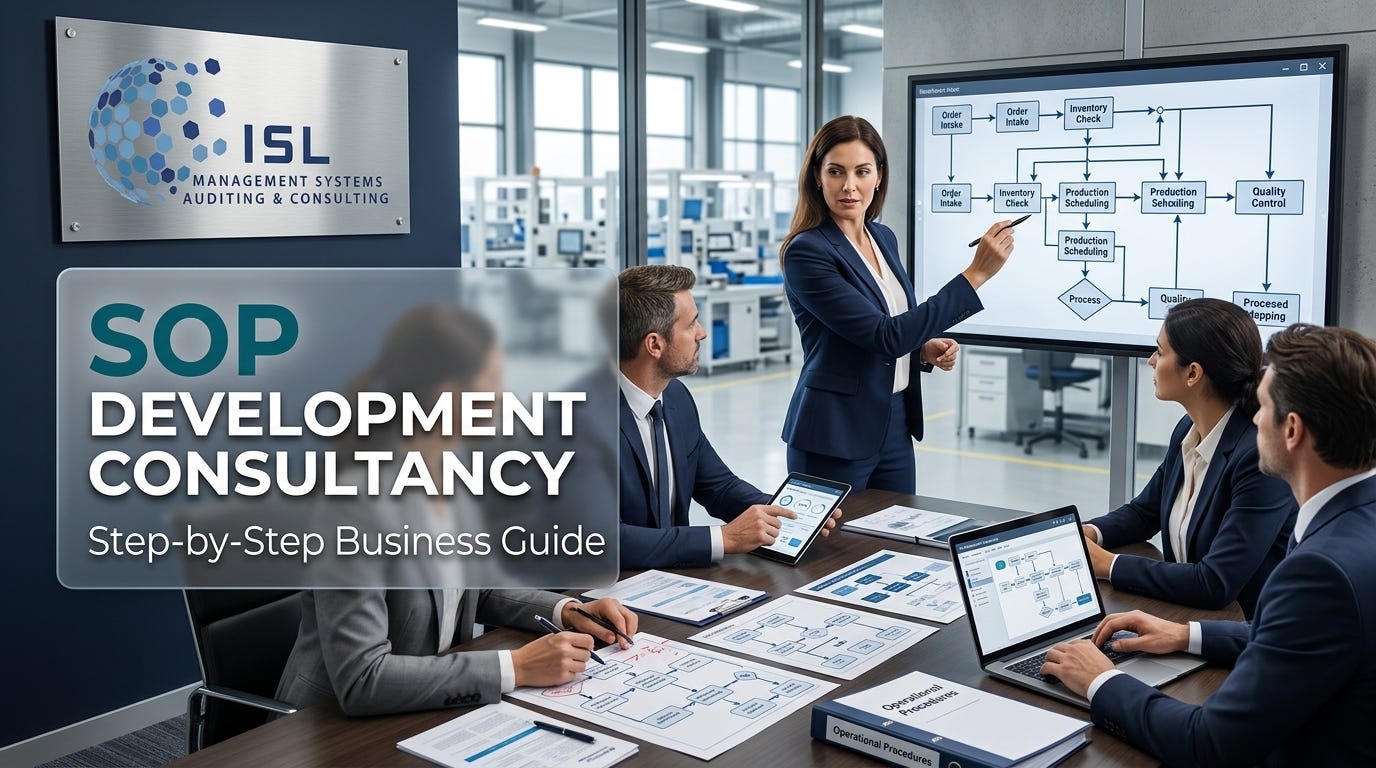
Genuine process improvement work begins with observation and analysis. It means spending real time inside an organization — understanding how work actually flows between departments, where handoffs break down, where decision-making stalls, and where effort is being duplicated or wasted. It is detective work, in many respects. The bottleneck that management has been complaining about for years is rarely where it appears to be. It is usually two or three steps upstream, in a process that nobody has ever stopped to question.
Once the real issues are identified, the work of redesigning and documenting better processes begins. This is where a consultancy earns its value — not just by finding problems, but by helping an organization build practical, sustainable solutions that staff at every level can understand and follow.
The Gap Between Effort and Output
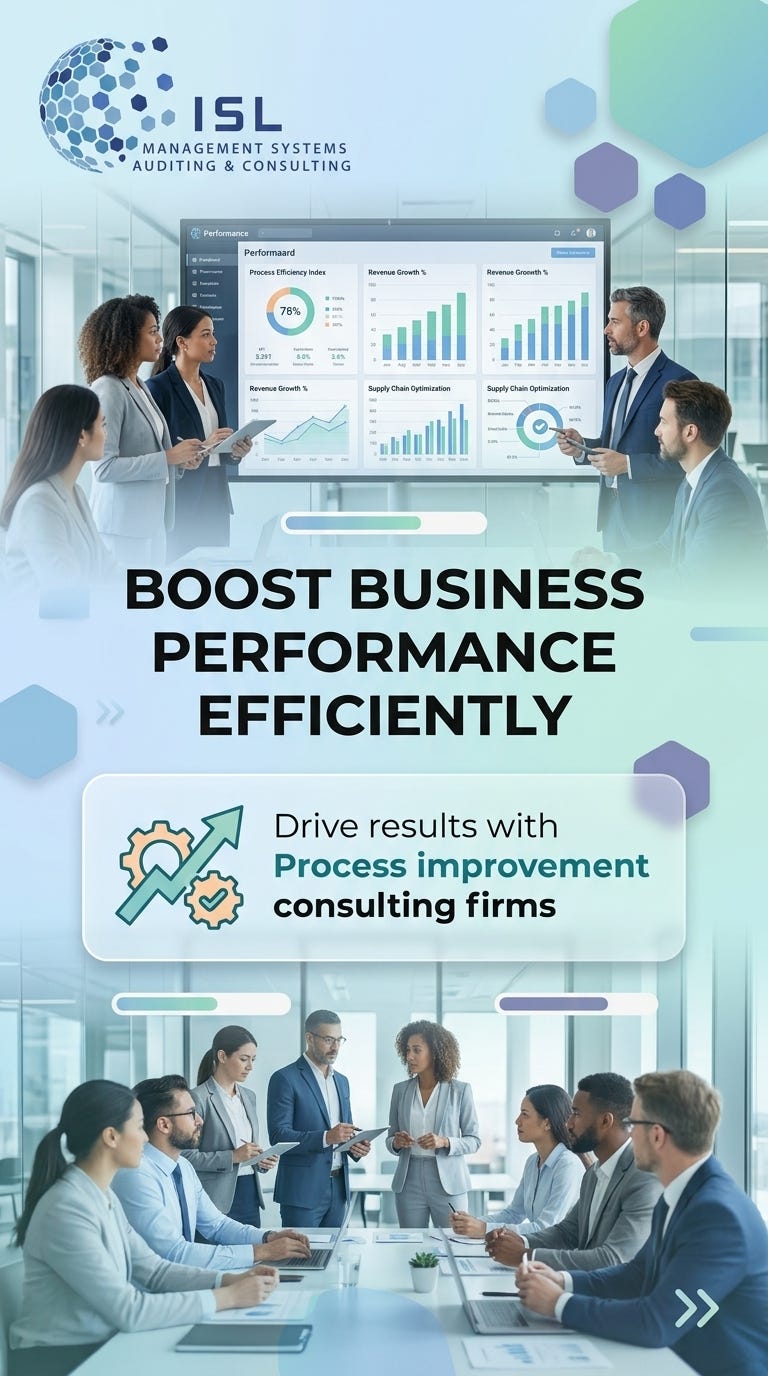
One of the most telling signs that a business needs process improvement support is a persistent gap between effort and output. Teams are working hard. Managers are putting in long hours. And yet results plateau, errors keep recurring, and customer satisfaction never quite reaches the level it should.
This gap does not close by working harder. It closes by working differently, which requires an honest, structured look at why current processes are not delivering what they should. For businesses in manufacturing, logistics, healthcare, education, and construction, this kind of analysis is not a luxury. It is the difference between an operation that scales reliably and one that creates new problems every time it grows.
Why African Businesses Are Turning to Specialist Firms
It would be easy to assume that **process improvement consulting** is a service primarily used by multinationals or large public sector organizations. The reality across Africa in recent years tells a rather different story. Medium-sized manufacturers in Kenya, logistics companies in Uganda, healthcare providers in Rwanda, and construction firms operating across South Sudan are all actively seeking out specialist firms to help them build better internal systems.
The reasons are practical. Competition is intensifying. Clients — whether local or international — are more demanding about quality and consistency. Regulatory requirements are tightening. And as businesses pursue ISO certification and other internationally recognized standards, the need for documented, well-functioning processes becomes non-negotiable. You cannot certify chaos. You can only certify clarity.
This is where firms such as ISL Management Systems Auditing & Consulting — headquartered in Nairobi and working across East and West Africa — have carved out a meaningful role. By combining deep process improvement expertise with genuine sector knowledge and an understanding of local operating conditions, these specialists offer something that generic consulting cannot: relevance. Solutions that actually fit the context in which they will be used.
Local Context, International Standards
One of the most common frustrations businesses express after working with generalist consultants is that the recommendations made no allowance for their specific environment. Frameworks lifted from Western corporate settings often clash with the realities of operating in East or West Africa — different regulatory landscapes, different workforce dynamics, and different supply chain constraints.
The most effective process improvement consulting firms working across Africa understand this intimately. They do not import solutions wholesale from elsewhere. They draw on international best practices — lean principles, quality management frameworks, and ISO standards — and adapt them thoughtfully to the conditions on the ground. The result is improvement that sticks, rather than change that looks good on paper but unravels within six months.
The Broader Impact on Organizational Performance
What strikes most business leaders once genuine process improvement work is underway is how wide its effects ripple. The initial goal might be to reduce errors in a production line or to speed up customer response times. But as processes become clearer and more consistent, other improvements follow almost automatically.
Staff performance typically improves — not because people are working harder, but because they are no longer wasting energy navigating ambiguity. When expectations are clear and procedures are documented, people can focus on execution rather than on working out what they are supposed to be doing in the first place. Onboarding new team members becomes faster and less dependent on individual mentors. Supervisors spend less time firefighting and more time managing strategically.
At the organizational level, improved processes directly support profitability. Waste reduction, whether in materials, time, or rework, translates into lower operating costs. More consistent outputs reduce the costs associated with customer complaints and returns. And the credibility that comes with demonstrable process discipline opens doors — to better clients, better contracts, and better financing.
Building Lasting Capability, Not Just Delivering a Report
The measure of a process improvement engagement should not be the thickness of the final document. It should be the degree to which an organization’s capacity to manage itself has genuinely increased. The best consulting firms understand this and build their work accordingly.
That means investing in knowledge transfer throughout the engagement. It means training staff not just in what the new processes are but also in how to monitor them, identify when they are breaking down, and make incremental improvements over time. An organization that relies entirely on its consultants to maintain performance has not truly improved. One that has developed the internal discipline to keep improving independently — that is the real goal.
What to Look for When Selecting a Process Improvement Partner
Not every firm that describes itself as a process improvement consultancy brings the same depth of rigor or the same quality of insight. For businesses evaluating their options, a few things are worth looking for beyond the pitch.
Experience across your specific industry matters considerably. A firm that has worked with manufacturers faces entirely different process challenges than one that has focused primarily on service businesses. Ask for evidence of outcomes achieved — not just services delivered. Reduced lead times, improved audit results, lower defect rates, and successful ISO certifications: these are the metrics that matter.
It is also worth asking how a firm approaches the human side of process change. The technical work of redesigning a workflow is only half the challenge. Getting people to actually change their behavior and adopt new ways of working is the harder half — and firms that underestimate it tend to produce improvements that do not survive contact with day-to-day reality.
Across Africa’s evolving business landscape, process improvement consulting firms are no longer a resource reserved for the few. They are becoming a standard feature of how serious organizations build for the long term. The businesses that engage them thoughtfully, choose wisely, and commit to the work consistently tend to emerge from the process not just more efficient but genuinely more capable — and far better equipped for whatever comes next.
Contact Us
🌐 Website: http://www.islglobal.net/our-services-2/
📧 Email: info@islglobal.net
📞 Call: +254 794 66 99 60
📍 Address: P.O.Box 67562–00100, Riverside Drive, Nairobi, Kenya
메타데이터
- post_id
- 2faeb6dee8fa
- slug
- the-firms-that-fix-what-others-cannot-see-why-process-improvement-consulting-is-reshaping-business-2faeb6dee8fa
- url
- https://medium.com/@islseo10/the-firms-that-fix-what-others-cannot-see-why-process-improvement-consulting-is-reshaping-business-2faeb6dee8fa
- canonical_url
- https://medium.com/@islseo10/the-firms-that-fix-what-others-cannot-see-why-process-improvement-consulting-is-reshaping-business-2faeb6dee8fa
- author_url
- https://medium.com/@islseo10
- status
- ok
- fetched_at
- 2026-06-21 15:33:18