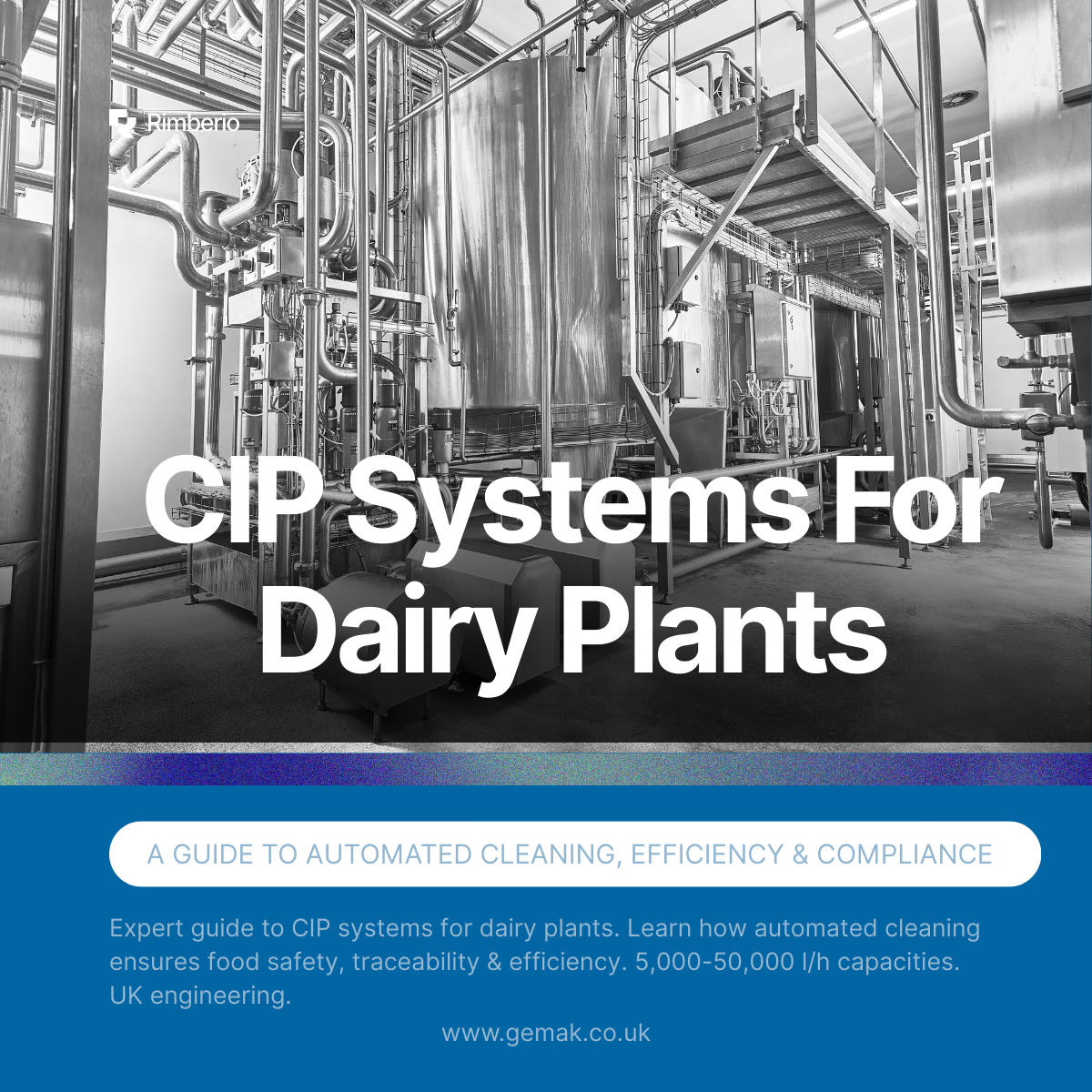
CIP Systems for Dairy Plants | Automatic Cleaning Solutions | Gemak
Cleaning is one of the most critical operations in any dairy or food processing plant. Without proper cleaning, bacteria can grow, product…
CIP Systems for Dairy Plants | Automatic Cleaning Solutions | Gemak
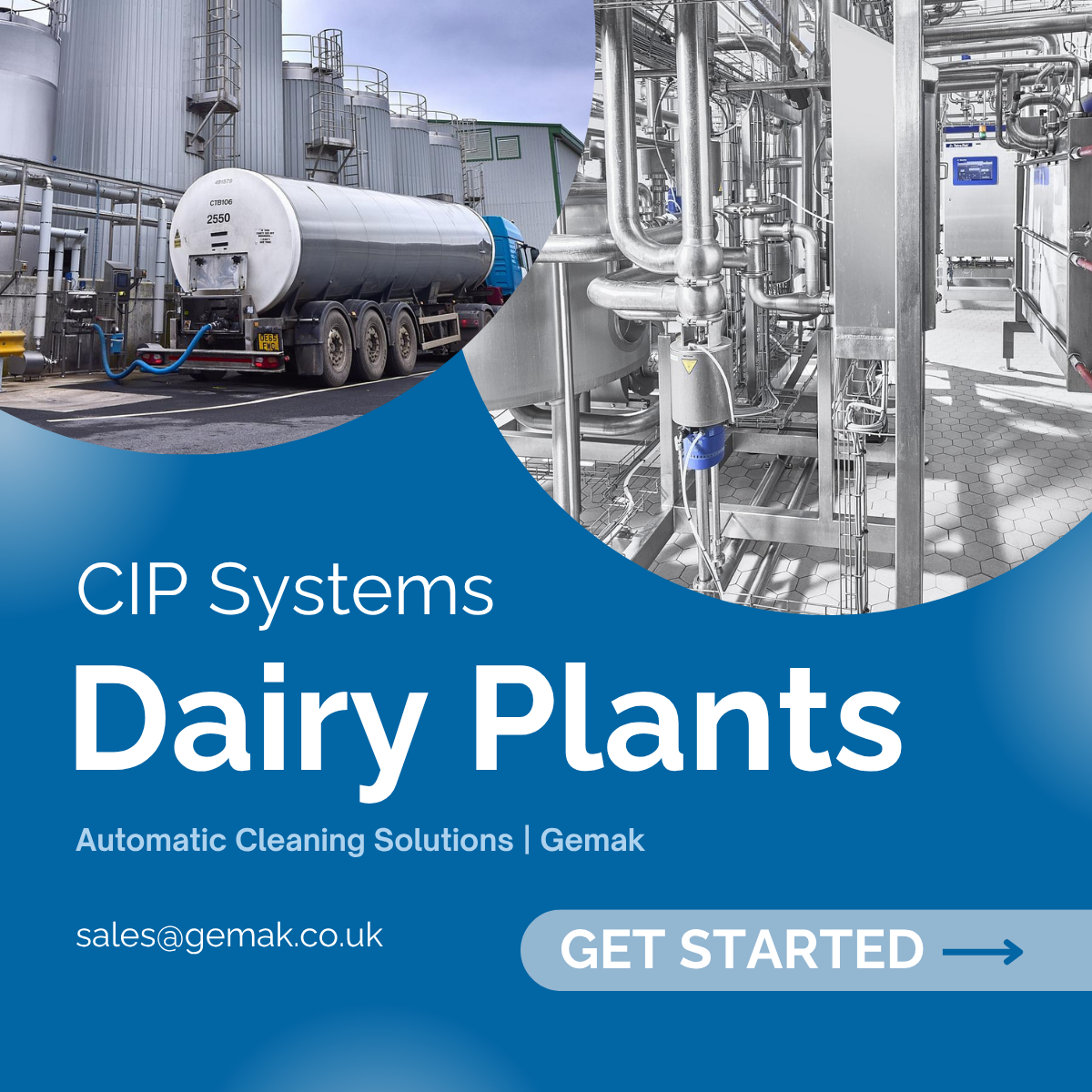
Cleaning is one of the most critical operations in any dairy or food processing plant. Without proper cleaning, bacteria can grow, product quality suffers, and food safety is compromised. Manual cleaning is time-consuming, inconsistent, and labour-intensive.
CIP systems for dairy plants solve this problem. CIP stands for Clean-in-Place. These automatic systems clean equipment without disassembly. They use precise control of time, temperature, flow, and chemicals to deliver consistent, validated results.
This guide covers everything you need to know about:
- CIP systems for dairy plants
- Automatic CIP system food industry applications
- Dairy processing systems integration
- Choosing the right dairy process equipment manufacturer
- Dairy processing plant design considerations
- Complete dairy processing solutions
Part 1: What Are CIP Systems for Dairy Plants?
Definition
CIP systems for dairy plants are automated cleaning systems that circulate cleaning solutions through pipes, tanks, pasteurisers, fillers, and other equipment without disassembly.
How CIP Works
- Pre-rinse: Water removes loose residue.
- Alkaline wash: Detergent dissolves fats and proteins.
- Intermediate rinse: Removes alkaline residue.
- Acid wash: Removes mineral scale.
- Final rinse: Sanitises and prepares for production.
What a CIP System Includes

Part 2: Why Automatic CIP System Food Industry Technology Matters
An automatic CIP system food industry solution offers significant advantages over manual cleaning.
Manual Cleaning vs. Automatic CIP

Benefits of Automatic CIP
- Reduced labour costs: One operator manages multiple units from a control room.
- Consistent results: Every cycle follows the same validated parameters.
- Full traceability: Data records for food safety audits.
- Lower operating costs: Optimised water, energy, and chemical usage.
- Improved safety: No chemical handling or confined space entry.
- Faster cleaning: Simultaneous cleaning of multiple circuits.
Part 3: Key Specifications for CIP Systems for Dairy Plants
When evaluating CIP systems for dairy plants, focus on these specifications.
Capacity


Gemak CIP units offer 1 to 6 pressure lines.
Part 4: Traceability — Why It Matters for Food Safety
Modern automatic CIP system food industry solutions continuously record every cleaning parameter.
What Gets Recorded
- Time: Start, duration, and end of each phase
- Temperature: Inlet, outlet, and return temperatures
- Flow rate: Throughout the circuit
- Concentration: Detergent strength via conductivity
- Pressure: To ensure proper turbulence
Why Traceability Is Essential
- Audit proof: Demonstrates compliance with food safety standards
- Process optimisation: Data reveals opportunities to reduce cycle times
- Troubleshooting: Historical data helps diagnose cleaning failures
- Continuous improvement: Track performance over time
Ask your dairy process equipment manufacturer: “Does your CIP system provide full data traceability for every cycle?”
Part 5: Integration with Dairy Processing Systems
CIP systems for dairy plants do not operate in isolation. They must integrate with your entire dairy processing systems.
Equipment That Requires CIP
- Pasteurisers
- UHT systems
- Heat exchangers (plate, tubular, scraped surface)
- Tanks and vessels
- Filling machines
- Sanitary pipes and valves
- Homogenisers and separators
Integration Requirements

A skilled dairy process equipment manufacturer designs CIP as an integrated part of your overall plant, not an afterthought.
Part 6: Dairy Processing Plant Design — CIP Considerations
Good dairy processing plant design incorporates CIP requirements from the beginning.
Design Principles for CIP-Ready Plants

Common CIP Design Mistakes
- Dead legs: Bacteria harbourage points that never get cleaned.
- Undersized return lines: Backpressure causes poor cleaning.
- Missing temperature sensors: Cannot verify cleaning temperature.
- Manual valves: Operators forget to open or close them.
Ask your dairy processing plant design partner: “Do you follow EHEDG and 3-A hygienic design guidelines?”
Part 7: Comparison — True Manufacturer vs. CIP Reseller

Part 8: Gemak — Your Dairy Process Equipment Manufacturer for CIP
Gemak is a trusted dairy process equipment manufacturer with over 40 years of industry heritage and 15 years of dedicated UK operations.
Our CIP Systems

What Sets Gemak Apart
- In-house design and manufacturing: We build our own CIP units.
- In-house automation: Bespoke software tailored to your plant.
- Pre-tested: Units are fully tested before shipping.
- UK-based support: Local service, genuine spares, fast response.
- Complete integration: CIP works seamlessly with your pasteurisers, tanks, and fillers.
Our UK Track Record
Gemak has delivered dairy processing solutions for leading UK brands, including:
- Wensleydale Cheese: 15,000 lph processing plant with integrated CIP
- South Caernarfon Creameries: Project Dragon with advanced CIP units
- Meadow Foods: Plant-based yoghurt line with full CIP integration
Part 9: Actionable Tips for Choosing Your CIP Partner
Step 1: Verify Manufacturing Capability
Ask: “Do you manufacture your own CIP units? Can I visit your factory?”
Step 2: Check UK References
Ask: “Can you provide three UK dairy plant references where your CIP system is installed?”
Step 3: Confirm Traceability
Ask: “Does your system record time, temperature, flow, and concentration for every cycle?”
Step 4: Assess Automation
Ask: “Is your automation designed and programmed in-house?”
Step 5: Understand Support
Ask: “What is your UK-based service response time for CIP emergencies?”
Step 6: Evaluate Scalability
Ask: “Can the system be expanded with additional tanks or pressure lines as my plant grows?”
Conclusion
CIP systems for dairy plants are essential for food safety, efficiency, and compliance. An automatic CIP system food industry solution delivers consistent, validated cleaning with full traceability.
When integrated properly into your dairy processing systems, CIP becomes a strategic asset, not just a cost centre. Good dairy processing plant design incorporates CIP requirements from the start.
Choose a dairy process equipment manufacturer with in-house capabilities, UK support, and proven experience. Gemak offers complete dairy processing solutions including advanced CIP systems.
👉 Visit Gemak UK: https://www.gemak.co.uk/product/cip-systems to discuss your CIP requirements.
메타데이터
- post_id
- 2fb4e0c9688b
- slug
- cip-systems-for-dairy-plants-automatic-cleaning-solutions-gemak-2fb4e0c9688b
- url
- https://medium.com/@gemakuk.foodmachinery/cip-systems-for-dairy-plants-automatic-cleaning-solutions-gemak-2fb4e0c9688b
- canonical_url
- https://medium.com/@gemakuk.foodmachinery/cip-systems-for-dairy-plants-automatic-cleaning-solutions-gemak-2fb4e0c9688b
- author_url
- https://medium.com/@gemakuk.foodmachinery
- status
- ok
- fetched_at
- 2026-06-10 15:53:41