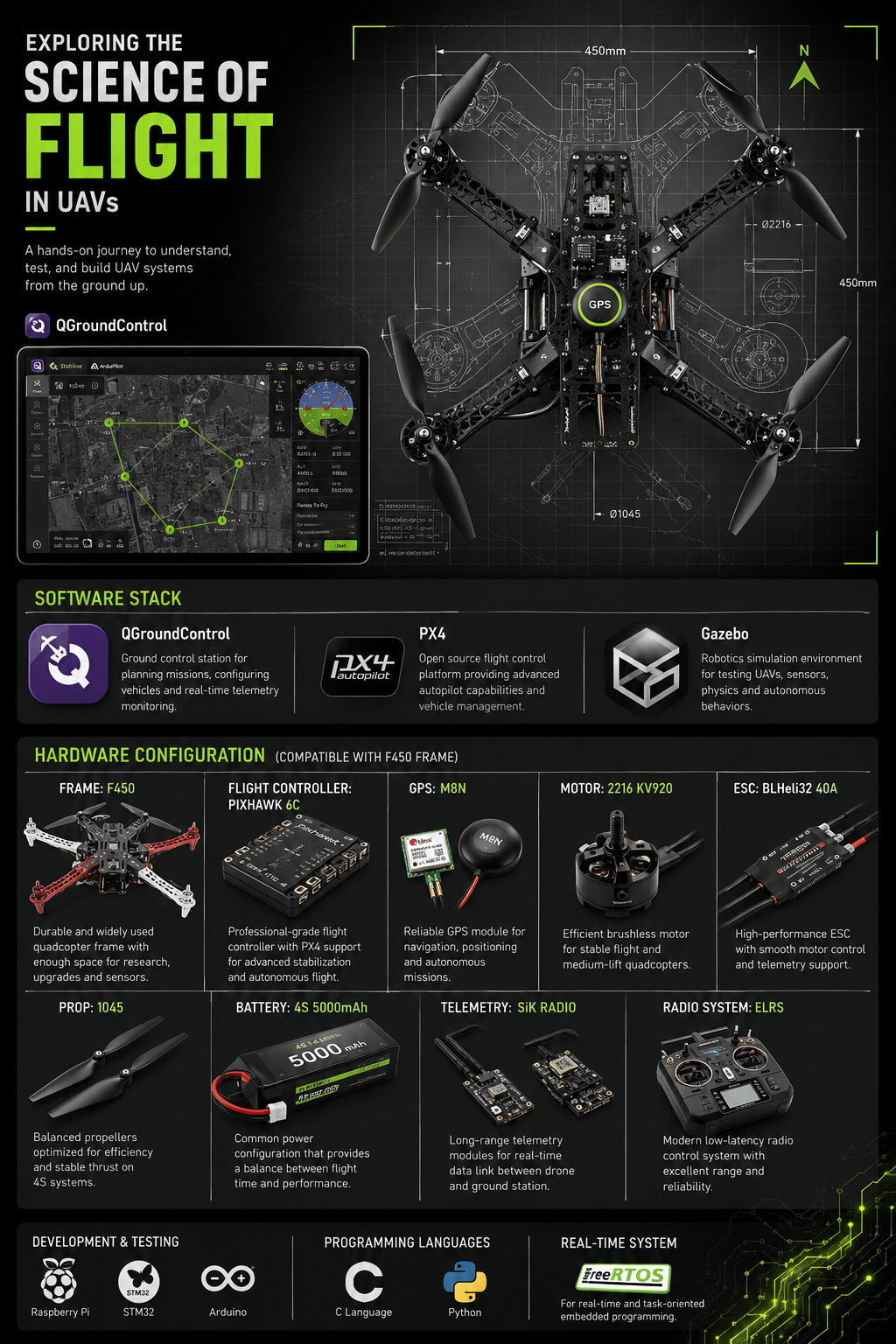
Introduction to the Main Sensors Used in Drone Flight Control
Hello everyone,

Introduction to the Main Sensors Used in Drone Flight Control
Hello everyone,
In the previous article, we discussed the fundamental standards used in drone flight control systems and selected the Pixhawk family of flight controllers as our reference platform for further analysis.
In this article, we begin exploring the flight control hardware. To understand how a drone operates, we must first understand how it maintains stability in the air and what information it receives from its surrounding environment. This information is collected by various sensors, processed by the flight controller, and then used to generate control commands for the motors.
For this reason, we will start by examining the most important sensors used in modern flight control systems. Since Pixhawk-based flight controllers were chosen as our reference platform, we will focus on the sensors commonly found in these systems.
The three primary sensors that are present in almost every modern drone are listed below.
1. 6-Axis Gyroscope and Accelerometer (IMU)
The Inertial Measurement Unit (IMU) measures both linear acceleration and angular velocity along three axes. Using this information, the flight controller can determine the drone’s orientation, attitude, and motion in real time, allowing it to maintain stable flight.
2. Compass (Magnetometer)
The magnetometer measures the Earth’s magnetic field and determines the direction of magnetic north. It is used for heading estimation, autonomous navigation, and Return-to-Home (RTH) functionality.
3. Barometer (Pressure and Altitude Sensor)
The barometer measures atmospheric pressure and estimates the drone’s altitude. This information is essential for altitude hold, stable flight, vertical speed estimation, and precision landing.
Sensor Selection for the Project
When selecting sensors for our experiments, the following criteria were considered:
- Availability in the market
- Reliability and performance
- Usage in real-world flight control systems
- Compatibility with modern drone technologies
After analyzing several Pixhawk-based flight controllers and other modern flight control boards, we selected the following sensors for purchase and testing:
- ICM-42688-P (6-Axis Gyroscope and Accelerometer)
- QMC5883L (Magnetometer)
- BMP388 (Barometer and Altitude Sensor)
The reasons for selecting each sensor are explained below.
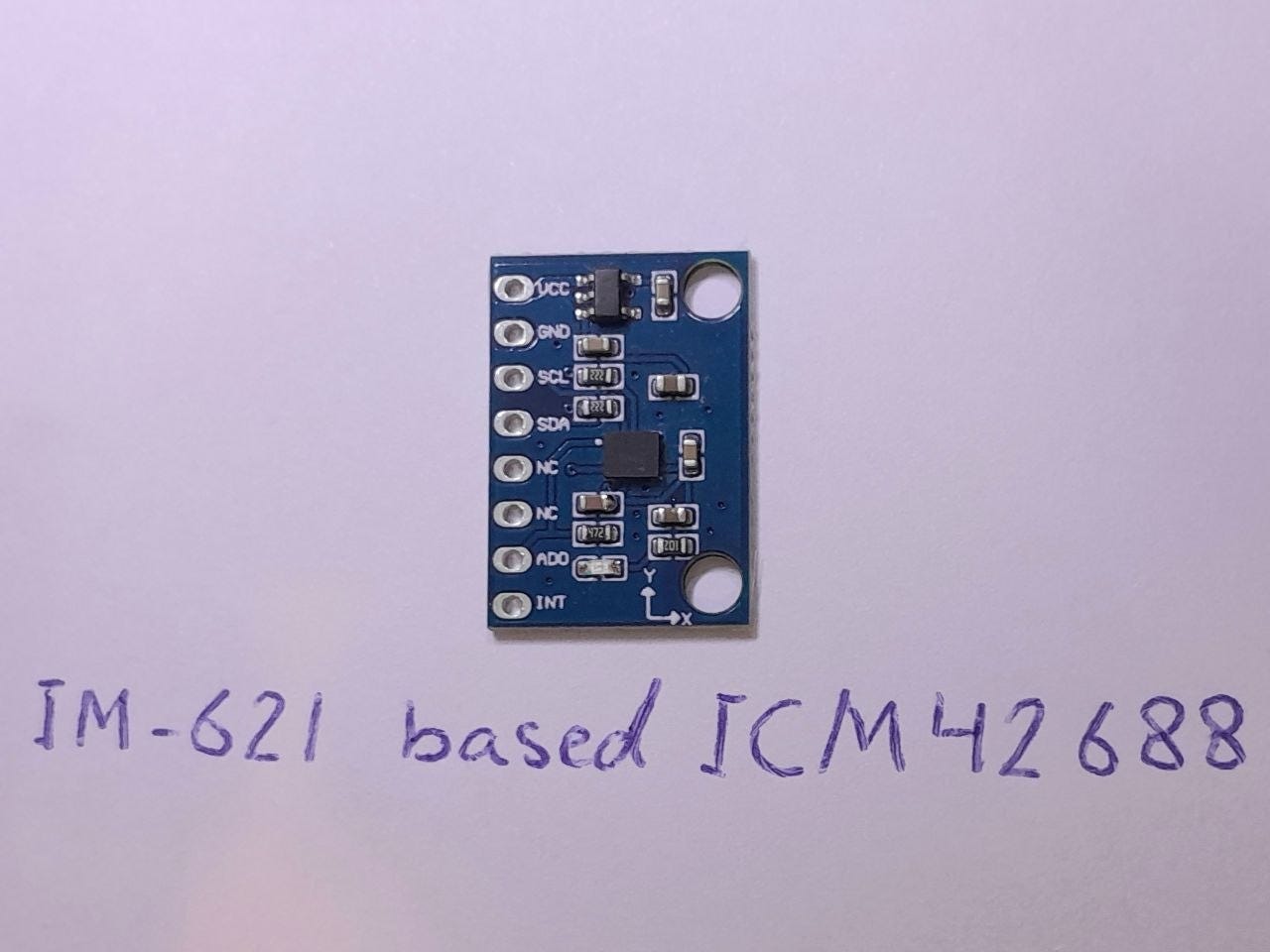
IM-621 based ICM42688
1. ICM-42688-P
The ICM-42688-P is the most important sensor selected for this project. It is a six-axis IMU that combines a gyroscope and an accelerometer in a single package. Today, it is widely used in modern FPV and professional flight controllers.
Examples of Flight Controllers Using This Sensor
- Pixhawk 6C
- Pixhawk 6X
- SpeedyBee F405 V4
- SpeedyBee F7 V3
- Matek H743
- Many modern STM32H7- and STM32F7-based flight control boards
Reasons for Its Popularity
- Lower noise compared to MPU6000
- High sampling rate
- Excellent stability for flight control applications
- Low power consumption
Today, the ICM-42688-P is one of the most widely used IMUs in modern Betaflight and INAV-based flight controllers.
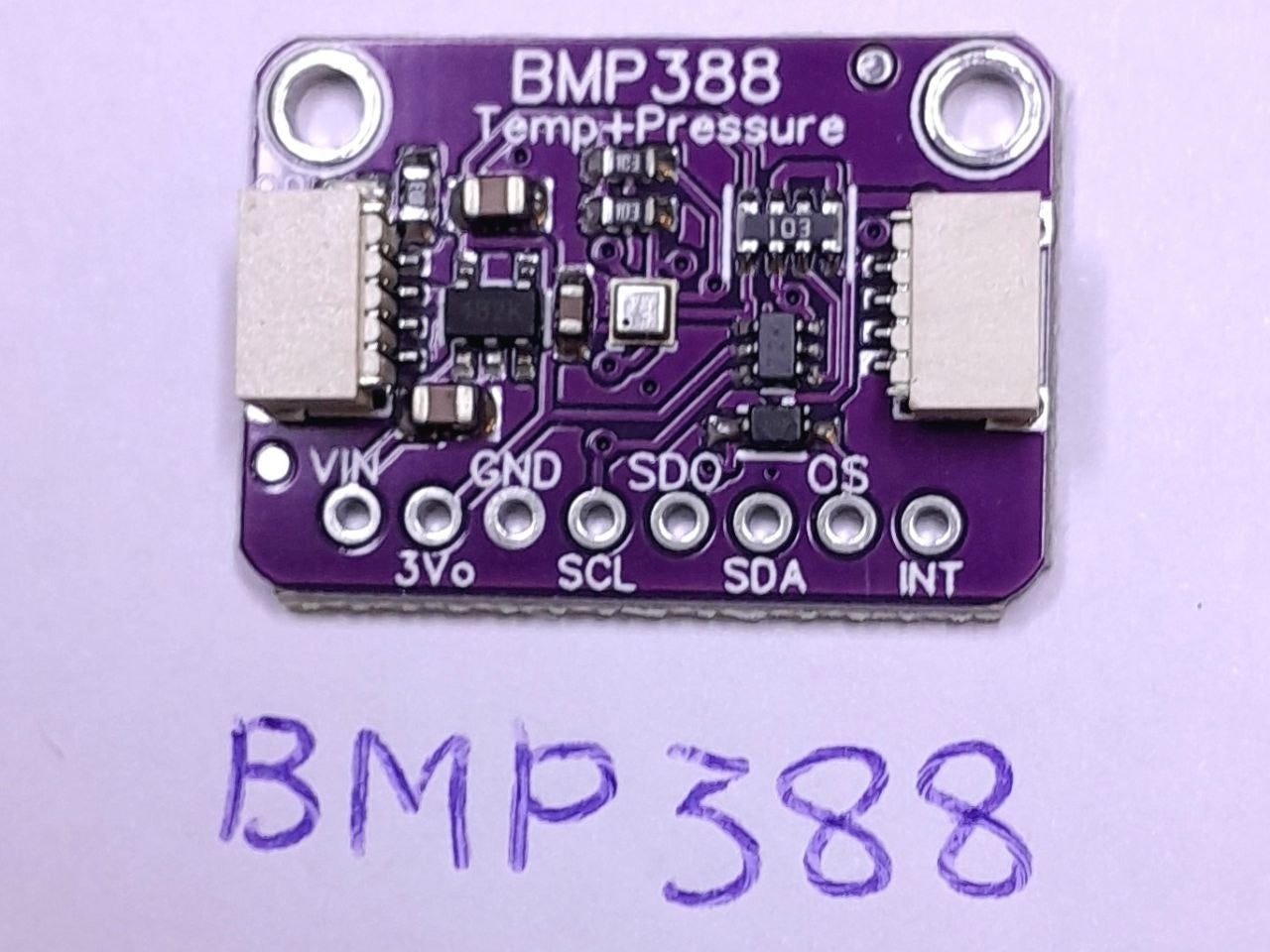
BMP388
2. BMP388
The BMP388 is a high-performance pressure and altitude sensor manufactured by Bosch.
Example Applications
- PX4 and ArduPilot altitude sensing modules
- Certain versions of the Matek H743
- PX4-based research platforms
- Custom academic and industrial flight controllers
Main Functions
- Altitude estimation
- Altitude Hold functionality
- Vertical velocity estimation
- Assistance with autonomous landing
Compared to older generations such as the BMP280, the BMP388 offers improved accuracy and stability.
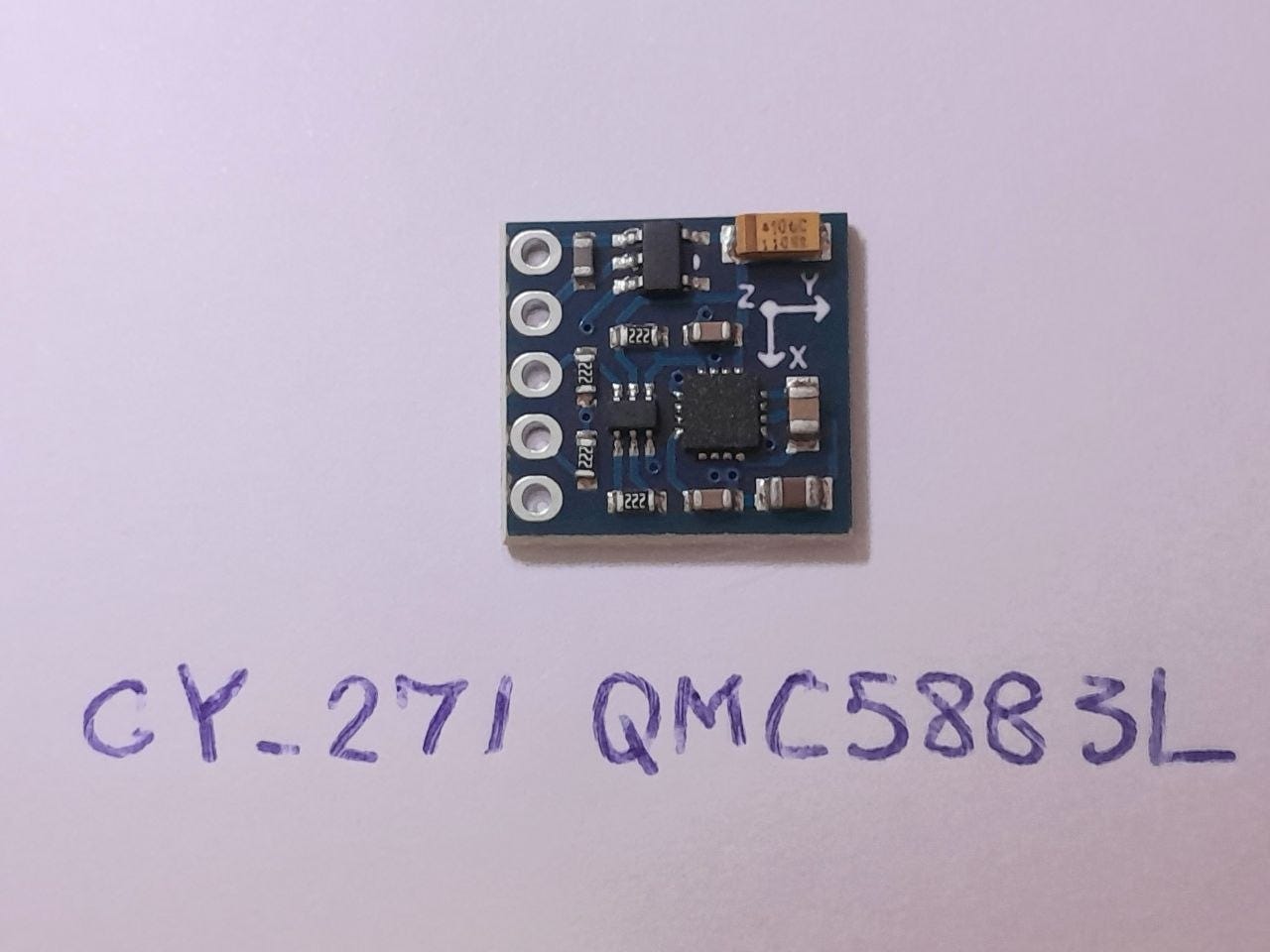
GY-271 QMC5883L
3. QMC5883L
The QMC5883L is a three-axis magnetometer used to determine heading based on the Earth’s magnetic field.
An important point to note is that this sensor is typically not integrated directly onto modern professional flight controllers. Instead, it is commonly used as an external compass connected to a GPS module.
Example Modules
- GPS + Compass modules based on the u-blox M8N
- M10Q-5883 navigation modules
- Various navigation modules used with INAV and Betaflight
Main Functions
- Magnetic north detection
- Autonomous navigation
- Return-to-Home (RTH)
- Waypoint navigation
General Specifications
- Three-axis magnetic field sensing
- Heading accuracy of approximately 1–2 degrees after proper calibration
Based on their capabilities, availability, and widespread use in modern flight control systems, these three sensors were selected for this project.
In the upcoming articles, we will interface these sensors with an STM32 microcontroller, learn how to acquire and process their data, and begin implementing the foundations of an AHRS (Attitude and Heading Reference System).
Stay tuned for the next article.
메타데이터
- post_id
- 2feedfe5bca3
- slug
- introduction-to-the-main-sensors-used-in-drone-flight-control-2feedfe5bca3
- url
- https://medium.com/@hamed.javadi.dafsari/introduction-to-the-main-sensors-used-in-drone-flight-control-2feedfe5bca3
- canonical_url
- https://medium.com/@hamed.javadi.dafsari/introduction-to-the-main-sensors-used-in-drone-flight-control-2feedfe5bca3
- author_url
- https://medium.com/@hamed.javadi.dafsari
- status
- ok
- fetched_at
- 2026-07-15 05:43:31