Great Reasons for Common Courtesies to Still Matter
In the fast-paced world we live in, it feels as though some common courtesies are quietly fading from everyday life. Perhaps they are…
Great Reasons for Common Courtesies to Still Matter
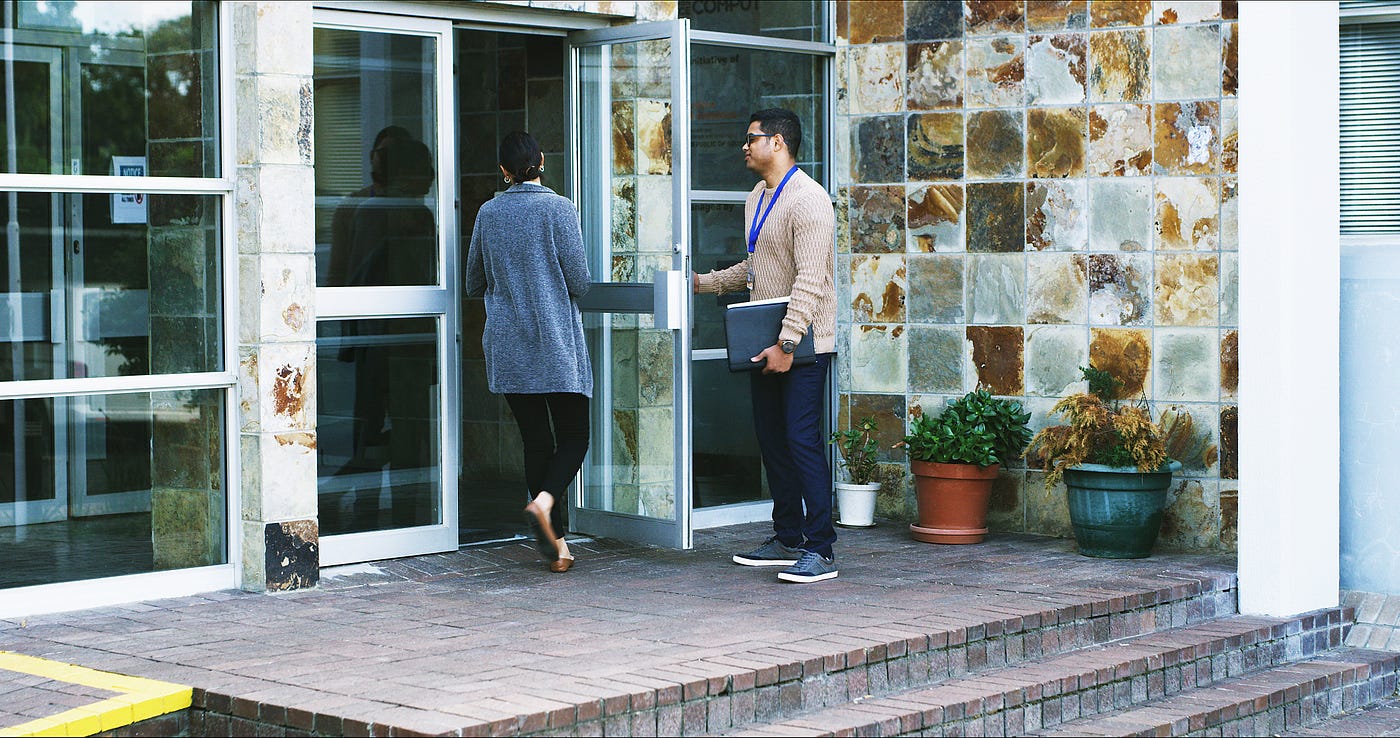
A man holding the door to the building open for a woman
In the fast-paced world we live in, it feels as though some common courtesies are quietly fading from everyday life. Perhaps they are considered old-fashioned or outdated, but I’d like to make the case for paying attention to them. Why? It’s simple, really. Common courtesies are ways of showing respect, kindness, and consideration for others.
What Are Common Courtesies?
Maybe you’re not sure what common courtesies are. They are small actions that acknowledge another person’s needs. Typically, they take only a few seconds and cost nothing. They sound pretty terrific, don’t they?
My mother was a stickler for all the courtesies I will talk about. She let the five of us (her children) know that no matter how old — or young — we were, she expected us to have good manners, be polite, and treat everyone with respect. My brothers, sisters, and I were quietly reminded, if we happened to forget, to practice one of the following common courtesies.
As you read through them, think about how it feels when you are on the receiving end.
Common Courtesies We Should Never Outgrow
Hold the Door for the Person Behind You
When you walk through a door, hold it open, even if you aren’t sure someone is behind you. This way, the door doesn’t close quickly. Sometimes we are so focused on what we’re thinking about or where we’re going that we don’t notice the person behind us. If you create the habit of always holding the door, then when someone happens to be there, you are showing consideration.
Let People Exit Before You Enter
There are many places where it is polite to let people exit before you enter. Let’s start with elevators. An elevator is typically a small space. If you start walking in before giving people a chance to exit, you create an unnecessary traffic jam.
Buses, trains, subways, and even store entrances are all places where it’s a good common courtesy to allow people to exit first. Another helpful tip is to stand to one side of the entrance. In the United States, for example, we generally stay to the right. This provides room for others to exit comfortably.
Wait Patiently in Line
We live in an age of instant results. We get answers to our questions quickly and can find almost anything online within seconds. We have become accustomed to not waiting, which can make standing in line a challenge.
When there is a line, people often complain. I would suggest that waiting your turn patiently is a sign of respect for those around you. Complaining loudly will not make the line move faster, nor will it endear you to the people waiting nearby.
Offer Your Seat to Someone Who Needs It More
Are you old enough to remember when people automatically offered their seat on a bus, subway, or train to older adults, pregnant women, people with mobility challenges, or someone carrying a small child?
The next time you see someone who may need a seat more than you do, consider offering yours. It is a simple but meaningful common courtesy.
Be Punctual
Being on time for appointments is a sign of respect for the person you are meeting. I’ve talked about waiting in line, but what about waiting for someone to arrive for lunch, dinner, or a show?
A sense of time is something many people struggle with. If that sounds familiar, try setting alarms or reminders so you leave home with enough time to travel to your destination.
Use “Please,” “Thank You,” and “Excuse Me”
These simple phrases never go out of style. I recently wrote about the importance of writing thank-you notes. It’s equally important to use polite words when interacting with others.
Make eye contact when asking for something, thanking someone, or trying to get someone’s attention. Eye contact communicates sincerity and respect.
Common Courtesies in the Digital Age
Put the Phone Away During Conversations
Even though we can communicate with others anytime and anywhere through text messages, it is courteous to put your phone away when speaking with someone in person.
Consider silencing your phone or putting it out of sight so you can be fully present. Giving someone your complete attention is one of the greatest signs of respect.
Respond to Messages
Goodwill is created when you acknowledge receiving a message. Even when I don’t have an answer, I like to let the sender know I received their message and am thinking about it. Sometimes a simple thumbs-up emoji or the words “Got it” are enough.
When messages go unanswered, people may wonder whether the message was lost or whether they are being ignored. Neither feels particularly good.
Why Common Courtesy Benefits Everyone
It Creates Positive Connections
Research shows that small positive interactions not only bring joy to another person but also boost your own sense of well-being. Smiling at someone on the street, offering a compliment, or showing a small kindness benefits both people involved.
It Sets an Example
When you consistently extend common courtesies to others, children and those around you notice. Courtesy is contagious.
It Costs Nothing
None of these actions cost anything beyond a little thought and a few seconds of your time. No special skills or training are required. Anyone can practice common courtesies.
Conclusion
As I was writing this blog post, more and more examples of common courtesies came to mind. Each one is a small act, yet each has the potential to make life a little easier for someone else.
I thought about how I always pick up after my dog. Some people in my neighborhood do not, and it bothers me. Then there are the grocery carts left loose in parking lots, ready to roll into someone’s car. Returning a cart takes only a minute or two, and I’m sometimes tempted not to because I’m often in a hurry. Still, I return it because I don’t want to be the person who leaves the task for someone else.
That may be the heart of common courtesies. They remind us that we share our communities with other people and that our actions affect those around us. In a world that often feels rushed and disconnected, these simple gestures create a little more kindness, consideration, and connection. While common courtesies may seem small, their impact is anything but.
Ready to create a calmer, more connected life? Small actions often lead to meaningful change. Whether it’s organizing your home, managing your time more effectively, or building routines that support your goals, thoughtful habits make a difference. If you’re ready to create more order, less stress, and greater ease in your daily life, I’d love to help. Contact me to learn more about my organizing services, classes, and support programs.
FAQs
Why are common courtesies important? Common courtesies demonstrate respect, kindness, and consideration for others. They help create positive interactions and stronger communities.
Are common courtesies old-fashioned? Some people may view them that way, but courtesy never goes out of style. The methods may change, but showing respect for others remains important.
What are examples of common courtesies? Holding doors, saying “please” and “thank you,” waiting your turn, arriving on time, responding to messages, and offering help to someone who needs it are all examples.
Do common courtesies matter in the digital world? Absolutely. Responding to messages, giving people your full attention during conversations, and practicing respectful online communication are modern forms of courtesy.
How can parents teach common courtesies to children? Children learn best by example. Consistently modeling respectful behavior and polite language helps children develop those habits naturally.
메타데이터
- post_id
- 2ff76e323641
- slug
- great-reasons-for-common-courtesies-to-still-matter-2ff76e323641
- url
- https://medium.com/@dnqsolutions/great-reasons-for-common-courtesies-to-still-matter-2ff76e323641
- canonical_url
- https://medium.com/@dnqsolutions/great-reasons-for-common-courtesies-to-still-matter-2ff76e323641
- author_url
- https://medium.com/@dnqsolutions
- status
- ok
- fetched_at
- 2026-07-22 12:42:39




