Why DeFi Needs Vault Infrastructure
Decentralized finance has unlocked one of the most expansive opportunity sets in modern financial history. With hundreds of protocols…
Why DeFi Needs Vault Infrastructure
Decentralized finance has unlocked one of the most expansive opportunity sets in modern financial history. With hundreds of protocols, multiple chains, constantly shifting yields, and an ever-growing list of strategies, users today have more ways than ever to deploy capital onchain.
But with that opportunity comes a fundamental problem: fragmentation.
The Fragmentation Problem
The modern DeFi landscape is not a single market it is a sprawling network of ecosystems. Liquidity is scattered across chains. Yield opportunities emerge and disappear rapidly. Strategies evolve daily.
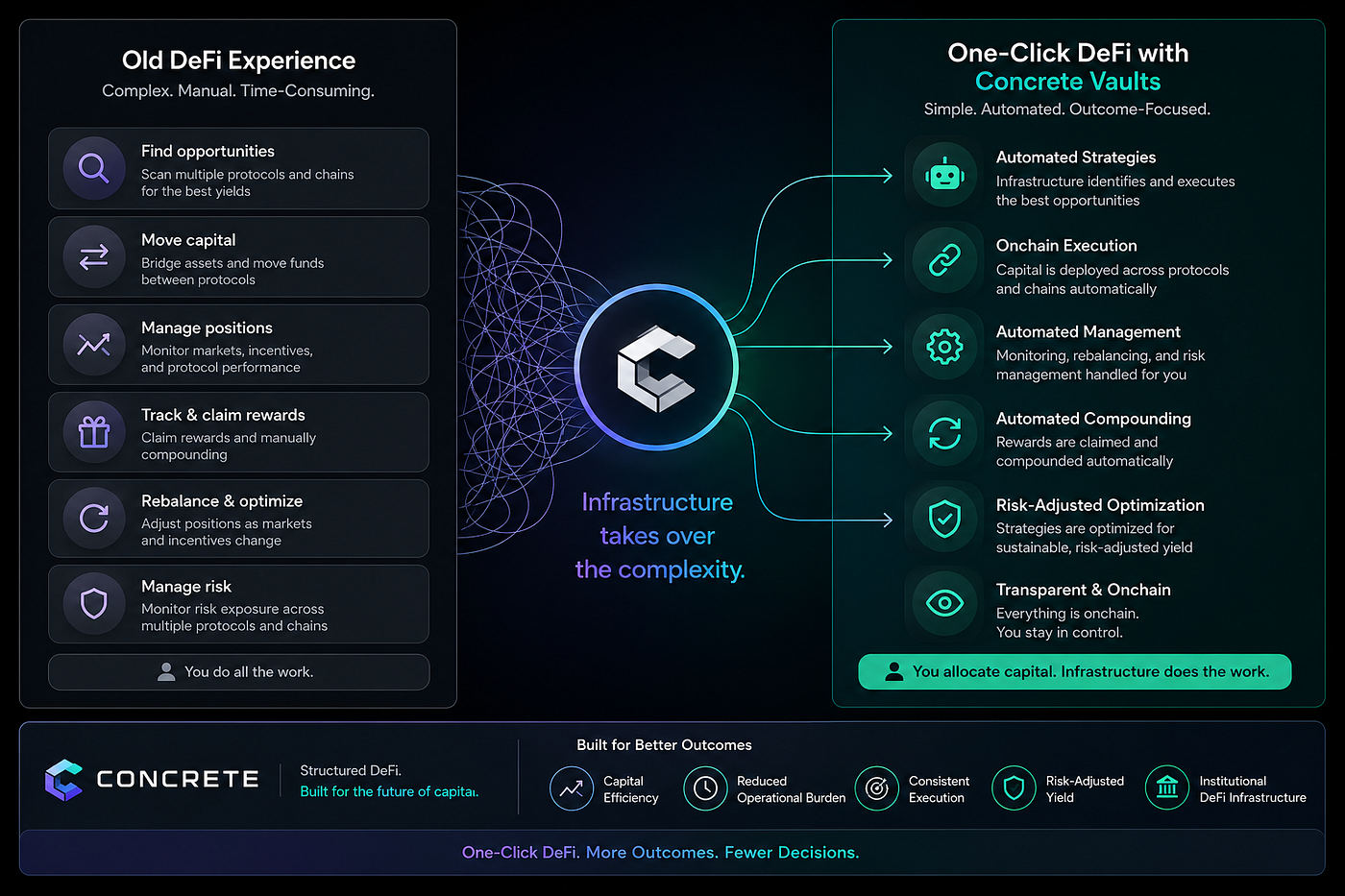
To stay competitive, users must:
- Monitor dozens of protocols
- Track yield fluctuations across chains
- Evaluate new opportunities constantly
- Reallocate capital in real time
In theory, this creates a highly dynamic and efficient market.
In practice, it creates a system where keeping capital productive requires constant manual effort.
The opportunity set is massive but navigating it efficiently is not.
The Operational Burden
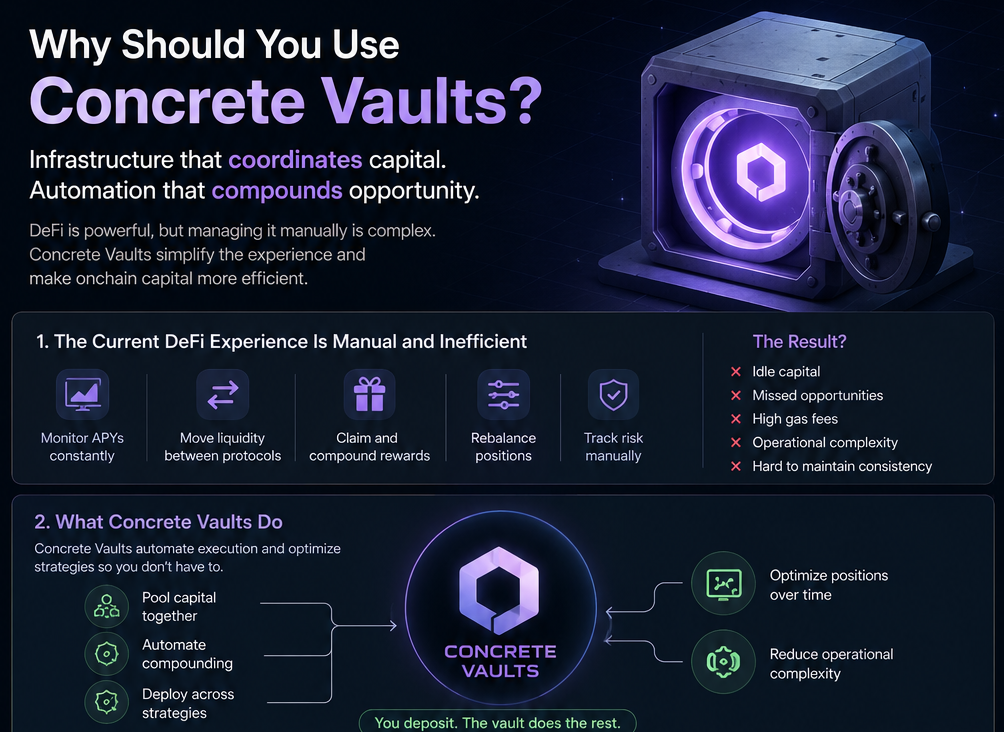
Behind every “yield opportunity” lies a series of operational tasks that users must perform manually:
- Monitoring APY changes across platforms
- Moving liquidity between protocols
- Claiming and compounding rewards
- Paying gas fees for every adjustment
- Managing exposure and risk across positions
Each of these actions introduces friction.
More importantly, they introduce inefficiency.
Users are not just allocating capital they are actively managing infrastructure. Time, attention, and execution costs become part of the equation, reducing overall returns and increasing complexity.
What should feel like capital allocation starts to resemble constant maintenance.
Idle Capital & Opportunity Cost
As complexity increases, behavior changes.
Instead of actively optimizing positions, users often:
- Leave capital idle
- Stay in outdated strategies
- Avoid reallocating due to gas costs or effort
- Miss higher-yield or lower-risk opportunities
This leads to a critical issue: inefficient capital usage.
In traditional finance, capital is continuously optimized by systems designed to allocate it efficiently.
In DeFi, capital frequently sits still, not because opportunities don’t exist, but because managing them is too burdensome.
The result is significant opportunity cost across the ecosystem.
Enter Vault Infrastructure
To move forward, DeFi needs to evolve from manual strategy execution to automated capital systems.
This is where DeFi vaults come in.
Vault infrastructure transforms how capital is managed:
From:
- Manual strategy selection
- Constant repositioning
- User-driven execution
To:
- Automated rebalancing
- Continuous deployment
- System-driven optimization
Concrete vaults are designed to enable this shift.
They provide:
- Automated compounding
- Aggregated liquidity
- Continuous onchain capital deployment
- Simplified user interaction
- Improved capital efficiency
Instead of chasing yield, users participate in systems that manage capital on their behalf.
This is the foundation of managed DeFi.
How Concrete Vaults Work
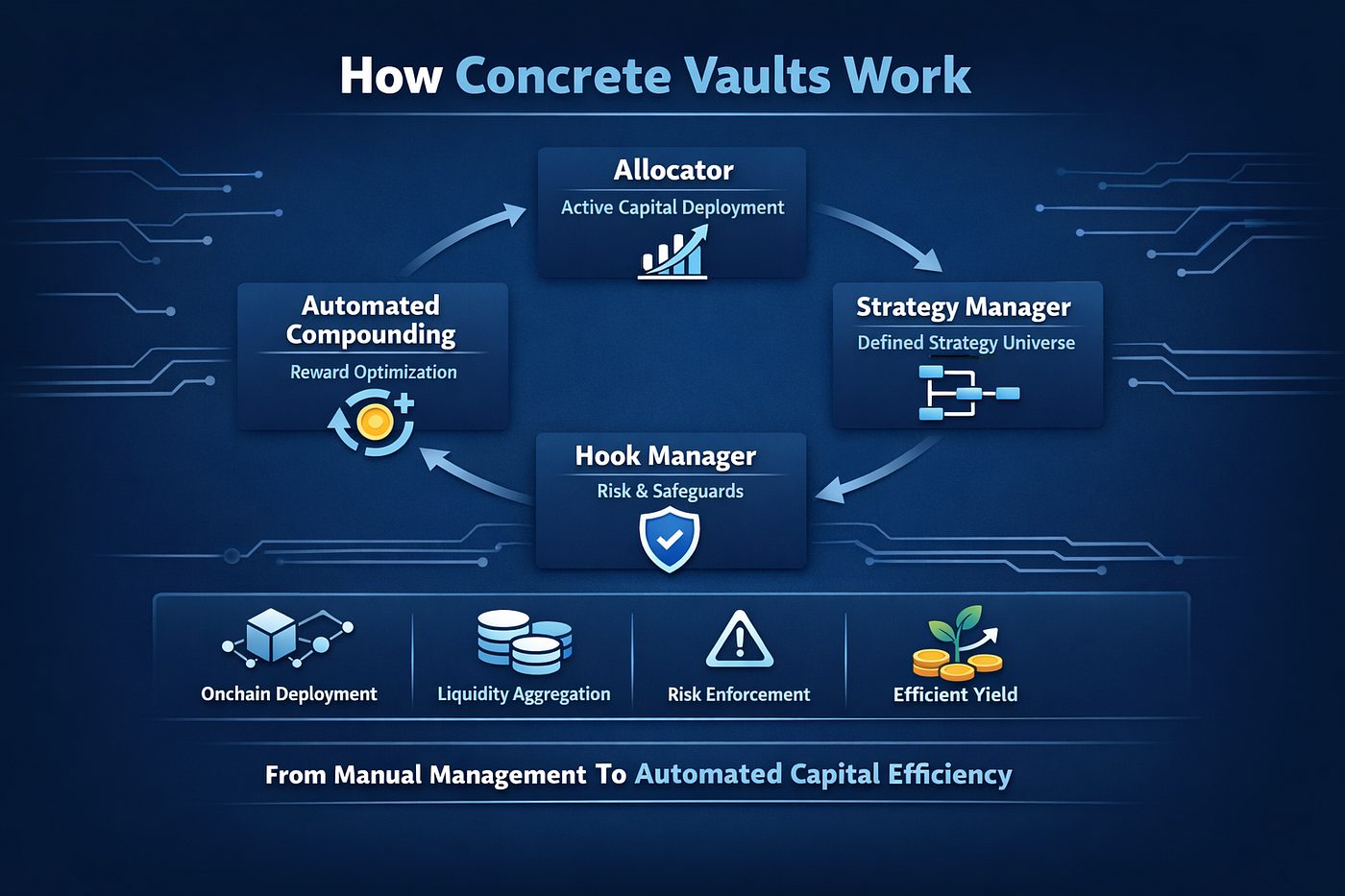
Concrete vaults are built as structured systems that coordinate capital allocation through defined components:
- Allocator — actively deploys capital across opportunities
- Strategy Manager — defines and updates the strategy universe
- Hook Manager — enforces risk parameters and safeguards
- Automated compounding — ensures rewards are reinvested
- Onchain capital deployment — maintains continuous productivity
Together, these components create a framework where capital is not manually moved it flows through infrastructure.
This shifts the focus from individual decision-making to system-level optimization.
Concrete vaults are not just tools for accessing yield, they are systems for managing capital efficiently.
A Real Example: Concrete DeFi USDT
To understand this in practice, consider Concrete DeFi USDT.
This vault offers approximately 8.5% stable yield, but the key innovation is not the yield itself, it’s how that yield is achieved.
- Strategy management is automated
- Capital is continuously deployed
- Rewards are compounded without manual intervention
- Risk is managed through structured systems
Users are not required to monitor markets or move funds.
The vault handles execution.
This results in:
- Consistent capital productivity
- Reduced operational overhead
- Improved capital efficiency
- More sustainable yield generation
Rather than relying on constant user action, the system ensures capital is always working.
The Bigger Shift
As DeFi continues to grow, complexity will not decrease — it will accelerate.
More chains. More protocols. More strategies.
Manual strategy management does not scale in this environment.
Infrastructure does.
We are moving toward a future where:
- Users no longer manage positions directly
- Systems handle allocation and optimization
- Vaults become the default interface for deploying capital
- Capital flows automatically through managed DeFi systems
The defining edge in DeFi will not be who finds the best yield.
It will be who builds the most effective systems to manage capital.
🚨 Explore Concrete at app.concrete.xyz 🚨
In the long run, institutional DeFi will not be powered by individuals chasing opportunities.
It will be powered by infrastructure that ensures capital is always in motion efficiently, intelligently, and continuously.
메타데이터
- post_id
- 2ffddff0562b
- slug
- why-defi-needs-vault-infrastructure-2ffddff0562b
- url
- https://medium.com/@I_SODL/why-defi-needs-vault-infrastructure-2ffddff0562b
- canonical_url
- https://medium.com/@I_SODL/why-defi-needs-vault-infrastructure-2ffddff0562b
- author_url
- https://medium.com/@I_SODL
- status
- ok
- fetched_at
- 2026-06-10 18:44:10