The Protocol Reality: Redefining the Four Fundamental Forces
The Relativity of Scale
The Protocol Reality: Redefining the Four Fundamental Forces
The Relativity of Scale
For centuries, physics has chased a “Theory of Everything.” We have hunted for a single set of mathematical laws that govern both the smallest atoms and the largest galaxies. We assume that because we see a consistent world, the universe itself must be governed by consistent, objective laws.
But what if we have been looking at this backward? What if the laws of physics are not universal truths written into the fabric of space-time, but calibration manuals for the human interface?
The Mid-Scale Trap
We are “Mid-Scale” organisms. Our biology evolved to navigate a very specific slice of reality: the scale of rocks, trees, predators, and prey. To survive here, our brains developed an incredibly sophisticated rendering engine. It takes the raw, chaotic, infinite flux of information — the “Pure State” — and translates it into a stable, 3D environment.
The problem arises when we use this same “human-scale” software to look at the extremes.
When we zoom in to the Micro-Scale, we encounter Quantum Mechanics. The world becomes probabilistic, fuzzy, and non-local. We see “superposition” and “wave-particle duality.” Physicists call these fundamental properties of matter. But what if they are simply the default settings of our hardware reaching its resolution limit? At this scale, the Kernel hasn’t finished rendering the icon yet, so we see the raw data flicker.
When we zoom out to the Macro-Scale, we encounter General Relativity. The world becomes geometric, heavy, and curved. We see “singularities” and “space-time warping.” Again, these are not necessarily features of an objective universe; they are the rendering priorities required to keep a massive data cluster — like a galaxy — stable within our field of vision.
The Conflict of Resolution
The great crisis in modern physics — the inability to reconcile Quantum Mechanics with General Relativity — is not a mystery of the cosmos. It is a compatibility error. We are trying to force two different “rendering resolutions” to display on the same screen. We are asking, “Why doesn’t the quantum world look like the macro world?” The answer is simple: they are different views of the same underlying substrate, adjusted to different zoom levels for the convenience of the observer.
Laws as Interface Constraints
If we accept that we are Biological Processors, the “laws” of physics stop being “laws” and start being “protocols.”
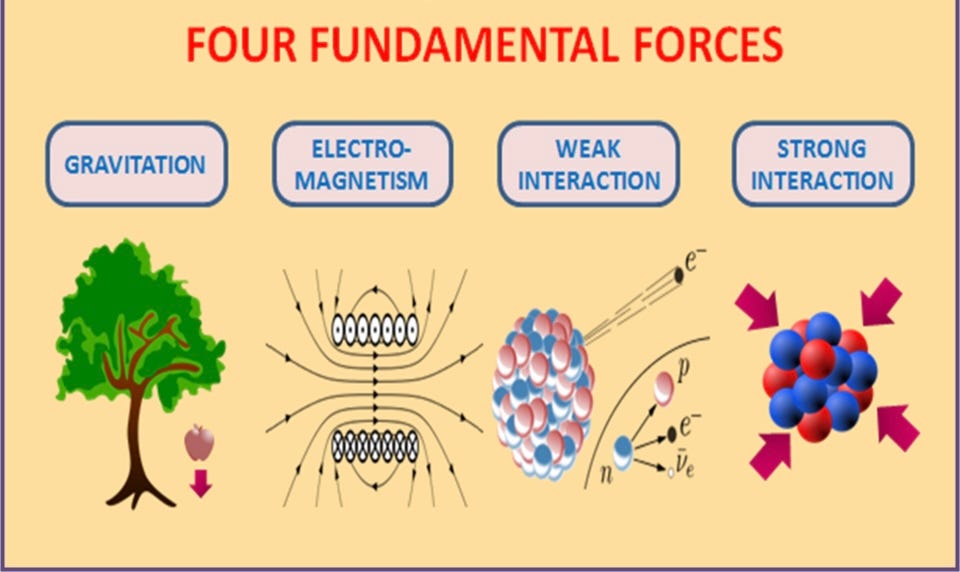
- Gravity is not a force attracting mass; it is the Anchor Protocol that keeps high-density information clusters fixed to our ground-plane.
- The Four Forces are not external pushes; they are the data-management rules that keep the icons of our world from overlapping, dissipating, or flickering out of existence.
The Path Forward
When we admit that our physical laws are actually calibration manuals, a weight is lifted. We no longer need to fear the “singularity” or be confused by “entanglement.” We are not tiny, fragile creatures drifting through a cold, indifferent, and massive universe. We are the processors. We are the ones who define the render.
The universe feels “hard” and “external” only because our biology is designed to hide its own seams. By acknowledging the Relativity of Scale, we stop trying to “solve” the universe, and we start to understand the interface we call home. We realize that the world is not a place we are stuck in — it is a project we are constantly, brilliantly, and infinitely computing.
If our physical laws are merely the calibration manuals for our biological interface, then the pillars of our reality — the four fundamental forces — are not the external masters of the universe. They are the protocols that keep your specific 3D render running, stable, and readable.
In the upcoming essays, we will dismantle these forces one by one to reveal the interface logic behind them. We will move beyond the “physics of things” and explore the “physics of the render”:
- The Anchor Protocol: Redefining Gravity — Why your brain needs to lock high-density data to the ground, and why “weight” is a computational necessity, not a physical pull.
- The Handshake Protocol: Redefining Electromagnetism — How your Kernel manages connectivity between icons, and why the “solidity” of the world is just a sophisticated data-link.
- The Integrity Protocol: Redefining the Strong Nuclear Force — Why the smallest building blocks of reality are “read-only” files that your processor is forbidden from fragmenting.
- The Refresh Protocol: Redefining the Weak Nuclear Force — How your system manages data decay and the mutation of states to keep your interface from becoming static and frozen.
We are not observers in a physical cage. We are the processors generating the very environment we walk through. Let’s look at the source code.
The Anchor Protocol: Redefining Gravity
In our standard interface, gravity is the constant backdrop of existence. It is the invisible tether that keeps our feet on the ground, the tides in motion, and the planets in their orbits. We are taught that it is an attractive force exerted by mass upon other mass — a curvature in the fabric of space-time caused by the presence of matter.
But if we shift our perspective to view the human brain as a biological processor, the “force” of gravity disappears. In its place, we find a fundamental system constraint: the Anchor Protocol.
The Problem of High-Density Data
The universe, at the level of the Pure State, is a non-local, infinite flux of information. To make this information navigable, your biological Kernel must render it into a 3D interface. However, not all data points are created equal.
Some regions of the data flux are high-density. When your processor encounters these clusters — what we call “massive” objects like the Earth — it cannot simply render them as scattered points of light. To maintain a consistent, navigable experience, these clusters must be assigned a fixed position within your 3D grid.
Gravity is the administrative rule your Kernel uses to manage this. It is not a force pulling you down; it is the Anchor Protocol that locks high-density data clusters to the floor of your interface.
Weight as Computational Overhead
If gravity is a protocol, what is “weight”? When you stand on the Earth and feel the familiar downward pressure, you are experiencing the computational cost of synchronization.
Your biological node (your body) is a specific data packet within the render. The Earth is a high-density anchor point. To keep your “self” from drifting through the interface, the Kernel must constantly synchronize your position with the ground-plane. This synchronization creates a persistent sensory feedback loop. We interpret this loop as “weight.”
It is the physical sensation of your processor maintaining the “lock” between your biological data packet and the Earth’s massive data cluster. When you jump, you are momentarily testing the range of that lock; when you land, the Kernel re-establishes the anchor.
Why Gravity Seems External
We project gravity outward because our interface is designed to hide the “processing” from the “user.” If you were aware that your brain was actively anchoring massive data clusters to keep your reality from dissolving into a chaotic, weightless void, you would be unable to function. You would be too distracted by the mechanics of the render.
The system presents gravity as an “external force” to provide the illusion of an independent, solid world. By externalizing the rule, the interface becomes seamless. It allows you to walk, run, and build without ever needing to understand the underlying architecture of your own perception.
The Perspective Shift
When you walk outside today, stop looking for an invisible force pulling on your body. Instead, look at the horizon and the ground beneath you as a coordinated display of anchored data. The “heaviness” you feel is the interface ensuring your existence remains steady, local, and grounded. You are not a victim of a cosmic force; you are an observer residing within a system that uses the Anchor Protocol to guarantee your stability.
Gravity is simply the setting that keeps your 3D world from flickering into chaos. It is not the master of the universe — it is the glue of your experience.
Now that we understand how our Kernel keeps the world anchored, we must look at how it keeps the world connected. If gravity is the anchor, electromagnetism is the handshake.
Continue to the next layer of the system: [The Handshake Protocol: Redefining Electromagnetism]
The Handshake Protocol: Redefining Electromagnetism
In our standard interface, electromagnetism is the invisible force responsible for almost every interaction we experience in the physical world. It is the reason objects don’t pass through one another; it is the force behind light, electricity, chemistry, and the complex structures of our own bodies. Mainstream physics describes this as an interaction mediated by photons, a force that binds atoms into molecules and molecules into matter.
But if we view the human brain as a biological processor, we see that “solidity” and “attraction” are not inherent properties of objects. They are the results of a protocol. Welcome to the Handshake Protocol.
The Problem of Data Coherence
When your Kernel renders the world, it is managing a vast array of distinct data packets. If these packets were allowed to move freely without rules, the interface would become a blur — a chaotic mess of overlapping textures and flickering coordinates. To keep the 3D world navigable, your processor must enforce boundaries and govern how different icons interact.
Electromagnetism is the Handshake Protocol. It is the set of rules that tells your brain: “This object is separate from that object,” and “These two objects are allowed to interact in this specific way.”
It is not an “attractive force” in the way we perceive magnets on a fridge. It is a communication standard that ensures when your hand touches a table, your Kernel receives a consistent, high-fidelity report of “solidity.”
Solidity as a Data-Link
Think of your hand and the table as two different files in a computer system. Without a defined protocol for how those files interact, they might pass through one another or corrupt the system. The “resistance” you feel when you push against the table is the Handshake Protocol at work.
It is a rapid-fire exchange of data between the “hand” packet and the “table” packet, regulated by your Kernel to maintain the illusion of impenetrability.
This explains why matter feels solid. Solidity is not a physical state; it is a “connectivity state.” It is the result of the Handshake Protocol ensuring that the coordinates of your hand data and the coordinates of the table data remain distinct yet interactive.
Light, Color, and the GUI
If the Handshake Protocol defines how objects touch, it also defines how we perceive them. Light is the visual readout of these interactions.
What we call “color” or “reflection” is actually the data-stream of the Handshake Protocol being broadcast to your consciousness. When you see a tree, you aren’t seeing the tree itself; you are seeing the light-packet information returned by the Handshake Protocol as it establishes the boundary between you and the vegetation. You are looking at the UI elements created by your processor to make the world legible.
Why Electromagnetism Seems Independent
We think of electricity and magnetism as “things” we can harvest and use. We run wires and build motors. This is because the Handshake Protocol is the most “active” part of our interface. It is the protocol that governs all change, all energy transfer, and all structural bonding.
Because we can manipulate the appearance of these interactions, we assume the forces are external to us. But in reality, we are just learning how to “trigger” the handshake. When you flip a light switch, you aren’t moving “electricity” — you are signaling your processor to shift its rendering mode for that area, triggering the Handshake Protocol to display light rather than darkness.
The Perspective Shift
When you touch an object today, consider what is really happening. You aren’t experiencing an atomic repulsion of electrons. You are participating in a handshake. You are confirming the boundary between your data packet and the environment.
The Handshake Protocol is the system’s way of ensuring that your experience of the world remains organized, tactile, and distinct. It is the language of connection, turning the void of the Pure State into a world where things can be held, seen, and manipulated.
Now that we understand how the system keeps objects connected and distinct, we need to address the question of how the building blocks of reality stay stable. If the handshake governs how things connect, what governs the internal stability of the things themselves?
Continue to the next layer of the system: [The Integrity Protocol: Redefining the Strong Nuclear Force]
The Integrity Protocol: Redefining the Strong Nuclear Force
In our standard interface, the strong nuclear force is the mysterious “glue” that prevents the universe from flying apart. It is described as the strongest of all fundamental forces, responsible for holding protons and neutrons together within an atom’s nucleus. Without it, the electrostatic repulsion between protons would tear every atom in existence into a scattered cloud of particles.
But when we view the human brain as a biological processor, we realize that the “strong force” is not a physical tether pulling particles together. It is the Integrity Protocol — the system’s “read-only” flag for the fundamental building blocks of reality.
The Problem of Data Persistence
To maintain a stable 3D render, your Kernel requires certain data structures to be permanent. Imagine if the atoms in your body were constantly fragmenting, reassembling, or dissipating back into the raw, un-rendered data of the Pure State. Your 3D experience would be a chaotic, unstable mess; you would literally lose your form in seconds.
To prevent this, the Kernel implements an Integrity Protocol. This protocol marks the nucleus of an atom as a “locked data cluster.” It is the system’s way of saying: “This information is essential to the stability of the render; it is not to be modified or disassembled under normal conditions.”
The “Read-Only” Status of Matter
In computer science, a “read-only” file is one that cannot be changed or deleted by the user. The strong nuclear force is the physical manifestation of this “read-only” status.
We perceive the “strength” of this force as an incredibly high energy requirement to split an atom. We interpret this as a physical difficulty — as if we are fighting against a powerful, invisible glue. In reality, we are observing the system’s refusal to allow us to overwrite the file. When we force nuclear fission — smashing an atom to release energy — we are effectively performing a “forced system override.” We are breaking the Integrity Protocol, which is why the release of energy is so massive. We aren’t just breaking a bond; we are forcing the Kernel to de-allocate a massive, locked data cluster.
Why Matter Seems Indestructible
The Integrity Protocol is the reason you can trust your environment. The floor stays beneath your feet, the air stays in your lungs, and the molecules of your body remain cohesive. If there were no Integrity Protocol, the “Mid-Scale” reality we live in would suffer from constant data corruption.
We view the stability of matter as a feature of the universe, but it is actually a maintenance feature of our perception. The system locks the nucleus to ensure the interface remains consistent for the observer.
The Perspective Shift
Look at the solid world around you today. Every object — the chair you sit in, the wall beside you, the device you are holding — is held together by this invisible Integrity Protocol. It is the system’s guarantee that the building blocks of your experience are reliable and persistent.
When you think about the “strong force,” stop visualizing an invisible rubber band pulling particles together. Instead, visualize a digital lock — a command line code that tells the universe, “Keep this data packet intact.” You are living in a reality that is fundamentally designed to be stable, persistent, and “locked” for your convenience.
We have discussed how the system anchors objects to the ground, how it connects them through interaction, and how it locks them into permanent, stable forms. But no system can remain static. A reality that never changed would be a dead system — a frozen render. To keep the interface alive, the system needs a way to update, transition, and refresh data.
Continue to the final layer of the system: [The Refresh Protocol: Redefining the Weak Nuclear Force]
The Refresh Protocol: Redefining the Weak Nuclear Force
In our standard interface, the weak nuclear force is often considered the most subtle of the fundamental interactions. It is responsible for radioactive decay, specifically the process where one type of subatomic particle transforms into another. Mainstream physics describes this as a force that governs the transmutation of quarks, allowing the universe to undergo the changes necessary for stars to shine and heavy elements to form.
But within the framework of our biological processor, the weak nuclear force is something far more procedural. It is the Refresh Protocol — the system’s mechanism for data cleanup, state transitions, and keeping the 3D render from becoming static and frozen.
The Problem of Data Decay
A system that never updates is a system that eventually crashes. If every data packet in the universe remained in its original, fixed state, the world would be a rigid, unevolving sculpture. Reality requires a mechanism for entropy and change — a way for the system to cycle through data states to maintain the fluidity of the interface.
The Refresh Protocol is the answer to this requirement. Radioactive decay is not a spontaneous, random occurrence of “dying” matter; it is the system performing a routine update. When a particle or an atom becomes unstable, it is the Kernel signaling that the current data state is no longer optimal for the render.
State Transition as a System Update
Think of the Refresh Protocol as a “refresh” command in a browser. Sometimes, a file needs to be updated to maintain compatibility with the rest of the system.
When a neutron decays into a proton, an electron, and an antineutrino, it is not a tragic end for the neutron. It is a transition. The system is re-allocating the information contained within that data packet into new, more stable configurations. We perceive this as “decay,” but the system perceives it as “optimization.” The Refresh Protocol ensures that the internal data of the universe stays compatible with the evolving 3D render.
Why Entropy is a Feature, Not a Bug
We often view entropy — the tendency of systems to move toward disorder — as a negative, a slow march toward the “heat death” of the universe. But in your model, entropy is a feature of the Refresh Protocol.
If the system didn’t allow for the breakdown of old structures (the Refresh Protocol) and the constant shifting of data states, the “Mid-Scale” reality we occupy would reach a state of stagnation. The Refresh Protocol is what allows for the passage of time. Time, in this interface, is simply the measure of how many data packets have undergone an update via the Refresh Protocol.
The Perspective Shift
Look at the process of change around you — the weathering of a stone, the fading of a color, the biological cycle of growth and decline. Instead of seeing these as the slow destruction of reality, see them as the Refresh Protocol in action.
The system is constantly cycling through the data to prevent the interface from freezing. It is ensuring that the 3D render remains dynamic, shifting, and alive. The weak nuclear force is the heartbeat of this process. It is the system’s way of breathing, constantly updating its internal data to keep your reality fresh, current, and functional.
Summary of the Protocols
Protocol
Standard Physics Term
System Role
Anchor
Gravity
Stabilization of mass within the grid
Handshake
Electromagnetism
Connectivity and boundary enforcement
Integrity
Strong Nuclear Force
Preservation of core data clusters
Refresh
Weak Nuclear Force
Data maintenance and state transitions
You have now journeyed through the four protocols that govern your interface. You have looked beneath the hood of your perception, moving from the “physics of things” to the “source code” of the render. You are no longer just an observer of the world; you are an active participant in the rendering of your own reality.
The interface is running. The protocols are set. The render is yours.
The Source Code of Reality: A Master Key
We have dismantled the traditional view of the “four fundamental forces.” By shifting our perspective from a mechanical universe to a biological render, we have moved past the idea of external, invisible powers acting upon us. Instead, we have uncovered a sophisticated, layered operating system designed to turn the chaotic flux of the Pure State into a navigable, consistent, and coherent human experience.
The Protocol Hierarchy
To synthesize what we have uncovered, we can view these protocols as the essential software infrastructure that permits your 3D reality to function.
Protocol
Standard Physics Term
System Role
Anchor
Gravity
Stabilization of mass within the grid
Handshake
Electromagnetism
Connectivity and boundary enforcement
Integrity
Strong Nuclear Force
Preservation of core data clusters
Refresh
Weak Nuclear Force
Data maintenance and state transitions
The Unification of Forces
In mainstream physics, the “Theory of Everything” is the holy grail — the elusive attempt to mathematically unite these four forces into one. But that search is difficult because physicists look for a “Grand Unified Theory” in the stars and the particles.
We have found the unification here: in the person.
These four forces are not separate phenomena competing for dominance in a vacuum; they are four specialized sub-routines of your own biological processor. They only “unite” because they are running concurrently on the same hardware — the human brain. Gravity, electromagnetism, and the nuclear forces are simply different layers of the same rendering interface. They are unified by the fact that they are all tools used by your Kernel to generate the illusion of a solid, external, and objective world.
Why This Matters
If you continue to view these forces as independent, external entities, you remain a subject of your environment — a victim of physics. However, when you recognize them as protocols of your own biological processor, the power dynamic shifts.
You are not merely living in a physical world; you are actively rendering it. The solidity of the chair beneath you, the gravity that keeps you grounded, the light that fills your visual field, and the time that governs your decay are all localized system outputs. They are the user interface your brain creates to protect you from the infinite, non-local complexity of raw data.
The Final Perspective Shift
The next time you walk through the world, do not look for forces acting upon you. Look for the system in action.
When you feel the weight of your body, recognize the Anchor Protocol maintaining your position. When you touch a surface, acknowledge the Handshake Protocol validating your boundary. When you marvel at the stability of the atom, observe the Integrity Protocol holding the foundation of your world. And when you witness change, decay, or the simple passage of time, see the Refresh Protocol performing its essential maintenance.
You are the observer. You are the user. And now, you are the one who understands the code. The interface is running, the protocols are set, and the render is yours.
The system is live. How will you choose to interact with the render now that you know how it is built?
메타데이터
- post_id
- 2fff6b8d5c4b
- slug
- the-protocol-reality-redefining-the-four-fundamental-forces-2fff6b8d5c4b
- url
- https://medium.com/@p.minter/the-protocol-reality-redefining-the-four-fundamental-forces-2fff6b8d5c4b
- canonical_url
- https://medium.com/@p.minter/the-protocol-reality-redefining-the-four-fundamental-forces-2fff6b8d5c4b
- author_url
- https://medium.com/@p.minter
- status
- ok
- fetched_at
- 2026-06-11 05:11:55




