The 10 Best UK Number Ones of the 2000s — Part Two: The Fear
‘The Fear’ is exactly how it felt to be alive at the end of the 2000s. So much so that I’ve always been irked by it knocking Lady Gaga’s…
The 10 Best UK Number Ones of the 2000s — Part Two: The Fear

‘The Fear’ is exactly how it felt to be alive at the end of the 2000s. So much so that I’ve always been irked by it knocking Lady Gaga’s ‘Just Dance’ off number one in February 2009. ‘The Fear’ is the definitive End of the Noughties text, and it should have been the other way around. Culturally, decades end months away from when the calendar says so, and ‘Just Dance’ ushered in the 2010s before any of us were aware. How perfect it would have been for Stefani Germanotta to start the new decade immediately after Lily Allen had given her mournful, wistful goodbye to the decade that was. Then again, maybe it’s entirely appropriate that the 2000s managed to hang on for the four weeks ‘The Fear’ spent atop the charts after Gaga threatened us with pop’s future.
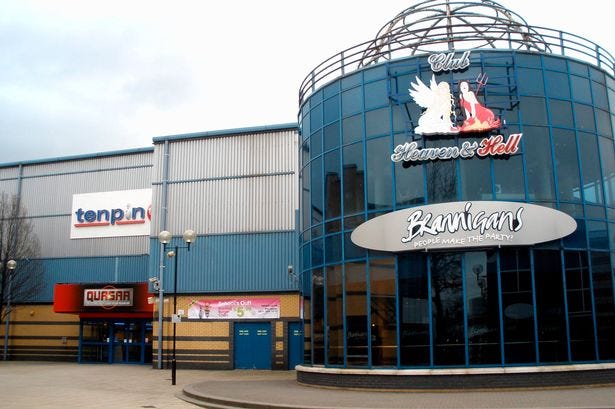
I was 15 years old in 2009, and maybe still a little too young to understand and feel the consequences of the 2008 bank crash, but its effects still crept into my line of sight all the same. I grew up in Stockport and still live there now. They call it ‘the new Berlin’ these days, but in 2009 it was old, damp, and entirely the colour of concrete. The mid-20th century town planning, which rebuilt and reorganised Stockport after the Blitz, had passed its expiry date years before, and now all the new money had dried up. This was long before Blossoms and Phil Foden. The best destination for a night out in Stockport was the train station, because that way you could spend your Fridays and Saturdays literally anywhere else — or so the joke went. Outside of Britain’s booming cities, in the new towns and old towns and especially in the forgotten towns, the picture was the same. Our worlds were starting to shrink. I was a Stopfordian on the brink of adolescence while Britain itself sat on the brink of a new decade, all of us anxious about the future but ultimately despondent as opportunity and potential went stale around us. And somewhere in the middle of all this, in the Gloucestershire market town of Moreton-in-Marsh, Lily Allen was writing.
[embed]
The Fear’ is placed perfectly in 2009. It looks back on the decade that was — defined by tabloid cruelty and reality TV, Blairism and media spin, invisible weapons of mass destruction and all-too-visible prolonged war — while nervously peering out towards the decade that’s coming. The ongoing ‘credit crunch’ and imminent years of austerity, the information age of social media and smartphones and (eventually) artificial intelligence, all of us trapped under the tightening net of ubercapitalism and private investment. It’s all here in very simple, easily quotable and bitesize turns of phrase, which are cheeky and witty but deliberately clunky and unsophisticated. An unbelievable amount of evocative, almost frightening Noughties imagery gets packed into Lily’s lyric here. The Iraq War, The Sun and The Mirror, cosmetic surgery, moral panic upon moral panic, celebrity obsession, tabloid gossip, existential dread, the diamond mines of Sierra Leone, credit cards, robots, fad diets. The zeitgeist video tape of Noughties Britain is decadent and ugly, and ‘The Fear’ displays it all. And then that rhetorical question floats out of Lily’s mouth in the chorus: ‘When do you think it will all become clear?’ In other words, when will we finally understand the world we’ve built? Will we ever understand it?
The character Lily played on her first ever number one — 2006 debut hit ‘Smile’ — was so skilled at pretending she was away with the fairies. ‘La la la la la la la la la la’ (and so on) she blabbed in that third verse, all while her friends secretly trashed her ex-boyfriend’s flat in the music video. Delightfully devilish, Lily. That same character pops up again here, but she’s slightly wearier and more cynical than before. Her mannerisms feel familiar but, instead of keeping that smiling poker face switched on to distract from her friends destroying someone’s life, she’s keeping that smiling poker face switched on to stave off an inevitable meltdown. It’s a horrifying and depressing feeling, to suddenly be as aware Lily is on ‘The Fear’ and she’s doing all she can to avoid it. The dream pop and psychedelic influences that the song is dressed up in give a hint that something’s gone wrong. You’re left feeling suspicious that textures so beautiful and tranquil could only come from somewhere dark. Lily’s delivery, too, is rarely more than a tuneful sigh, like she’s looking at the world from above and feeling apathetic about its doomed future. It’s actually a bit OK Computer in that regard, you know? And a bit ‘That Funny Feeling’, the Bo Burnham song. A numb and almost flippant glance at a world on fire, using an intangible rhetorical device as its central motif — the ‘Fear’ and the ‘Funny Feeling’ are the same thing.
Songs like ‘The Fear’ always walk a very fine line, I think — they either achieve the genuinely witty and sharp social commentary they’re jonesing for, or they stumble through superficial criticisms like “kids today” and “we live in a society”. This stays firmly in the territory of the former because Lily has watched the world change around her as she’s come of age during the Noughties. She understands the crushing reality that popular culture has been slowly but surely consumed by capitalism, and that everything we consider to be ‘art’ or ‘entertainment’ has been swallowed, digested, and shat out as ‘content’. It dawns on Lily midway through the song — just like it did everyone else — that ‘The Fear’ is complicit in prolonging the effects of everything she’s criticising. What started as something true to her, and something personal to her soul, has become another product to be bought and sold. Her emotions and expressions, and even her depression, have become commerce, reaching number one with a few thousand sales at 99p. ‘The Fear’ is simultaneously peppy and defeated. Lily acknowledges that she’s a ‘weapon of massive consumption’, but also reminds us that she’s only a cog in this industry and in the world we’ve built for ourselves.
The whole thing is a deceptively tranquil nightmare. Even the music video — which resembles something Katy Perry might have gone for, with its massive mansion setting and group choreography and cartoonishly large and colourful props — sees Lily literally carried through parts of it as she passively and listlessly travels through the set, like a dreaming deadweight. And while the song itself sounds beautiful, dressing itself up in all the bells and whistles that 21st century synthpop can afford, the despondent roots of the composition are still clearly visible. That introductory finger-plucked guitar, which resembles fucking Portishead or something, has a maudlin expression and provides the path upon which the rest of ‘The Fear’ walks. Even after that first snap of the snare, and after the sudden switch from sleepy acoustics into majestic radio pop, you can’t escape it. Those synth pads that lurk between the lines in the chorus, that shimmer in and out of view constantly like an ocular migraine, only serve to enhance the poignancy and dissolution in Lily’s slowly beating heart. Producer and engineer Greg Kurstin brings it all under one roof, painting the dismal vision and bringing it to perfect life.
A friend of mine once posited to me that ‘The Fear’ explains what happened to Lily Allen after 2009. A major star of the 2000s, she made it into the 2010s — just not very far. So went her theory that, once Lily became so aware of her place in the world, so aware of her complicity, and so aware that she was part of the machine, she couldn’t continue to live the life of ‘packing plastic’. My friend told me: “You could look at ‘The Fear’ in the sense that it’s bragging or celebrating excess, but there’s a real sense of unease and anxiety there too. Some critics did mention that in 2008 Lily had spent over £100,000 on clothes alone, but it’s not a coincidence that she later revealed that she was dealing with bipolar disorder. There is a sense of allusion to that. And it makes me wonder if this was the beginning of the end for Lily Allen’s pop career. This sort of awareness about the reality of fame and the futility of your own art is a Pandora’s Box that artists never really recover from. Self-awareness can quickly become self-doubt. You can’t just go on with the flow of pop music after uncovering the deep-rooted problems of your art. That’s probably how you end up with something like Sheezus.”
‘The Fear’ sums up pop music’s ability to stand back from popular culture and the zeitgeist before absorbing and digesting and processing, and spitting out something new. If anyone under 20 is reading this, this is exactly how it felt to be an adolescent in the late 2000s. In the late 1980s and through the 1990s, academics and journalists observed the collapse of the Soviet Union and the subsequent end of the Cold War, the burgeoning enthusiasm for globalisation and international unity, and the broad acceptance of Western liberal democracy, and dared to suggest that humanity may have assumed its final form, therefore reaching the end of its developing history. The 2000s blew that vision up several times over and reminded us, in devastating and dystopian fashion, that the curtain never falls on history. In 2025, we know we are powerless, we know the world is burning, and we know it’s a big club we’re not in. I’m not sure we’d accepted that yet in 2009, even as we went nowhere in our forgotten towns — we were still tying tiny knots with shredded ribbons of optimism. ‘The Fear’ sat at number one for a month, warning us that the world we were building for ourselves was only going to end up here.
메타데이터
- post_id
- 2fffb58856db
- slug
- the-10-best-uk-number-ones-of-the-2000s-part-two-the-fear-2fffb58856db
- url
- https://medium.com/@colourfulsevens/the-10-best-uk-number-ones-of-the-2000s-part-two-the-fear-2fffb58856db
- canonical_url
- https://medium.com/@colourfulsevens/the-10-best-uk-number-ones-of-the-2000s-part-two-the-fear-2fffb58856db
- author_url
- https://medium.com/@colourfulsevens
- status
- ok
- fetched_at
- 2026-06-14 11:28:49