Beyond Trim-X: Two Powerful Alternatives for Fat Loss, Recovery, and Healthy Aging
Is Trim-X Worth the Hype?
Beyond Trim-X: Two Powerful Alternatives for Fat Loss, Recovery, and Healthy Aging
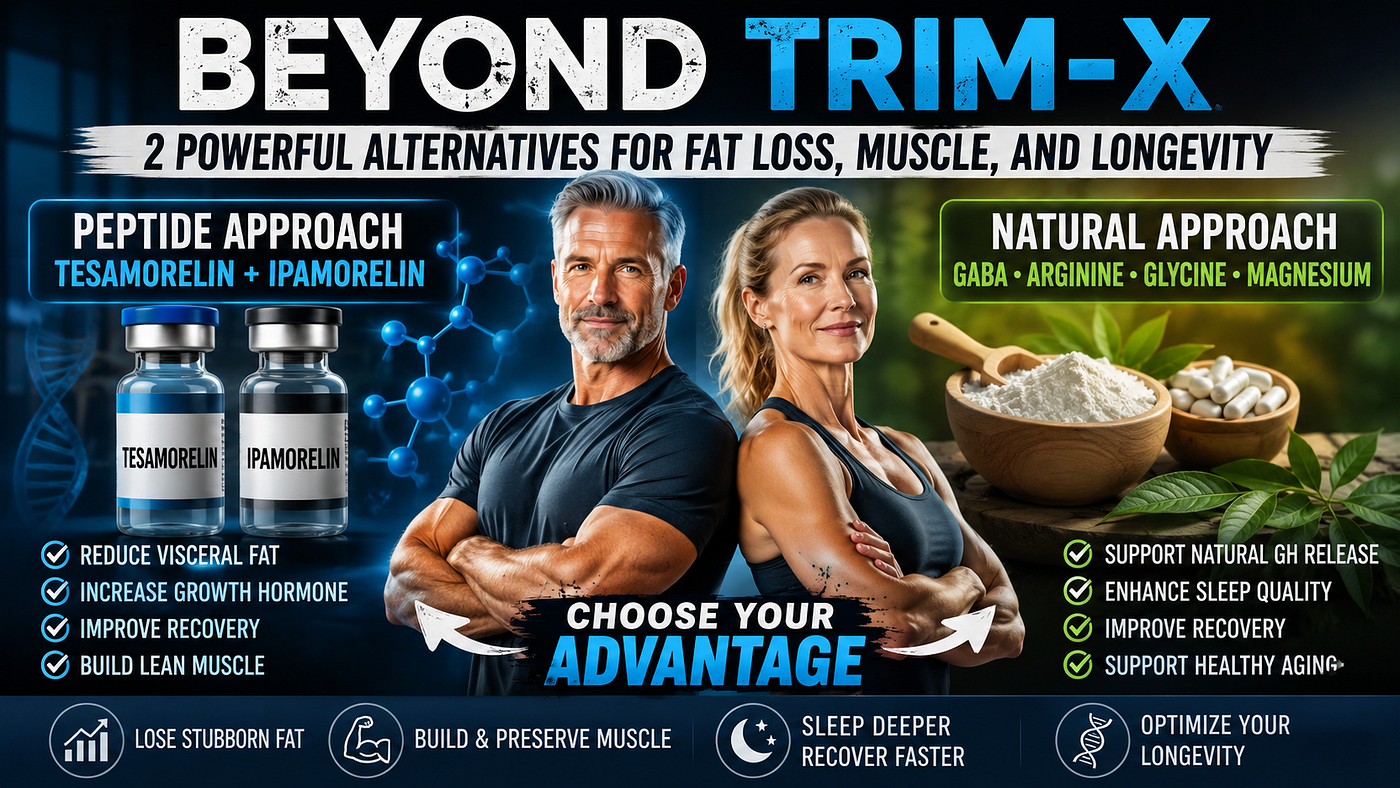
What Trim-X is, and alternatives to taking growth hormone.
Is Trim-X Worth the Hype?
As we age, many of us discover a frustrating reality.
The same diet and exercise program that worked in our twenties and thirties suddenly stops producing results. Fat accumulates around the midsection, muscle becomes harder to build, recovery slows, and energy levels often decline.
This isn’t simply a matter of willpower.
Biology changes with age.
One reason is the gradual decline in growth hormone production. Beginning around age 30, growth hormone secretion falls steadily throughout life, influencing body composition, muscle maintenance, recovery, sleep quality, and metabolic health (Bartke, 2008).
Programs such as Trim-X have gained popularity because they attempt to address some of these age-related changes.
What Is Trim-X?
Trim-X is generally marketed as a physician-supervised body recomposition program designed to help individuals lose fat while preserving or building lean muscle mass.
While specific formulations vary among providers, Trim-X programs commonly focus on:
- Fat loss
- Muscle preservation
- Hormonal optimization
- Improved recovery
- Increased energy
- Healthy aging
Many protocols incorporate medications, peptides, nutrition coaching, exercise programming, and lifestyle modifications to create a comprehensive metabolic health strategy.
The central idea is that improving body composition is more important than simply losing weight.
After all, losing 20 pounds means little if half of it comes from valuable muscle tissue.
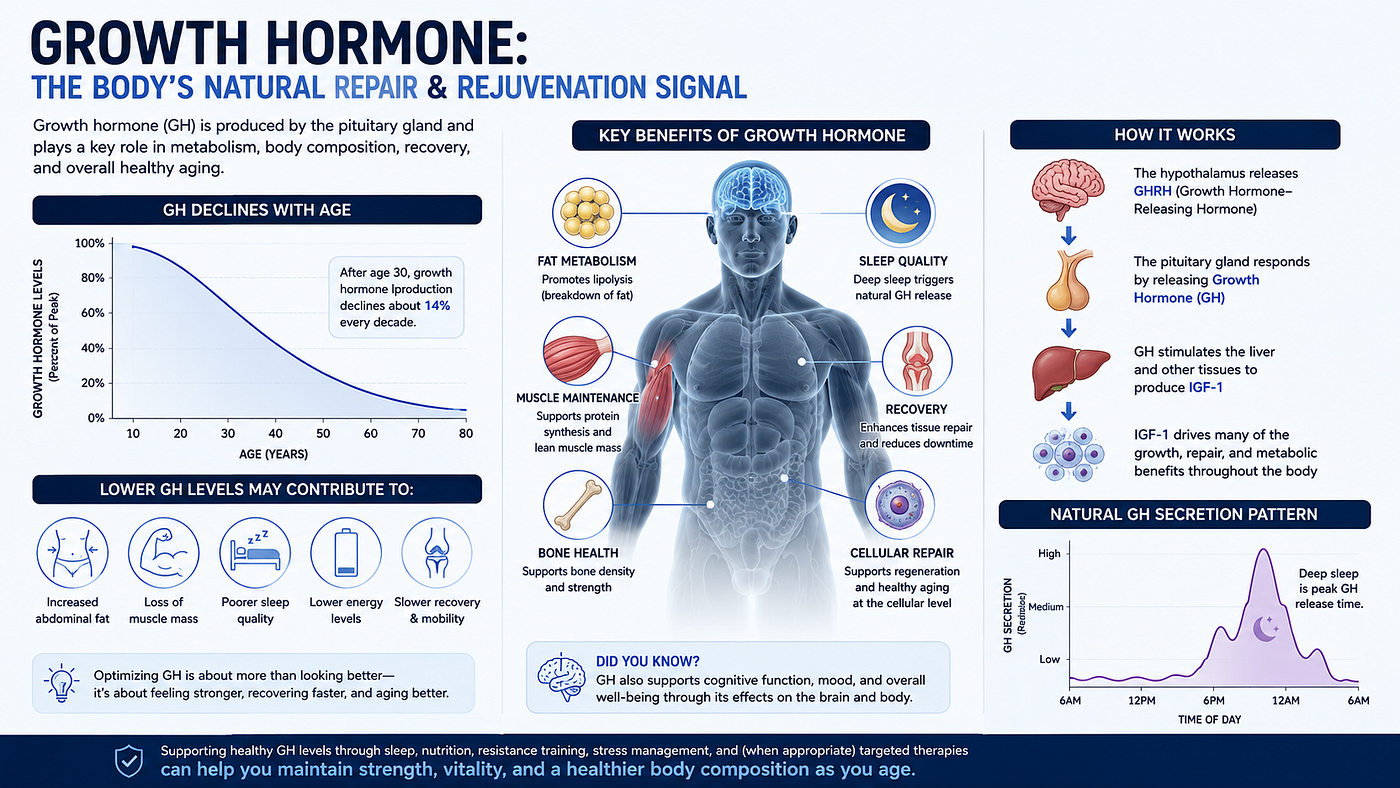
How growth hormone works and it’s benefits. Created with AI.
Why Growth Hormone Matters
Growth hormone serves as one of the body’s primary repair and recovery signals.
It helps regulate:
- Fat metabolism
- Protein synthesis
- Muscle maintenance
- Connective tissue repair
- Sleep quality
- Exercise recovery
As growth hormone levels decline, many adults notice:
- Increased belly fat
- Reduced muscle mass
- Slower recovery
- Lower energy
- Reduced exercise capacity
This has led researchers to investigate ways to safely support the body’s natural growth hormone production.
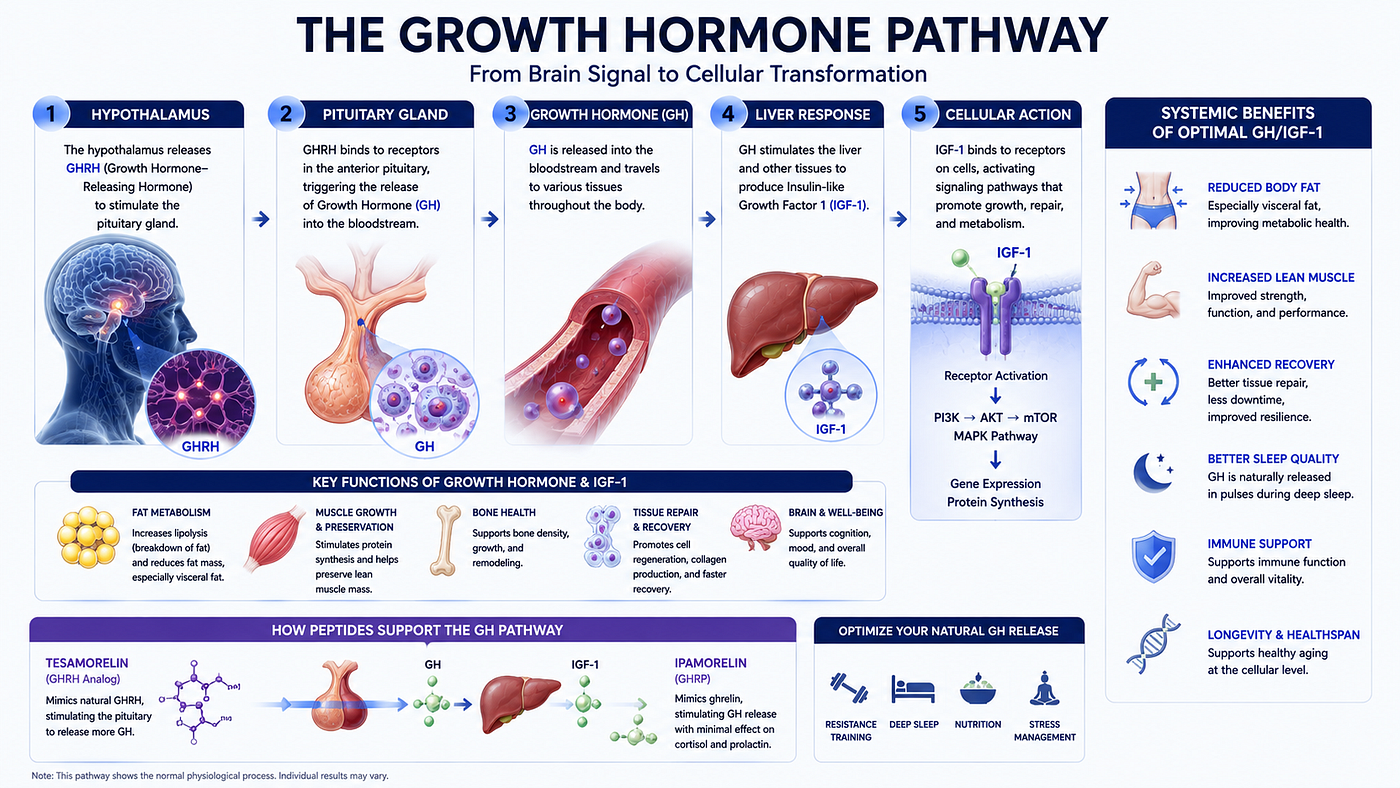
The growth hormone pathway and how tesamorelin aids in increasing it.
Alternative #1: The Peptide-Based Approach
For individuals interested in physician-supervised peptide therapies, one of the most promising alternatives involves combining Tesamorelin with Ipamorelin.
Why Tesamorelin?
Tesamorelin stimulates the pituitary gland to release growth hormone through pathways that closely resemble natural physiology.
Research has shown that Tesamorelin can significantly reduce visceral fat, the metabolically dangerous fat surrounding internal organs (Stanley & Grinspoon, 2015).
Benefits may include:
- Reduced abdominal fat
- Improved body composition
- Enhanced recovery
- Increased IGF-1 production
- Potential support for metabolic health
Why Add Ipamorelin?
Ipamorelin works through a different mechanism.
It activates ghrelin receptors and encourages pulsatile growth hormone release while minimizing unwanted stimulation of cortisol and prolactin.
Potential benefits include:
- Improved recovery
- Enhanced sleep quality
- Increased lean muscle support
- Better exercise adaptation
- Synergy with Tesamorelin
Sample Peptide Protocol
Morning
- Tesamorelin, physician-directed dosing
- Resistance training 3 to 5 times weekly
- High-protein breakfast
Evening
- Ipamorelin, physician-directed dosing
- Magnesium glycinate
- Consistent sleep schedule
Nutrition Goals
- Protein: 1.6 to 2.2 g/kg body weight
- Emphasis on whole foods
- Adequate fiber intake
- Calorie intake matched to goals
Who May Benefit?
This approach may be attractive for adults over 40 who:
- Have stubborn abdominal fat
- Want greater body recomposition
- Are focused on healthy aging
- Desire physician-guided peptide support
Alternative #2: The Natural Growth Hormone Optimization Stack
Not everyone wants to use peptides.
The good news is that several nutrients have been studied for their ability to support the body’s natural growth hormone release, particularly when taken before sleep.
Glycine
Glycine is an amino acid involved in collagen synthesis, neurotransmitter balance, sleep quality, and metabolic health.
Research suggests glycine may improve sleep architecture and support recovery.
Suggested dosage: 3 to 5 grams before bed.
Arginine
L-Arginine has long been studied for its ability to stimulate growth hormone secretion by suppressing somatostatin, one of the body’s growth hormone-inhibiting signals.
Suggested dosage: 5 to 9 grams before bed on an empty stomach.
GABA
Gamma-Aminobutyric Acid is a calming neurotransmitter that may increase growth hormone secretion and improve relaxation.
One human study demonstrated a significant increase in growth hormone levels following oral GABA supplementation (Powers et al., 2008).
Suggested dosage: 500 to 1,000 mg before bed.
Magnesium Glycinate
Magnesium Glycinate supports hundreds of enzymatic reactions, including muscle recovery, nervous system function, and sleep quality.
Magnesium deficiency is associated with impaired sleep and reduced recovery.
Suggested dosage: 200 to 400 mg elemental magnesium before bed.
The Natural “GH Support Stack”
30 Minutes Before Bed
- Glycine: 3 to 5 grams
- L-Arginine: 5 to 9 grams
- GABA: 500 to 1,000 mg
- Magnesium glycinate: 200 to 400 mg
Lifestyle Multipliers
To maximize effectiveness:
- Resistance train 3 to 5 times weekly
- Maintain healthy body fat levels
- Prioritize deep sleep
- Avoid large meals immediately before bed
- Reduce or eliminate alcohol intake
- Manage chronic stress
The DNA Connection
Genetics may influence how well someone responds to any body composition strategy.
Several polymorphisms deserve attention:
GH1
Variants in the growth hormone gene may influence endogenous growth hormone production.
GHR
Variants in the growth hormone receptor gene may affect cellular responsiveness to growth hormone.
IGF1
Differences in the IGF1 gene can influence circulating IGF-1 levels and anabolic signaling.
FOXO3
Often called a longevity gene, certain FOXO3 variants appear associated with healthier aging and improved stress resistance.
PPARA and PPARG
These genes influence fat metabolism and insulin sensitivity, potentially affecting body composition outcomes.
DNA testing may help explain why two people following the same protocol often experience dramatically different results.
Which Option Is Better?
The answer depends on your goals.
Choose the Peptide Approach If:
- You want maximum body recomposition support.
- You are working with a qualified healthcare provider.
- You are comfortable using prescription peptides.
Choose the Natural Approach If:
- You prefer a supplement-based strategy.
- You want to support healthy aging naturally.
- You are looking for a lower-cost option.
Some individuals begin with the natural protocol and later explore peptide therapies if additional support is needed.
The Bottom Line
Trim-X has become popular because it recognizes an important truth about aging. The challenge is not simply eating less and exercising more. The challenge is working with changing biology. Whether you choose a peptide-based approach using Tesamorelin and Ipamorelin or a natural stack featuring glycine, arginine, GABA, and magnesium, the foundation remains the same:
- Build muscle
- Improve sleep
- Support recovery
- Optimize metabolism.
Because the goal is not merely to live longer, but rather to remain strong, energetic, and capable throughout those additional years.
References
Bartke, A. (2008). Growth hormone and aging: A challenging controversy. Clinical Interventions in Aging, 3(4), 659–665. https://doi.org/10.2147/CIA.S3697
Liu, H., Bravata, D. M., Olkin, I., Nayak, S., Roberts, B., Garber, A. M., & Hoffman, A. R. (2007). Systematic review: The safety and efficacy of growth hormone in the healthy elderly. Annals of Internal Medicine, 146(2), 104–115. https://doi.org/10.7326/0003-4819-146-2-200701160-00005
Powers, M. E., Yarrow, J. F., McCoy, S. C., & Borst, S. E. (2008). Growth hormone isoform responses to GABA ingestion at rest and after exercise. Medicine & Science in Sports & Exercise, 40(1), 104–110. https://doi.org/10.1249/MSS.0b013e318158b518
Stanley, T. L., & Grinspoon, S. K. (2015). Effects of growth hormone-releasing hormone on visceral fat, metabolic, and cardiovascular indices in human studies. Growth Hormone & IGF Research, 25(2), 59–65. https://doi.org/10.1016/j.ghir.2014.12.005
Westcott, W. L. (2012). Resistance training is medicine: Effects of strength training on health. Current Sports Medicine Reports, 11(4), 209–216. https://doi.org/10.1249/JSR.0b013e31825dabb8
Yarasheski, K. E., Zachwieja, J. J., & Bier, D. M. (1993). Acute effects of resistance exercise on muscle protein synthesis rate in young and elderly men and women. American Journal of Physiology, 265(2 Pt 1), E210–E214. https://doi.org/10.1152/ajpendo.1993.265.2.E210
메타데이터
- post_id
- 3014c96896ef
- slug
- beyond-trim-x-two-powerful-alternatives-for-fat-loss-recovery-and-healthy-aging-3014c96896ef
- url
- https://medium.com/illumination-scholar/beyond-trim-x-two-powerful-alternatives-for-fat-loss-recovery-and-healthy-aging-3014c96896ef
- canonical_url
- https://medium.com/illumination-scholar/beyond-trim-x-two-powerful-alternatives-for-fat-loss-recovery-and-healthy-aging-3014c96896ef
- author_url
- https://medium.com/@petermarinoscience
- status
- ok
- fetched_at
- 2026-06-14 13:58:26