Phage Therapy May Solve The Antibiotic Resistance Crisis… So Why Isn’t It FDA-Approved?
Did you know that the common cold may be lethal once again? What was once a get-out-of-work pass may send you to the ER, because…
Phage Therapy May Solve The Antibiotic Resistance Crisis… So Why Isn’t It FDA-Approved?
Did you know that the common cold may be lethal once again? What was once a get-out-of-work pass may send you to the ER, because antibiotics, our solution to almost every virus we contract, will one day offer no relief of the virus and its symptoms. This is due to the Antibiotic Resistance Crisis, which in short is the result of using antibiotics for every bacterial infection we encounter, making that bacteria immune, and leaving us scrambling for a cure.
There may be one solution that will solve this global problem, and we are not far from it.
Viruses.
But aren’t viruses the ones we are trying to defeat? Aren’t they the ones that are becoming immune to antibiotics and may one day wipe out humanity? These viruses are different. They attack the bacteria that are the root cause of everything from mild infections to deadly diseases.
Those viruses are called bacteriophages (phages), and they are the source of phage therapy, the 100-year-old treatment that will now be our last resort to combating the Antibiotic Resistance Crisis.
Phages are precision-based viruses with a genetic code that allows them to target a specific bacteria and annihilate it. The great thing about phages is that they are like laser-guided missiles, compared to antibiotics which are like bullets from a shotgun. These viruses have no other effect on any part of the human body, and they are constantly evolving, making them the perfect weapon against these superbugs.
Phage therapy is the future of medicine, and its success depends on understanding how phages work and their advantages in attacking viruses compared to some of our current treatments.
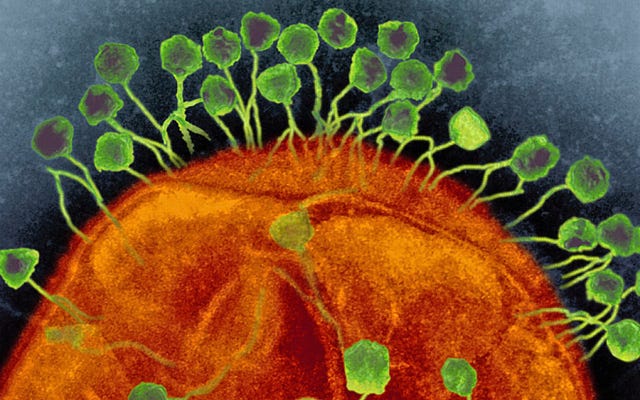
Icosahedral head-tail phages infecting a bacteria. Photo credit
Phage Therapy, What Makes It So Great?
What Is A Phage?
Bacteriophages look like they came out of a movie, but it’s far from Science Fiction. Phages can come in three distinct forms. The ones we will focus on are in the icosahedral head-tail form.
The nucleic acid is located in the head capsule. Nucleic acid is where the organism’s DNA or RNA is stored. The tail fibres are how the phage moves around, and its pins/spikes are how it infects its host.
In a part of their DNA, there is a gene that determines the exact strand of bacteria it can attack. Some phages have a narrow range of bacteria they can attack, while others with a broad range can attack a few types.
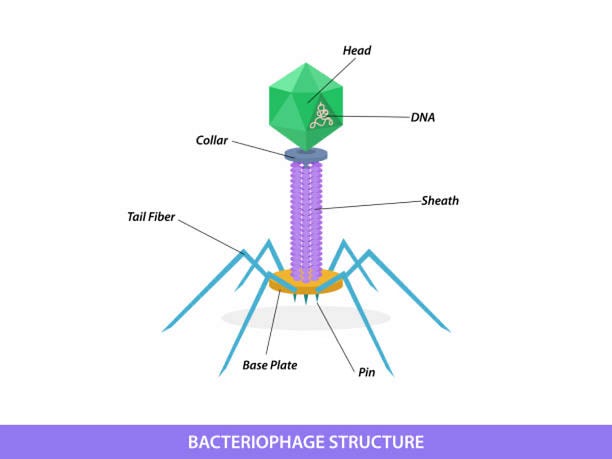
A diagram of an Icosahedral head-tail phage. From top to bottom labelled parts: Head, DNA, Collar, Sheath, Tail Fiber, Base Plate, Pin. Photo Credit
These little organisms make up more than every other organism and bacteria on earth combined. So if there was ever any worry of them running out, there is no chance.
How Do They Work?
Phages need to find their host in order to reproduce, but it can’t just be any strand of bacteria. To detect what bacteria the phage can use as its host, phages use the receptors on the bacterial cells to determine and differentiate between all the bacteria.
Some of these receptors can range from a bacteria’s flagella (the long threads some bacteria use to maneuver) to the sugars found on the surface of some cells, or the protein bumps found in a cell’s membrane. These are only a few examples of receptors as not all bacteria have these three specific characteristics.
Once a phage locates its compatible host, it has two options (cycles) on how it wants to overtake and kill its host. The two cycles are the lytic cycle and the lysogenic cycle. A phage can either be a virulent phage (only capable of using the lytic cycle) or a temperate phage (capable of switching between the two).
Lytic Cycle
The lytic cycle is used when the phage injects its DNA into its host cell and turns it into a breeding ground to create more phages identical to itself. Then those newly produced phages burst out of the host cell, resulting in the bacteria’s death.
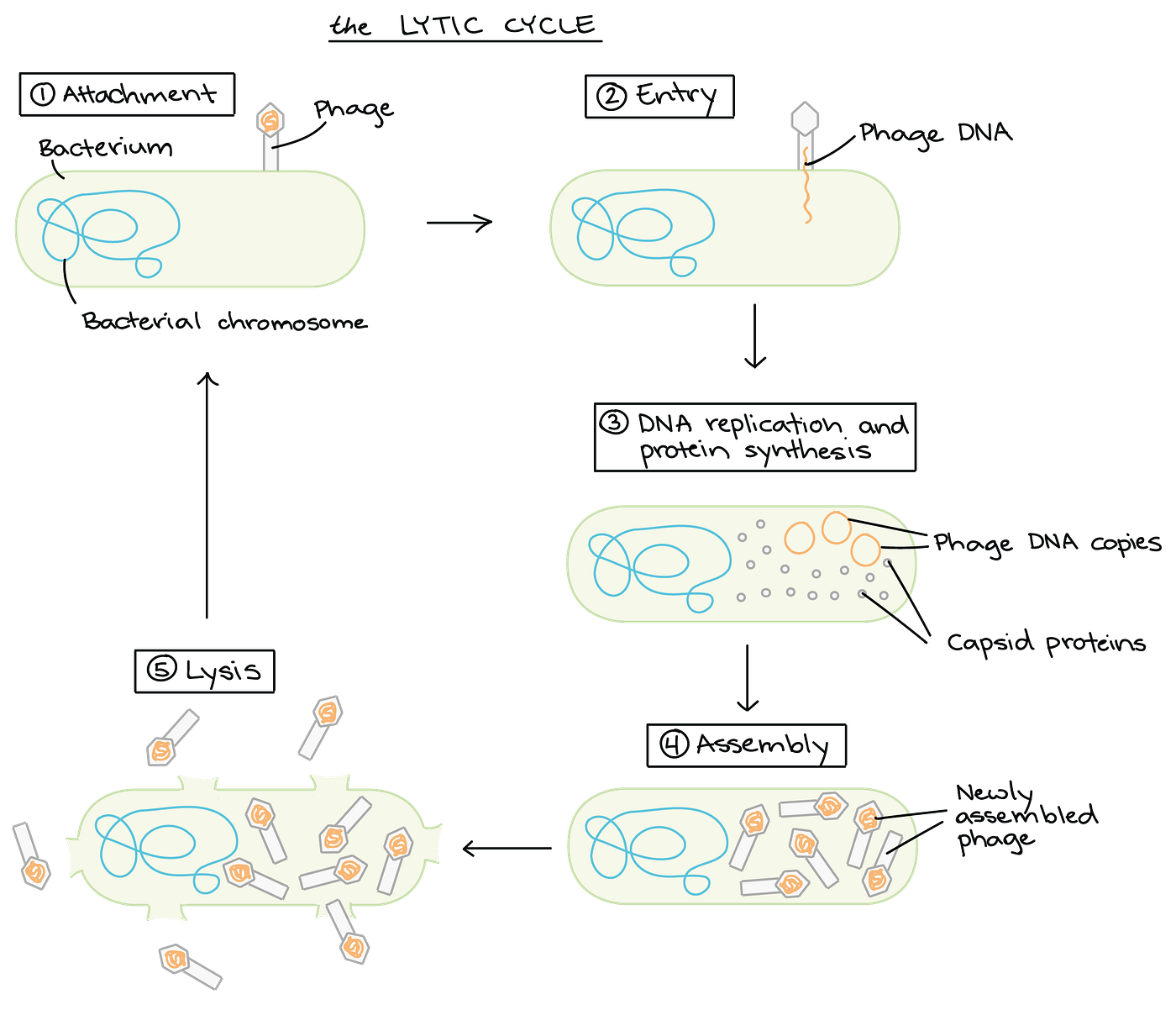
The lytic cycle of an Icosahedral head-tail phage. The five phases of the cycle are as follows: Attachment, Entry, DNA Replication and Protein Synthesis, Assembly, and Lysis. Photo credit
Phase 1. Attachment: The proteins in the pins/tail fibres of a phage bond to a receptor and attach themselves to the bacteria, which will become the host for the phage’s reproduction process.
Phase 2. Entry: The DNA of the phage is injected into the cytoplasm of its new host.
Phase 3. DNA Replication and Protein Synthesis: The DNA is taken and copied into the bacterial host’s system, and those genes are used to make different proteins, like capsid proteins (the shell where the DNA is stored in a phage). These proteins will be developed in the next stage to create new phages.
Phase 4. Assembly: The capsids develop and are embedded with the copied DNA to continue the formation of new phages.
Phase 5. Lysis: This is where the lytic cycle differentiates greatly from the lysogenic cycle. Another strand of protein from the infecting phage pokes holes in the plasma membrane and cell wall of the bacterial host, making it fill with water and expand. This causes the host to burst and allows the newly produced phages to flow out of the host cell.
This cycle is effective when we want to completely destroy the bacteria and increase the population of a specific phage variant.
Lysogenic Cycle
In the lysogenic cycle, the phage uses the bacterial host to reproduce without having to kill the bacteria in the end. This is a great choice when phages want to prevent the overpopulation of one phage variant. When there are too many phages attacking bacterial hosts and killing them, there is a chance that there won’t be enough bacteria left for all the phages to infect, leaving them no host to reproduce in. The lysogenic cycle keeps the ratio of phages to bacteria balanced.
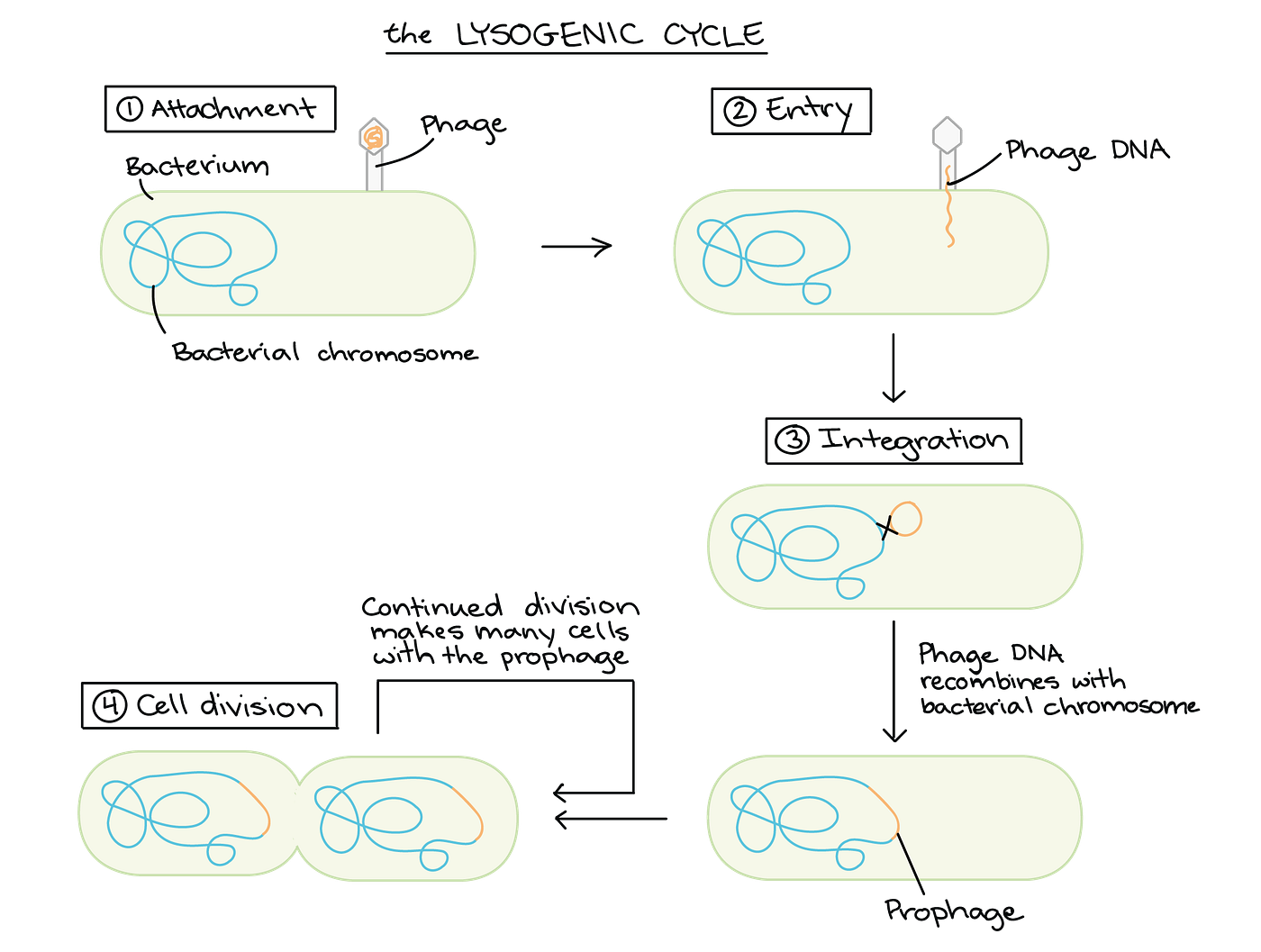
The lysogenic cycle of an Icosahedral head-tail phage. The four phases of the cycle are as follows: Attachment, Entry, Integration, Cell Division. Photo credit
Phase 1. Attachment: Just as in the lytic cycle, the proteins on a phage’s pins/tail fibres bond to a bacterial host’s receptors, attaching the phage to the host.
Phase 2. Entry: The DNA from the phage gets injected into the bacterial host, and this is where the change from the lytic cycle to the lysogenic cycle takes place.
Phase 3. Integration: The DNA that was injected into the bacterial host bonds to a specific region of the bacterial chromosome and becomes integrated fully. This turns the bacterial host into a prophage, which is when the host cell carries these idle genes of the phage that were integrated. This means that the genes aren’t making proteins to produce new phages. Sometimes a prophage will become active again, and that will trigger the remaining steps of the lytic cycle.
Phase 4. Cell Division: Each time the bacterial cell divides, those prophage genes are also copied into each new host cell.
How Does Phage Therapy Work?
Phages use one of two cycles to kill their bacterial target, with extremely precise accuracy, ensuring no other cells or bacteria will be affected. These are some of the characteristics of phages that apply to the use of phage therapy.
The therapy begins by identifying the bacteria or infection that needs to be treated. If this infection is immune to most or all antibiotics (superbug), which is becoming more common, then we could deploy phage therapy.
We would then have to rely on our phage library, which is a large stock of different kinds of phages. We would pick out the right phages and prepare them to be administered in different ways (injection, powder, cream, oral, aerosol, etc.) depending on the type of infection and where the phages need to go. They are prepared through a purification process that ensures they will have very little side effects when used.
Sometimes we can choose more than one phage when those multiple species can work alongside each other without causing any bacterial imbalances. When we use more than one phage species, we call that a phage cocktail.
Once the phages or phage cocktail is administered, then it’s the process of waiting for them to go through their cycles and eliminate that bacteria.
History Of Phage Therapy
Phage therapy was discovered over 100 years ago by microbiologist Felix d’Herelle. Phage therapy was proving to have some success, but there were factors that could have made others question its consistency of results. Some of those factors are improperly designed experiments and their lack of control groups, the storage of phages and their purification, and the narrow range of bacteria phages could target.
After the discovery of penicillin, phage therapy was out of the question. Antibiotics were easier to understand and utilize, and there was no need for this complicated therapy. But now, we are facing a problem where most of our treatments (antibiotics) aren’t working on the developing infections and bacteria we used to easily treat. This problem is called the Antibiotic Resistance Crisis.
Phage therapy is being looked at more as an alternative for treating different infections and diseases, and they have many advantages compared to antibiotics as a treatment.
Phage Therapy vs Antibiotics
Antibiotics are general attackers: Because antibiotics can attack many different bacteria at once, we run the risk of damaging important bacteria that humans need, or damage to other systems because of good bacteria being killed. This is why, when we use antibiotics, we often have some serious or unwanted side effects. Phage therapy will utilize phages that are specific to one target, meaning they won’t affect any other part of the body and create no unwanted damage.
Antibiotics cause bacteria to evolve, but antibiotics can’t evolve: The more we used antibiotics for everything, the more bacteria have been exposed to them, allowing the bacteria to evolve and become stronger against our treatments. This is why we get superbugs or risk of having untreatable infections. Phages are living organisms that not only kill bacteria as part of their reproduction process (part of the natural life cycle), but they can evolve with the bacteria to combat immunity, unlike antibiotics, which are only as strong as we can create them.
Phages are natural, easy to find, and easy to supply: Because phages are viruses that we find everywhere from the soil to inside our gut, they are easy to locate and are part of the natural environment. Antibiotics, on the other hand, need to be manufactured and designed to treat all these different bacterial infections. Another advantage is that phages can multiply and create more of themselves through their lytic cycle process, meaning we may only require one dose of phages for the treatment to be effective.
Phages can be genetically engineered: This means that we can modify phages to work the way we need them to, alter some of their disadvantages, and constantly evolve them to combat bacterial immunity.
Real World Applications Of Phage Therapy
Phage therapy is making its way into the medical scene. Here are a few examples of real-world research and applications of phage therapy, helping to pave the way for this upcoming treatment.
Armata Pharmaceuticals
Armata Pharmaceuticals is a company focused solely on pioneering and developing phage therapy technology and advancements to combat the Antibiotic Resistance Crisis.
They have been focusing on extensive research about bacteriophages and have been able to give an approximate of how long a phage’s lytic life cycle will take (30–60 minutes). This was one of the problems with implementing phage therapy because no one knew how long the treatment would take to treat a bacteria.
Armata Pharmaceuticals has also been working on modifying phages using synthetic biology. Through their Synthetic Phage Platform, they are working to make phages, already extremely efficient bacteria killers, even more efficient by expanding their host range, giving them the ability for biofilm degradation (biofilm are the extracellular polymers bacteria make when they irreversibly attach to and grow on a surface), enhancing their resistance prevention to combat the ever-evolving bacteria, etc.
The company has been looking at not only how phages can be implemented now, but how we can modify them and improve them for future uses to be more efficient, more reliable, and better utilized.
They are one of the pioneering companies in their field in America and have been established for phage therapy research and clinical trials since the mid-1990s. With their newer advancements in utilizing synthetic biology and compiling more information and tests on phages, their progress will continue to grow and more advancements will be made.
Dr. Tom Patterson: Multi-Drug-Resistant Bacterial Infection
Dr. Tom Patterson was discovered to have a pancreatic pseudocyst, a collection of fluid around the pancreas. A localizer on the infection slipped and spilled the bacteria into his abdomen and bloodstream, throwing him into septic shock and a coma. The infection was a multi-drug-resistant strain of Acinetobacter baumannii, an often deadly pathogen. The combination of it being already deadly, spilling into other regions in his body, and also being multi-drug-resistant, made the chances of survival with any of our current treatments slim. When doctors realized this, they decided to apply for an emergency FDA approval to administer phage therapy to the infection.
There were many people involved in locating the proper phages necessary for the treatment, and it wasn’t helpful that most of it was guesswork. The process was strenuous in preparation for the distribution of these phages into the infection, and there was no past work to compare to. The only indicators of success were when the ideal progression in recovery was present.
The phages were a cocktail of four different species which were injected into him intravenously to flood the bloodstream and reach the infection all through his body. On March 17 2016, the phage cocktail was injected intravenously, and he awoke from his coma on March 19. By June 6, there were no signs of A. baumannii in his body. August 12 2016, he was discharged from the hospital.
He appeared on a Ted Talk his wife hosted in 2018, looking most definitely alive, but more importantly well and healthy. He had originally lost 100 pounds of muscle and had to go through intensive physical rehabilitation.
The use of phage therapy goes to show the possibilities of this treatment when we have time to do the research, planning, and preparations necessary. The resistant infection led to doctors scrambling for a cure, but more testing and information will make future applications of phage therapy straightforward and easy to implement.
[embed]A video by the UC San Diego Today on Dr. Tom Patterson and his story about phage therapy curing him of the pancreatic pseudocyst strain Acinetobacter baumannii that spread to his abdomen and flowed through his blood, a multi-drug-resistant infection.
FDA-Approval For Phage Therapy
Those real-world application examples shed light on what is being done with phage therapy and its possibilities for the future. One of the issues with phage therapy is getting it FDA-approved, which proves to be a difficult and extensive task. By overcoming these obstacles, we can pave the way for a future utilizing this impressive treatment.
Obstacles In Utilizing Phage Therapy
The storage and preparation of phages: Phages are living organisms and need to be kept at specific temperatures, which seem to vary based on multiple resources. They also need optimal storage for longer shelf-life, and the preparation of modifying them and purifying them for each individual patient can be time-consuming and complicated.
Difficulty in finding the right phages to treat bacteria: While there are so many different types of phages, 10³¹ of these organisms make up our planet, it can be difficult to locate the ones that we need for a specific case. This then leads to the issue of building phage libraries. Storing and stocking up on different phages proves to be an obstacle because of how niche most of these phages are in what bacteria they attack. We need to make sure we have all the phages required so we can eventually genetically engineer them to work the way we want them to and have the resources to treat any infection we encounter.
Phages might cause imbalances in our immune system: Phages are viruses that multiply and kill other bacteria. Sometimes, they can trigger the immune system to overreact or cause an imbalance. This might be solved with genetic engineering or by choosing specific phages to lower the chances of this happening. We also need to realize that antibiotics cause imbalances in our immune system as well, leading to side effects, which rarely happen with phage therapy.
Having to create new phage therapies for individual patients: The great thing about phage therapy is that it’s like the ultimate personalized medicine. Doctors can determine what phage type you’ll need, your dosage amount, and the combination of phages if required. The downfall is that we don’t know what the procedure would be for manufacturing and creating these different treatments. Because each one is different, how do we determine if they are safe without sending them through trials to be individually FDA-approved? Do we use existing data with phages used in different treatments to help determine this? We would need to agree on an efficient system to create different mixtures and therapies.
Where Are They Approved?
There are places in the world that were pioneers in early research of phage therapy that still use it to this day. It is still widely used in Eastern Europe, some places including Georgia, Poland, and Russia.
Phage therapy in Poland is under rules and regulations, where phage therapy is only administered to patients in the Procedure and Treatment Unit (PTU).
In Georgia and Russia, the use of phage therapy has evolved into what our use of antibiotics is like. You can purchase pre-made phage cocktails or treatments without prescriptions, which are considered pharmaceuticals. When it comes to their policies on personalized phage therapy, the two countries differ. Personalized phage medicines are allowed to be manufactured in specifically licensed pharmacies in Georgia, while there are only one or two companies in Russia which are authorized to manufacture personalized phage therapy medicines.
What’s Next?
Phage therapy is clearly resurfacing, and its comeback is impactful. Without being FDA-approved, it has already been the cure for patients with superbug infections. There are companies investing time and money into its research, and there are more clinical trials being done. In Europe, phage therapy is already being implemented as pharmaceuticals, and the knowledge of its capabilities are years ahead of Western civilization. Phage therapy is our only solution to the Antibiotic Resistance Crisis, so we need to ensure that we tackle the obstacles of this treatment to make it available for implementation. The impact it will have on curing countless patients with deadly resistant infections is one that will greatly influence how we go about treating lethal superbugs in the future.
I’m Isavella!
I am currently researching phage therapy and the obstacles in its implementation. I am a grade nine GATE student and a member of The Knowledge Society (TKS), the world’s top innovation program for teens. In my spare time, I love to write, do Muay Thai, bake, and learn something new. Feel free to connect with me on LinkedIn or subscribe to my newsletter! I have a new blog being published soon and you’ll find it on one of those platforms.
References
메타데이터
- post_id
- 301838516f5c
- slug
- phage-therapy-might-solve-the-antibiotic-resistance-crisis-so-why-isnt-it-fda-approved-301838516f5c
- url
- https://medium.com/@IsavellaT/phage-therapy-might-solve-the-antibiotic-resistance-crisis-so-why-isnt-it-fda-approved-301838516f5c
- canonical_url
- https://medium.com/@IsavellaT/phage-therapy-might-solve-the-antibiotic-resistance-crisis-so-why-isnt-it-fda-approved-301838516f5c
- author_url
- https://medium.com/@IsavellaT
- status
- ok
- fetched_at
- 2026-06-09 15:37:30