Barkat, Baisakhi & Circular Care
What the Gurdwara (Sikh place of worship) teaches us about abundance
Barkat, Baisakhi & Circular Care
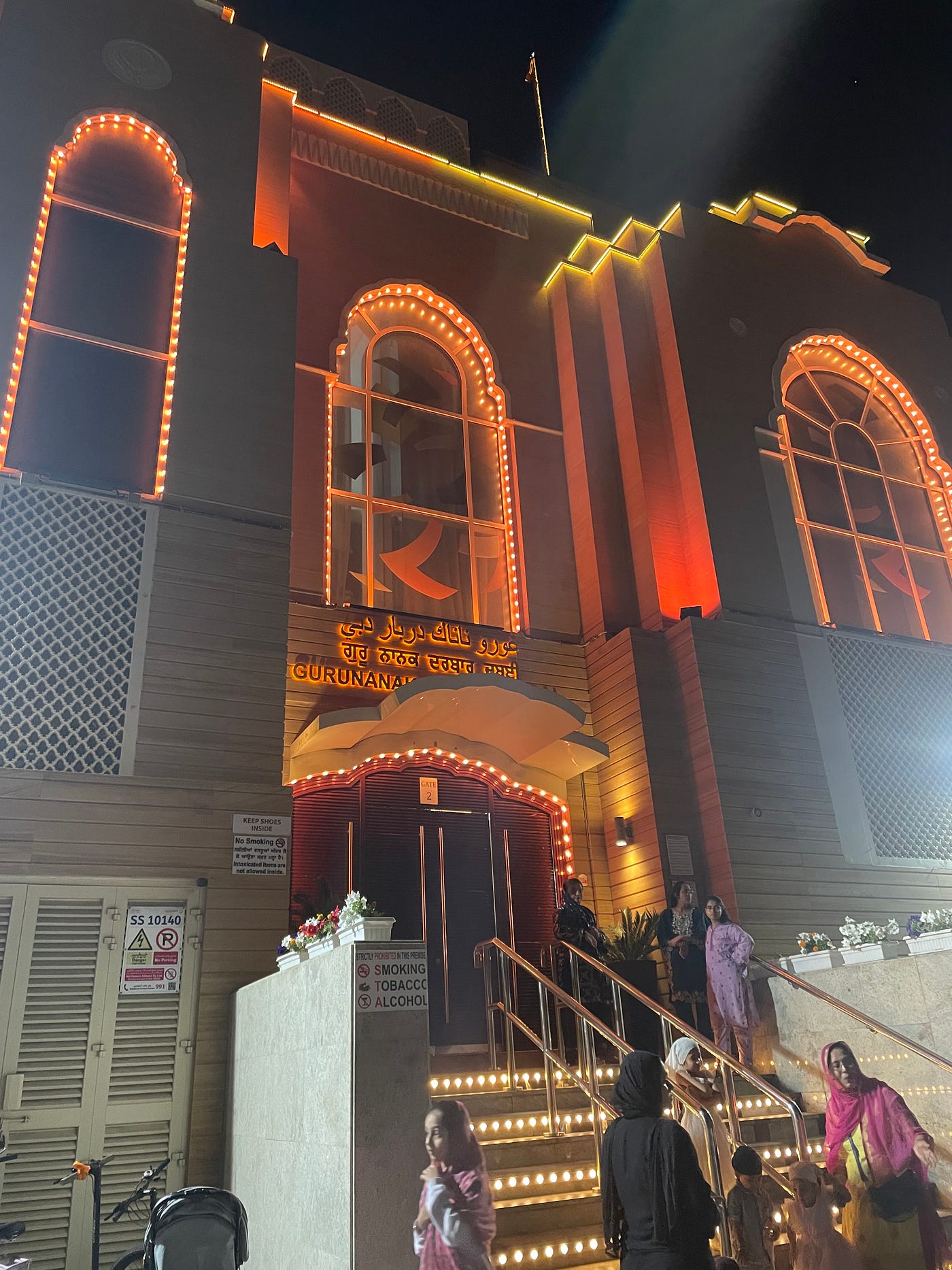
Last evening, I visited the Gurdwara for Baisakhi.
As I walked through the entrance, I was immediately met with the hum of coordinated care.
Volunteers lined up to serve langar. Shoes were being collected, sorted, and returned with reverence. Shuttle buses were transporting elderly sangat to and from the Gurdwara grounds. Police officers and sevadars stood side by side, calmly managing traffic.
It was seamless — not because it was managed through money or central command, but because it was rooted in seva.
No one was counting. No one was earning. And yet — everything flowed.
An Economy of Abundance
As someone who studied Economics at university, I first came across ideas like the circular economy in lecture slides. The idea that systems could be designed to reuse, regenerate, and flow sustainably fascinated me. But I didn’t realise then that I had already seen these principles in practice — not in a corporate sustainability report, but in the langar hall.
In the Gurdwara, circularity isn’t theoretical — it’s lived. A self-sustaining cycle of giving, receiving, and replenishing.
Here, Barkat (blessing or divine abundance) isn’t accumulation. It’s redistribution. It’s the knowing that what you give returns — not to you, necessarily, but to the ecosystem.
Scarcity Doesn’t Live Here
There are no signs that say “only one roti.” No receipts. No VIP lines. Everyone sits in pangat — side by side.
You may be a CEO, a student, or someone with no home — the thali is served the same. The care is equal.
This challenges everything we’re taught in capitalist systems — that worth must be earned, that time is money, that food and care are commodities.
At the Gurdwara, they are rights. And more than that — they’re responsibilities.
What If Our Systems Looked Like This?
What if we designed more than just our packaging to be circular? What if we designed our relationships, our institutions, our economies — around care?
The Gurdwara doesn’t just run on barkat. It is a model of what it looks like when design meets devotion.
Baisakhi, Reimagined
Baisakhi is often described as a celebration of harvest. But really, it’s a celebration of distribution. It’s not just what we gather, but what we give.
This year, Baisakhi reminded me that the most beautiful systems are the ones that don’t need to be branded as innovative — they’ve already been living, breathing, and serving for centuries.
What systems of abundance have you experienced lately? What does circular care look like in your world?


메타데이터
- post_id
- 302541f5c6a6
- slug
- barkat-baisakhi-circular-care-what-the-gurdwara-teaches-us-about-abundance-302541f5c6a6
- url
- https://medium.com/@nikita.asnani222/barkat-baisakhi-circular-care-what-the-gurdwara-teaches-us-about-abundance-302541f5c6a6
- canonical_url
- https://medium.com/@nikita.asnani222/barkat-baisakhi-circular-care-what-the-gurdwara-teaches-us-about-abundance-302541f5c6a6
- author_url
- https://medium.com/@nikita.asnani222
- status
- ok
- fetched_at
- 2026-07-20 08:03:32