Tell Chuck; He’ll Know What to Do
Discover the hidden directing methods of Professor Wole Soyinka through Professor Chuck Mike’s reflections. Explore their collaborative…
Tell Chuck; He’ll Know What to Do
Discover the hidden directing methods of Professor Wole Soyinka through Professor Chuck Mike’s reflections. Explore their collaborative genius and the iconic archival photos preserved by HSPACA.
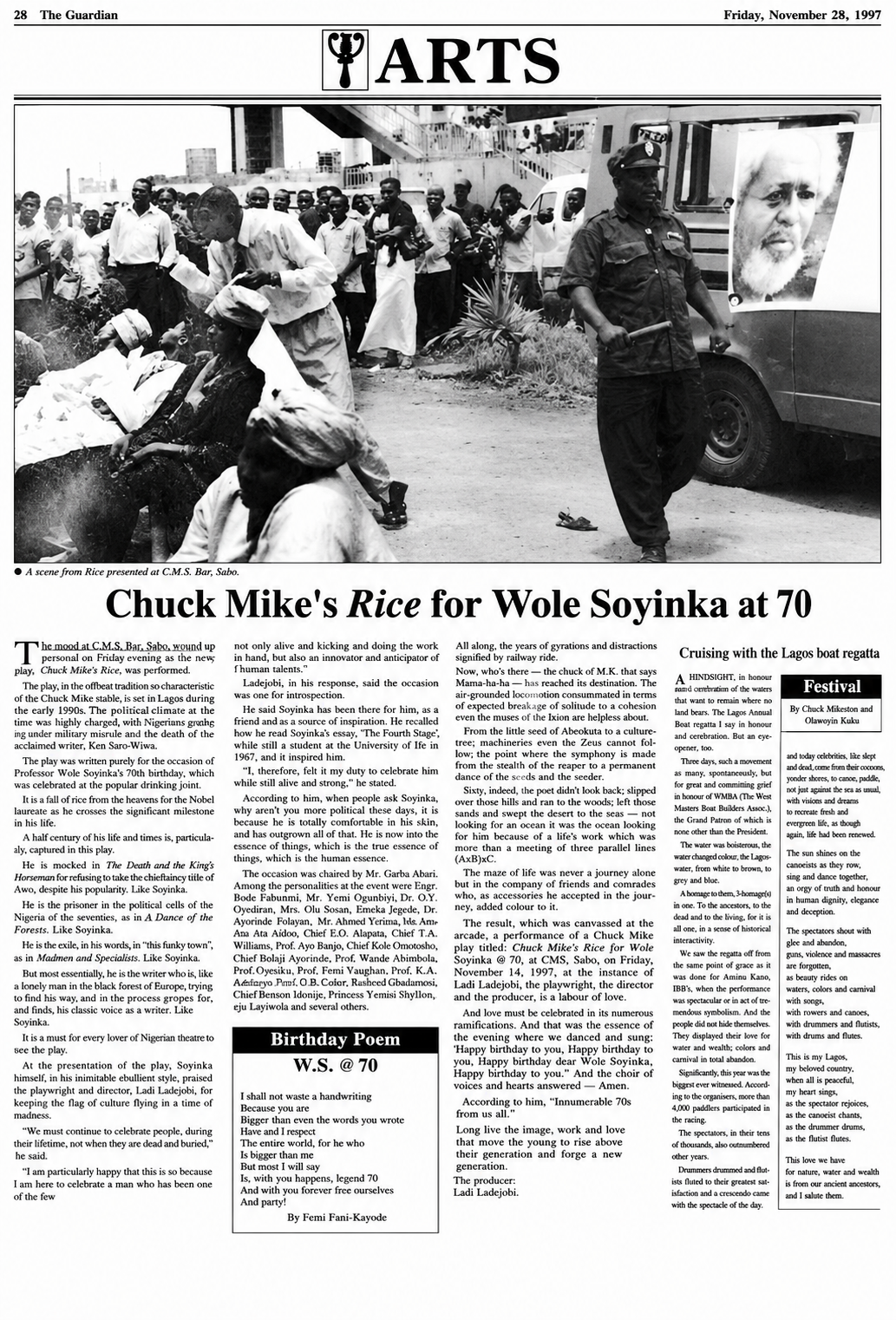
News clip from author’s archive
Professor Chuck Mike Remembers Directing with Professor Wole Soyinka
Beyond the Nobel laureate and celebrated playwright was a theatre director whose methods shaped generations of performers. Professor Chuck Mike offers a rare firsthand account of the creative process behind Professor Wole Soyinka’s theatre.
History remembers Professor Wole Soyinka as a Nobel laureate, playwright, poet and public intellectual. Those who worked with him remember something else. They remember a director.
Much has been written about Soyinka’s literary genius. Comparatively little has been written about the way he made theatre, how he worked with actors, how he developed performances, how he trusted collaborators, and how he transformed a fleeting idea into living drama.
Professor Chuck Mike was one of the few people uniquely placed to witness that process from the inside. Their relationship began at the then University of Ife. Although often described as one of Soyinka’s students, Chuck Mike prefers a more accurate description.
“I never took a formal class with Soyinka as a student. He was my mentor.”
That distinction matters. As a young member of the academic staff, Chuck Mike assisted Professor Soyinka on numerous productions, directing many of the Guerrilla Theatre Unit’s outreach performances presented in surrounding communities. Their collaboration culminated in Requiem for a Futurologist, which Chuck Mike later directed on a national tour.
The experience inspired him to undertake an extensive study of Soyinka as a director.
“To my knowledge,” Chuck Mike reflects, “it remains the only extensive study on him as a director. Most writings have been on his literary career.”
That observation exposes an important gap in African theatre scholarship.

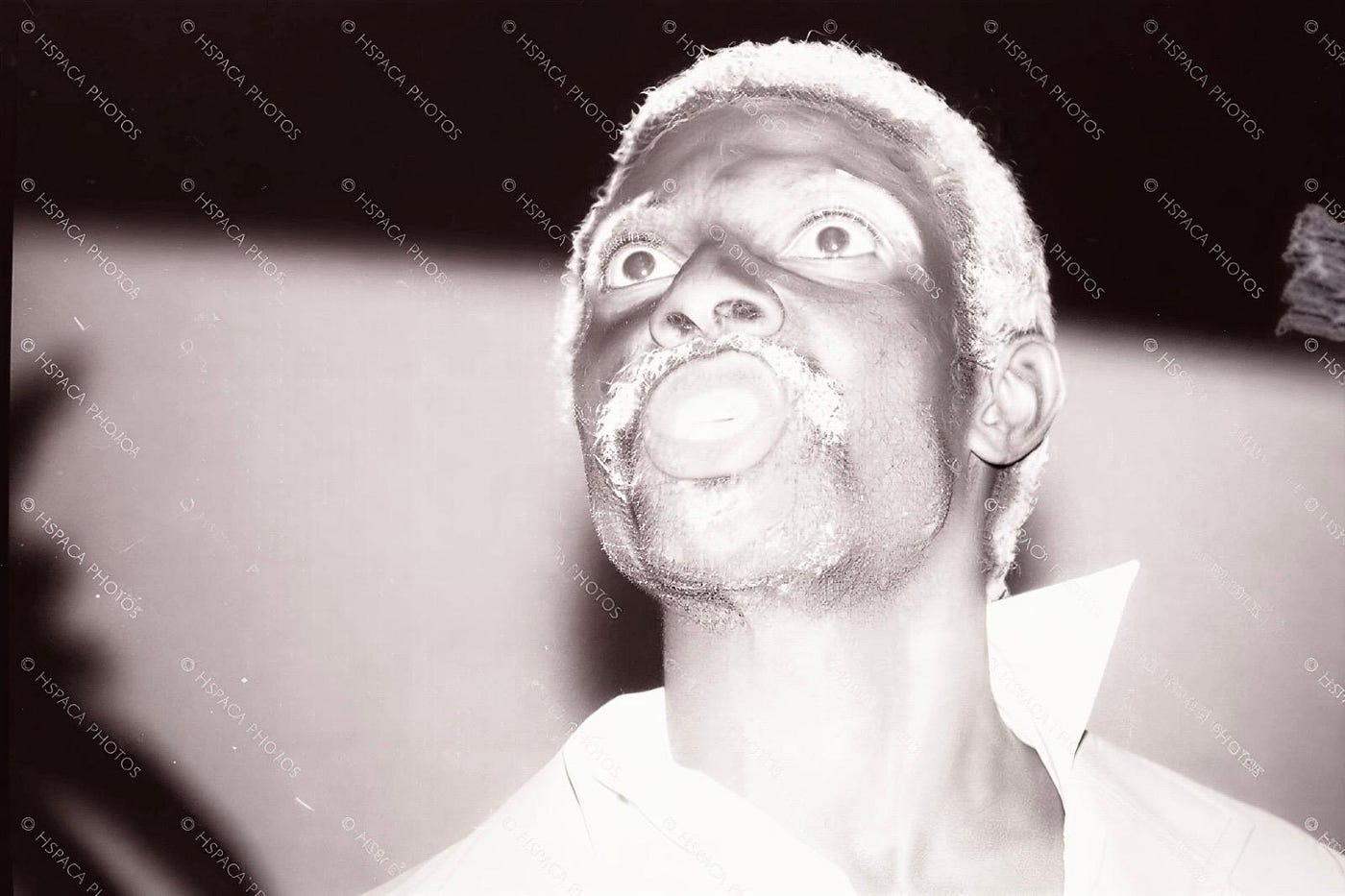
Photo of Professor Wole Soyinka by Hakeem Shitta. Copyright HSPACA.
The Director Behind the Playwright
When Professor Soyinka assumed leadership of the Ife Theatre Company, he wanted to reshape the way actors worked. The company had previously been trained within a tradition that valued precision and specificity in performance. Soyinka wanted something different.
Chuck Mike recalls, "He needed more eclecticism in playing.”
“He wanted to write less and be able to give them a thought cue and have them improvise around it.”
It was an ambitious vision.
Rather than treating actors as interpreters of fixed scripts, Soyinka wanted collaborators capable of creating theatre from ideas, images, and impulses. Improvisation was not an exercise.
It was a method of discovery.
Recognizing Chuck Mike’s affinity for that approach, Soyinka invited him to Ife during the summer while he was pursuing postgraduate studies to help nurture this new performance process with the acting company.
The collaboration proved so fruitful that Soyinka later appointed him to teach acting and directing in the department.
For nearly a decade, they worked side by side.
“Tell Chuck, He’ll Know What to Do."
Their collaboration did not end when both men left the university. Years later, while serving as Chairman of the Federal Road Safety Corps, Professor Soyinka telephoned Chuck Mike’s wife in Lagos with a characteristically brief message.
“Tell Chuck I need a sketch for training new marshals. He’ll know what to do.”
There was no lengthy briefing. No detailed script. No explanation. Just trust.
Chuck Mike understood immediately, and the result was Babatunde You Too Sabi, featuring Felix Okolo as a reckless driver.
After watching the performance, Soyinka approved it on the spot and arranged transport for the company to Abuja, where it became part of the training program for new marshals.
Chuck Mike, drawing on years of Guerrilla Theatre experience, transformed the journey itself into theatre.
The company stopped at motor parks from Iddo to Abuja, performing along the route before reaching the Nation’s capital.
The road became the stage. A Theatre of Ideas.

Photo of Professor Chuck Mike by Hakeem Shitta. Copyright HSPACA.
Another collaboration grew from an idea Soyinka called RAIDS, Road Accident Immune Deficiency Syndrome. From it emerged what became known as the ID Game.
Soyinka would propose two words beginning with the letters “I” and ""D"—for example, Irresponsible Driver. The actors would then create an original performance around that phrase.
Thirteen such ideas became thirteen sketches intended for television. Although the series was never broadcast, the performances found audiences where they mattered most: in motor parks and public spaces.
Felix Okolo, Niji Akanni, and Adeoye Bakare were among the artists who helped bring those pieces to life. The process perfectly illustrated Soyinka’s belief that theatre begins not with a finished script but with a provocative idea.
“Go and Work It Out”
Perhaps no story captures Soyinka’s directing style more vividly than the creation of Riceee. Outraged by the rice scandal during the Shagari administration, Soyinka remarked in his office one day: “I can see these politicians shitting money from this scandal.”
Chuck Mike immediately replied, "Yes. I can see it done in mime.”
Soyinka’s response was instantaneous. “Go and work it out.”
That was all. From a single image emerged a powerful piece of political theatre first created with members of the Pyrates Confraternity at Ife. Later, hundreds of Pyrates gathered carrying sacks resembling bags of rice and staged the work outside the National Assembly while legislators were in session. Years afterwards, Chuck Mike revived Riceee through Collective Artistes as a birthday tribute to Professor Soyinka at Iponri.
One Image. One Instruction. A lasting work of theatre.
Completing the Experiment.
Looking back, Chuck Mike believes the experiment that Soyinka envisioned at Ife was only partially realized there.
“Though we never achieved that as hoped in Ife with the Acting Company, we did with Collective Artistes and the Performance Studio Workshop.”
That reflection is profound. It suggests that the eclectic, improvisational theatre Soyinka imagined found its fullest expression in the work Chuck Mike later developed through Collective Artistes and the Performance Studio Workshop. In that sense, those companies did not depart from Soyinka’s philosophy. They fulfilled it.
Remembering the Director
Professor Wole Soyinka’s reputation as one of the world’s greatest playwrights is secure. His legacy as a director deserves equal attention.
Thanks to Professor Chuck Mike’s recollections, we glimpse a director who trusted actors, nurtured collaborators, valued improvisation, embraced political engagement, and believed that the strongest theatre often begins not with a finished script but with a single compelling image.
Capturing the Vision
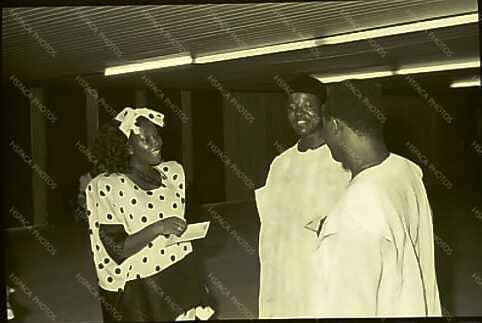
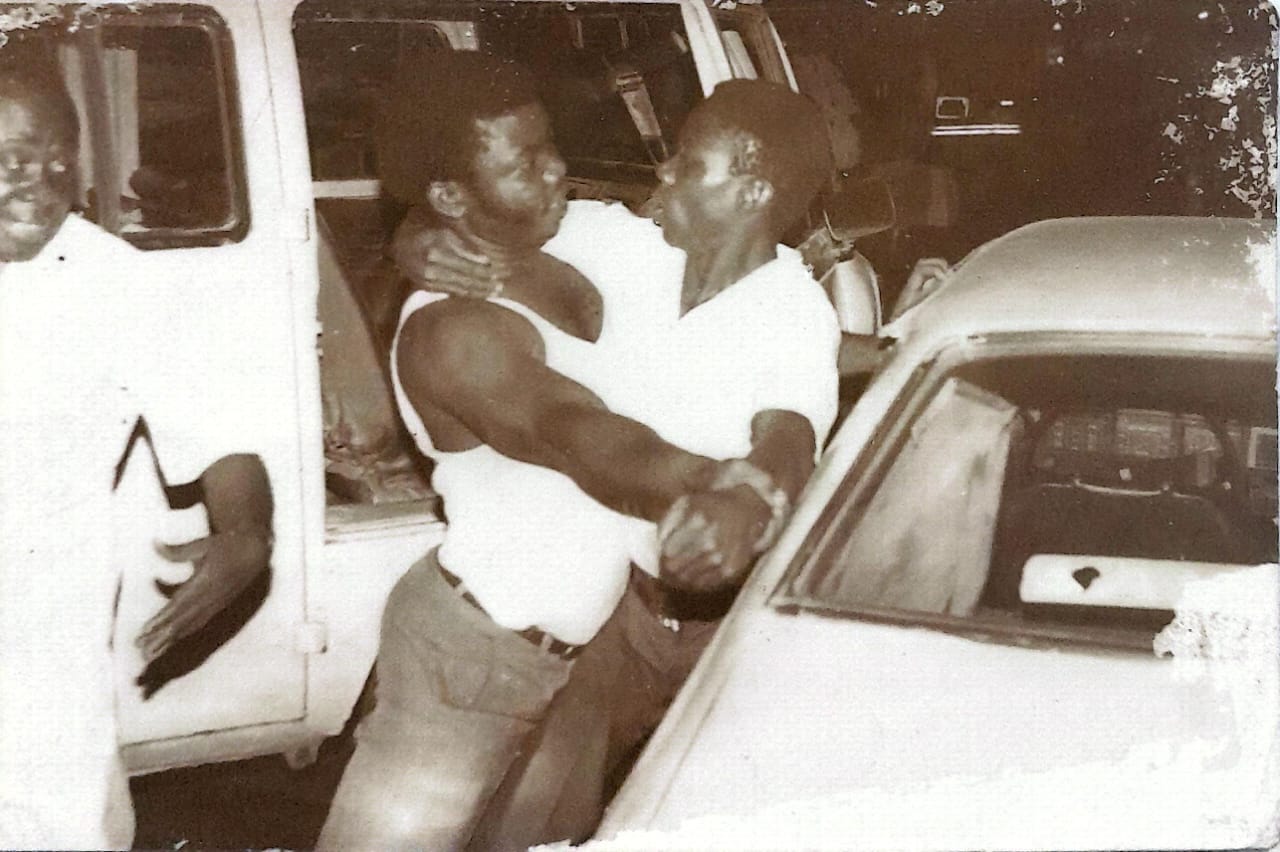
This vibrant era of theatrical experimentation was closely documented on film. Numerous portraits and works of Professor Wole Soyinka, alongside those of Professor Chuck Mike, were captured by the renowned photographer Hakeem Shitta. Today, these visual records form a vital part of the Hakeem Shitta Photo and Cultural Archive (HSPACA), preserving the physical essence of their historic collaboration for future generations.
For students of African theatre, these memories are more than reminiscences. They are an invitation to rediscover Professor Wole Soyinka, not only as the writer of remarkable plays but also as the director who inspired others simply by saying:
“Go and work it out.”
메타데이터
- post_id
- 3076c6c886eb
- slug
- tell-chuck-hell-know-what-to-do-3076c6c886eb
- url
- https://medium.com/write-your-world/tell-chuck-hell-know-what-to-do-3076c6c886eb
- canonical_url
- https://medium.com/write-your-world/tell-chuck-hell-know-what-to-do-3076c6c886eb
- author_url
- https://medium.com/@seguncoladimeji
- status
- ok
- fetched_at
- 2026-07-13 06:23:13