Data scraping: Everything you should know
For any data collection project, collecting data is a starting step that needs rigorous planning with a clear articulation of your…
Data scraping: Everything you should know
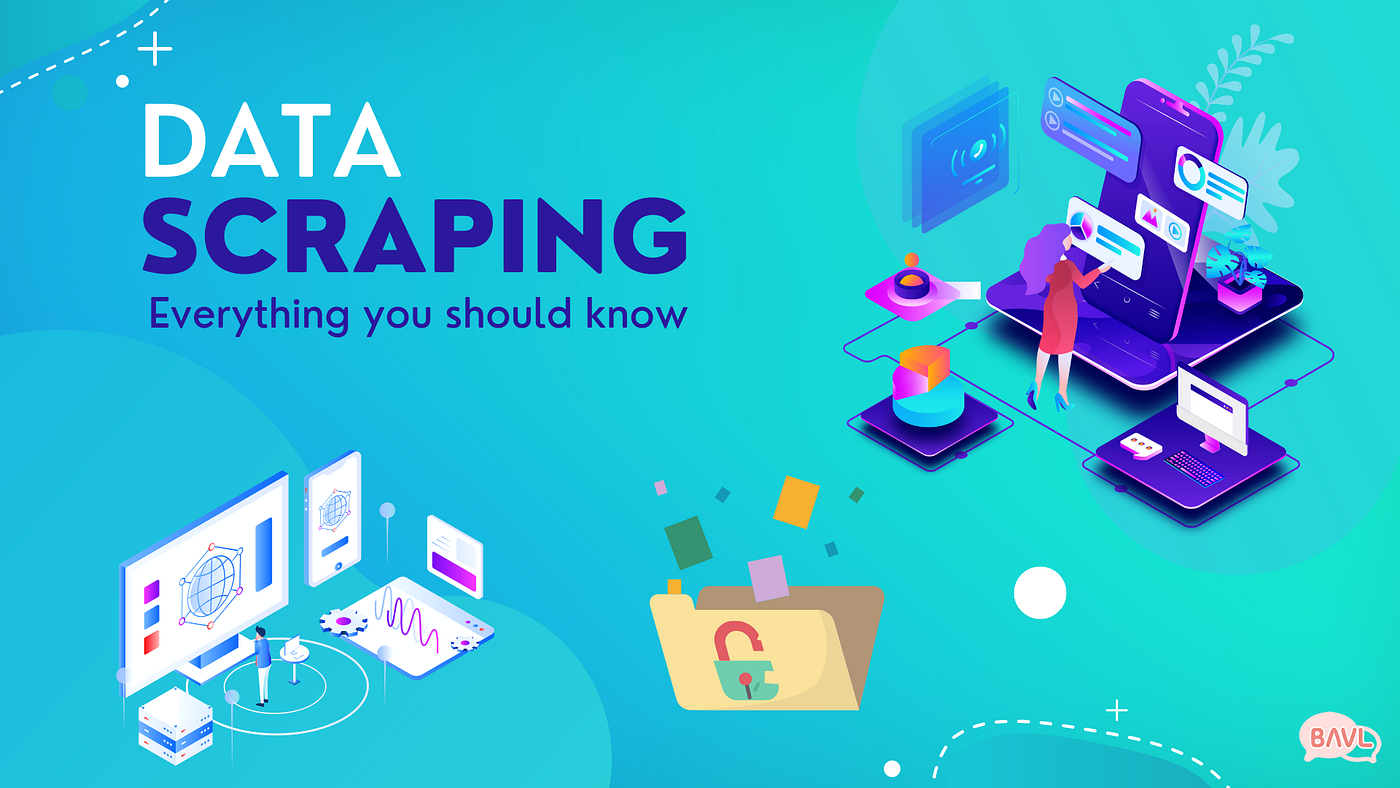
Data scraping as a helpful data collection technique.
For any data collection project, collecting data is a starting step that needs rigorous planning with a clear articulation of your priority, purpose, and requirements, as different kinds of data can be collected through data generation, extraction, and other means. For data extraction, data scraping is one option you may want to take. Although appearing simple at a glance, data scraping can become highly complex depending on your purpose, intended functionality, and varying features. This article looks into what data scraping is, the needs it can meet, and how it fares compared to other data-centered methods. In the end, we hope this helps you make that important decision in choosing whether to go with data scraping for your next data collection task — or maybe you’re better off with something else.
What is data scraping?
Data scraping is extracting data from websites, databases, or other sources using automated software and converting it into a structured format. It is a powerful tool for gathering and analyzing large amounts of information that would otherwise be difficult or even impossible to get. For example, a data scraping tool can be used to extract contact information from a website or to collect financial data that is publicly available online from a financial institution. It can also extract data from other public sources, such as social media platforms like Twitter and Facebook. Its use in business intelligence applications can help companies gain an in-depth understanding of their markets, customers, and competitors. On top of it all, it can also be utilized to identify trends and patterns in large datasets. For example, a company might use data scraping to analyze customer feedback on social media or to monitor competitor pricing. Because it allows data collection from scientific studies and the compilation of large datasets for academic purposes, data scraping is also used in research applications. In addition, data scraping can detect fraud or anomalies in large datasets, allowing for implementing proper measures to prevent further occurrences.
Web scraping for NLP
Web scraping is a crucial component in the data collection process that has become increasingly popular for collecting language data. In natural language processing (NLP), web scraping is used to gather data that can be utilized to develop and refine algorithms for language understanding and generation. It is even more instrumental when the data is not readily available in structured or machine-readable formats, such as HTML or XML.
Web scrapers can extract websites’ texts, images, and other data types, and the data collected can range from simple word lists and frequency counts to more complex linguistic analyses. This data can then be used to create datasets for NLP. Using web scraping, NLP researchers can collect large amounts of data from many different sources that can be used to train algorithms to detect patterns, identify topics, and understand the sentiment of the text. For example, web scraping can help companies build a marketing strategy based on created datasets of online reviews, which can be used to train sentiment analysis algorithms to classify text into positive, negative, or neutral. With a given dataset, these algorithms can also be trained to identify and classify text into specific categories or topics. In addition to creating datasets, web scraping can collect information about how people use language on the web. It can then be used to understand how language changes over time and spot trends in its usage.
Web scraping versus manual data extraction
Web scraping has several advantages over manual data extraction, which makes it a popular choice for businesses. The first advantage of web scraping is the speed at which data can be extracted. Automated software can quickly and efficiently extract large amounts of data from websites, saving businesses time and resources. This can give businesses a competitive edge as they can quickly analyze data and make decisions based on the results. Second, the data extracted via web scraping is more likely accurate given how automated software is programmed to follow specific rules and extract data from websites consistently, ensuring reliability. Manual data extraction can be prone to errors and inconsistencies, resulting in inaccurate data that often leads to bad decisions. Third, web scraping can also give businesses valuable insights into their market by better understanding their target audience and the competition in real time. This can help companies make informed decisions and stay ahead of the competition. Lastly, web scraping can automate mundane tasks that would otherwise be too time-consuming. For example, businesses can use web scraping to automatically monitor prices and competitors’ activities, allowing them to focus on more critical tasks. Web scraping is becoming increasingly popular as businesses look for ways to stay ahead of the competition.
What tools are used for data scraping?
There are several ways to scrape data; the most common is using a web crawler. This is a piece of software that accesses web pages and follows links to other pages to systematically browse the web, downloading them and extracting data from them. Web crawlers can be programmed to extract specific data or be configured to save all the data they can find. Other standard tools include web browsers, data extraction software, and application programming interfaces (APIs).
So, what exactly is a web crawler?
Web crawlers, also known as spiders, bots, and web robots, are used to index web pages for search engines. Web crawlers, like GoogleBot and Lumar (formerly DeepCrawl), work by sending out requests to web pages, collecting data, and indexing it. They typically follow links on each page to find and index more pages to add to the search engine index. Web crawlers also use algorithms to assess the relevance of web pages and prioritize pages that are more likely to be helpful to users. In other words, the same tools used by search engines like Google can also be used to scrape data from the Internet.
What is the difference between data mining and data scraping?
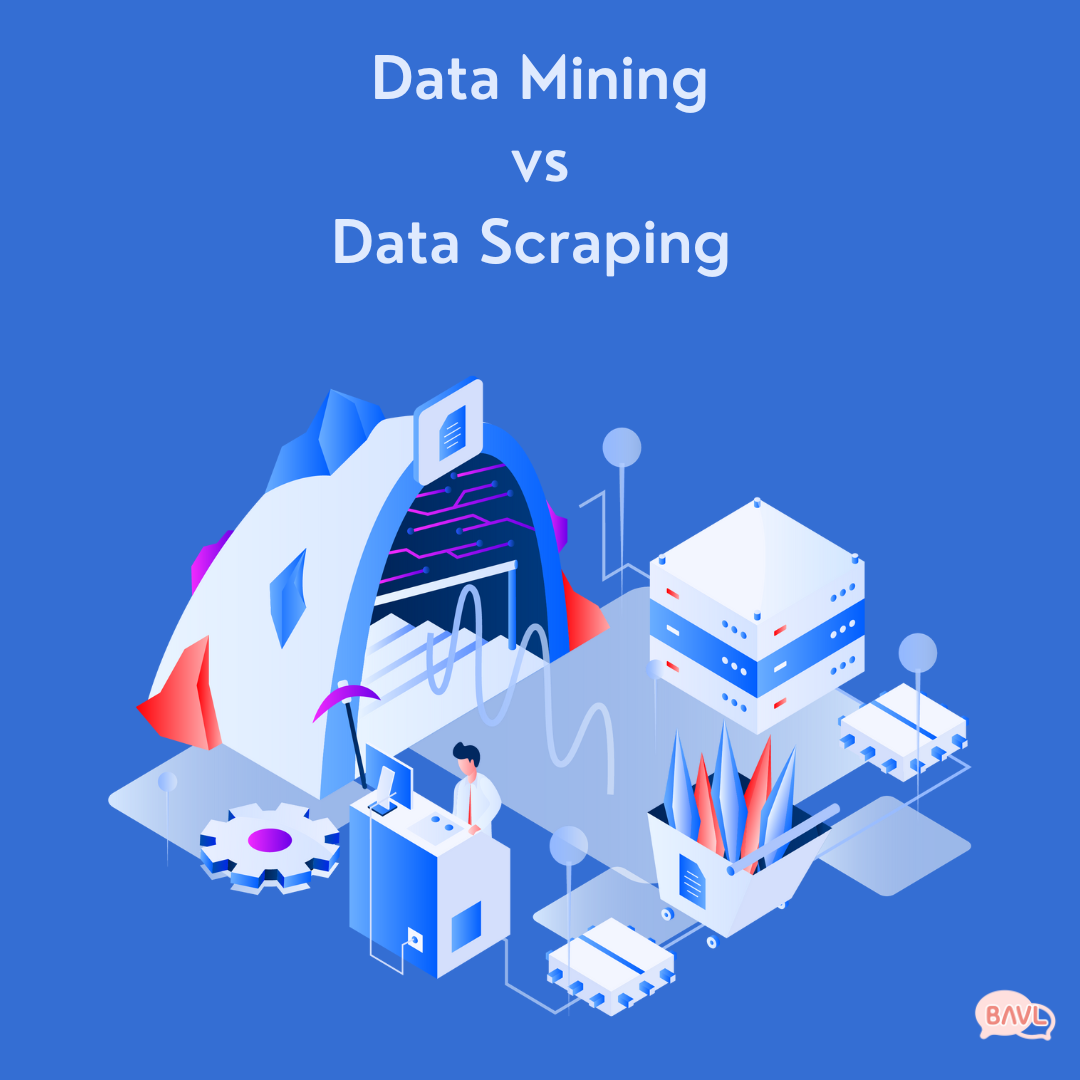
Sometimes labeled interchangeably, the terms “data scraping” and “data mining” mean completely different things.
Data mining is the process of analyzing large datasets to discover patterns and trends, while data scraping is the process of extracting data from websites or other sources. Data mining involves analyzing large amounts of data to identify relationships and correlations, while data scraping is gathering data from a specific source. The end goal of data mining is to gain insights and create predictive models, while data scraping aims to extract data from a particular source. Therefore, when considered together, they can be better understood as two steps in the same process: fetching the data and then analyzing the data. Overall, data scraping is essential in several fields, including NLP, allowing researchers to create powerful algorithms for language understanding and generation. However, it’s not a free-for-all approach, and several considerations and precautions are important to consider.
So, can I just scrape data from any website?
In general terms, web scraping is fair to be used when the data is publicly available and not protected by copyright, when the web scraping does not interfere with the use of the website by other users, and when the website’s owner has not explicitly prohibited it. However, web scraping can be subject to legal restrictions, as some websites may not allow the scraping of their data.
When using data scraping, it is crucial to ensure that the data is collected legally and ethically. It is also essential to ensure that the data is used responsibly and that it is properly stored and secured.
In short, there are a few dos and don’ts to consider when using data scraping. It is important to ensure that you are not scraping data from websites protected by copyright or other laws. You must also confirm that you are not collecting sensitive information or personal data and that you are following the law and other ethical guidelines. Finally, it is important to use the data responsibly and to take precautions to ensure that it is not used for malicious purposes.
Depending on where you live, different laws and regulations may apply. In the United States, the Computer Fraud and Abuse Act (CFAA) has been used to prosecute web scraping in some cases. In the European Union, the General Data Protection Regulation (GDPR) includes provisions related to web scraping. Additionally, some websites have Terms of Service or other policies that prohibit web scraping. Based on these considerations, web scraping can also be deemed illegal and punishable by law.
The following cases set a precedent for litigation related to web scraping:
-
Ticketmaster v. Prestige Entertainment, Inc. (2002): Ticketmaster sued Prestige Entertainment for using web scraping software to collect data from Ticketmaster’s website and use it to create competing ticket resale websites.
-
hiQ Labs v. LinkedIn (2018): hiQ Labs was sued by LinkedIn for scraping its public profiles and using the data to create software for human resources.
-
Facebook v. Power Ventures (2012): Facebook sued Power Ventures for accessing and collecting Facebook data after it had been told to stop scraping.
-
Craigslist v. 3Taps (2013): Craigslist sued 3Taps for scraping its website and using the data to create a rival classifieds website.
-
hiQ Labs v. LinkedIn (2020): LinkedIn sued hiQ Labs for scraping its public profiles, even after its previous lawsuit against hiQ Labs.
How can web scraping be prevented?
If you are the owner of a web page, you might be interested in preventing your information from being scraped by unauthorized parties. Web scraping can be prevented using various methods, such as CAPTCHA, IP address blocking, and web page obfuscation. CAPTCHA (Completely Automated Public Turing Test to Tell Computers and Humans Apart) is designed to prevent automated bots from extracting data from websites. On the other hand, IP address blocking can prevent specific IP addresses from accessing a website. To add a higher level of difficulty in scraping, web page obfuscation makes the HTML code difficult to read or understand. Additionally, websites can use robots.txt files to specify which pages or resources should not be accessed by web scrapers.
What is the right way to build a language data collection project?
BAVL offers data collection, annotation, cleaning, etc., all at bavl.ai.
The right way to build a language data collection project is to develop and use a well-defined process. This process should include a clear goal, a plan for collecting data, a strategy for validating the collected data, and procedures for organizing and storing the data. Additionally, it is important to ensure that the data is collected ethically and legally and that privacy and security measures are put in place to protect the data. Finally, it is vital to have a plan for using the data effectively. This may include analyzing the data, creating visualizations, or using machine learning algorithms to gain insights from the data.
If you are looking for a one-stop solution that can help you solve all your data collection needs for your next NLP project without all the complications that come with web scraping, look no further. Visit bavl.ai or email bavl@lexcode.com now to learn more about everything that BAVL has to offer, or schedule a call with us now to get started.
메타데이터
- post_id
- 30a641ded1f3
- slug
- data-scraping-everything-you-should-know-30a641ded1f3
- url
- https://medium.com/@BAVL/data-scraping-everything-you-should-know-30a641ded1f3
- canonical_url
- https://medium.com/@BAVL/data-scraping-everything-you-should-know-30a641ded1f3
- author_url
- https://medium.com/@BAVL
- status
- ok
- fetched_at
- 2026-06-10 08:17:25