Trump Administration Moves to Strip Citizenship From 17 More Naturalized Americans
As the Trump administration moves to revoke citizenship from more naturalized Americans, critics warn that millions may begin questioning…
POLITICS
Trump Administration Moves to Strip Citizenship From 17 More Naturalized Americans
As the Trump administration moves to revoke citizenship from more naturalized Americans, critics warn that millions may begin questioning whether their place in the country is truly secure
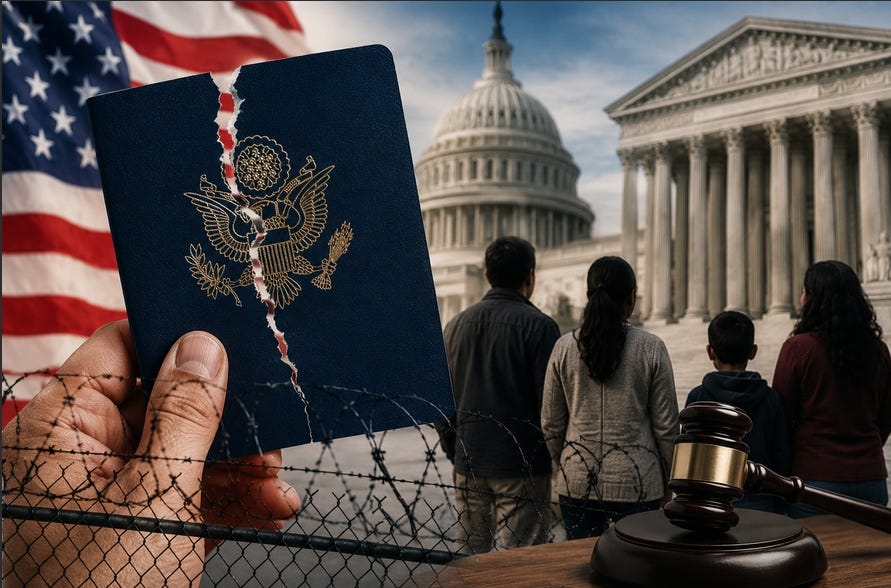
Could Your American Citizenship Be Taken Away? — ChatGPT
The Trump administration is expanding its effort to revoke U.S. citizenship from naturalized Americans. A plan has recently been announced to pursue denaturalization cases against 17 additional people accused of serious crimes and immigration fraud.
Denaturalization is the legal process through which the government seeks to revoke citizenship from a person who became a U.S. citizen through naturalization rather than by birth.
The U.S. Department of Justice announced Monday that it had filed actions against 17 naturalized citizens from Cuba, Haiti, Colombia, Mexico, and Jamaica. Federal officials allege the individuals concealed important information when they were granted citizenship. Or that they made false statements during the naturalization process.
The Growing Use of a Rare Government Power
According to the Justice Department, the cases involve allegations ranging from sexual abuse of a minor and large-scale drug distribution to wire fraud and bank fraud.
Under federal law, citizenship obtained through fraud, misrepresentation, or the concealment of material facts can be revoked. This can happen through a process known as denaturalization. Federal officials argue that the law is intended to protect the integrity of the naturalization system.
How? By ensuring that applicants provide truthful and complete information when seeking U.S. citizenship.
“Citizenship is a privilege,” Acting Attorney General Todd Blanche said in a statement, arguing that individuals who abuse the naturalization process should face consequences.
The Justice Department maintains that denaturalization actions are reserved for cases involving serious misconduct or evidence that citizenship was obtained improperly.
The latest action follows a similar announcement last month, when the administration sought to denaturalize 12 other naturalized Americans accused of offenses including supporting terrorist organizations, committing war crimes, and sexually abusing minors.
Taken together, the cases suggest that the administration intends to make denaturalization a more prominent part of its broader immigration enforcement strategy.
Part of a Broader Immigration Strategy
The latest administration move reflects a wider immigration agenda under President Donald Trump’s second administration. Since returning to office, Trump has prioritized aggressive immigration enforcement. He has been building on campaign promises of mass deportations and stricter oversight of both legal and undocumented immigration.
A Justice Department memo released last year identified categories of individuals the administration intends to prioritize for denaturalization proceedings. This includes those people considered national security threats and those accused of failing to disclose felony convictions during the citizenship process.
Administration officials argue that enforcing these laws protects the integrity of the naturalization system. They also say that it ensures that citizenship remains reserved for those who obtained it legally.
Why Critics Are Paying Close Attention
Although denaturalization is permitted under federal law, it has historically been very rare. Immigration law experts note that the government must meet a high legal standard before citizenship can be revoked.
U.S. Citizenship and Immigration Services states that denaturalization generally requires proof that an applicant deliberately concealed or misrepresented material facts during the naturalization process. This can be difficult to prove.
The current administration’s renewed focus on citizenship revocation is drawing scrutiny. Not only from immigration advocates but also civil liberties groups. Critics argue that expanding the use of denaturalization raises broader questions about the security of citizenship for naturalized Americans, even when the current cases involve allegations of fraud or serious criminal conduct.
Some advocates worry that the growing use of denaturalization could leave naturalized citizens feeling that their status is more vulnerable than that of Americans born in the United States. They argue that the issue is not only about the cases currently before the courts but also about the precedent being set for future administrations.
Are these actions opening the door to push out even more naturalized citizens in the future?
What About Americans Born in the United States?
Others may wonder whether Americans born in the United States could someday face similar actions if they fall out of favor with a particular administration.
Legal experts say the answer, under current law, is no.
Citizenship acquired at birth is protected by the Constitution, and there is currently no legal mechanism that allows the government to revoke the citizenship of a native-born American for political views, criticism of government officials, or other lawful activities.
Concerned civil liberties advocates argue that the administration’s emphasis on denaturalization has sparked a larger conversation. It triggers questions about the limits of ultimate government power and the importance of protecting citizenship rights for all Americans. Both natural-born and naturalized.
A Debate That Is Just Beginning
Historically, denaturalization was an uncommon legal tool. According to the National Immigration Forum, the government filed an average of just 11 denaturalization cases annually between 1990 and 2017. During Trump’s first term, that average rose to 42 cases per year.
Outspoken supporters of the current policy say the issue is straightforward: people who obtained citizenship through fraud should not be allowed to keep it. Critics counter that the renewed focus on denaturalization raises questions that extend far beyond the individuals named in these cases.
As the administration continues to expand its use of denaturalization, the debate is no longer just about immigration. It is increasingly becoming a conversation about citizenship itself. Who gets to keep it, how secure it really is, and where the government’s authority over that status should end.
메타데이터
- post_id
- 30bb2d5f7b56
- slug
- trump-administration-moves-to-strip-citizenship-from-17-more-naturalized-americans-30bb2d5f7b56
- url
- https://medium.com/bouncin-and-behavin-blogs/trump-administration-moves-to-strip-citizenship-from-17-more-naturalized-americans-30bb2d5f7b56
- canonical_url
- https://medium.com/bouncin-and-behavin-blogs/trump-administration-moves-to-strip-citizenship-from-17-more-naturalized-americans-30bb2d5f7b56
- author_url
- https://medium.com/@boutiqueshopgirl
- status
- ok
- fetched_at
- 2026-06-15 20:49:13