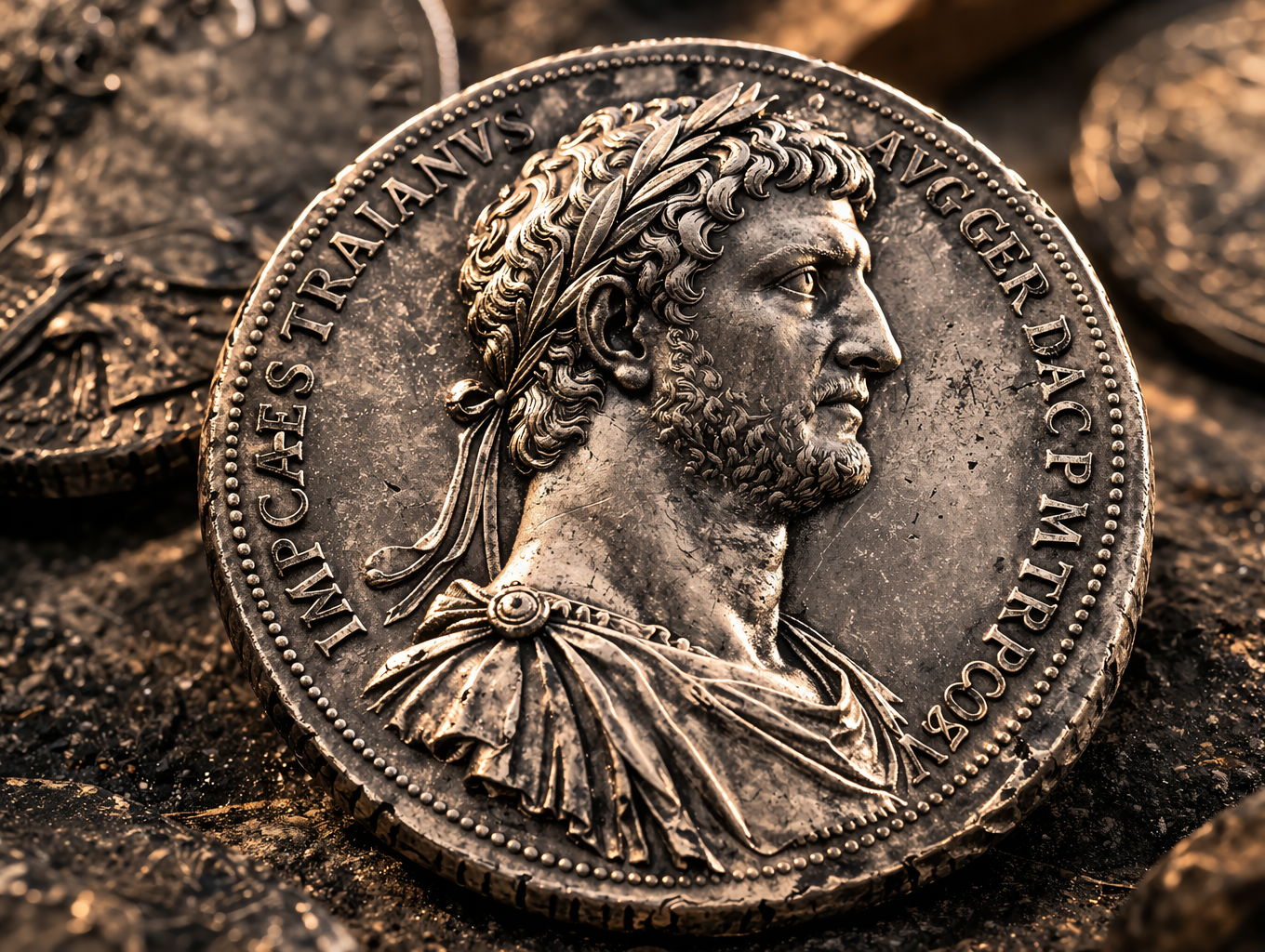
How the Denarius Controlled Rome’s Economy
The small silver coin that shaped wages, trade, and power across the Roman Empire.
How the Denarius Controlled Rome’s Economy
The small silver coin that shaped wages, trade, and power across the Roman Empire.

Roman military power was funded and maintained through the daily flow of silver denarii.
The small silver coin that quietly ran an empire
In the heart of ancient Rome, long before banks, credit cards, or digital payments, there was a small silver coin that held everything together.
It wasn’t gold. It wasn’t rare. It wasn’t flashy.
It was the denarius.
And for centuries, this single coin quietly controlled wages, trade, taxes, and even the power of the Roman Empire itself.
A coin born from crisis
The denarius first appeared around 211 BC, at a time when Rome was fighting for survival during the Second Punic War.
Rome needed money. Reliable money. Money that soldiers would trust… and merchants would accept.
So they created the denarius - a standardized silver coin that would become the backbone of the Roman economy.
From that moment on, everything changed.
One coin to price everything
What made the denarius powerful wasn’t just its silver.
It was consistency.
For generations, the denarius became the reference point for daily life:
- A worker’s daily wage was about one denarius
- A soldier’s pay was calculated in denarii
- Food, clothing, and rent were all priced in denarii
It became the language of value.
When everyone agrees on the value of one coin… trade becomes simple, fast, and predictable.
The glue of an empire
The Roman Empire stretched from Britain to Egypt.
Different cultures. Different languages. Different traditions.
But one currency connected them all.
The denarius allowed merchants in Spain to trade easily with buyers in Syria. It allowed taxes to be collected in the same unit across thousands of miles. It allowed contracts to be written with clear and stable prices.
In a world without modern banking… the denarius acted like a shared economic language.
Silver that paid for power
Rome’s military strength depended directly on this coin.
Soldiers were paid in denarii. Campaigns were funded in denarii. Supplies were purchased in denarii.
If the flow of silver stopped… the army weakened.
So controlling the denarius meant controlling Rome’s power.
When the coin began to change
For a long time, the denarius remained strong and trusted.
But as the empire expanded, expenses grew.
Emperors needed more money. And instead of raising taxes alone… they did something else.
They reduced the silver content of the coin.
At first, people didn’t notice. Then they did.
The coin still looked the same… but it was worth less.
Prices started rising. Trust started falling. And slowly, inflation spread through the empire.
A quiet warning from history
The story of the denarius is more than ancient history.
It’s a reminder.
A reminder that money is not just metal or paper. It’s trust.
Once people stop trusting a currency… everything around it begins to shake.
Trade slows. Prices rise. Stability fades.
Rome didn’t fall because of one coin. But when the denarius weakened… the economy followed.
The hidden engine of Rome
The denarius was never the most beautiful coin Rome made. It wasn’t the largest. It wasn’t the rarest.
But it was the most important.
Because behind every road, every army, every market, and every tax… there was a small silver coin keeping the system alive.
A coin that most people never thought about.
But one that controlled everything.
Final thought
If you want to understand how great civilizations rise and fall… don’t just look at their wars or their leaders.
Look at their money.
Because sometimes, the smallest coin tells the biggest story.
메타데이터
- post_id
- 30bff47ffeca
- slug
- how-the-denarius-controlled-romes-economy-30bff47ffeca
- url
- https://medium.com/@PastMint/how-the-denarius-controlled-romes-economy-30bff47ffeca
- canonical_url
- https://medium.com/@PastMint/how-the-denarius-controlled-romes-economy-30bff47ffeca
- author_url
- https://medium.com/@PastMint
- status
- ok
- fetched_at
- 2026-07-13 06:23:13