The Hidden Relationship Between Injector Nozzle Spray Penetration and Engine Stability
Most discussions about diesel injector nozzles focus on fuel pressure, injection timing, or fuel quantity.
The Hidden Relationship Between Injector Nozzle Spray Penetration and Engine Stability
Most discussions about diesel injector nozzles focus on fuel pressure, injection timing, or fuel quantity.
But another factor plays an equally important role in combustion behavior:
spray penetration.
The distance and pattern with which fuel travels inside the combustion chamber directly influence:
- flame propagation
- combustion stability
- cylinder pressure balance
- thermal distribution
- long-term engine smoothness
Even small changes in spray penetration depth can alter how combustion develops under different load conditions.
This is why some diesel engines remain smooth and stable under heavy load while others gradually develop:
- vibration
- unstable acceleration
- thermal imbalance
- inconsistent combustion behavior
despite having similar injector systems.
This article explores the hidden relationship between injector nozzle spray penetration and diesel engine stability, and why penetration behavior matters more than many operators realize.
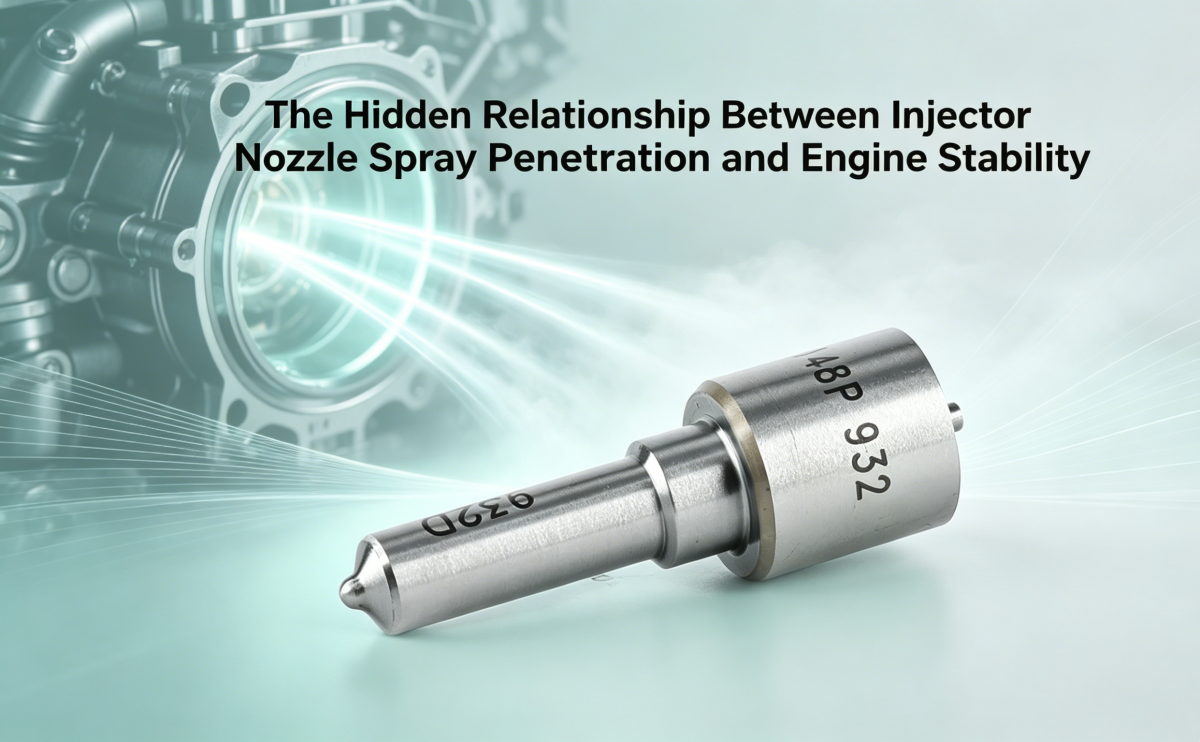
Why Spray Penetration Directly Influences Combustion Quality
When fuel enters the combustion chamber, it must penetrate deeply enough to mix effectively with compressed air.
However, penetration depth must remain balanced.
If penetration is too shallow:
- fuel may not distribute efficiently
- combustion becomes incomplete
- efficiency declines under load
If penetration is too deep:
- fuel may concentrate excessively
- localized combustion temperatures increase
- thermal stress rises
Examples such as:
- **DLLA155P1062 diesel injector nozzle**
- DSLA145P864 diesel injector nozzle
demonstrate how spray penetration characteristics influence combustion behavior even under similar fuel pressure conditions.
Why Penetration Balance Matters in Modern Diesel Engines
Modern diesel combustion chambers are designed around extremely controlled airflow patterns.
Injector nozzles must deliver fuel with:
- correct penetration depth
- stable diffusion behavior
- predictable flame development
to maintain combustion efficiency.
Because combustion chambers operate under rapidly changing pressure and temperature conditions, penetration stability becomes essential for:
- smooth pressure rise
- balanced combustion spread
- controlled thermal behavior
Without proper penetration balance, combustion stability gradually deteriorates.
The Difference Between Shallow and Deep Fuel Penetration
Different spray penetration behaviors produce different combustion characteristics.
Shallow Penetration
Shallow spray penetration may:
- improve short-range fuel diffusion
- reduce localized heat concentration
- support smoother low-load combustion
However, insufficient penetration can also reduce:
- high-load combustion efficiency
- deep chamber fuel utilization
- torque consistency under stress
Deep Penetration
Deep penetration improves:
- fuel delivery under heavy load
- high-pressure combustion efficiency
- combustion energy concentration
But excessive penetration may increase:
- localized thermal stress
- piston crown heat concentration
- uneven combustion pressure behavior
Efficient combustion therefore requires a carefully balanced penetration profile rather than maximum penetration alone.
How Flame Propagation Changes Engine Stability
After injection occurs, combustion develops through flame propagation across the chamber.
Stable flame propagation creates:
- smooth pressure rise
- predictable torque release
- balanced thermal distribution
But unstable spray penetration can disrupt flame development.
This may create:
- uneven combustion zones
- delayed pressure rise
- localized heat concentration
- inconsistent cylinder loading
For example:
- DLLA149P1470 diesel injector nozzle
may exhibit different combustion stability behavior depending on penetration consistency during changing load conditions.
Why Flame Front Development Matters
The combustion flame front controls how smoothly combustion pressure develops.
A stable flame front improves:
- combustion rhythm
- acceleration smoothness
- thermal efficiency
- vibration control
An unstable flame front may gradually create:
- rough combustion behavior
- inconsistent engine response
- micro vibration during acceleration
- long-term thermal imbalance
These issues often develop slowly before visible mechanical symptoms appear.
Localized Heat and Combustion Concentration
One of the biggest risks associated with unstable penetration behavior is localized combustion concentration.
When fuel accumulates excessively in one area:
- combustion temperature rises sharply
- thermal expansion becomes uneven
- piston stress increases
Over time, this contributes to:
- combustion chamber fatigue
- injector wear acceleration
- uneven cylinder loading
- declining long-term stability
Importantly, localized combustion may exist long before major failure occurs.
Why Thermal Concentration Often Goes Undetected
Many operators only notice combustion problems after severe symptoms appear.
But thermal imbalance usually develops gradually.
Early signs may include:
- slight vibration under load
- rougher acceleration feel
- inconsistent thermal behavior
- declining combustion smoothness
Because power output may remain acceptable initially, these symptoms are often ignored until long-term wear becomes significant.
Fuel Penetration Under Heavy Load Conditions
Spray penetration becomes especially important during heavy-load operation.
Examples include:
- towing
- uphill climbing
- heavy cargo transportation
- sustained high-RPM operation
Under these conditions:
- cylinder pressure rises rapidly
- combustion temperatures increase significantly
- penetration consistency becomes critical
Stable penetration helps maintain:
- balanced flame development
- efficient combustion spread
- smoother torque release
- controlled thermal behavior
while unstable penetration increases combustion stress.
Why Similar Nozzles Produce Different Stability Characteristics
Two injector nozzles with similar specifications may still behave differently because penetration behavior depends on:
- spray hole geometry
- fuel droplet momentum
- airflow interaction
- needle response behavior
- chamber pressure dynamics
This explains why engines using similar injector systems may still exhibit major differences in:
- smoothness
- combustion stability
- vibration behavior
- thermal consistency
under real operating conditions.
The Relationship Between Spray Penetration and Long-Term Reliability
Stable combustion reduces microscopic stress during every combustion cycle.
Balanced penetration behavior improves:
- cylinder pressure consistency
- thermal distribution uniformity
- combustion smoothness
- long-term durability
Poor penetration stability gradually increases:
- thermal fatigue
- vibration stress
- piston loading imbalance
- injector wear accumulation
Over thousands of operating hours, these differences significantly influence engine lifespan.
Why Efficient Combustion Depends on Controlled Fuel Spread
Many operators assume increasing pressure automatically improves combustion.
In reality, combustion efficiency depends on how effectively fuel spreads and burns throughout the chamber.
Controlled penetration helps maintain:
- balanced combustion expansion
- stable pressure development
- predictable thermal behavior
- efficient energy release
This is why injector spray penetration remains one of the most important — yet least understood — aspects of diesel combustion behavior.
FAQ
What is diesel injector spray penetration?
Spray penetration refers to how far fuel travels inside the combustion chamber after injection.
Can excessive penetration damage engine components?
Yes. Excessive penetration may create localized thermal concentration and uneven combustion stress.
Why does penetration stability matter under load?
Heavy-load operation increases cylinder pressure and combustion temperature, making stable penetration critical for balanced combustion.
Does spray penetration affect vibration?
Yes. Uneven combustion caused by unstable penetration may create pressure imbalance and vibration during acceleration or load transition.
Conclusion
Injector nozzle spray penetration plays a critical role in diesel engine stability.
Efficient combustion depends not only on fuel pressure or timing, but also on:
- penetration depth
- flame propagation behavior
- combustion spread consistency
- thermal balance stability
Even small penetration variations influence:
- cylinder pressure behavior
- torque smoothness
- combustion efficiency
- long-term engine reliability
Understanding spray penetration behavior allows operators to better evaluate combustion quality, improve thermal stability, and maintain smoother engine operation over time.
Ultimately, stable diesel combustion depends not only on injecting fuel — but on controlling exactly how combustion energy spreads throughout the chamber.
👉 Explore diesel engine components and fuel injection systems: **Diesel Injector Nozzle**
👉 Related technical reading: **Why Efficient Diesel Combustion Depends on Fuel Distribution, Not Just Pressure**
메타데이터
- post_id
- 30ebc22faa20
- slug
- the-hidden-relationship-between-injector-nozzle-spray-penetration-and-engine-stability-30ebc22faa20
- url
- https://medium.com/@pioneerdieselparts/the-hidden-relationship-between-injector-nozzle-spray-penetration-and-engine-stability-30ebc22faa20
- canonical_url
- https://medium.com/@pioneerdieselparts/the-hidden-relationship-between-injector-nozzle-spray-penetration-and-engine-stability-30ebc22faa20
- author_url
- https://medium.com/@pioneerdieselparts
- status
- ok
- fetched_at
- 2026-07-26 21:14:45