How much damage does 24-hour recording do to a MicroSD card?
In dashcams, surveillance cameras, GPS trackers, and other always-on devices, “24-hour loop recording” is very common. Many users naturally…
How much damage does 24-hour recording do to a MicroSD card? (Real write load and lifespan analysis)

In dashcams, surveillance cameras, GPS trackers, and other always-on devices, “24-hour loop recording” is very common. Many users naturally worry:
Will a MicroSD card wear out quickly because it is constantly being written to?
The answer is: it will not fail immediately, but it does consume lifespan. The key factors are write volume and card quality.
Below is a data-based breakdown.
1. Write volume calculation: how much data is written in 24 hours?
The lifespan of a MicroSD card is mainly determined by NAND flash program/erase (P/E) cycles, not time.
So first, we need to calculate the actual daily write load.
1. Typical dashcam bitrate reference
Resolution
Encoding
Typical bitrate
1080P
H.264
10–20 Mbps
1080P
H.265
6–12 Mbps
2K
H.265
12–20 Mbps
4K
H.265
25–45 Mbps
We take a common mid-range value:
1080P H.264 ≈ 15 Mbps
2. Convert to storage write volume
Calculation:
· 15 Mbps ÷ 8 = 1.875 MB/s
· 1.875 × 3600 = 6.75 GB/hour
· 6.75 × 24 = 162 GB/day
3. Conclusion
�� 24-hour continuous recording ≈ 150–170 GB of data written per day
This means:
· 64GB card: overwritten about 2.5 times per day
· 128GB card: about 1.2 times per day
· 256GB card: about 0.6 times per day
2. Lifespan testing: how long can a MicroSD card actually last?
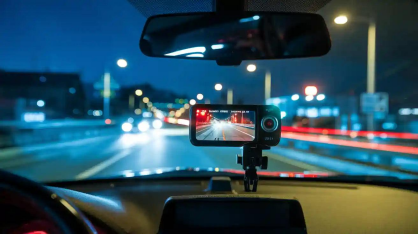
MicroSD lifespan depends mainly on NAND flash endurance (P/E cycles).
1. Key metric: P/E cycle endurance
Type
Endurance (P/E cycles)
Consumer-grade TLC
500–1500 cycles
High-quality TLC
1500–3000 cycles
Industrial SLC/MLC
3000–100,000 cycles
2. Lifespan model using a 128GB card
Assumptions:
· Capacity: 128GB
· Daily write: 162GB
· Equivalent full writes: ~1.27 cycles/day
3. Annual write load:
· 1.27 × 365 ≈ 463 cycles/year
4. Theoretical lifespan estimation
Case A: Consumer-grade (1000 cycles)
· 1000 ÷ 463 ≈ 2.1 years
Case B: High-quality (3000 cycles)
· 3000 ÷ 463 ≈ 6.4 years
Case C: Industrial-grade (5000+ cycles)
· Up to 10+ years
5. Real-world adjustment (important)
Actual lifespan is usually affected by:
· Wear leveling (extends lifespan)
· Temperature, power loss, and card quality (reduce lifespan)
�� So in reality:
Consumer-grade: 1–3 years High-quality cards: 3–5 years Industrial-grade: 5–10+ years
3. Real scenario: why do taxi dashcam cards fail more often?
Let’s look at a typical case:
Scenario:
· Taxi with 24/7 recording
· Summer cabin temperature: 60–80°C
· Using a consumer-grade 64GB card
What happens:
-
High temperature → reduced NAND stability
-
Frequent overwrite cycles → accelerated wear
-
Sudden power loss → file system corruption
-
Non-endurance card → increased ECC errors
Result:
· 3–6 months: lag or stuttering
· Video frame loss
· Eventually becomes unreadable
�� Many users blame “poor card quality,” but the real reason is:
Mismatch between write load, temperature, and card endurance level
4. How to extend MicroSD card lifespan
The core principle is simple:
Reduce write pressure + use higher-endurance cards
1. Choose the right card (most important)
Recommended:
· Dashcam → High Endurance card
· 24/7 surveillance → Industrial MicroSD
· General storage → consumer-grade is fine
Key specs:
· V30 / V60 video rating
· A1/A2 application performance
· Wide temperature range (-25°C to 85°C)
2. Enable loop recording (essential)
Loop recording means:
Automatically overwriting old files instead of filling the card completely
3. Reduce bitrate (very effective)
Example:
· 1080P 15 Mbps → reduce to 10 Mbps
· This can reduce write load by ~30%
4. Format regularly (recommended every 1–2 months)
Benefits:
· Clears file fragmentation
· Optimizes storage blocks
· Reduces logical wear
5. Avoid high temperatures
Temperature has a major impact:
Temperature
Effect
25°C
Normal
60°C
30–50% lifespan reduction
80°C
High failure risk
6. Use power-loss protection devices
For automotive use:
· Dashcams with supercapacitors
· Prevents file corruption from sudden shutdown
5. Summary: does 24-hour recording damage MicroSD cards?
In one sentence:
24-hour recording does not instantly destroy a MicroSD card, but it turns it into a high-intensity consumable device.
The real factors affecting lifespan are:
· Daily write volume (GB/day)
· NAND type (TLC/MLC/SLC)
· Temperature environment
· Card endurance grade
· Proper usage patterns
Final conclusion:
· Consumer-grade cards: noticeable risk after 1–2 years
· High-quality cards: stable 3–5 years
· Industrial-grade cards: long-term 24/7 operation possible
메타데이터
- post_id
- 30f5bf89b293
- slug
- how-much-damage-does-24-hour-recording-do-to-a-microsd-card-30f5bf89b293
- url
- https://medium.com/@couchpotato0425/how-much-damage-does-24-hour-recording-do-to-a-microsd-card-30f5bf89b293
- canonical_url
- https://medium.com/@couchpotato0425/how-much-damage-does-24-hour-recording-do-to-a-microsd-card-30f5bf89b293
- author_url
- https://medium.com/@couchpotato0425
- status
- ok
- fetched_at
- 2026-07-09 08:27:28