Hemophilia Disease and Proactive Care
Better medicine now lets people with hemophilia stay active and live without fear, moving from constant worry to a full, healthy life…
Hemophilia Disease and Proactive Care
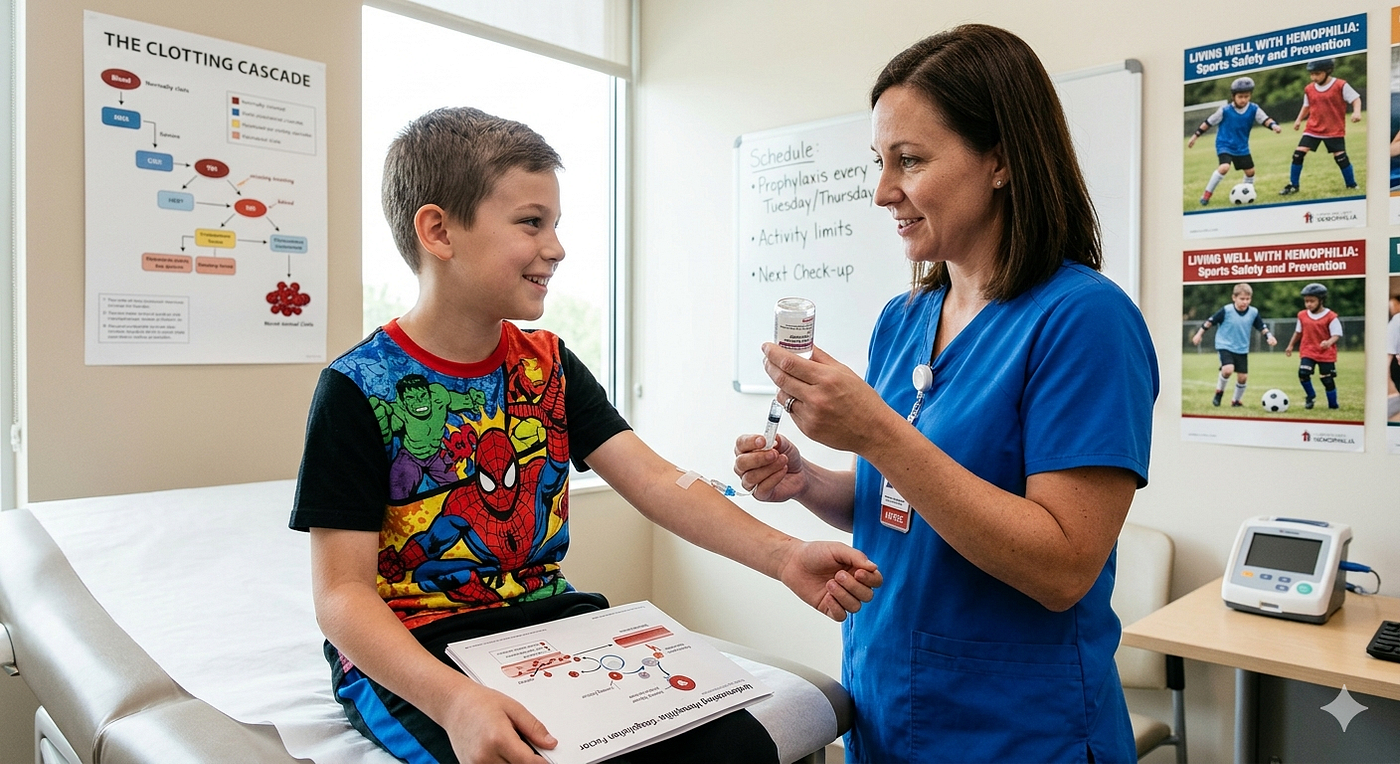
Better medicine now lets people with hemophilia stay active and live without fear, moving from constant worry to a full, healthy life through proactive daily care.
How does hemophilia actually work?
To manage this condition well, you first have to understand how it works. Hemophilia is a rare illness that people are born with. In a healthy person, the blood “clots” to stop bleeding, but in someone with hemophilia, the blood doesn’t clot right.
This happens because their blood is missing clotting factors. These are special proteins that help the blood stick together.
The three Main Types of hemophilia
A genetic bleeding disorder where blood doesn’t clot properly due to missing clotting factors:
1. Hemophilia A
- Cause: Deficiency of clotting factor VIII (8)
- Most common type (about 80–85% of cases)
- Severity: Can range from mild to severe
- Symptoms: Easy bruising, prolonged bleeding, joint bleeds
2. Hemophilia B
- Cause: Deficiency of clotting factor IX (9)
- Also called “Christmas disease”
- Less common than Hemophilia A
- Symptoms are very similar to Hemophilia A
3. Hemophilia C
- Cause: Deficiency of clotting factor XI (11)
- Much rarer
- Usually milder symptoms
- More common in certain populations (e.g., Ashkenazi Jewish descent)
- Bleeding often occurs after surgery or injury rather than spontaneously

How Serious Is It?
How bad the condition is depends on how much clotting factor is in the blood.
- Mild or Moderate: Bleeding usually only happens after a big injury or surgery.
- Severe: Bleeding can happen for no reason at all (spontaneous bleeding). This often happens inside the joints and muscles, even if the person didn’t fall or get hurt.
Bleeding inside the joints is very dangerous. It causes pain and can make it hard to walk or move later in life. The best way to stay healthy is to stop bleeds from happening in the first place. You have to take care of it every day, like other long-term health issues.
How Can Proactive Care Prevent Hemophilia Bleeds?
Doctors now suggest regular treatment to prevent bleeds before they start. Instead of waiting for a bleed to happen, patients take medicine on a schedule. This keeps enough medicine in the blood to make the condition much easier to manage.
Treating kids early helps them stay healthy. It prevents the joint pain that used to be common. Now, kids can play and go to school like their friends. They don’t have to live in fear of bleeding. This is the top way doctors treat this today.
Can You Live an Active Lifestyle with Hemophilia?
There are many new ways to treat bleeding. Some medicines now last longer, so you don’t need them as often. Some can be provided as a quick shot under the skin instead of into a vein. There is even a new treatment that might help the body make its own medicine with one shot..
Medicine is only half the battle. You also need to stay active with safe exercises like swimming or walking to keep your joints strong. Avoid rough sports that might cause bleeds. It also helps to stay at a healthy weight and work close with your doctors and family.
There are many new ways to treat bleeding. Some medicines now last longer, so you don’t need them as often. Some can be provided as a quick shot under the skin instead of into a vein. There is even a new treatment that might help the body make its own medicine with one shot..
Medicine is only half the battle. You also need to stay active with safe exercises like swimming or walking to keep your joints strong. Avoid rough sports that might cause bleeds. It also helps to stay at a healthy weight and work close with your doctors and family.
What is the Role of an HTC in Hemophilia Management?
At the heart of patient service living is the Hemophilia Treatment Center (HTC). These specialized centers bring together a multidisciplinary team that includes:
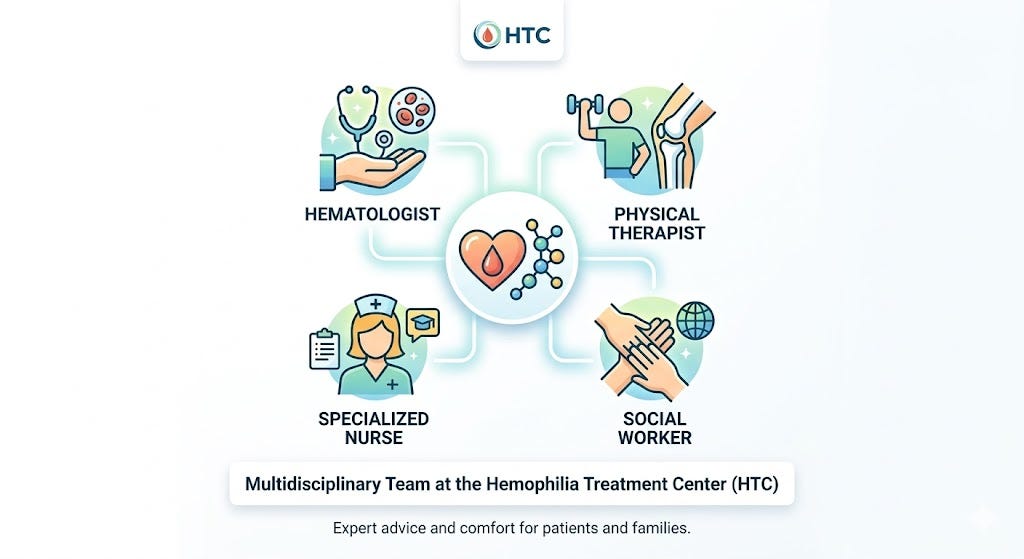
- Hematologists who oversee clotting factor therapy and medical management.
- Physical therapists who help protect joints and maintain mobility.
- These nurses are your first stop for help. They provide training and support whenever you need it.
- Social workers who assist with insurance, school accommodations, and emotional well-being.
These centers provide better care than a regular doctor can. When a family is new to the illness, the HTC is a reliable place for expert advice and comfort.
What are the Benefits of Hemophilia Home Therapy?
Being able to treat yourself at home is a big help. Patients and parents learn how to put medicine into a vein. They do this right when a bleed starts or on a regular schedule to stop bleeds before they happen.
Home therapy offers several life-changing benefits:
- Immediate treatment: Bleeds can be addressed within minutes, minimizing joint damage and pain.
- Independence: Patients are not bound to a hospital or clinic for routine care.
- A regular routine: Kids stay in school and adults stay at work without health problems getting in the way.
Home care is usually supported by special pharmacies. They deliver medicine right to your door, send nurses to help, and talk to your insurance company for you.
How Can You Manage Hemophilia Treatment Costs?
Treatment is very expensive, so money help is a huge part of staying healthy. Many patients depend on:
- Insurance case managers who specialize in bleeding disorders and help navigate coverage.
- Patient help programs offered by pharmaceutical companies to reduce out-of-pocket costs.
- Groups that help pay for your insurance, your trips to the doctor, and other emergency needs.
These organizations are like a safety net. They work very hard to keep the costs low and ensure no one ever misses the medicine they need to stay healthy.
How does community support help people with hemophilia?
Support from others makes a big difference. National groups for hemophilia are there to give you the help you need. They offer
- Educational conferences and workshops for patients and families.
- Peer support programs that connect other day diagnosed families with experienced mentors.
- Advocacy efforts to protect funding for research and access to care.
- Camps where kids can play and make friends with others who have hemophilia.
These groups also give help with school, work needs, and mental health. They understand that this condition affects every part of a person’s life.
Why is physical activity important for joint health in hemophilia?
A key focus of modern patient service living is encouraging safe physical activity. Years ago, patients were often discouraged from exercise for fear of injury. Today, physical therapists and rehabilitation specialists work with patients to:
- Strengthen muscles around vulnerable joints.
- Identify low-impact activities such as swimming, cycling, and walking.
- Develop individualized fitness plans that balance activity with safety.
It is very important to keep your joints healthy. For people with severe hemophilia, bleeding into the joints is the most common problem. If this isn’t treated the right way, it can lead to long-term joint pain and stiffness (arthritis)

What are the Latest Innovations in Hemophilia Patient Services?
New ideas are changing how patients live. Video calls let people talk to their medical team from home, so they don’t have to travel as much. Phone apps help them keep track of their medicine, bleeding, and supplies. Also, a new treatment called gene therapy might work with one dose, which changes how we plan for long-term health.
All these improvements are making things better. Instead of “dealing” with a long-term illness, patients can now have a life that is as active and healthy as everyone else
How Can You Build a Future Beyond a Hemophilia Diagnosis?
Living with hemophilia is a journey that extends beyond the clinical setting. It requires emotional resilience and a strong support network. For parents of another day diagnosed child, the initial period can be overwhelming.Gemini said
Talking to doctors and support groups is key. They teach you how to treat bleeds at home and how to work with your school and medical team.
The future looks very bright for people with bleeding disorders. Thanks to new research and better medicine, the goal is now to live a great life, not get by. By understanding their illness, taking their medicine, and getting help from friends, people can do amazing things. The story has changed — it is no longer about managing a disease, but about living a life full of potential.
메타데이터
- post_id
- 30fe55948375
- slug
- hemophilia-disease-and-proactive-care-30fe55948375
- url
- https://medium.com/@fazeelaislam5/hemophilia-disease-and-proactive-care-30fe55948375
- canonical_url
- https://medium.com/@fazeelaislam5/hemophilia-disease-and-proactive-care-30fe55948375
- author_url
- https://medium.com/@fazeelaislam5
- status
- ok
- fetched_at
- 2026-08-02 02:37:03