Voice-First Design with Protopie: Improving User Testing
Introduction
Voice-First Design with Protopie: Improving User Testing
Introduction
Imagine designing a voice interface without hearing a single voice command! That’s the paradox our team faced while developing an ambitious voice-first system. Our traditional Figma prototypes looked polished but remained frustratingly silent, forcing us to make wild guesses about how users would interact with voice.
The goal was ambitious: create a product where users could complete most tasks using only voice commands, with minimal physical device interaction. But without proper testing tools, we found ourselves in costly development cycles based on untested assumptions.
Protopie changed everything. It enabled us to create functional voice prototypes that users could test, providing genuine feedback before writing code. This shift transformed our design process, improved developer handoffs, and ultimately led to a better product.
In this article, I’ll share how Protopie’s voice interaction capabilities helped us bridge the gap between concept and reality, and the unexpected benefits we discovered along the way.
Why Voice-First Design?
Pushing Beyond Traditional Interfaces
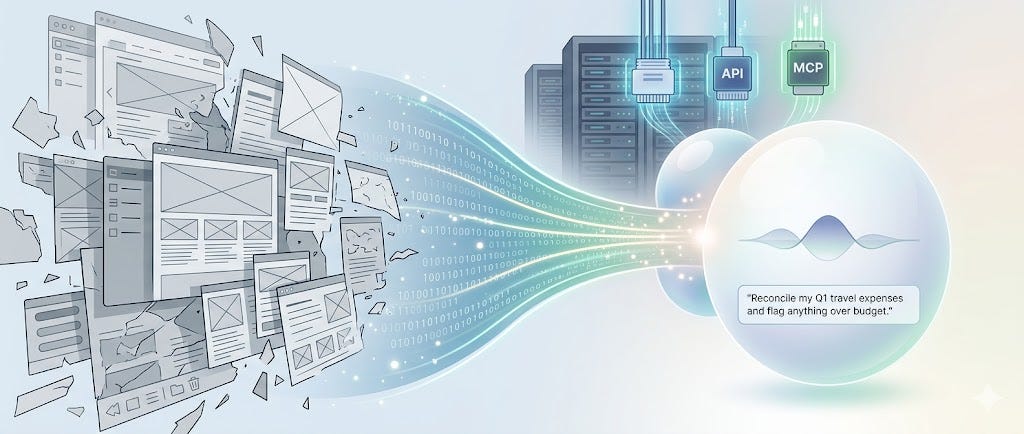
Voice-first design represents a paradigm shift in how we approach user interactions. While touch screens revolutionized mobile experiences, they still require direct physical engagement. Our vision goes further — creating an assistant that handles day-to-day tasks primarily through voice commands, powered by AI agents working behind the scenes.
This approach isn’t just about convenience; it’s about fundamentally changing the relationship between users and technology. By removing the need to physically interact with a device for most tasks, we’re creating a more ambient, natural computing experience that integrates seamlessly into users’ lives.
Behavior Shift: From Screen to Voice
Getting users to adopt a voice-first mindset comes with significant challenges. We’re essentially asking people to change deeply ingrained behaviors — reaching for their phones dozens (or hundreds) of times daily is automatic for most.
This behavior change requires a thoughtful design that acknowledges the learning curve while making it worthwhile. Our strategy focuses on creating voice interactions that are:
- More efficient than screen-based alternatives
- Natural in-conversation flow
- Reliable enough to build trust
- Contextually aware and personalized

Prototyping Challenges in Voice Interfaces
Traditional prototyping tools excel at visual interfaces but fall short when designing for voice. This gap creates several key challenges:
- Interaction Validation: How do you test if users understand what commands are available?
- Natural Language Variations: People express the same intent in countless ways — how do you account for this diversity?
- Feedback Mechanisms: Without screens, how do you confirm system understanding and provide status updates?
- Flow Testing: Voice conversations can branch in unexpected ways compared to linear UI flows
These challenges made it clear that our team needed a more sophisticated prototyping approach that could actually simulate voice interactions rather than just describing them conceptually.
Protopie Implementation
Real-World Voice Testing Through Transcription
One of our breakthrough moments came when we implemented voice transcription as text to capture user commands. Instead of forcing users into rigid command structures, we presented general guidance on possible actions while allowing them to phrase commands in their own words.
This approach yielded significant benefits:
- Each user expressed the same intent using different natural language patterns
- We collected valuable data for future intent detection development
- The variations revealed how different users conceptualize the same tasks
Uncovering the Unknown Through Open Exploration
By removing prescriptive guidance during testing, users felt free to explore the system naturally. This open-ended approach revealed:
- Unexpected edge cases we hadn’t considered in our initial design
- Alternative use cases that expanded our product vision
- Natural interaction patterns we could incorporate into our design
Protopie’s app-like interface was crucial here — users interacted with what felt like a finished product rather than an obvious prototype. This created a more realistic testing environment and elicited more genuine responses than traditional wireframes would have.
Multi-Path Design with Voice Triggers

Protopie’s voice trigger functionality transformed how we approached interaction design. By setting up multiple variations of the same flow, we could:
- Account for different phrasing of the same command
- Create conditional branches based on specific word choices
- Design appropriate responses for edge cases
- Test recovery paths when users went off script
This flexibility eliminated the need to guide users during testing sessions. Instead of saying “now, try asking for your schedule,” we could simply observe what they naturally tried to do. The result was more authentic user behavior and more reliable testing data.
The ability to define interactions for each edge case using conditions meant our prototype could handle unexpected inputs gracefully, further enhancing the realism of the testing experience.
Lessons Learned
Embracing Ambiguity in Voice Design
Our journey with voice-first prototyping taught us to embrace ambiguity rather than fight it. Unlike touchscreen interfaces with visible buttons and menus, voice interactions exist in an open space of possibilities. We learned to design for this ambiguity by:
- Creating flexible response patterns that could handle varied user inputs
- Focusing on intent recognition rather than exact command matching
- Building graceful fallbacks when users ventured beyond our anticipated paths
The Power of Contextual Feedback
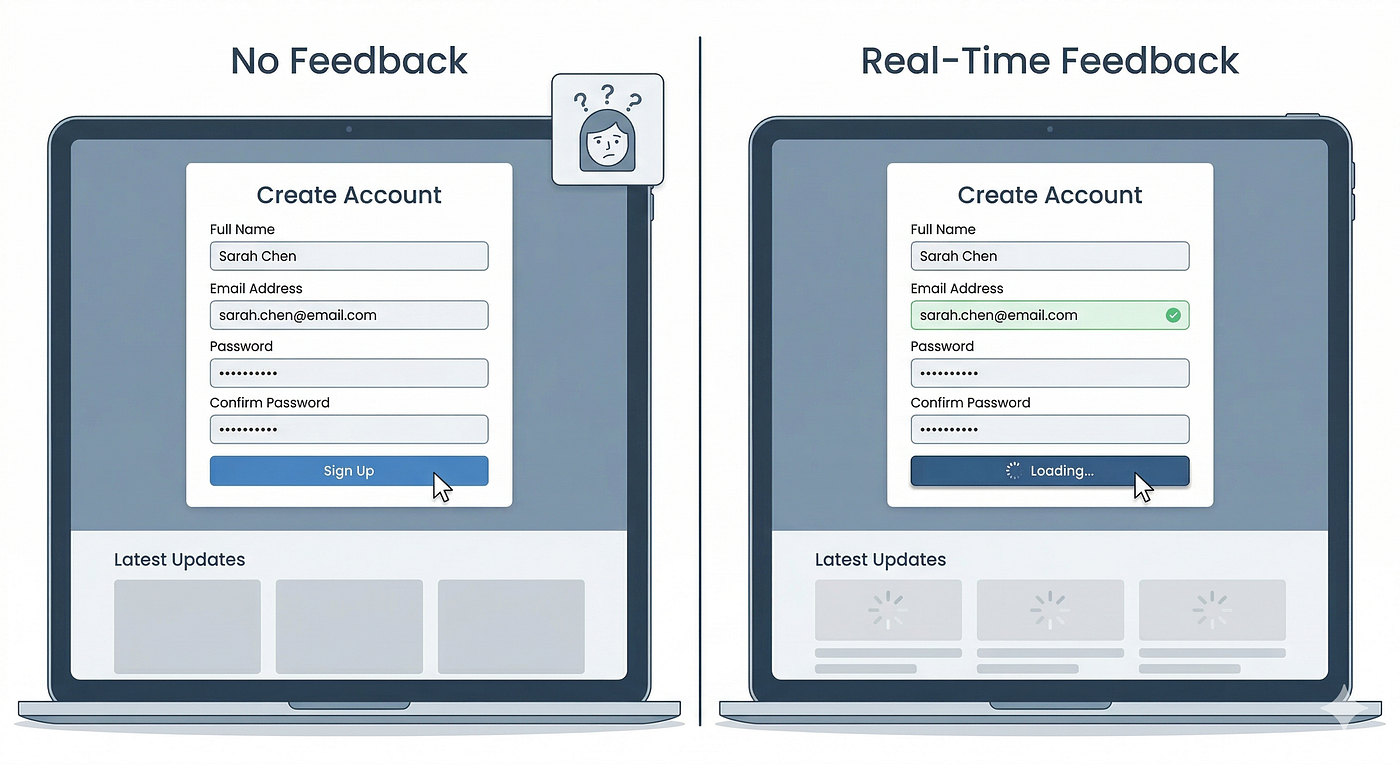
Without visual cues, providing appropriate feedback became critical. Our most successful voice interactions included:
- Brief confirmations that the system understood the request
- Status updates during longer tasks
- Natural transitions between conversation topics
- Subtle audio cues that reinforced successful interactions
Iterative Testing Reveals Patterns

Through repeated testing sessions, we identified recurring patterns in how users approached voice interactions:
- Many users started with simple, robotic commands before becoming more conversational
- Natural language varied widely based on user demographics and technology comfort
- Users expected the system to remember context from earlier in the conversation
- Trust developed gradually as users confirmed the system understood them
Future Applications
Blending Modalities for Richer Experiences
While our current focus is voice-first, we see tremendous potential in thoughtfully combining voice with other interaction methods:
- Voice for primary commands with touch for refinement
- Gesture recognition to complement spoken instructions
- Visual feedback for complex information alongside voice confirmations
- Haptic responses as subtle acknowledgments of voice commands
New Testing Methodologies

Our prototyping experience has inspired us to develop new testing approaches specifically for voice interactions:
- Remote testing protocols that capture natural home usage patterns
- Longitudinal studies to track how voice usage evolves over time
- Comparative analysis between voice and traditional interfaces for key tasks
- Metrics focused on conversation success rather than traditional UI completion rates
Knowledge Sharing and Design Systems
Perhaps most importantly, we’re working to codify what we’ve learned into:
- A voice interaction design system with reusable patterns
- Best practices documentation for voice prototyping
- Training materials to help other designers transition to voice-first thinking
This approach to voice-first design represents not just a new way of prototyping, but a fundamental shift in how we think about human-computer interaction — one conversation at a time.
Conclusion
Our journey with voice-first design using Protopie has fundamentally changed how we approach user experience design. What began as a practical solution to a prototyping challenge evolved into a complete transformation of our design philosophy.
The ability to create and test functional voice interfaces before development has not only saved time and resources but has also resulted in a product that truly meets user needs. By observing real interactions rather than imagining them, we’ve created voice experiences that feel natural and intuitive.
If you’re designing voice interfaces, I encourage you to explore tools like Protopie that enable actual voice interaction testing. The insights you’ll gain from watching real users engage with your voice prototype will transform your approach in ways that static mockups simply cannot match.
I’d love to hear about your experiences with voice design and prototyping. What challenges have you faced? What solutions have you discovered? Share your journey and let’s continue advancing this exciting frontier of user experience together.
메타데이터
- post_id
- 312eb161e99b
- slug
- voice-first-design-with-protopie-improving-user-testing-312eb161e99b
- url
- https://medium.com/uxd-talks/voice-first-design-with-protopie-improving-user-testing-312eb161e99b
- canonical_url
- https://medium.com/uxd-talks/voice-first-design-with-protopie-improving-user-testing-312eb161e99b
- author_url
- https://medium.com/@anmol.sirkeck
- status
- ok
- fetched_at
- 2026-06-24 18:57:25