How UCMAS Transforms Children Aged 5–13 into Confident and Independent Learners
How UCMAS Transforms Children Aged 5–13 into Confident and Independent Learners
How UCMAS Transforms Children Aged 5–13 into Confident and Independent Learners
How UCMAS Transforms Children Aged 5–13 into Confident and Independent Learners
Every parent wants their child to grow up feeling capable, sharp, and ready to take on the world. But in a classroom full of distractions and a curriculum that often moves faster than children can absorb, it is easy for kids to fall behind — not just in academics, but in self-belief.
That is exactly where UCMAS Canada steps in. A globally recognized, scientifically proven child development program, UCMAS uses abacus-based mental math to do something far more powerful than teach arithmetic — it builds the kind of confidence, focus, and independence that children carry with them for life.
Here is a closer look at how the program works and why thousands of Canadian parents trust it to transform their children between the ages of 5 and 13.
What Is UCMAS and Why Does It Work?
UCMAS stands for Universal Concept of Mental Arithmetic System. At its core, it is a whole-brain development program built on abacus learning and mental math, designed specifically for children aged 5 to 13 — the window when young brains are most receptive to new learning.
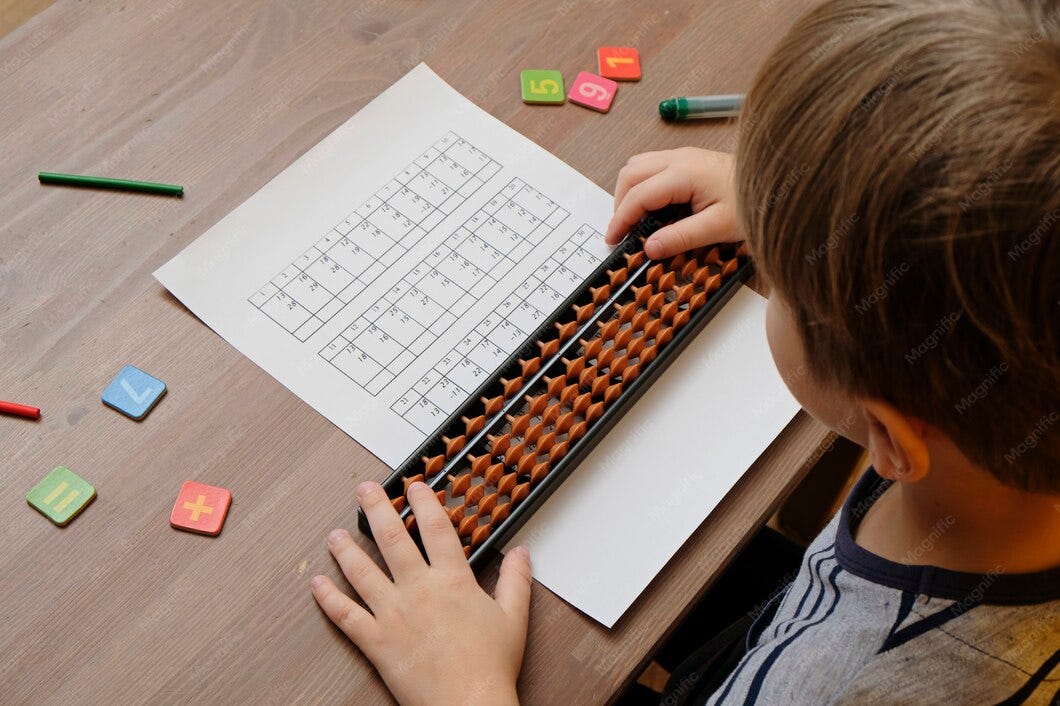
The program begins with hands-on abacus practice. Children learn to use a physical tool to solve calculations, which activates both their logical and creative brain functions. Over time, they internalize the abacus and begin visualizing it mentally — performing fast, accurate calculations without pen, paper, or a calculator.
This is not just impressive party-trick math. It is a structured form of cognitive training that rewires how children think, process, and learn.
How Abacus Classes Build a Stronger Brain
One of the most remarkable things about abacus classes is that they engage both hemispheres of the brain simultaneously. The left brain handles logic and calculation, while the right brain manages visualization and creativity. Most traditional education leans heavily on the left side. UCMAS activates both.
Here is what that looks like in practice during a typical session:
- A child hears a series of numbers called out rapidly.
- They move beads on the abacus — using six fingers — to track the calculation.
- Gradually, they stop needing the physical tool and begin picturing it in their mind.
- Speed and accuracy increase steadily with every session.
This process, repeated consistently, builds incredibly strong neural pathways. Children develop sharper memory, better concentration, faster processing, and improved problem-solving abilities — all through the simple act of practicing math.
What makes the UCMAS afterschool program stand out is its structured eight-level curriculum, designed to progressively challenge students as they grow, so learning never plateaus.
The Role of Mental Math for Kids in Everyday Life
Parents often ask: why does mental math for kids matter beyond school? The answer is that it builds practical intelligence — the kind that helps children navigate real life, not just pass exams.
Think about it. When a child can quickly estimate costs at a store, split a bill, calculate a game score, or manage their weekly pocket money without reaching for a phone, they gain something invaluable: independence.
UCMAS students develop skills that show up in all sorts of daily situations:
- Estimating whether they have enough money before making a purchase
- Calculating how much time they have left before an activity ends
- Solving classroom problems faster than their peers, building academic confidence
- Making quicker decisions during team sports and competitive activities
These are not abstract skills. They are the building blocks of capable, self-reliant young people. Explore more about how mental math prepares children for real-life challenges and why the habit of mental calculation sets kids apart.
Confidence Building for Kids: The UCMAS Effect
One of the most visible transformations parents notice in UCMAS students is a shift in attitude. Children who were once hesitant to raise their hands in class begin volunteering answers. Kids who dreaded numbers start looking forward to math.
This is confidence building for kids in its most natural form — earned through real achievement, not empty praise.
When a child learns to calculate 287 + 492 + 169 in their head within seconds, something clicks internally. They realize they are capable of things they once thought impossible. That feeling — of genuine competence — spills over into every other area of their life.
UCMAS reinforces this through:
- Regular grading and level progression that gives children clear milestones to work toward
- Annual competitions at provincial, national, and international levels where students test their skills in a healthy, energizing environment
- Recognition through certificates, medals, and trophies that celebrate real effort and achievement
The UCMAS National Level Competition is a perfect example of this — an event where children solve 150 to 200 math problems in just eight minutes, building not only speed but the kind of calm, focused performance under pressure that defines future leaders.
Beyond Math: Soft Skills That Last a Lifetime
Here is something many parents do not expect when they sign their child up for abacus classes: the benefits extend far beyond mathematics.
The intense focus required during UCMAS sessions trains children to concentrate for longer periods. The visualization practice sharpens memory. The timed exercises develop patience and emotional regulation. The group and competitive elements build communication and social confidence.
As highlighted in how UCMAS builds soft skills in children, the program quietly raises confident communicators and thoughtful young leaders — without children even realizing it.
Key soft skills UCMAS students develop include:
- Improved concentration and attention span
- Stronger short-term and long-term memory
- Better listening and observation skills
- Creativity, driven by right-brain stimulation
- Emotional resilience and the ability to handle pressure calmly
- Healthy time management habits from working on timed tasks regularly
These are skills that serve children in school, in friendships, in sports, and eventually in careers.
What the Science Says About the 5–13 Age Window
The UCMAS program is purposefully designed for children aged 5 to 13, and there is solid science behind that choice. Neuroscience confirms that the brain undergoes rapid development during this period, with the majority of neuron connections forming in these foundational years.
The UCMAS brain development program takes full advantage of this window. When children are trained on the abacus during this phase, the brain forms stronger, more permanent pathways for memory, reasoning, visualization, and problem-solving.
Children who begin training early benefit from:
- Faster cognitive processing that improves learning across all subjects
- A stronger foundation in numerical reasoning that carries through secondary school
- Greater adaptability, as early training makes the brain more flexible to new challenges
- Heightened creativity, because right-brain stimulation during early years has long-lasting effects
The earlier children start, the more they benefit. But even children who join the program later within this age range experience measurable improvements in focus, memory, and academic performance.
What Parents Are Saying
Real families across Canada have seen the UCMAS difference first-hand. Parents consistently report that their children:
- Start loving mathematics after previously dreading it
- Calculate faster than adults — often before a phone can even be unlocked
- Show a noticeable improvement in concentration during homework and study time
- Grow more confident in class and more willing to speak up and participate
One parent put it simply: “My son can quickly calculate numbers before we can even open calculators on our phones. It has boosted his confidence so much — I would recommend this to everyone.”
With over 90 centers across Canada — from Toronto and Vancouver to Montreal and Calgary — finding a center near you is easier than ever. You can explore UCMAS locations across Canada to find the one closest to your family.
Conclusion: Give Your Child a Head Start That Lasts
UCMAS Canada is more than an afterschool math program. It is a scientifically proven child development system that uses abacus-based mental math to unlock a child’s full cognitive potential between the most critical years of brain growth — ages 5 to 13.
Through structured abacus classes, children develop not just speed in calculation but genuine confidence, sharper memory, better focus, and the kind of independent thinking that prepares them for academic success and real-world challenges alike. Every session, every milestone, and every competition is designed to bring out the very best in your child — and to help them believe in what they are capable of.
If you are ready to give your child an edge that goes far beyond report cards, now is the perfect time to take that first step.
Book a Free Trial Class today and discover how UCMAS can transform your child into a confident, independent, and capable learner.
메타데이터
- post_id
- 31737b4fd8b4
- slug
- how-ucmas-transforms-children-aged-5-13-into-confident-and-independent-learners-31737b4fd8b4
- url
- https://medium.com/@ucmascanada/how-ucmas-transforms-children-aged-5-13-into-confident-and-independent-learners-31737b4fd8b4
- canonical_url
- https://medium.com/@ucmascanada/how-ucmas-transforms-children-aged-5-13-into-confident-and-independent-learners-31737b4fd8b4
- author_url
- https://medium.com/@ucmascanada
- status
- ok
- fetched_at
- 2026-07-09 20:10:33