OTT Business & Strategy
What It Really Takes to Launch a Successful OTT Platform in 2026
OTT Business & Strategy
What It Really Takes to Launch a Successful OTT Platform in 2026
The OTT (Over-the-Top) streaming industry is no longer in its experimental phase — it has matured into a highly competitive, rapidly evolving ecosystem driven by technology, user behavior, and new forms of content consumption. What once began as a convenient alternative to traditional television has now become the dominant medium for entertainment, education, and creator-led media.
However, launching a successful OTT platform in 2026 is fundamentally different from what it was even a few years ago. It is no longer enough to upload content and build a basic app. Today’s audiences expect intelligent, seamless, and personalized streaming experiences across devices, while businesses must balance monetization, scalability, and engagement.
To succeed, OTT platforms must evolve from simple content libraries into full-scale digital ecosystems — powered by AI, driven by creators, optimized for mobile, and built for scale.
The New OTT Reality: From Content Libraries to Intelligent Ecosystems
The biggest shift in the OTT landscape is the transition from content-first platforms to experience-first ecosystems.
Earlier, success depended largely on the size of a content catalog. Today, platforms are judged by how effectively they:
- Deliver content across multiple devices
- Personalize the viewing experience
- Adapt to changing content formats like vertical video
- Support diverse monetization strategies
- Enable direct relationships between creators and audiences
This evolution reflects a deeper truth: OTT platforms are no longer just distribution tools — they are data-driven engagement platforms.
In this new environment, success depends on how well a platform integrates technology, content strategy, and user experience into a single cohesive system.
Multi-Device Streaming: The Foundation of Modern OTT Platforms
One of the most fundamental requirements of a successful OTT platform is seamless multi-device streaming.
Audiences today do not consume content in a single, fixed environment. A user might begin watching a show on their smartphone during a commute, continue on a laptop during a break, and finish it later on a smart TV at home. This behavior has made cross-device continuity a baseline expectation rather than a premium feature.
A well-designed OTT platform must ensure:
- Consistent user interfaces across all devices
- Smooth synchronization of watch history and preferences
- High-quality streaming performance regardless of device
Supporting platforms such as Android TV, Apple TV, Roku, Fire TV, iOS, Android, and web is no longer optional — it is essential. Without this foundation, even the most compelling content will struggle to retain viewers.
AI in OTT: From Recommendation Engines to Platform Intelligence
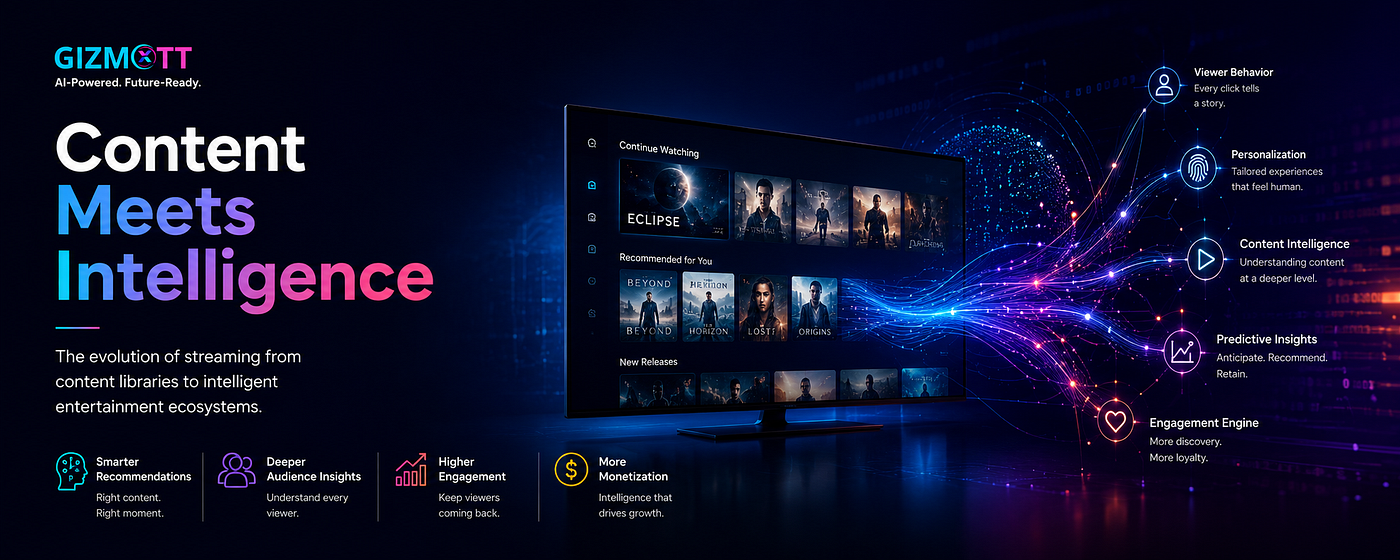
Artificial Intelligence has moved from being a supporting feature to becoming a central pillar of OTT platform success.
Initially, AI was primarily used for content recommendations. While that remains important, its role has expanded significantly.
Today, AI powers multiple layers of the streaming experience. It enables platforms to understand user behavior, predict preferences, and deliver highly relevant content at the right time. More importantly, AI is now influencing both front-end user experience and back-end operations.
On the user side, AI enhances:
- Personalized content discovery
- Dynamic home screens
- Automated playlists and recommendations
On the operational side, it enables:
- Automated subtitle generation and localization
- Content tagging and metadata enrichment
- Ad targeting and revenue optimization
As content libraries grow larger, the ability to guide users efficiently becomes critical. Without AI, users are often overwhelmed by choice. With AI, platforms can create curated, intuitive viewing journeys that increase engagement and reduce churn.
In 2026, OTT platforms without AI are not just behind — they are fundamentally incomplete.
Vertical Video and the Shift to Mobile-First Streaming
One of the most significant changes in content consumption is the rise of vertical video and mobile-first viewing behavior.
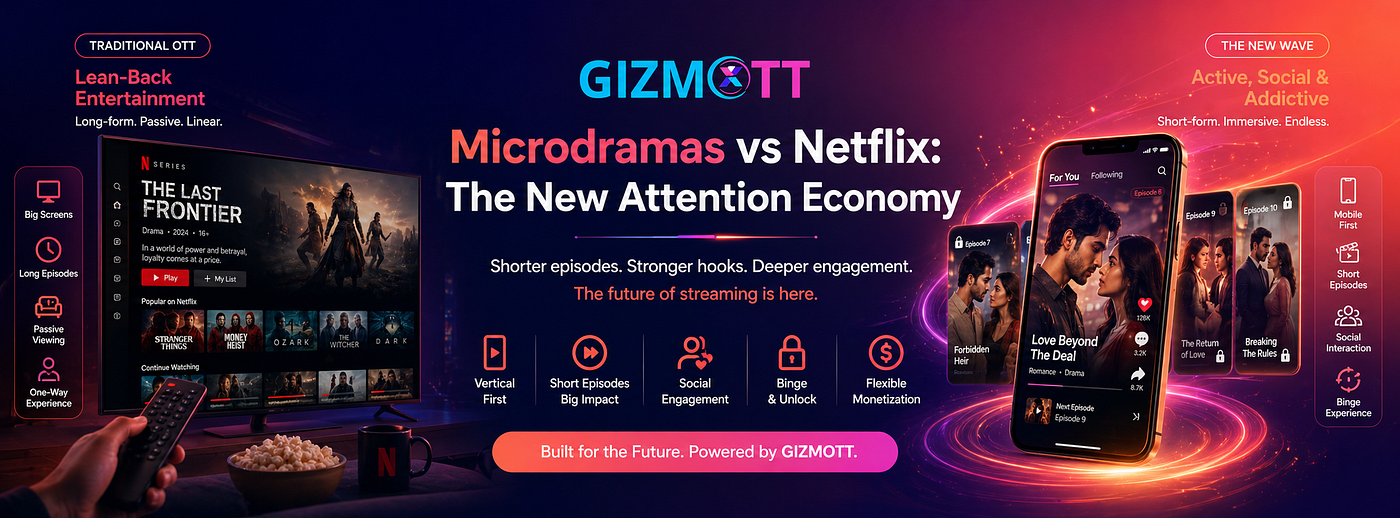
Streaming is no longer confined to living rooms. It now happens throughout the day, in short bursts, on mobile devices. This shift has given rise to new content formats, particularly **short-form vertical videos and microdramas. These formats are not simply adaptations of traditional content — they are designed specifically for mobile consumption**.
OTT platforms are increasingly integrating features that support this shift, including:
- Vertical video playback within apps
- Short-form content sections for quick discovery
- Mobile-first user interface design
This trend reflects a broader transformation in audience behavior. Viewers are moving away from long, uninterrupted sessions toward flexible, on-demand consumption patterns.
Platforms that ignore vertical formats risk missing out on a growing segment of users — particularly younger audiences who are accustomed to mobile-native experiences.
The Creator Economy: Redefining Ownership in Streaming
The rise of the creator economy is reshaping the very structure of the OTT industry.
Traditionally, content distribution was controlled by studios and broadcasters. Today, individual creators are building their own audiences — and increasingly, their own platforms. This shift has given rise to a new model: creator-led OTT platforms.
Instead of relying on third-party platforms, creators are launching their own streaming services to:
- Own their content and distribution
- Build direct relationships with their audience
- Monetize through subscriptions and exclusive content
For OTT platform providers, this creates a new set of requirements. Platforms must now support:
- Creator onboarding and content management
- Flexible monetization options
- Community-driven engagement features
The success of modern OTT platforms will depend not only on content volume but also on how effectively they empower creators to build and monetize their own ecosystems.
Monetization in 2026: Flexibility Over Fixed Models
Monetization remains one of the most critical aspects of any OTT platform, but the approach has evolved significantly.
While traditional models like SVOD (subscription-based), AVOD (ad-supported), and TVOD (transactional) are still widely used, relying on a single model is increasingly risky.
Modern platforms are adopting hybrid monetization strategies that combine multiple revenue streams.
For example, a platform might offer:
- Free content supported by ads (AVOD)
- Premium subscriptions for exclusive content (SVOD)
- Pay-per-view events or special releases (TVOD)
This flexibility allows platforms to cater to different audience segments while maximizing revenue potential.
Additionally, the rise of FAST (Free Ad-Supported Streaming TV) channels is creating new opportunities for content distribution and advertising.
As subscription fatigue grows among users, platforms that provide flexible access and pricing options will have a clear advantage.
Content Strategy: Why Niche Platforms Are Winning
A common misconception is that success in OTT requires massive content libraries. In reality, many of the fastest-growing platforms today are focused on niche audiences.
These platforms succeed by delivering highly relevant content to specific communities, such as:
- Regional language audiences
- Fitness and wellness communities
- Educational content consumers
- Faith-based or cultural groups
Niche platforms benefit from stronger audience loyalty, higher engagement, and clearer brand identity.
Instead of competing directly with global streaming giants, they carve out focused content ecosystems that resonate deeply with their users.
In the current OTT landscape, relevance often matters more than scale.
User Experience: The Silent Driver of Retention
While content attracts users, user experience determines whether they stay.
Modern audiences expect streaming platforms to be fast, intuitive, and visually engaging. A poorly designed interface can lead to frustration, even if the content itself is strong.
Successful OTT platforms prioritize:
- Clean and intuitive navigation
- Fast loading times and smooth playback
- Personalized home screens
- Easy content discovery
User experience is often overlooked, but it plays a crucial role in reducing churn and increasing engagement.
In a competitive market, even small improvements in UX can have a significant impact on platform performance.
Infrastructure and Scalability: Building for Growth
Behind every successful OTT platform lies a robust and scalable technology infrastructure.
Streaming at scale requires a combination of technologies working together seamlessly, including:
- Cloud-based hosting and storage
- Content Delivery Networks (CDNs)
- Video encoding and streaming protocols
- Real-time analytics systems
As platforms grow, they must be able to handle increased traffic, expand to new regions, and support additional devices without compromising performance.
Scalability is not just about handling growth — it is about ensuring a consistent, high-quality experience for every user, regardless of location or device.
GIZMOTT — Powering the Next Generation of OTT Platforms
As the OTT landscape continues to evolve, platforms need solutions that are flexible, scalable, and aligned with emerging trends.
GIZMOTT is designed to support the next generation of streaming platforms by enabling businesses and creators to launch fully branded OTT apps across all major devices, including smart TVs, mobile apps, and web platforms.
With support for vertical video formats, multi-device streaming, and flexible monetization models, GIZMOTT allows organizations to adapt to changing audience behaviors.
Additionally, its infrastructure is built to accommodate AI-driven workflows, creator-led platforms, and scalable content distribution, ensuring that users can build streaming ecosystems that are ready for the future.
The Future of OTT Platforms
Launching a successful OTT platform in 2026 requires more than just content — it requires a strategic approach that combines technology, user experience, and innovation.
The platforms that succeed will be those that:
- Leverage AI to enhance personalization and efficiency
- Adapt to mobile-first and vertical content formats
- Empower the creator economy
- Implement flexible monetization strategies
- Deliver seamless multi-device experiences
The OTT industry is no longer just about streaming — it is about building intelligent, scalable, and engaging digital ecosystems.
As the landscape continues to evolve, one thing is clear: success will belong to those who can integrate content, technology, and user experience into a unified platform that meets the demands of modern audiences.
메타데이터
- post_id
- 31983b88dbc6
- slug
- ott-business-strategy-31983b88dbc6
- url
- https://medium.com/the-streaming-playbook/ott-business-strategy-31983b88dbc6
- canonical_url
- https://medium.com/the-streaming-playbook/ott-business-strategy-31983b88dbc6
- author_url
- https://medium.com/@Gizmott
- status
- ok
- fetched_at
- 2026-06-12 07:40:50