Adversarial CAPTCHA Is a Reliability Problem, Not Just a Solving Problem
Most developers first encounter CAPTCHA as a blocking step in a workflow.
Adversarial CAPTCHA Is a Reliability Problem, Not Just a Solving Problem
Most developers first encounter CAPTCHA as a blocking step in a workflow.
A page loads. A challenge appears. The automation stops. The immediate engineering question becomes: how do we solve this challenge and continue?
That framing is too narrow for production systems.
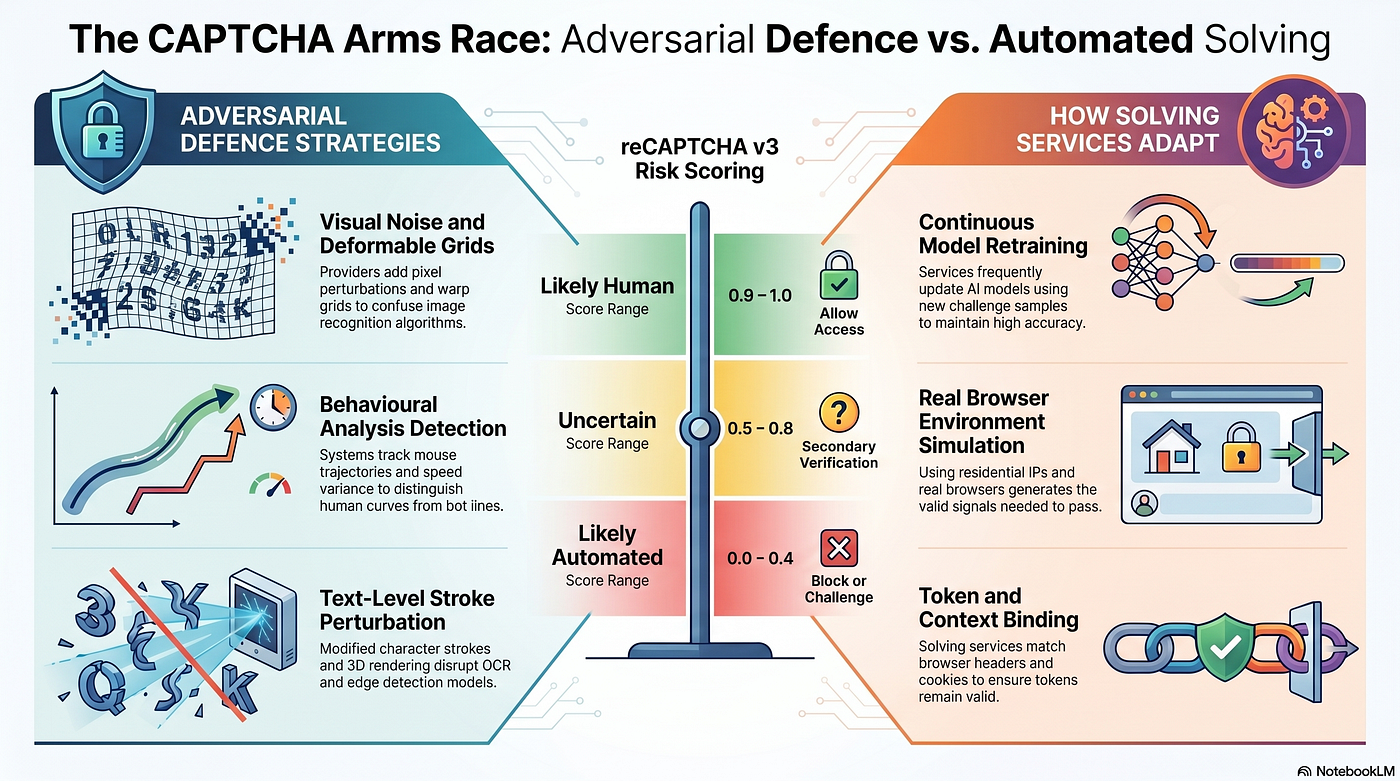
Modern CAPTCHA systems are not static puzzles. They are adaptive risk engines. They evaluate visual input, browser environment, interaction timing, session history, token behavior, network reputation, and page context. The challenge shown to one user may not be the same challenge shown to another. A low-risk user may pass with minimal interaction, while a high-risk session may receive multiple rounds of image grids, stricter timing rules, or token constraints.
This means adversarial CAPTCHA behavior is not only a computer vision problem. It is a reliability problem.
For developers and engineering teams, the important question is not simply “Can this CAPTCHA be solved?” It is “How does our system behave when challenge difficulty, latency, solve rate, and access state change over time?”
That question requires architecture, monitoring, fallback logic, and compliance boundaries.
Why this problem matters
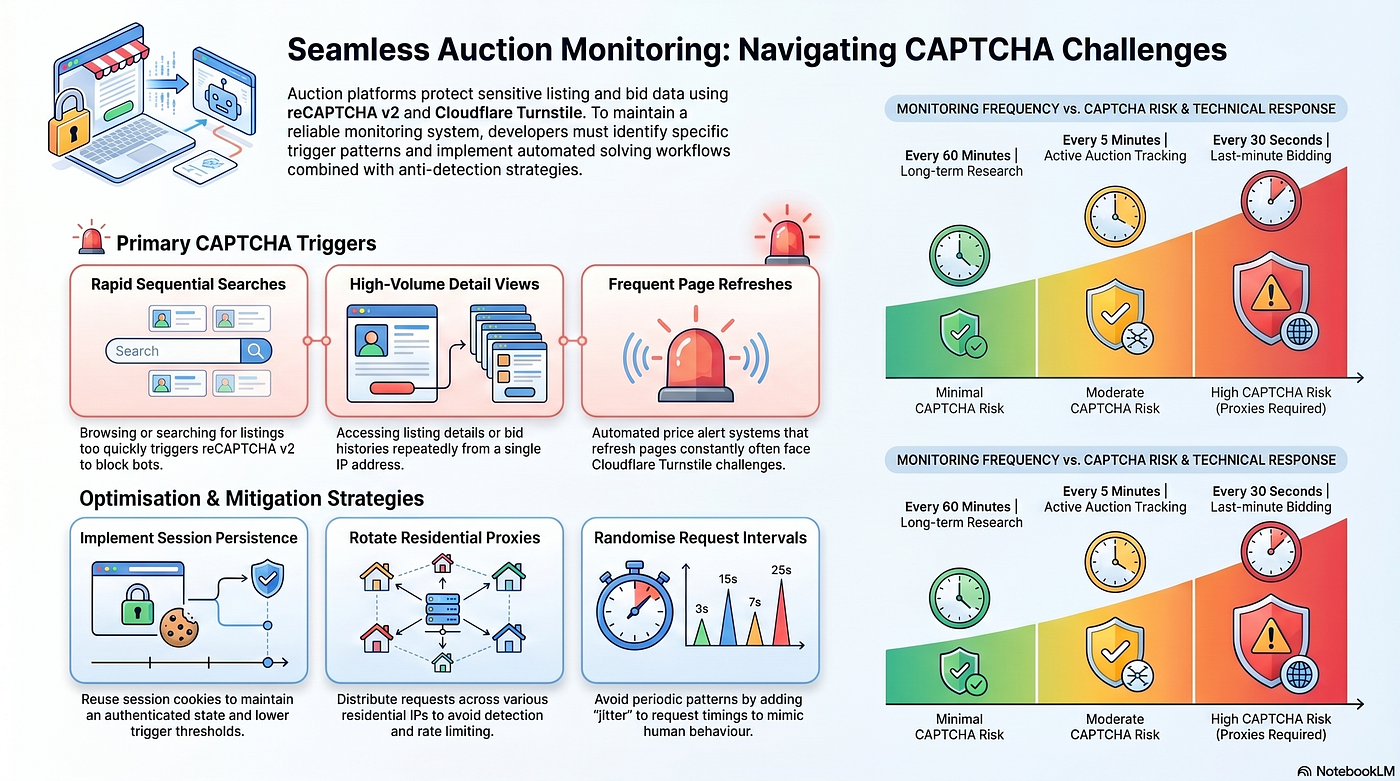
CAPTCHA workflows often sit inside larger systems: QA automation, ad verification, research data collection, authorized scraping, fraud review, marketplace monitoring, or internal testing pipelines.
When CAPTCHA behavior changes, those systems can fail in subtle ways.
A sudden solve-rate drop may look like a provider issue, but it may actually be caused by risk scoring changes. A slower challenge may increase queue latency. A token binding rule may cause solved tokens to fail if the browser context changes. A high challenge rate may indicate that the workflow is too aggressive, the session is inconsistent, or the target environment has changed its detection logic.
The operational risk is bigger than one failed request.
If CAPTCHA events are hidden inside generic errors, the team loses visibility. If retries are unlimited, the system may increase traffic pressure and worsen challenge rates. If challenge difficulty is not measured, teams cannot separate provider degradation from workflow design problems. If safe-use rules are not explicit, automation can drift outside approved boundaries.
Adversarial CAPTCHA systems force teams to treat CAPTCHA handling like any other external dependency: variable, measurable, failure-prone, and policy-sensitive.
Technical workflow breakdown
A production-ready CAPTCHA-aware automation system should include six layers.
The first layer is the workflow trigger. This defines why the automation is running. Is it an internal QA test? A client-authorized verification job? A research pipeline? A compliance check? The workflow purpose matters because it determines whether CAPTCHA handling is permitted and what data should be collected.
The second layer is environment preparation. CAPTCHA systems evaluate more than the visible challenge. They may consider browser characteristics, interaction timing, session history, and network context. From an engineering standpoint, the key is consistency. The workflow should record the execution environment so failures can be reproduced and analyzed.
The third layer is challenge detection. The system should classify whether a page contains no challenge, visible CAPTCHA, invisible risk scoring, browser verification, multi-round challenge, expired token, or session-bound token failure. Treating all of these as “CAPTCHA failed” hides useful information.
The fourth layer is policy routing. Not every challenge should be solved automatically. Some workflows may allow approved solving. Others may require cooldown, retry later, manual review, or stopping the job. This routing should be configuration-driven, not hardcoded in scattered scripts.
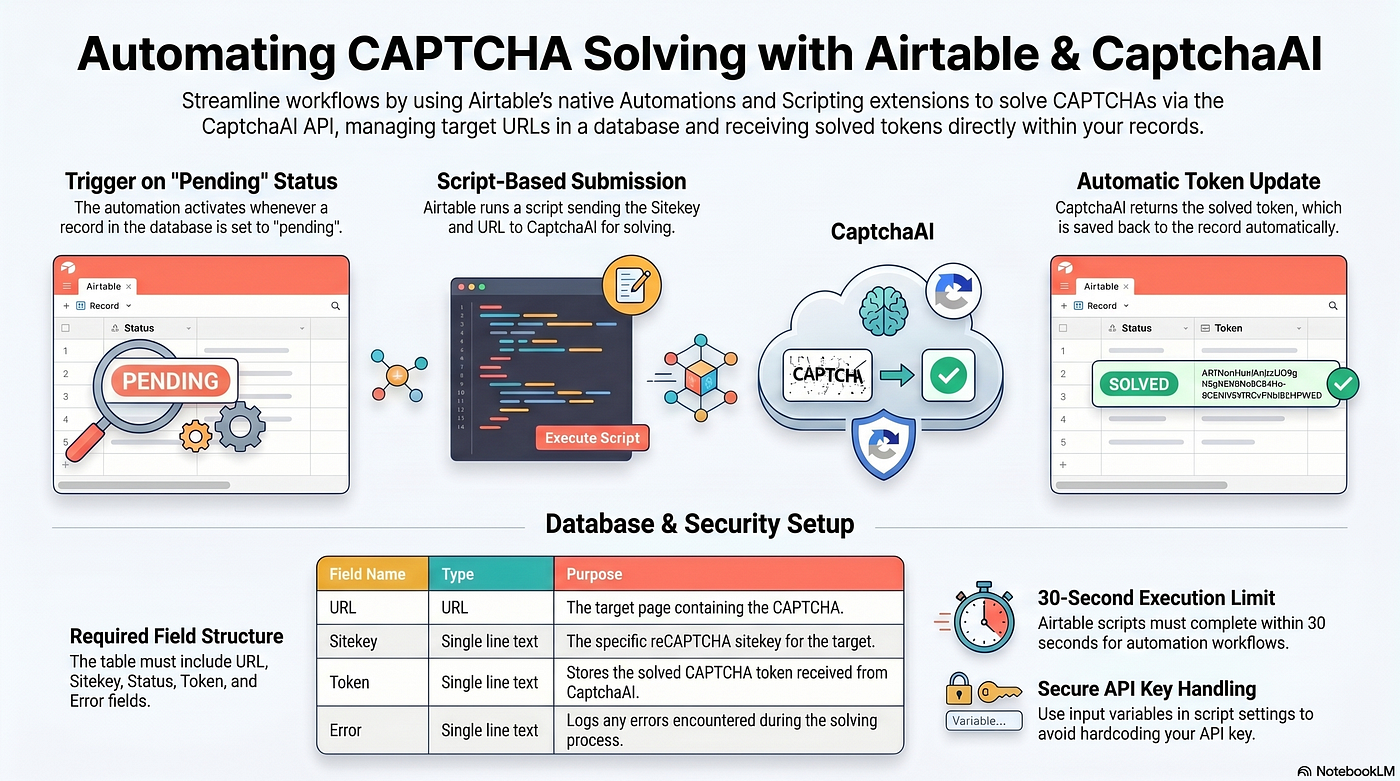
The fifth layer is execution and response validation. If an approved workflow uses a solving service, the system should validate the outcome at the workflow level, not only at the challenge level. A returned token is not the same as successful page access. The real result is whether the intended authorized workflow completed correctly.
The sixth layer is observability. Every CAPTCHA event should produce structured telemetry: challenge type, page state, solve time, success or failure, retry count, workflow ID, provider, environment metadata, and final outcome. Without this layer, adversarial changes become guesswork.
This design turns CAPTCHA handling from a fragile inline step into a controlled subsystem.
Production considerations
The first production consideration is variability.
Adversarial CAPTCHA systems are intentionally dynamic. They may change challenge difficulty based on behavior, volume, risk signals, or provider updates. Engineering teams should expect solve time and success rate to fluctuate. Static assumptions such as “this challenge usually takes five seconds” will eventually break.
The second consideration is latency budget.
CAPTCHA handling can become one of the slowest parts of an automation workflow. If the system uses queues, worker pools, or browser sessions, longer challenge times can reduce throughput and increase operational cost. Teams should define a clear timeout budget and decide what happens when that budget is exceeded.
The third consideration is error taxonomy.
A visual challenge failure is different from a token expiration. A browser verification block is different from a rate-limit response. A low risk score is different from a network timeout. Error categories should be explicit because they drive different remediation paths.
The fourth consideration is workflow confidence.
A CAPTCHA step may succeed while the broader workflow fails. For example, the system may receive a token but still fail page access because the token is bound to a different session state. The pipeline should verify the final business outcome, not only the challenge response.
The fifth consideration is compliance.
CAPTCHA systems are deployed to manage access and reduce abuse. Any workflow that interacts with them must have clear authorization. Teams should maintain records of why the workflow exists, what systems it touches, and what permission or contract allows it.
The sixth consideration is fallback design.
Fallback should not always mean “try again.” In some cases, the safest fallback is slower scheduling. In others, it is manual review. In others, it is switching to an official API or stopping collection. Retry logic should be tied to failure type and authorization policy.
Common mistakes
One common mistake is treating adversarial CAPTCHA as a one-time integration issue. Providers continuously update techniques, so a workflow that works today may degrade later.
Another mistake is logging only final failures. If the system does not capture challenge type, latency, retry count, and page state, engineers cannot explain why performance changed.
A third mistake is assuming a solved CAPTCHA equals workflow success. Tokens may expire, bind to session state, or fail downstream validation. Always check the final workflow result.
A fourth mistake is using aggressive retries without backoff. This can increase challenge difficulty, create noisy telemetry, and waste infrastructure.
A fifth mistake is ignoring invisible risk scoring. Some systems may not show a challenge at all but still lower trust scores or trigger secondary verification. A lack of visible CAPTCHA does not always mean the workflow is healthy.
A sixth mistake is designing around a single provider behavior. CAPTCHA systems evolve. The integration should be modular enough to handle new challenge states, new result types, and new policy decisions.
Metrics to monitor
The most important metrics fall into four groups.
First, challenge metrics: CAPTCHA detection rate, challenge type distribution, multi-round challenge rate, invisible risk challenge rate, token expiration rate, and browser verification rate.
Second, performance metrics: solve latency, p95 and p99 challenge time, queue wait time, worker utilization, timeout rate, and cost per completed workflow.
Third, reliability metrics: solve success rate, downstream validation success rate, retry rate, fallback rate, manual review rate, and workflow completion rate.
Fourth, anomaly metrics: sudden solve-rate drops, spikes in challenge difficulty, increased token failures, higher browser verification frequency, and changes by source, region, workflow, or environment.
A rising CAPTCHA rate should be investigated as an operational signal. It may indicate provider changes, workflow volume issues, environment inconsistency, or unauthorized access patterns.
Safe/authorized-use note
CAPTCHA handling, automation, bots, scraping, and third-party workflows require strict boundaries. This type of workflow should only be used in owned, client-authorized, or contractually permitted environments.
That safety rule should not live only in documentation. It should be reflected in system design: workflow approvals, rate limits, audit logs, access policies, monitoring, and clear stop conditions.
The goal is not to bypass protections. The goal is to build reliable automation for approved use cases while respecting the systems being accessed.
For the original technical overview of adversarial CAPTCHA techniques, review the source article here: https://blog.captchaai.com/adversarial-captchas-provider-techniques
Use it as a reference for understanding the challenge landscape, then design your automation system around observability, policy routing, controlled retries, and measurable workflow outcomes.
Before scaling any CAPTCHA-aware workflow, define the access policy, challenge taxonomy, timeout budget, telemetry model, and fallback behavior. In production, the CAPTCHA step is not isolated; it is part of your reliability architecture.
메타데이터
- post_id
- 31b654fccbb4
- slug
- adversarial-captcha-is-a-reliability-problem-not-just-a-solving-problem-31b654fccbb4
- url
- https://medium.com/@oliverjack1999xx/adversarial-captcha-is-a-reliability-problem-not-just-a-solving-problem-31b654fccbb4
- canonical_url
- https://medium.com/@oliverjack1999xx/adversarial-captcha-is-a-reliability-problem-not-just-a-solving-problem-31b654fccbb4
- author_url
- https://medium.com/@oliverjack1999xx
- status
- ok
- fetched_at
- 2026-06-09 15:37:30