The Autistic Threshold Effect
Why tolerance collapses suddenly instead of gradually.
The Autistic Threshold Effect

There is a moment I’ve learned to recognize in myself, though it took years to understand what it actually was. It never arrives gradually. There is no warning curve, no gentle decline in tolerance. Everything seems fine, manageable, even calm. And then, suddenly, it isn’t. The shift is abrupt, almost violent in how fast it happens. One second I am functioning, responding, present. The next, my system is completely offline.
For a long time, people around me interpreted this as unpredictability. Moodiness. Overreaction. They would say things like “but you were fine a minute ago” or “this came out of nowhere.” I used to believe them. I thought maybe I lacked emotional regulation, or that I was exaggerating my limits. But the more I paid attention to my internal experience, the clearer it became that nothing about these moments was sudden from the inside.
What collapses suddenly is not tolerance itself, but the visible expression of it.
This is what I’ve come to understand as the autistic threshold effect. The point at which accumulated sensory, cognitive, and emotional load crosses a line, and the system shuts down or explodes not gradually, but instantly.
The mistake most people make is assuming tolerance works like a meter you can see filling up. They imagine stress as something that increases slowly, with visible signs along the way. A little irritation. A little fatigue. A little distraction. And then eventually overwhelm. That model does not match my experience at all.
My experience is closer to carrying weight in a backpack that no one else can see. I can walk normally. I can talk. I can smile. I can participate. From the outside, I look stable. But the weight keeps increasing. Quietly. Invisibly. Until the moment I bend down to tie my shoe and the zipper breaks.
From that perspective, the collapse is not sudden. It is delayed visibility.
This is why the autistic threshold effect is so often misunderstood. It does not announce itself in socially legible ways. There is no gradual emotional display that signals what is coming. The system is compensating right up until it cannot anymore.
And when it cannot, it stops completely.
This pattern shows up everywhere in autistic life. In conversations that go on just a little too long. In environments that are tolerable until they aren’t. In relationships that feel manageable until a single comment suddenly makes everything unbearable. To outsiders, it looks like an overreaction to something small. To the autistic person, it feels like the final straw on a structure that has been bending for hours, days, sometimes weeks.
What makes this especially difficult is that autistic people often don’t feel the approach of the threshold clearly. Not because we lack awareness, but because our systems are designed to prioritize continuation over interruption. We keep going. We push through. We adapt. We adjust. We tell ourselves we can handle it. And often, we genuinely believe that we can.
Until we can’t.
The threshold is not felt as a gradual warning. It is felt as a switch.
One moment the system is compensating. The next, it is protecting itself.
This is where many harmful misunderstandings begin. When neurotypical people hear about autistic meltdowns or shutdowns, they often imagine them as emotional outbursts. As reactions to frustration. As failures of self-control. But the autistic threshold effect is not about emotion spilling over. It is about capacity being exceeded.
Capacity is not infinite. It is finite, and it is shaped by factors that are often invisible to others. Sensory noise. Social ambiguity. Cognitive load. Masking. Unresolved emotional residue. None of these may look dramatic in isolation. But together, they stack.
And the stack does not topple gradually.
It collapses.
One of the most damaging aspects of living with this pattern is the way it invites disbelief. People trust what they can observe. They trust gradual change. When they don’t see struggle building, they assume it doesn’t exist. So when the threshold is crossed, the reaction seems unjustified.
“You were doing fine.” “This isn’t that big of a deal.” “You could’ve said something earlier.”
But what if earlier never looked like distress? What if earlier looked like effort?
This is the quiet cruelty of the threshold effect. It punishes people for being competent right up until they aren’t. The better you are at compensating, the less warning you give others. And the less warning you give, the less compassion you receive when things fall apart.
I started noticing this pattern long before I had language for it. I would leave environments abruptly. Cancel plans at the last minute. Go silent after seeming engaged. From the outside, it looked inconsistent. From the inside, it felt inevitable.
What I didn’t understand then was that I wasn’t failing at regulation. I was hitting a ceiling.
Autistic tolerance does not erode smoothly. It holds. And then it drops.
This is not because autistic people lack resilience. It is because resilience is being spent constantly, in small, invisible ways. Every adjustment costs something. Every sensory filter costs something. Every social calculation costs something. The system is paying fees all the time, even when things appear calm.
Eventually, the account hits zero.
The threshold effect explains why advice like “take breaks before you’re overwhelmed” often fails autistic people. The idea assumes that overwhelm announces itself early enough to intervene. But when the system is compensating automatically, the conscious mind doesn’t always get early access to that information. By the time you realize you need a break, the threshold has already been crossed.
This is also why autistic people are often accused of being dramatic when they finally do react. The reaction looks disproportionate because the buildup was invisible. What people see is the collapse, not the accumulation.
Once I understood this, my relationship with my own limits began to change. I stopped waiting for clear emotional distress as a signal. Instead, I started paying attention to subtler markers. Cognitive fog. Slower responses. A growing sense of detachment. These were not signs that something was wrong. They were signs that the system was working hard.
They were signs that the threshold was approaching, even if it wasn’t emotionally loud yet.
Recognizing the threshold effect doesn’t make you immune to it. I still hit it. I still misjudge. I still collapse sometimes. But understanding it changes the narrative. It replaces shame with explanation. It replaces self-blame with context.
The problem was never that my tolerance was weak.
The problem was that it was finite in a world that assumes it isn’t.
Continuing from there, what became clear to me over time is that the autistic threshold effect does not exist in isolation. It reshapes the way you move through the world, the way you make plans, the way you trust yourself, and the way others interpret your behavior. When your capacity collapses suddenly instead of gradually, you begin to live with the quiet knowledge that stability is conditional. Not fragile, but conditional. It holds as long as the system remains within its limits, and those limits are not always visible from the inside, let alone to anyone else.
This creates a strange relationship with anticipation. I don’t fear specific events as much as I fear accumulation. It’s rarely one thing that overwhelms me. It’s the stacking of many tolerable things without enough space between them. A conversation here, a noisy environment there, a task that requires sustained focus, a social obligation that demands emotional calibration. Each of these alone is manageable. Together, they become weight. But because none of them feels dramatic in the moment, I keep going. I assume I can handle one more thing. And often, I can. Until suddenly I can’t.
The threshold effect teaches you that capacity is not something you feel running out. It’s something you discover only when it’s gone. This makes self-trust complicated. You learn that your internal sense of “I’m okay” is not a guarantee. It’s a temporary state maintained by continuous effort. And effort, when it’s constant, becomes invisible even to the person exerting it.
This is why autistic people are often described as inconsistent. Capable one day, unavailable the next. Engaged in one context, withdrawn in another. What looks like inconsistency is actually a system responding accurately to fluctuating load. The threshold is crossed not because of weakness, but because the conditions changed. Unfortunately, those conditions are rarely acknowledged.
Socially, this creates a painful dynamic. People build expectations based on what they see you handle. If you manage a busy environment once, they assume you can always manage it. If you show up energized one day, they assume that energy is stable. If you push through discomfort quietly, they assume there was no discomfort at all. The threshold effect punishes competence by turning it into a baseline expectation.
When collapse finally happens, it feels to others like betrayal. Like unreliability. Like a sudden refusal rather than a delayed consequence. This is where guilt sets in for many autistic people. You start apologizing not just for what you can’t do, but for the way your limits appear. You apologize for being “sudden,” for “changing,” for “not communicating earlier,” even when there was nothing clear to communicate yet.
I spent years trying to explain my limits retroactively. Trying to make sense of them after the threshold had already been crossed. But explanations rarely satisfied anyone, because they didn’t match the observable timeline. People want warnings that look like gradual distress. They want visible struggle before collapse. When that doesn’t happen, they doubt the legitimacy of the limit itself.
What helped me was understanding that the threshold effect is not something you manage by better communication alone. You can explain it perfectly and still be misunderstood, because it contradicts how most people believe tolerance works. Instead of trying to make others intuitively understand it, I started adjusting my life around it.
That meant building more space than seemed necessary. Fewer stacked commitments. Longer recovery windows. Clearer exit strategies, even from situations I expected to tolerate. It meant accepting that I might leave things early, not because I was failing, but because I was respecting a system that doesn’t warn loudly.
This kind of adjustment often looks excessive from the outside. People ask why you need so much downtime, why you plan so cautiously, why you seem to pull back when things appear fine. What they don’t see is that caution is not fear. It’s calibration. It’s the difference between living constantly at the edge of collapse and living with enough margin to remain coherent.
The threshold effect also changes how you relate to emotion. Because the collapse is not gradual, the emotional expression that follows it can be intense. Shutdowns, meltdowns, sudden withdrawal, or complete exhaustion are not emotional overflows in the traditional sense. They are systemic resets. The body is not expressing a feeling. It is protecting itself.
This is why trying to reason with someone who has crossed their threshold rarely works. The cognitive system is no longer in charge. Regulation has shifted from conscious control to automatic defense. Expecting explanation, negotiation, or composure in that moment misunderstands what is happening entirely.
Once I stopped framing these moments as emotional failures, I stopped trying to perform regulation when my system had already decided it was done. That shift alone reduced how long those states lasted. Fighting the collapse extended it. Accepting it shortened it.
There is also grief in recognizing the threshold effect. Grief for the version of yourself you thought you were supposed to be. The one who could keep going indefinitely, who could tolerate more with enough effort, who just needed to try harder. Letting go of that version can feel like giving up, but it isn’t. It’s choosing sustainability over fantasy.
The autistic threshold effect forces an uncomfortable truth into view. Capacity is not a moral trait. It is not something you earn by being disciplined or motivated. It is a property of a system, shaped by neurology, environment, and accumulated load. Ignoring that truth doesn’t make the system stronger. It only makes the collapse more dramatic.
Understanding this doesn’t eliminate the threshold, but it changes the way you live around it. You stop seeing sudden collapse as personal failure and start seeing it as delayed feedback. You stop asking why you couldn’t handle “just one more thing” and start asking how many things were already being handled silently.
This perspective doesn’t make life effortless. But it makes it honest. And honesty, for autistic people, is often the first step toward stability that doesn’t depend on constant self-erasure.
What this entire reflection has been circling around is not collapse, but misunderstanding. Not emotional instability, but a mismatch between how autistic capacity actually works and how the world expects it to work. The autistic threshold effect is not a dramatic flaw in regulation. It is a structural property of a nervous system that compensates quietly, continuously, and deeply, until compensation is no longer possible.
The reason the collapse looks sudden is because the effort was never visible. Autistic systems do not leak stress in small, socially readable ways. They contain it. They redistribute it. They hold it internally while maintaining outward coherence. This creates an illusion of stability that others mistake for unlimited capacity. When that illusion breaks, the reaction feels unjustified only because the cost was never seen.
This is why autistic people are so often judged at the exact moment they most need understanding. The threshold is crossed at the point where performance ends and protection begins. The body is not expressing emotion in that moment. It is ending a process that has exceeded safe limits. What looks like loss of control is actually the system regaining it in the only way still available.
Seen through this lens, much of what autistic people are blamed for begins to make sense. The sudden need to leave. The abrupt silence. The canceled plans. The sharp boundary that appears without warning. These are not failures of communication. They are late-stage signals from a system that has been communicating internally all along.
The tragedy is that autistic people are often taught to ignore those internal signals in favor of external expectations. We learn to trust what others see over what we feel. We learn to believe that if no one else notices strain, it must not be real. Over time, this disconnect trains us to cross our own thresholds more violently than necessary, simply because we are waiting for permission to stop.
Understanding the threshold effect restores that permission. It reframes collapse as information rather than evidence. It allows you to reinterpret your history not as a series of inexplicable failures, but as a pattern that was always consistent once you knew what to look for. You were not unpredictable. You were responding accurately to cumulative load in a world that only recognizes gradual breakdown.
This understanding also changes how responsibility is assigned. Instead of asking why an autistic person couldn’t handle one more demand, the more honest question becomes how much had already been handled without acknowledgment. Instead of treating sudden limits as personal shortcomings, they can be understood as boundaries that were crossed long before they became visible.
At its core, this text is not about learning to push the threshold further. It is about learning to live with enough margin that the threshold does not have to announce itself through collapse. That margin may look excessive to others. It may look like caution, withdrawal, or overplanning. But it is not fear. It is structural self-respect.
The autistic threshold effect explains something many autistic people have felt their entire lives but rarely had language for. The sense that you are capable until you aren’t, and that when you aren’t, the world treats that moment as the only one that matters. Naming this pattern does not solve it overnight, but it does something equally important. It returns coherence to your experience.
You stop asking what is wrong with you and start understanding how you work.
And once you understand that, the suddenness disappears. Not because the threshold vanishes, but because you no longer measure yourself by a system that was never designed to see the weight you were carrying.
The collapse was never the point of failure.
It was the moment the system finally told the truth.
💛 Support the Author
I’m a Brazilian writer with a dream — to make a living through words. As an autistic person, writing has always been my safe space, my way of connecting with the world and making sense of it.
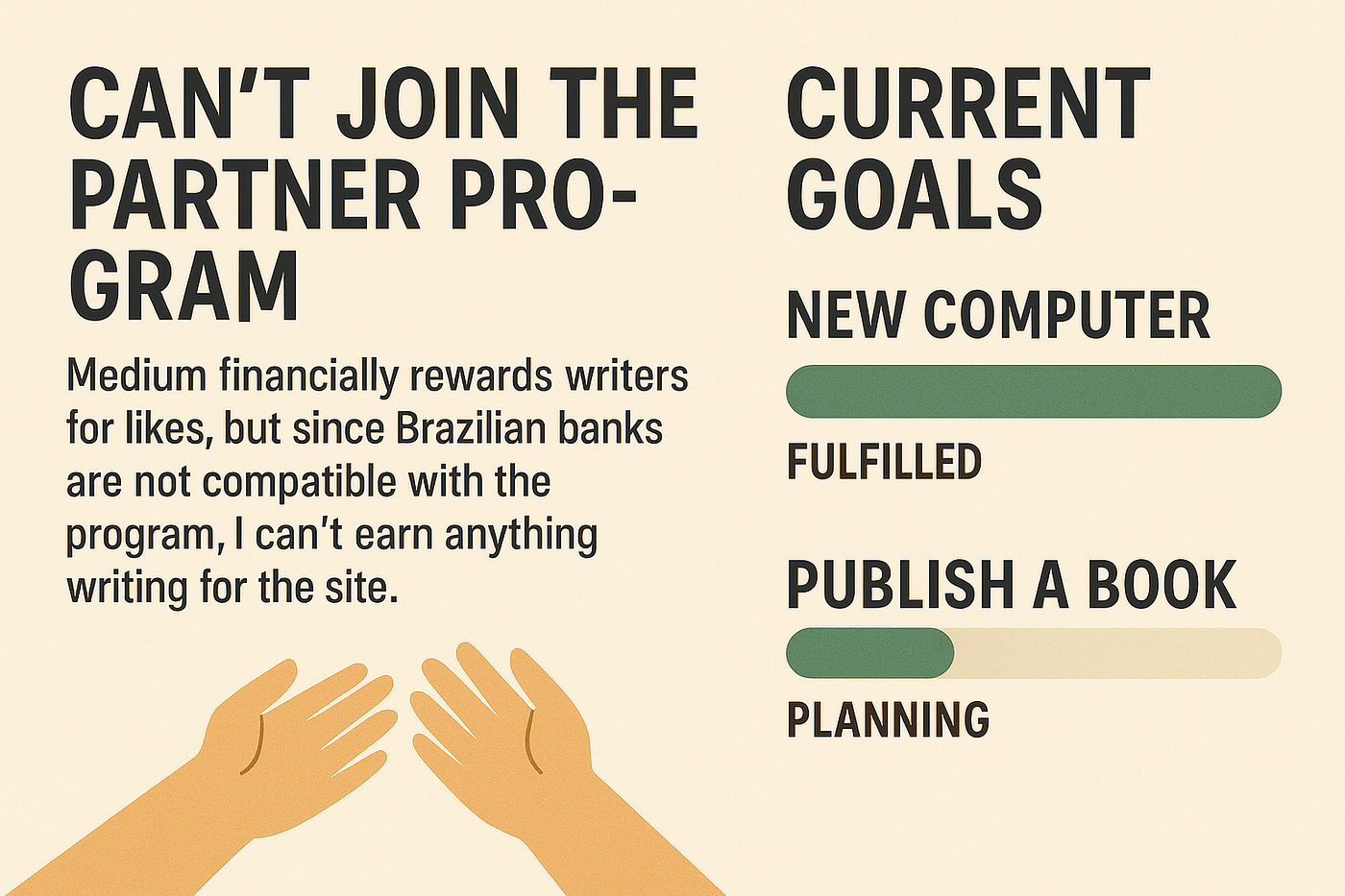
Medium does not allow authors from Brazil to join its Partner Program, which means I don’t earn anything from the time and care I put into these texts — unless readers like you choose to support me directly.
If you enjoy my writing and feel it resonates with you, I humbly invite you to consider leaving a small tip. It’s not about paying for the text itself — it’s about encouragement, about saying “keep going, your words matter.”
Every contribution, even $1, helps me stay motivated and continue creating — especially as I work on my book and try to dedicate more time to writing.
🧡 You can support me through my Linktree, where I offer multiple ways to donate:
- via Ko-fi
- via PayPal in Brazilian Reais (BRL) → Donate in BRL
- via PayPal in U.S. Dollars (USD) → Donate in USD
- or even a Pix contribution through LivePix (for Brazilian supporters)
Just look for the donation button (a little hand with a heart 🤲💙) next to the “Follow” button — or go directly to: 👉 ko-fi.com/higgoraraujo
You can also find the same link in my bio, through my Linktree, with all available support options.
Your support isn’t just financial — it’s a way of telling me “don’t stop, keep writing.” And that, more than anything, keeps me moving forward.
Thank you, from the bottom of my heart. 💛

메타데이터
- post_id
- 31c800dfd0e5
- slug
- the-autistic-threshold-effect-31c800dfd0e5
- url
- https://medium.com/@higgoraraujo/the-autistic-threshold-effect-31c800dfd0e5
- canonical_url
- https://medium.com/@higgoraraujo/the-autistic-threshold-effect-31c800dfd0e5
- author_url
- https://medium.com/@higgoraraujo
- status
- ok
- fetched_at
- 2026-07-14 19:34:30