Adult Acne: Why It Shows Up Later and What Actually Helps
Plenty of people make it through their teenage years with clear skin, only to find themselves breaking out in their late twenties…
Adult Acne: Why It Shows Up Later and What Actually Helps
Plenty of people make it through their teenage years with clear skin, only to find themselves breaking out in their late twenties, thirties, or beyond. It can feel both confusing and unfair, and it often comes with a quiet worry that you are doing something wrong. The reassuring truth is that adult acne is common, well understood, and very treatable. It simply behaves a little differently from teenage acne, and understanding those differences is the first step toward getting it under control for good.
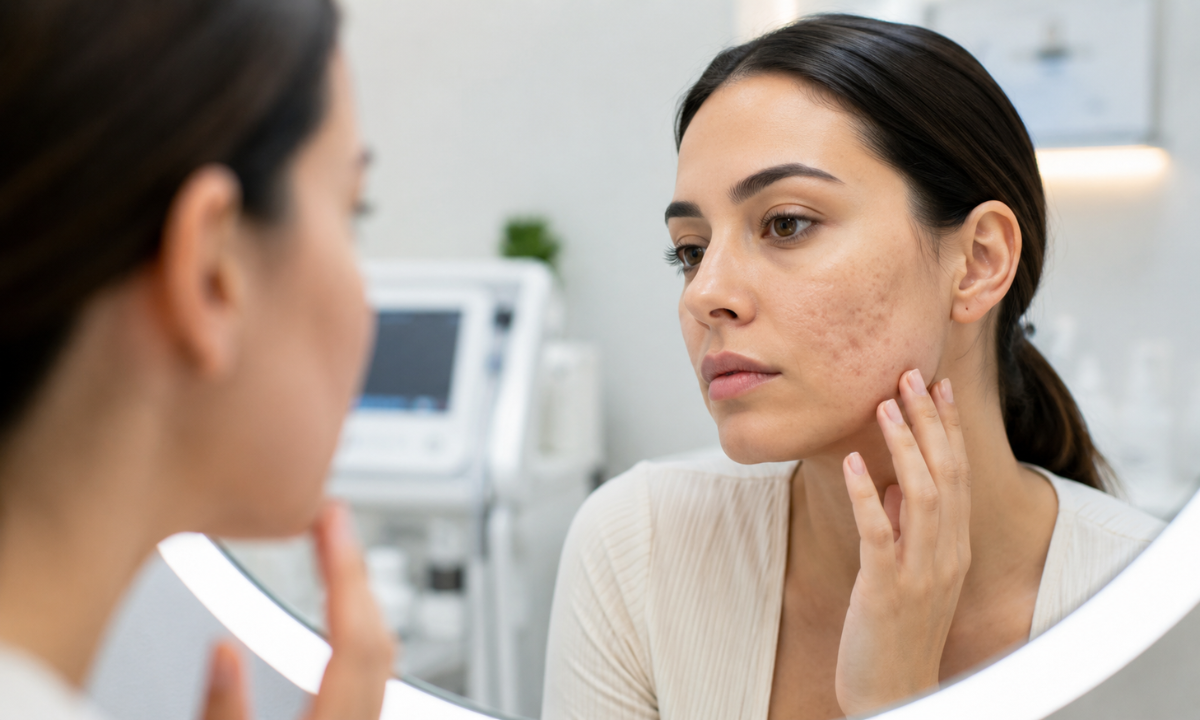
At its core, acne forms the same way at any age, from a mix of clogged pores, excess oil, bacteria, and inflammation. What stands out in adults is the role of hormones. Adult breakouts, especially in women, tend to settle along the jaw, chin, and lower cheeks, and they often flare on a monthly cycle or during times of hormonal change. This pattern is a clue that the acne is being driven from the inside, not just by what is sitting on the surface of the skin.
That internal driver is exactly why so many over-the-counter products plateau for adults. Drugstore options mostly target surface clogging and mild inflammation, which genuinely helps milder cases. When the engine is hormonal or the breakouts are deep, those products hit a ceiling no matter how faithfully they are used. The common response, layering on more and stronger active ingredients, often backfires, irritating the skin barrier and making breakouts and redness worse rather than better.
Adult skin also tends to be less forgiving when it comes to the aftermath of a breakout. Inflamed acne that lingers is more likely to leave behind dark marks and scarring, and those marks fade more slowly on mature skin than they do at fifteen. This is a big part of why getting active acne under control early matters so much. Calming the breakouts is not only about today’s skin; it is about protecting your skin’s appearance over the next several years.
There is also a stubborn set of myths worth clearing away, because they keep people stuck. Acne is not a sign of poor hygiene, and scrubbing harder or washing more often usually irritates the skin and worsens things. Diet plays a smaller and far more individual role than the internet suggests. And picking at blemishes, however satisfying in the moment, is one of the most reliable ways to turn a temporary spot into a lasting mark. Gentle and consistent almost always beats aggressive.
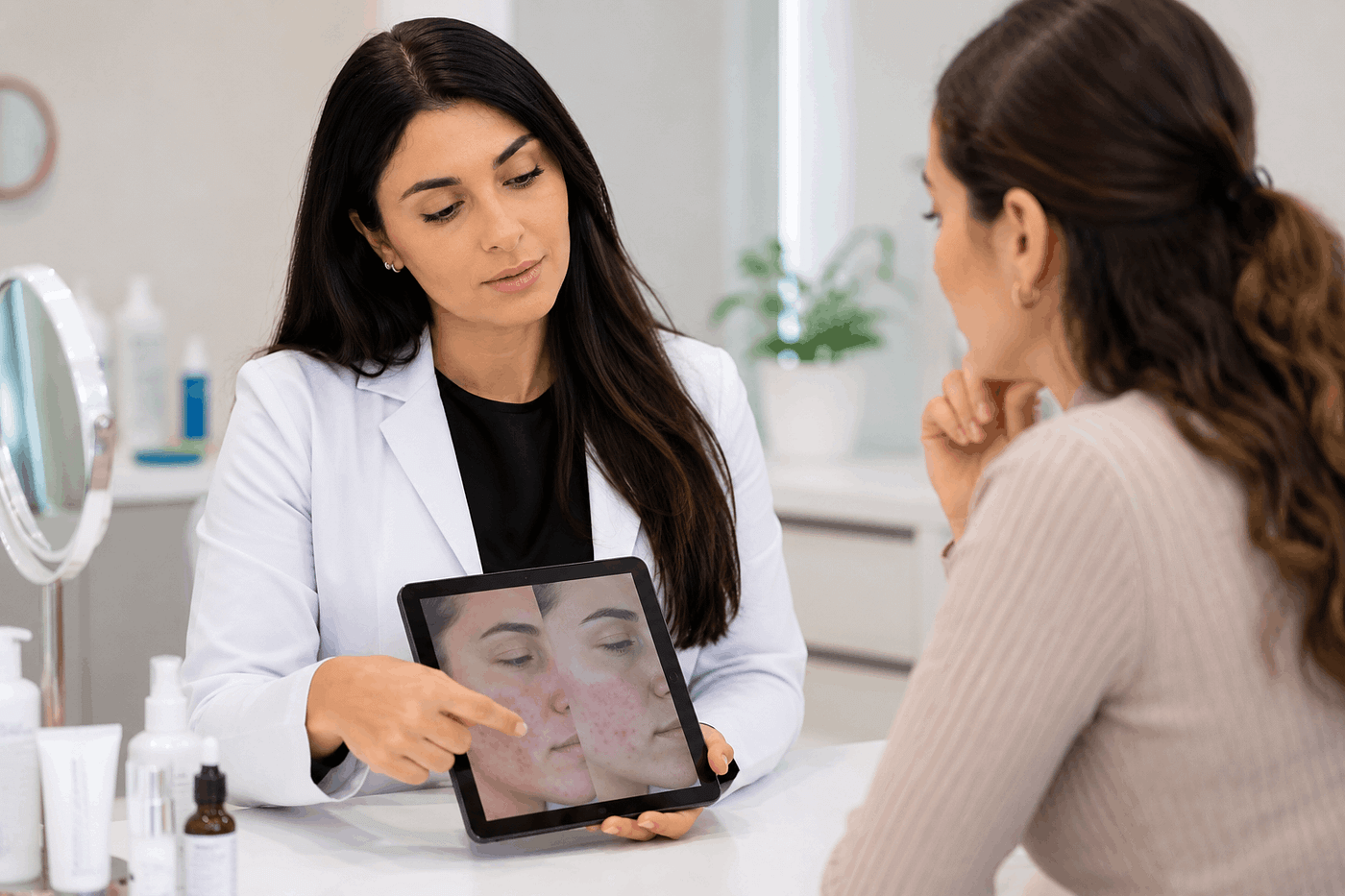
Effective treatment starts with looking at the type and pattern of your breakouts rather than treating every spot the same way. Comedonal acne, the blackheads and whiteheads, responds to one set of tools, while deep, painful cystic and hormonal acne usually needs prescription-strength help to settle. A plan might combine topical treatments, oral medication, a hormonal approach, and in-office procedures, chosen for your skin and adjusted over time as it responds. The aim is steady control, not a brief burst of clearing that fades the moment you stop.
It also helps to set realistic expectations about time. Acne treatments generally work over weeks and months, not days, and the early phase can require patience before the payoff arrives. Follow-up visits to fine-tune the plan are part of what makes results hold, and consistency from the patient is just as important as the prescription. This is a marathon with a very achievable finish line, not a sprint.
It is also worth a word about the factors that genuinely do influence adult acne, since the internet tends to either ignore them or exaggerate them. Stress is real and can worsen breakouts through hormonal pathways, and sleep and overall skin care play supporting roles. Skincare and makeup products labeled non-comedogenic are less likely to clog pores, which can help at the margins. None of these replace treatment for moderate or hormonal acne, but they are reasonable habits that support a medical plan rather than working against it, and a provider can help you sort the useful changes from the noise.
If you have been consistent with products for a couple of months without real progress, or if your breakouts are deep, painful, or starting to leave marks, that is the signal to get help rather than buy one more cleanser. Zina Goldvekht, PA-C, a physician assistant at Adult & Pediatric Dermatology in Forest Hills, Queens, treats acne in teens and adults, with a focus on both clearing breakouts and limiting the marks they can leave behind.
Disclaimer: This article is general information, not medical advice, and it is not a substitute for an in-person evaluation. If you have a skin concern, see a qualified dermatology provider, who can examine you, confirm a diagnosis, and recommend treatment suited to your situation.
메타데이터
- post_id
- 32231a28a61e
- slug
- adult-acne-why-it-shows-up-later-and-what-actually-helps-32231a28a61e
- url
- https://medium.com/@zinagoldvekhtpa/adult-acne-why-it-shows-up-later-and-what-actually-helps-32231a28a61e
- canonical_url
- https://medium.com/@zinagoldvekhtpa/adult-acne-why-it-shows-up-later-and-what-actually-helps-32231a28a61e
- author_url
- https://medium.com/@zinagoldvekhtpa
- status
- ok
- fetched_at
- 2026-07-13 06:23:13