Travelling without a ticket
It was one of my favourite movies from childhood — Bombay to Goa. I was always a big fan of Mehmood, and later I learned that his brother…
Travelling without a ticket
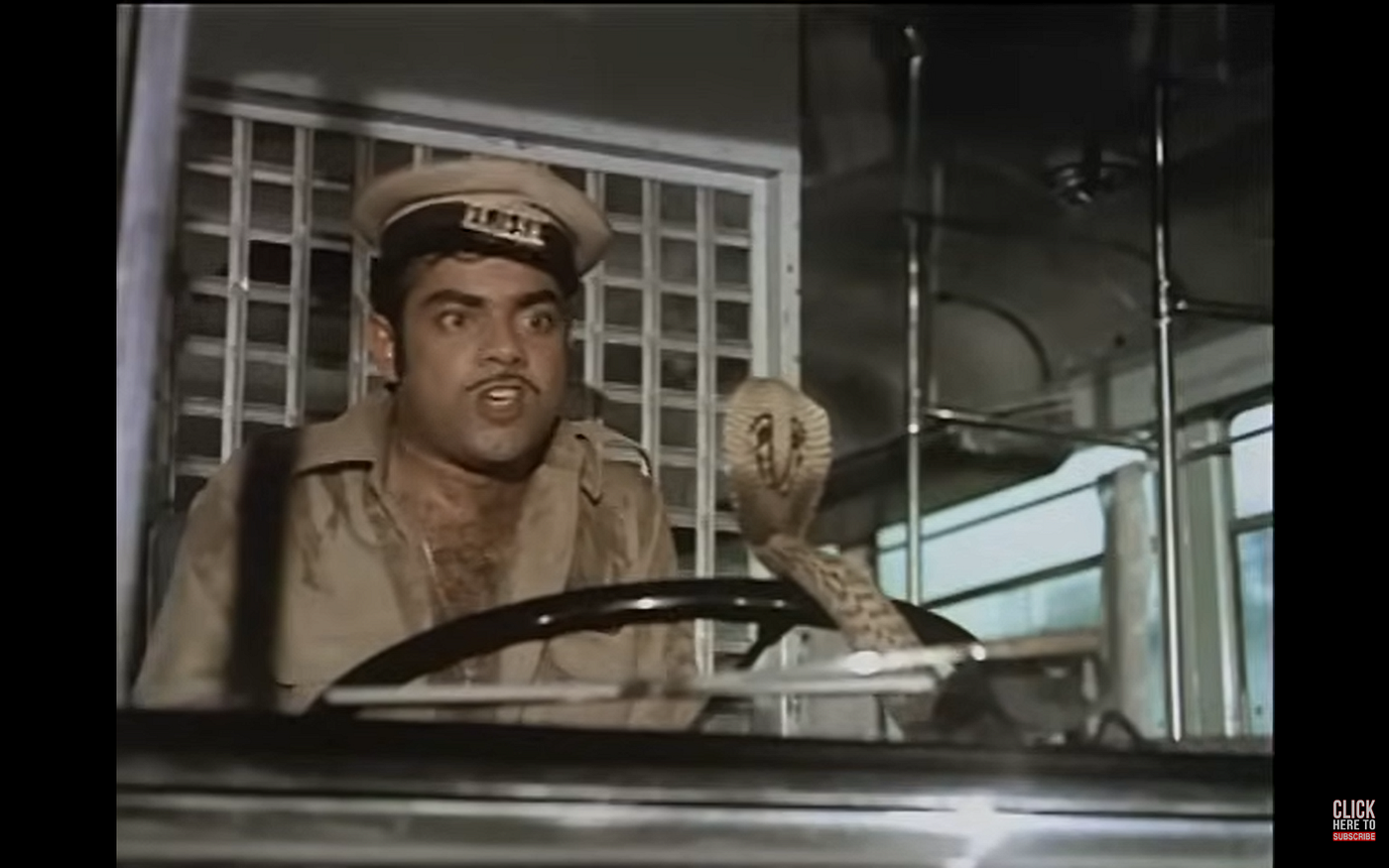
Scene from a movie Bombay to Goa
It was one of my favourite movies from childhood — Bombay to Goa. I was always a big fan of Mehmood, and later I learned that his brother added to the comedy flair, too. Mr. Bachchan was not yet a superstar at the time, but his charisma was already undeniable. Interestingly, the villain almost seemed more macho and attractive — no wonder the heroine seemed drawn to him.
The film was full of eccentric characters — passengers travelling with hens, fish, and all sorts of chaos in that bus from Bombay to Goa. What I loved most was how ordinary people refused to remain silent spectators when the heroine was harassed. There was also that unforgettable scene: a cobra escaping from a snake charmer’s basket, throwing the entire bus into comic panic. The timing was perfect. Everyone laughed.
But what was comedy on screen would not be comedy in real life.
Times have changed. Snake charmers are no longer a common sight in India, and possessing a cobra is illegal under Indian law. Yet the “cobra” remains iconic in our imagination. For many people, every snake is simply a snake — and any “phanwaala” (hooded snake) is automatically a cobra. Bollywood’s countless Naag–Naagin stories have shaped how we see them. Even today, some believe that if you kill a male cobra, the female will seek revenge. Strangely, perhaps this fear has unintentionally helped in conserving the species.
But not all cobras are the same.
We often confuse the Indian cobra with the King Cobra. The Indian cobra is widely distributed across the country, including central deciduous forests. The King Cobra, however, has a more restricted range — largely in the Western Ghats, Eastern Ghats (towards Odisha and West Bengal), parts of Northeast India, and some forested regions of Northern India.
As a child growing up in the Terai region of Uttar Pradesh, I remember snake charmers bringing large snakes in bamboo baskets for public shows. I could never tell whether they were King Cobras or Indian cobras. But I remember being fascinated — and slightly afraid — watching those huge snakes travel from village to village in the company of the charmer.
We were always safe as the “handler” of the snake was present. They mostly knew where they picked the animal and how far its “home range” is. Species evolve very specifically within certain landscapes. They are shaped by their forests, climates, prey, and ecosystems. When they appear in areas that are not part of their historical habitat, it often signals human interference.
A recent paper by Parmar and colleagues highlighted something surprising — King Cobras travelling by train in Goa. Yes, trains. The study suggests that railway networks may be acting as unintended conduits, moving snakes beyond their natural range. Goa may be a small state, but apparently even the “King” is travelling by this aam aadmi sawaari.
When species are transported — intentionally or accidentally — into new territories, problems arise. The snake may struggle to survive in unfamiliar conditions. Local communities may not know how to respond safely. And that is where fear, conflict, and negative interactions begin.
What was once a comic scene in a movie — a cobra escaping into chaos — becomes a real conservation concern when wildlife starts moving outside its natural boundaries because of us.
Wild animals are not props for entertainment, nor are they villains in folklore. They are species shaped by specific landscapes. When we alter those landscapes or move them around, we disrupt something delicate. Maybe it’s time we look at cobras — not as cinematic drama or superstition — but as part of a complex natural system that deserves understanding rather than fear.
메타데이터
- post_id
- 324fd2b60c4b
- slug
- travelling-without-a-ticket-324fd2b60c4b
- url
- https://medium.com/@ridhimasolankigtf/travelling-without-a-ticket-324fd2b60c4b
- canonical_url
- https://medium.com/@ridhimasolankigtf/travelling-without-a-ticket-324fd2b60c4b
- author_url
- https://medium.com/@ridhimasolankigtf
- status
- ok
- fetched_at
- 2026-06-26 06:47:43