What It Means to Host Someone Far From Home
There is a quiet difference between giving someone a place to sleep and giving them a place to settle. The distinction often goes unnoticed…
What It Means to Host Someone Far From Home
There is a quiet difference between giving someone a place to sleep and giving them a place to settle. The distinction often goes unnoticed until you’ve travelled far enough to need it.
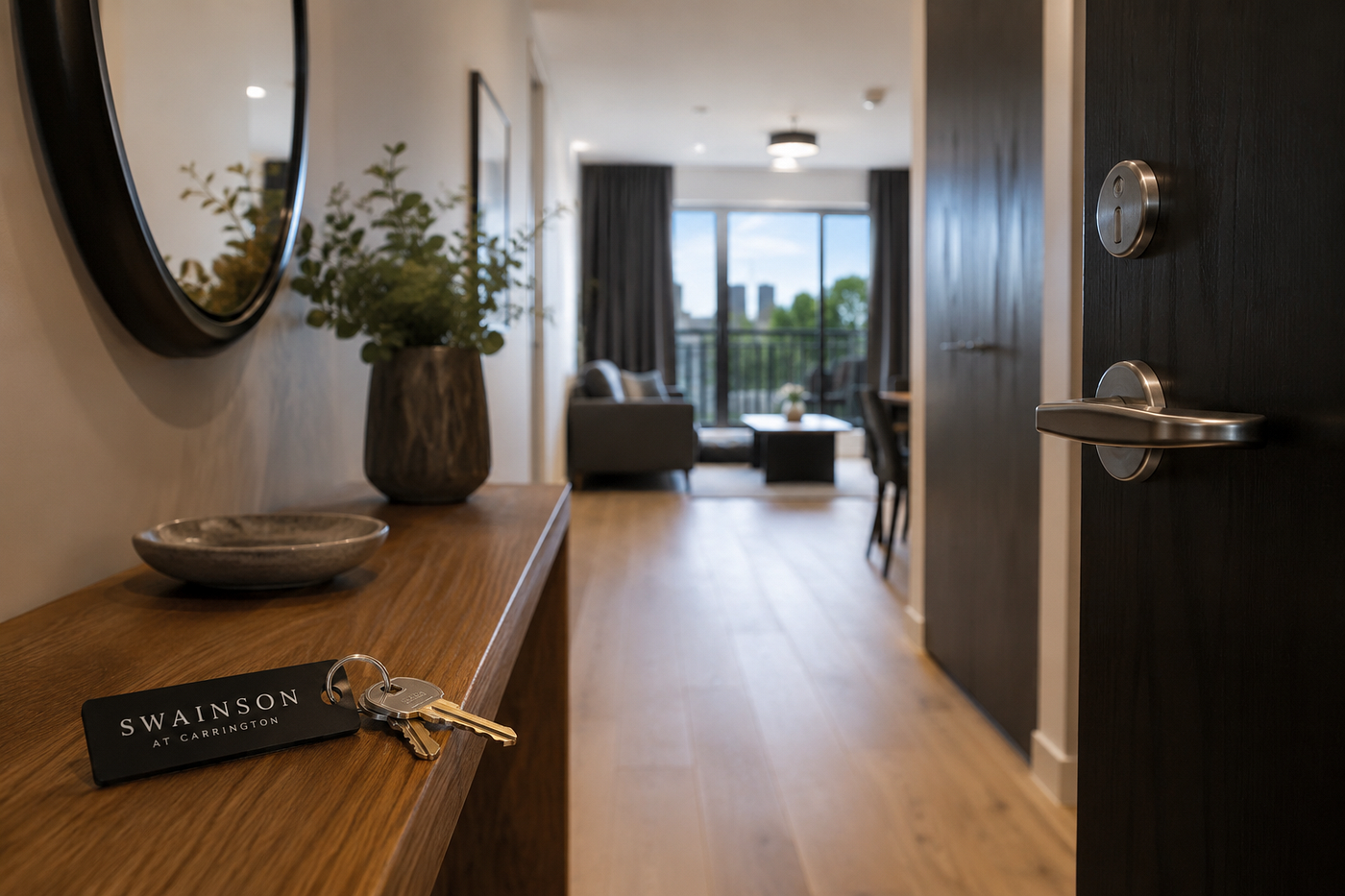
AI-generated illustration inspired by the Swainson
Arrival Is More Than Reaching a Destination
Travel has a way of compressing emotions into a single day. There is excitement, certainly, but also uncertainty. Even the most seasoned traveller eventually reaches the point where navigation apps blur together, airport announcements become background noise, and the only thing they truly want is a door that opens easily.
Every journey begins with movement. Genuine hospitality begins when the movement finally stops.
That moment rarely looks dramatic. It might be standing outside a building after sunset, suitcase beside you, listening to an unfamiliar city. It might be placing your passport back into your bag after checking in, taking a deep breath, and realizing there is nowhere else you need to be that evening.
People often remember the landmarks they visited, the meals they shared, or the beaches they wandered. Yet, when they describe a trip years later, they frequently return to smaller memories: the first morning coffee made in silence, the comfort of unpacking clothes into drawers instead of living from a suitcase, or the reassuring feeling that, for a few days, they belonged somewhere.
That emotional transition from visitor to temporary resident is one of the most overlooked aspects of travel.
For anyone searching for Adelaide accommodation, this shift often depends less on the destination itself than on how they are welcomed into it.
Hospitality Has Quietly Changed

Image Credit: Swainson Apartments
Hospitality once centred around service that was always visible.
Concierge desks. Bellhops. Daily housekeeping. Formal greetings across polished reception counters.
Those experiences still have their place, but modern travel has expanded the definition of what makes people feel cared for.
Today’s travellers increasingly value autonomy alongside comfort. After a delayed flight or a late-night arrival, many people would rather unlock a door independently than wait in a hotel lobby. Privacy has become a form of generosity. Simplicity has become a luxury in its own right.
This evolution reflects how people travel today.
Remote workers blend business with leisure. Families stay longer during school holidays. Couples seek neighbourhood cafes rather than crowded tourist districts. Friends gather around a dining table instead of ordering room service.
Hospitality has become less about constant attention and more about thoughtful design.
It asks a different question.
Instead of “How can we serve every moment?”**
It becomes:
“How can we make every moment easier?”
The Emotional Weight of an Unfamiliar City
Every destination introduces a quiet vulnerability.
No matter how confident someone appears, arriving somewhere unfamiliar requires countless small decisions.
Which tram should I catch?
Where can I buy groceries?
Is this neighbourhood lively after dark?
Can I safely leave my belongings here?
How long does it take to feel comfortable enough to stop checking maps every few minutes?
Good accommodation rarely answers these questions directly.
Instead, it creates enough stability that travellers begin answering them for themselves.
The most memorable places don’t remove independence they encourage it.
A well-equipped apartment with a kitchen says something subtle:
“Stay as long as you like.”
Laundry facilities communicate another reassuring message:
“You don’t have to rush.”
Comfortable living spaces suggest:
“You can pause here.”
These aren’t extravagant gestures.
They’re invitations to settle into the rhythm of everyday life.
An Imagined Evening in Adelaide

AI-assisted lifestyle image created using original Swainson property
Imagine arriving in Adelaide just after dusk.
Your flight has been delayed.
Your phone battery is almost gone.
The city feels quieter than expected.
You let yourself into your apartment using a simple self check-in process. There is no queue, no reception desk, no pressure to arrive before someone leaves for the evening.
Inside, everything feels practical in the best possible way.
You put water on to boil.
You unpack instead of leaving clothes folded in a suitcase.
Later, you walk to a nearby supermarket and return with fresh bread, fruit, olive oil, and ingredients for breakfast.
It isn’t a remarkable evening.
That is exactly why it matters.
By morning, Adelaide already feels less like somewhere you’re visiting and more like somewhere you’re briefly living.
Travel memories are often built from ordinary moments that become extraordinary simply because they happen somewhere new.
Why Independence Can Feel More Welcoming Than Service
There is a misconception that hospitality always requires visible interaction.
In reality, thoughtful independence can feel equally generous.
For many travellers, particularly those arriving late, travelling with children, or balancing work commitments, flexibility removes stress long before any conversation begins.
Self check-in isn’t simply a convenience.
It acknowledges that every journey unfolds differently.
Some guests arrive after midnight.
Others spend an extra hour exploring before returning.
Some prefer complete privacy after long flights.
Others simply enjoy moving at their own pace.
Modern self check-in accommodation Adelaide reflects this understanding. It trusts guests while allowing them to begin their stay on their own terms, a quiet expression of confidence that many travellers appreciate more than scripted welcomes.
Trust, after all, is one of hospitality’s most meaningful gifts.
Feeling Less Like a Tourist

AI-generated illustration inspired by the Adelaide Central Market
There is a noticeable difference between visiting a city and participating in it.
Hotels naturally encourage movement.
Apartments often encourage routine.
Routine may sound unremarkable, but it transforms travel.
Making breakfast before exploring local galleries.
Doing laundry before heading to the markets.
Working for a few hours near a window overlooking neighbourhood streets.
Walking to the same cafe two mornings in a row until the barista recognises your order.
These repeated moments slowly dissolve the invisible barrier between visitor and resident.
That is why self-contained has become increasingly appealing to travellers seeking more than convenience.
Having your own kitchen, living area, and everyday amenities creates room for normal life to continue even while you’re somewhere entirely different.
Rather than consuming a destination, you begin participating in it.
Small Details Shape Bigger Memories
People rarely remember thread counts.
They remember how a place made them feel.
Hospitality often lives inside details that are almost invisible.
Natural light in the morning.
A dining table large enough for takeaway shared with friends.
Enough space for children to play before bedtime.
Reliable Wi-Fi before an important online meeting.
Hooks for coats.
Good coffee within walking distance.
Windows that frame neighbourhood life rather than busy hotel corridors.
These details communicate care without announcing themselves.
Thoughtful accommodation understands that comfort isn’t created through extravagance.
It’s created through ease.
When Accommodation Becomes Part of the Destination
Travel writing often focuses on attractions.
Museums. Festivals. Restaurants. Coastlines.
Yet accommodation quietly shapes every one of those experiences.
A restful night’s sleep changes how early you’re willing to explore.
A kitchen encourages visits to farmers’ markets instead of eating every meal out.
Laundry facilities make longer itineraries feel manageable.
Extra living space allows conversations to continue long after returning from dinner.
For travellers seeking serviced apartments, these practical comforts often become part of the trip rather than simply supporting it.
Accommodation influences the pace of travel.
And pace influences memory.
Practical Considerations That Matter More Than You Expect

AI-assisted lifestyle image created using original Swainson property
While emotion shapes memorable travel, practical details often determine whether a stay feels effortless.
When choosing accommodation, consider questions that extend beyond location:
Is the space designed for everyday living?
Look for accommodation with kitchens, dining areas, laundry facilities, and enough room to relax beyond sleeping.
Does arrival fit your schedule?
Flexible self check-in can remove unnecessary stress, especially after delayed flights or evening arrivals.
Will the location suit your plans?
Different neighbourhoods support different experiences. Adelaide CBD accommodation places visitors close to cultural attractions, restaurants, business districts, and public transport, while surrounding suburbs may offer quieter residential surroundings and easier access to beaches or parks.
Are you staying for several nights?
For longer visits, apartments often provide greater comfort than traditional hotel rooms by allowing guests to establish familiar routines.Who are you travelling with?
Families may appreciate separate living areas and kitchens, while professionals often prioritise workspace, connectivity, and proximity to meetings. The right family accommodationor business accommodation supports the practical realities of each journey rather than asking travellers to adapt.
Hospitality That Reflects Contemporary Travel
The idea of hosting someone has evolved alongside the way people travel.
Increasingly, guests are looking for accommodation that feels less transactional and more personal not because someone is constantly present, but because thoughtful choices have already anticipated their needs.
Across Adelaide, this changing expectation has contributed to the growing popularity of self-contained apartments that prioritise privacy, flexibility, and comfort.
Properties like those offered by us reflect this broader shift. Rather than replicating a traditional hotel experience, we focus on creating independent spaces where travellers can cook, work, rest, unpack, and settle into daily life at their own pace. With apartments located across the city and surrounding suburbs, flexible self check-in, and practical amenities such as fully equipped kitchens and laundry facilities, the emphasis is less on constant service and more on helping guests feel comfortably at home while away.
That approach feels particularly relevant for those seeking long stay, where familiarity quickly becomes as valuable as convenience.
It is not about replacing hospitality. It is hospitality expressed differently.
Home Is Sometimes Measured in Small Rituals
Perhaps the greatest compliment someone can pay accommodation isn’t that it felt luxurious.
It’s that they stopped thinking about it.
The apartment became part of the background while life unfolded.
Breakfast was made.
Laundry was done.
A laptop opened before a morning meeting.
Friends gathered around a dining table.
Children fell asleep after long days exploring.
The city gradually became familiar.
Those quiet rituals create a temporary sense of home.
And perhaps that is what hosting someone far from home has always meant.
Not recreating the place they left behind.
Not overwhelming them with service.
But offering enough comfort, trust, and independence that they can begin writing a small chapter of everyday life somewhere entirely new.
Long after flights are forgotten and itineraries misplaced, travellers often remember how a place allowed them to feel.
The best accommodation doesn’t ask guests to admire it.
It simply gives them the space to belong.
메타데이터
- post_id
- 324ff65fce8a
- slug
- what-it-means-to-host-someone-far-from-home-324ff65fce8a
- url
- https://medium.com/@swainsons/what-it-means-to-host-someone-far-from-home-324ff65fce8a
- canonical_url
- https://medium.com/@swainsons/what-it-means-to-host-someone-far-from-home-324ff65fce8a
- author_url
- https://medium.com/@swainsons
- status
- ok
- fetched_at
- 2026-07-27 21:09:12