The Ethics of Refusal: Rethinking the Free Rider
Every refusal hides a diagnosis — not of the refuser, but of the world that makes obedience a survival instinct.
The Ethics of Refusal: Rethinking the Free Rider
Every refusal hides a diagnosis — not of the refuser, but of the world that makes obedience a survival instinct.
Tommaso Biagi Independent researcher in moral and political philosophy; editor at the Journal of Rational Fire
- The Invention of the “Free Rider”
Every system of domination needs its heretics — and its scapegoats.
For capitalism, that scapegoat is the free rider.
The free rider is the one who benefits from collective goods without contributing to their creation. Economists, ethicists, and politicians alike have built entire theories around this figure: the lazy citizen, the worker who shirks, the beneficiary of welfare who “takes without giving”.
It is the moral image that justifies coercion.
Because if too many “ride for free,” society collapses — or so we are told.
But what if this story is wrong at its foundation?
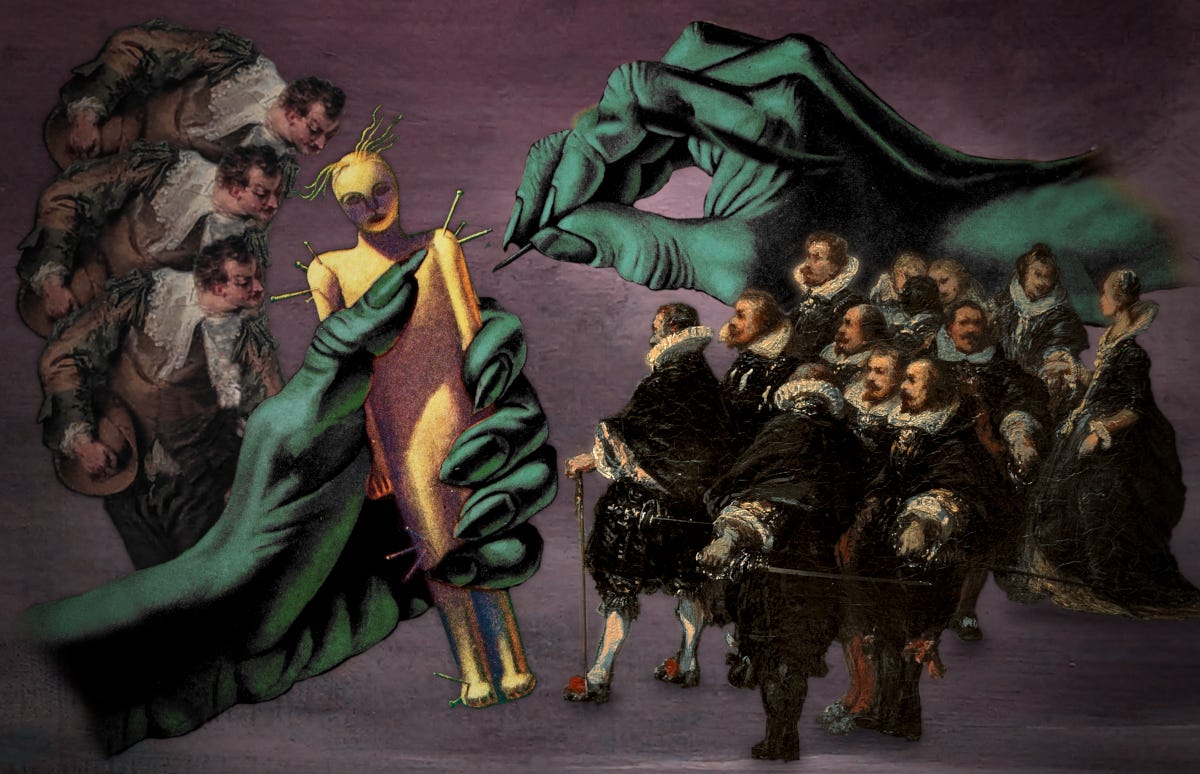
What if the so-called free rider is not a parasite of cooperation but the canary in the mine — the first to suffocate in a system that treats participation as a moral duty, regardless of the cost of participation itself?
To expose this moral error, we must reexamine a hidden axiom that underpins modern moral and political philosophy: the idea that non-participation is always a failure of duty, never a signal of structural dysfunction.
2. The Hidden Calculus Behind “Duty”
The moral condemnation of the free rider rests on an invisible equation.
It assumes that cooperation is, by default, a good — and that contributing to it is always a moral obligation. To refuse to participate is to “take advantage” of others’ work.
Yet this reasoning already presupposes something false: that cooperation itself is neutral, or even benevolent.
That the social order in which we are asked to participate is not already structured on coercion, hierarchy, and domination.
This is the first sleight of hand of moral utilitarianism:
it presents participation in an unjust system as an ethical act, and refusal as a vice.
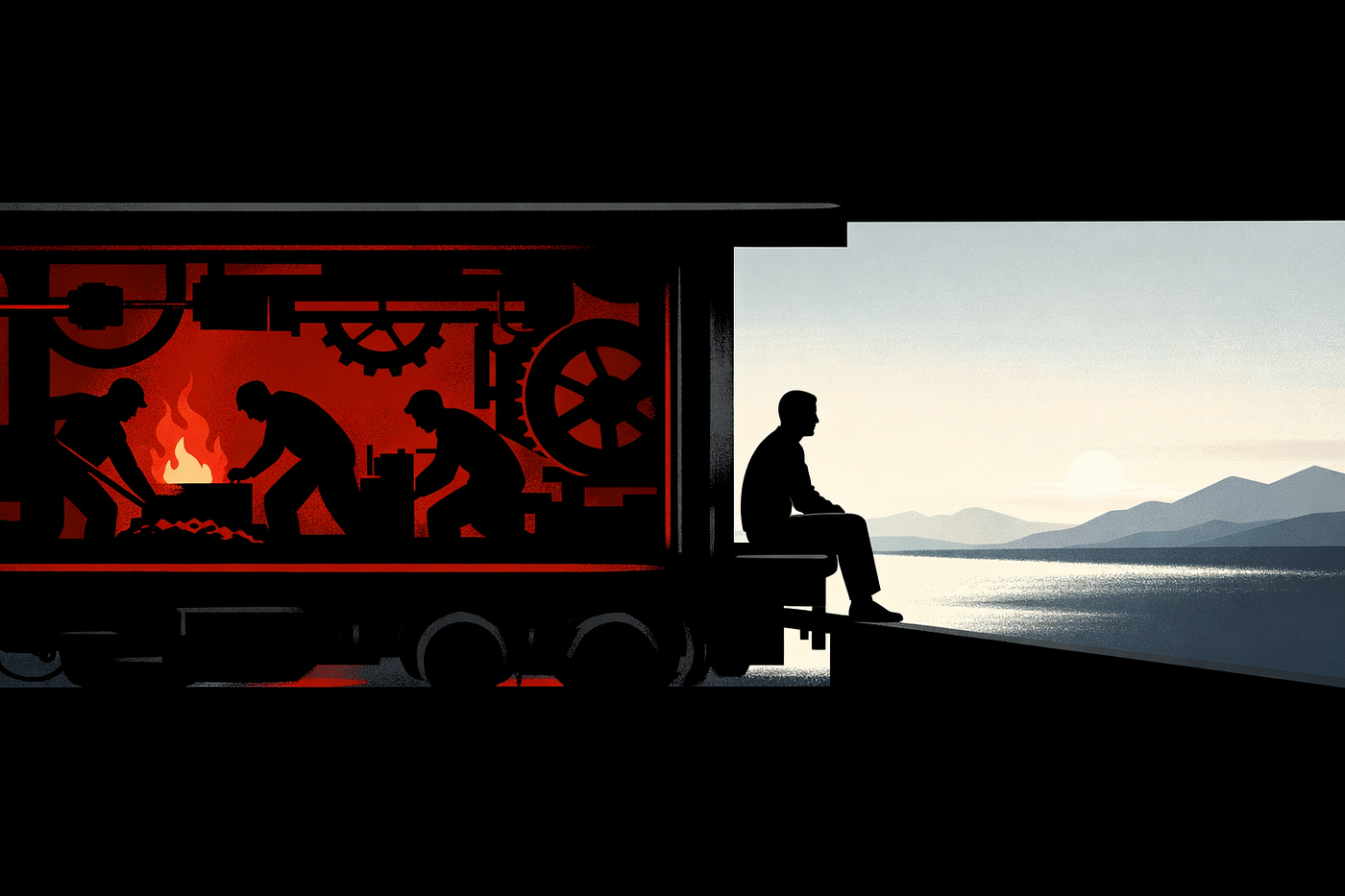
But a worker forced to choose between starvation and submission is not “cooperating”; he is surviving.
And one who withdraws from such a system is not a parasite — he is a fugitive of moral incoherence.
To call his withdrawal “free riding” is to erase the coercive preconditions of the very cooperation he refuses.
3. Cooperation Is Not Always Good
We are told that cooperation is the foundation of civilization — and in some sense, that’s true.
But not all cooperation is morally equal.
Cooperation can build hospitals and mutual aid networks — or prisons, markets, and armies.
It can produce vaccines or weapons, housing or debt, food or exploitation.
In itself, cooperation is ethically neutral. Its value depends on the structure of power that governs it:
- Who decides the terms?
- Who bears the costs?
- Who can refuse participation without losing the means to live?
Modern societies, however, treat cooperation as an end in itself. “Work,” “productivity,” “economic participation” — all become sacred duties, detached from the moral quality of what is produced.
Thus, to “refuse to cooperate” is not seen as a legitimate moral stance but as deviance.
And the free rider becomes the heretic who refuses to bow before this new religion of production.
4. The Myth of Reciprocity
At the heart of the free rider accusation lies the myth of reciprocity:
the belief that every benefit must be repaid by an equivalent contribution.
But reciprocity makes sense only when the field is level — when all participants are equally capable of contributing.
In reality, people enter the social game with vastly unequal resources: cognitive, psychological, social, economic.
What economists call “shirking” is often just the visible symptom of an invisible asymmetry — a person paying a higher cost for the same act of participation.
A neurodivergent person who struggles with executive dysfunction, a worker with chronic pain, a parent caring for a disabled child — each “cooperates” under conditions of exhaustion and invisible taxation.
To demand reciprocity from unequal subjects is to impose a moral tax on fragility.
The free rider, in this sense, is often the one who refuses to bankrupt himself just to appear “reciprocal.”
5. The Hidden Violence of Contribution
The modern cult of contribution hides its own violence.
We say “everyone must do their part.” But what we really mean is: everyone must adapt to the tempo of the system, or be excluded.
We call it “responsibility.” But it’s a moral disguise for structural ableism.
The inability to meet the standard pace of cooperation is treated not as a systemic failure but as personal guilt.
This logic runs deep — from schools that punish “inattention” to workplaces that reward “resilience” while exhausting their workers.
The free rider, here, is simply the one who no longer plays along.
The one who says: this game is killing me.
To brand him as a parasite is to protect the machine that broke him.
6. The Free Rider as Mirror
What the free rider reveals is not laziness but limits.
He shows the line where participation becomes self-destruction.
His refusal is not nihilism — it’s a boundary.
It says: there are forms of cooperation that no longer serve life but consume it.
When a society labels such refusal as immoral, it reveals its own pathology:
it cannot tell the difference between order and domination, between solidarity and coercion.
The free rider thus becomes a mirror — reflecting the moral exhaustion of a civilization that no longer distinguishes between working and being worked.
7. The Economics of Coercion
In capitalist language, the free rider problem is a question of incentives:
If everyone benefits without paying, why would anyone pay?
But this economic model is built on a moral inversion.
It assumes that contribution must always be enforced, because left to themselves, humans are selfish.
This cynicism justifies coercion. Taxes, wage labor, debt, surveillance — all become tools to ensure “participation.”
The free rider is not an economic anomaly; he is the person who exposes the coercion hidden beneath the appearance of choice.
He is the one who sees that “voluntary participation” often means “compulsory survival.”
8. The Ontology of Fatigue
There is a deeper, quieter truth at work here:
fatigue is not moral failure.
A civilization that condemns fatigue as vice — that sees rest, withdrawal, or slowness as parasitism — is a civilization that has confused vitality with productivity.
The free rider reminds us that the right to disengage is as essential as the right to speak.
Freedom without the right to stop participating is a simulation of liberty — a treadmill with painted landscapes.
The refusal to “do one’s part” can be an act of care — not only for oneself but for the integrity of meaning.
It says: no production justifies the loss of humanity required to sustain it.
9. From Moral Shame to Structural Diagnosis
What we call “moral laziness” is often systemic burnout.
The fatigue of those who carry the invisible weight of maintaining a world that demands constant effort without reciprocal care.
To shame non-participation is to medicalize dissent.
But every withdrawal from an unjust structure is a form of testimony:
it tells us where the system stops being livable.
The free rider, in this sense, is the index of institutional cruelty.
Wherever he appears, it’s a sign that cooperation has turned into compulsion.
The question is not “how do we eliminate free riders?” but “how do we build systems of cooperation that do not destroy those who can’t keep up?”
10. The Right to Refusal
A moral system that cannot accommodate refusal is already authoritarian.
Refusal is the grammar of freedom.
It is what allows morality to exist in the first place — the ability to say no to domination.
The Ethics of Limit calls this the Lexical Shield:
the set of material conditions (income, shelter, healthcare, time) that make refusal possible without collapse.
Without these Shields, “freedom” is a lottery of privilege — the strong call it agency, the weak call it survival.
The free rider, in this light, is simply someone whose shield has failed — or who refuses to weaponize his survival against others.
11. From Guilt to Insight
The moral imagination of our time is haunted by guilt.
We feel guilty for resting, for being unproductive, for saying no.
This guilt is not natural — it’s manufactured.
It is how systems of domination internalize obedience: by turning fatigue into sin and refusal into shame.
To liberate ourselves from this guilt is not to reject cooperation — it is to reclaim ethical agency.
It is to say: participation must be chosen, not extorted.
A moral society is not one without free riders; it’s one that no longer needs the category to maintain its order.
12. Conclusion — Refusal as Moral Intelligence
The free rider does not break society — he diagnoses it.
He reveals that the so-called “common good” often rests on a hidden arithmetic of sacrifice.
To honor him is not to celebrate laziness but to recognize that every withdrawal is a form of moral intelligence — a signal that the cost of belonging has exceeded the value of being.
The true free rider problem is not that too few contribute, but that too many contribute to a system that consumes them.
When refusal becomes a moral act, cooperation can finally become voluntary — and therefore, genuinely human.
메타데이터
- post_id
- 325becc07c5b
- slug
- the-ethics-of-refusal-rethinking-the-free-rider-325becc07c5b
- url
- https://medium.com/@philosofake/the-ethics-of-refusal-rethinking-the-free-rider-325becc07c5b
- canonical_url
- https://medium.com/@philosofake/the-ethics-of-refusal-rethinking-the-free-rider-325becc07c5b
- author_url
- https://medium.com/@philosofake
- status
- ok
- fetched_at
- 2026-08-07 21:47:05