Why Your Curry Tastes Different? “The Masala Is the Answer”
You followed the recipe exactly. Same ingredients, same quantities, same cooking time. But when you tasted it, something was off. Not wrong…
Why Your Curry Tastes Different? “The Masala Is the Answer”
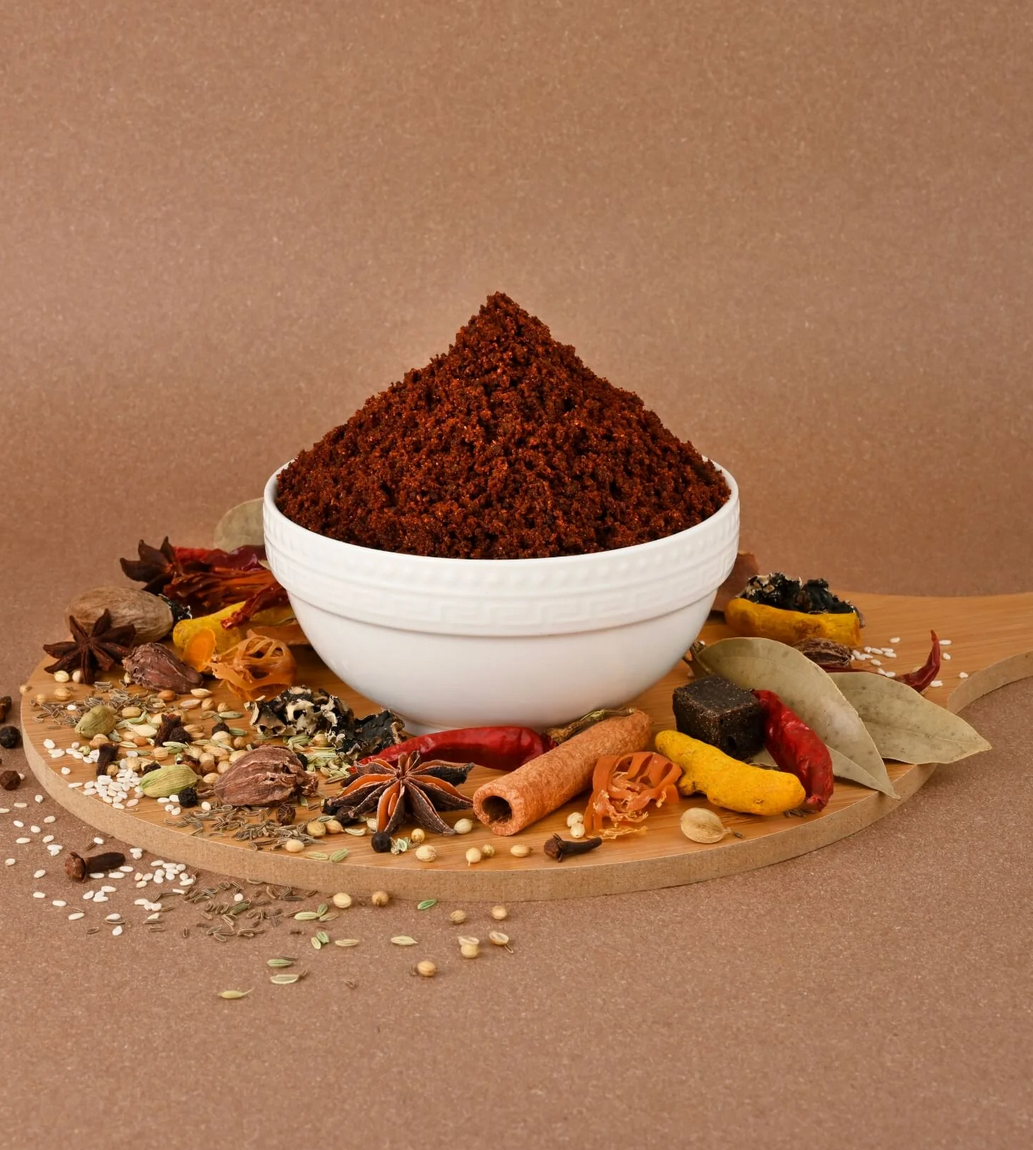
Traditional Kala Masala
You followed the recipe exactly. Same ingredients, same quantities, same cooking time. But when you tasted it, something was off. Not wrong exactly just not quite right. Not the depth you were expecting. Not that familiar warmth that makes a curry feel complete.
If this has happened to you more than once, you are not alone. And the reason is almost never the technique.
It is the masala.
This blog is not about complicated cooking methods or exotic ingredients. It is about understanding one simple truth that experienced home cooks already know that the quality, type, and preparation of your masala determines more about your curry’s final flavour than almost anything else you do in the kitchen.
The Curry Problem Nobody Talks About Honestly
Most cooking advice focuses on technique. How to temper spices. When to add tomatoes. How long to cook the meat. These things matter, but they are secondary to something more fundamental.
Think about it this way. Two people make the same curry using the same recipe. One uses freshly prepared, carefully roasted whole spices. The other uses a commercial masala powder that has been sitting in a warehouse for six months before reaching the supermarket shelf.
The technique can be identical. The result will not be.
Nobody talks about this clearly because it requires admitting something uncomfortable that the packet of masala powder most of us reach for every day is not really delivering what we think it is.
What Masala Actually Does in a Curry
Before we talk about what goes wrong, it helps to understand what masala is supposed to do.
A good masala does not just add flavour. It builds a base. It creates the foundation that every other ingredient in the curry rests on. When it hits a hot pan with oil, the spices begin releasing their essential oils the aromatic compounds that carry the real character of each ingredient. Those oils then coat the onions, the tomatoes, the meat or vegetables, and travel through the entire dish as it cooks.
This is why a curry made with good masala has flavour in every bite, not just on the surface. The spice has penetrated the dish rather than sitting on top of it.
When this process does not happen when the masala lacks those essential oils to begin with the curry tastes flat. Or sharp but one-dimensional. Or just vaguely spiced rather than genuinely flavourful. You can smell that something is missing even before you taste it.
Why Commercial Masala Often Falls Short
This is not about dismissing an entire category of products. There are valid reasons to use ready-made masala. Convenience is real, and time is limited.
But it is worth understanding what happens between a whole spice and a commercial masala powder, because the journey matters enormously.
Whole spices contain their essential oils locked inside their cells. Those oils are stable when the spice is whole. The moment you grind a spice, you expose those oils to air, light, and heat and they begin to degrade almost immediately.
Industrial grinding generates heat through friction. That heat accelerates the evaporation of the very compounds that give each spice its character. By the time the powder is blended, packaged, shipped to a distributor, stored, shipped again to a retailer, and finally placed on a shelf weeks or months may have passed. The oils that were once vibrant are now largely gone.
What remains is colour and a faint echo of the original aroma. It is technically spice. But it is not performing the way a spice should perform.
The Difference Roasting Makes
One thing that separates a truly good masala from an average one is the roasting process and specifically, whether it is done with attention or with speed.
Dry-roasting whole spices before grinding is not optional in traditional Indian cooking. It is essential. Heat activates the aromatic compounds inside each spice and transforms them. A raw cumin seed and a properly roasted cumin seed produce completely different flavours when ground. The roasted one is deeper, nuttier, more complex.
But roasting is also where most things go wrong at scale. Industrial roasting is done in batches, under time pressure, at temperatures optimised for throughput rather than flavour. The margin between perfectly roasted and slightly over-roasted is narrow. At scale, that margin is regularly exceeded.
Handmade masala, roasted in small quantities by someone paying attention, works differently. The person making it can smell the moment each spice is ready. They can hear the change in sound as moisture leaves the pan. They adjust the heat intuitively. That level of control is not possible at industrial scale, and it shows in the final product.
How the Wrong Masala Changes Your Curry
Let us be specific about what actually changes in a curry when the masala is not performing.
Depth disappears. A curry made with flat masala tastes one-dimensional. You might get heat, you might get colour, but you do not get that layered warmth that makes each bite slightly different from the last.
Aroma becomes surface-level. Good masala makes a curry smell as rich as it tastes. When the essential oils are gone, the aroma fades quickly. The kitchen smells good while cooking, but the dish itself does not carry that fragrance through to the table.
You end up adding more, not better. This is the part most home cooks recognise without realising the cause. When a dish tastes bland, the instinct is to add more spice. But if the masala itself lacks potency, adding more of it just increases the powder-to-dish ratio without adding real flavour. The curry gets heavier but not deeper.
The finish is sharp rather than round. A well-made masala rounds out a curry as it cooks the flavours mellow and integrate. A poorly made masala often leaves a sharp, slightly raw edge even after long cooking.
What Your Grandmother’s Curry Actually Had
There is a reason the curry from an older generation of home cooks tasted different and better to most of us.
It was not because they were more skilled cooks, necessarily. It was because they used masala that was made properly. In many households, masala was made at home, in small batches, with whole spices bought fresh from a market, cleaned by hand, dry-roasted with care, and ground on a stone surface that did not generate excess heat.
That masala had everything still intact the oils, the complexity, the slow-release flavour that builds through cooking. The curry made with it tasted the way curry is supposed to taste.
Most of us lost access to that masala as convenience products took over. The curry changed not because we cook worse, but because the foundation changed beneath us.
What to Look For in a Good Masala
If you want to fix the flatness in your curry, the answer is not a new recipe. It is a better masala. Here is what actually matters:
Made in small batches. Large-batch industrial production almost always compromises quality for consistency. Small-batch masala, made by hand, can afford the time and attention that large operations cannot.
Whole spices, roasted before grinding. This is non-negotiable for real flavour depth. If you cannot verify this, the aroma when you open the packet will tell you a well-made masala smells alive and complex, not dusty or faint.
No fillers or additives. Many commercial blends use starch, flour, or synthetic enhancers to bulk up the product or extend shelf life. These dilute the actual spice content without adding any flavour value.
Used in smaller quantities. Counterintuitively, a good masala requires less of itself. If you find yourself using large amounts just to taste anything, that is a sign the masala is not doing its job.
The Simple Fix That Changes Everything
You do not need to overhaul your entire cooking approach. You do not need to start grinding your own spices from scratch every day.
What you need is to start with a masala that was made with the same care that your grandmother brought to hers. One that was roasted properly, ground carefully, and made without shortcuts.
Start with your regular curry recipe. Change nothing except the masala. Use a handmade, traditionally prepared blend something like a good kala masala for Maharashtrian curries, or a goda masala for vegetarian dishes. Use slightly less than you normally would. Then taste.
The difference will be immediately clear. Not subtle, not something you have to convince yourself to notice. Clear.
That is what masala is supposed to do. That is what it can do, when it is made the right way.
The gap between a curry that tastes good and one that tastes the way it is supposed to taste is almost never about cooking skill. Most home cooks are doing everything right. The problem is hidden inside the masala tin.
When you understand that the masala is not just a flavouring but the structural foundation of the entire dish, you start making different choices. You pay more attention to what goes into it, how it was made, and whether the person who made it cared enough to do it properly.
That attention, carried from the spice maker to your pan, is what your curry has been missing.
메타데이터
- post_id
- 32bd2e9f08d7
- slug
- why-your-curry-tastes-different-the-masala-is-the-answer-32bd2e9f08d7
- url
- https://medium.com/@FoodSpiceBox/why-your-curry-tastes-different-the-masala-is-the-answer-32bd2e9f08d7
- canonical_url
- https://medium.com/@FoodSpiceBox/why-your-curry-tastes-different-the-masala-is-the-answer-32bd2e9f08d7
- author_url
- https://medium.com/@FoodSpiceBox
- status
- ok
- fetched_at
- 2026-07-11 15:26:47