Multi-Agent Reinforcement Learning for Hierarchical Condition Category (HCC) Risk Adjustment…
Introduction

Multi-Agent Reinforcement Learning for Hierarchical Condition Category (HCC) Risk Adjustment Optimization in Value-Based Healthcare
Introduction
The transformation of healthcare delivery from fee-for-service models to value-based healthcare has significantly increased the importance of accurate risk adjustment methodologies. Risk adjustment serves as a foundational mechanism for predicting healthcare expenditures and allocating resources based on patient complexity. One of the most widely utilized frameworks for this purpose is the Hierarchical Condition Category (HCC) model, which categorizes patient diagnoses into clinically meaningful groups and assigns risk scores that influence reimbursement decisions. As healthcare systems continue to generate vast amounts of clinical, administrative, and demographic data, traditional HCC coding and risk adjustment processes face challenges related to accuracy, scalability, and adaptability. These limitations have created opportunities for advanced artificial intelligence techniques, particularly Multi-Agent Reinforcement Learning (MARL), to enhance HCC risk adjustment optimization.
Multi-Agent Reinforcement Learning represents an emerging branch of machine learning in which multiple intelligent agents interact within a shared environment, learning optimal strategies through continuous feedback and reward mechanisms. Unlike conventional machine learning approaches that rely primarily on historical datasets, MARL enables dynamic decision-making by allowing agents to adapt to changing healthcare conditions, coding practices, and patient populations. Within the context of HCC risk adjustment, different agents can be assigned specialized responsibilities, such as diagnosis identification, documentation validation, coding optimization, risk score prediction, and compliance monitoring.
EQ.1.HCC Risk Score:

Healthcare organizations often struggle with incomplete clinical documentation, coding inconsistencies, and missed diagnosis opportunities that negatively affect HCC risk scores. These challenges can result in underestimation of patient risk profiles, inadequate reimbursement, and reduced care quality. A MARL framework addresses these issues by creating a collaborative ecosystem where agents continuously learn from one another and optimize overall system performance. For example, one agent may analyze electronic health records to identify chronic conditions, while another agent validates coding accuracy and a third agent predicts reimbursement outcomes. Through cooperative learning, the agents collectively maximize coding precision and financial accuracy.

The integration of MARL into HCC optimization is particularly relevant in value-based healthcare environments where reimbursement depends heavily on patient outcomes and risk-adjusted performance metrics. Healthcare providers participating in accountable care organizations, Medicare Advantage programs, and population health management initiatives require precise risk assessment mechanisms to ensure equitable compensation and effective resource allocation. MARL systems can facilitate real-time identification of risk factors, enabling providers to intervene proactively and improve patient outcomes.
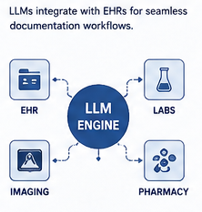
Another important advantage of MARL lies in its ability to process heterogeneous healthcare data. Modern healthcare environments generate structured and unstructured information from electronic medical records, laboratory results, physician notes, imaging reports, wearable devices, and claims databases. Traditional predictive models often struggle to integrate these diverse data sources efficiently. Multi-agent systems can distribute analytical responsibilities among specialized agents, each focusing on a particular data domain while contributing to a unified risk adjustment strategy. This distributed intelligence enhances system scalability and improves overall predictive performance.
Furthermore, reinforcement learning frameworks excel in environments characterized by uncertainty and evolving conditions. Healthcare regulations, coding guidelines, and reimbursement structures frequently change, requiring adaptive systems capable of learning new patterns without extensive retraining. MARL agents continuously update their policies based on environmental feedback, allowing healthcare organizations to maintain compliance while optimizing reimbursement opportunities. This adaptability is especially valuable in managing chronic disease populations where patient conditions evolve over time and influence future healthcare utilization.
The proposed MARL-based HCC optimization framework can be structured around cooperative and competitive learning mechanisms. Cooperative agents work together to maximize overall risk adjustment accuracy, while competitive agents challenge each other’s predictions to reduce errors and bias. Reward functions can be designed to incentivize accurate coding, complete documentation, regulatory compliance, and improved patient outcome prediction. Through iterative learning cycles, agents gradually develop sophisticated strategies that enhance both clinical and financial performance.

In addition to financial benefits, MARL-driven HCC optimization contributes to improved patient care. Accurate risk stratification enables healthcare providers to identify high-risk patients earlier, prioritize preventive interventions, and allocate resources more effectively. By recognizing complex comorbidities and chronic conditions that might otherwise be overlooked, the system supports more comprehensive care planning and personalized treatment approaches. Consequently, healthcare organizations can achieve better patient outcomes while maintaining sustainable financial performance.
EQ.2.Multi-Agent Reward Function:

The implementation of MARL for HCC risk adjustment also introduces opportunities for transparency and explainability. Advanced agent architectures can generate interpretable recommendations that assist coders, clinicians, and administrators in understanding the rationale behind risk score modifications. Such transparency is essential in healthcare environments where accountability, compliance, and audit readiness are critical considerations.
As healthcare systems increasingly embrace digital transformation, the convergence of reinforcement learning, multi-agent systems, and risk adjustment methodologies represents a promising direction for future research and innovation. By leveraging collaborative intelligence and adaptive learning, MARL has the potential to redefine how healthcare organizations optimize HCC coding and risk adjustment processes within value-based care frameworks.

Conclusion
Multi-Agent Reinforcement Learning offers a powerful and adaptive approach for optimizing HCC risk adjustment in value-based healthcare. Through collaborative learning, dynamic decision-making, and continuous adaptation, MARL can improve coding accuracy, reimbursement optimization, compliance, and patient risk stratification. As healthcare organizations seek more intelligent and scalable solutions for managing complex patient populations, MARL-based HCC optimization frameworks may become a critical component of future value-based care strategies.
메타데이터
- post_id
- 32c7db2f2705
- slug
- multi-agent-reinforcement-learning-for-hierarchical-condition-category-hcc-risk-adjustment-32c7db2f2705
- url
- https://medium.com/@bindooo.madhaveee/multi-agent-reinforcement-learning-for-hierarchical-condition-category-hcc-risk-adjustment-32c7db2f2705
- canonical_url
- https://medium.com/@bindooo.madhaveee/multi-agent-reinforcement-learning-for-hierarchical-condition-category-hcc-risk-adjustment-32c7db2f2705
- author_url
- https://medium.com/@bindooo.madhaveee
- status
- ok
- fetched_at
- 2026-06-25 16:53:31