Is AGI here and we don’t see it?
I am always fascinated by a good phylosophical debate. But what makes the debate “good” is the fact that somehow it is rooted on real…
Is AGI here and we don’t see it?
Photo by Jamie Street on Unsplash
I am always fascinated by a good phylosophical debate. But what makes the debate “good” is the fact that somehow it is rooted on real issues that surround us in any form.
The discussion over LLMs and AGIs is fascinating. Or is it? For sure it is highly philosophical and conceptual, but if we look at how we humans interact with the world around us, we see that we do not look at problems in an abstract way conceptualizing the details as they are, but we rely on our practical past experiences and past interactions with the world. And that is the reason why literature and documentation matter: having others’ experiences at your disposal means having access to all information on someone else’s experiences without requiring information about their world and being able to reconnect patterns we experience with patterns documented by others in other contexts.
How does that matter in an LLM vs AGI world? It matters as the difference between a kid trying to please their parents and an LLM is the fact that a child, as well as an adult trying to do a good impression in an interview or at the first date, has a physical world surrounding her, so the context she relies on is hugely more complex and precise than the one we give in our “system prompts”. The context in reality is not just textual, but also physical and material. We can give our friendly LLM that context in the form of words and much else. But it will always be “our” selection of context for an utilitaristic approach, and not the child’s sensor eyes, smell, taste, touch. It’s like with the old text based adventures, like Zork.
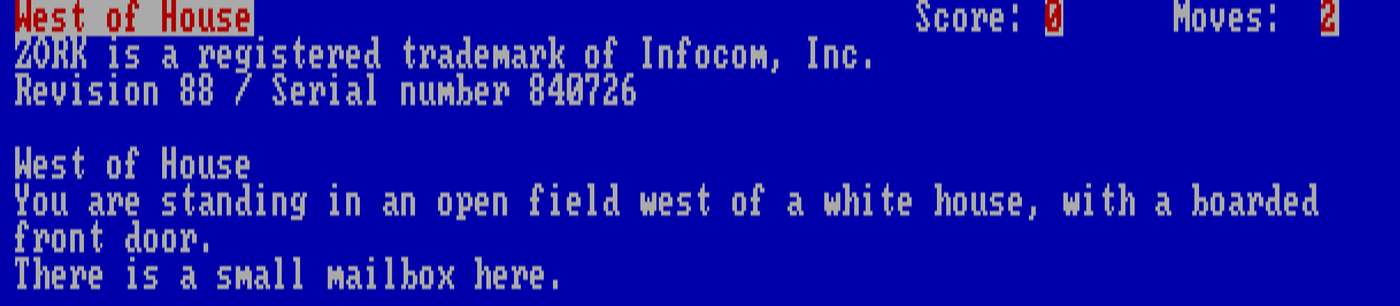
What you can do depends on the world described to you. And as humans preceiving sensor information or “context” from all directions, we learn with time how to filter that out, creating for ourselves the perfect summary of what is around us and what is useful to us. In Zork’s world you don’t know if there are some trees standing there, if there are little animals moving around, what sounds or smells are part of the world surrounding you as a character, because in the context of a compact narrative it is useless. In a very strong metaphore, Zork (and in fact a mediated Context representation like the one we give our LLM tools) is like Helen Keller playing Skyrim only through an “utilitaristic” screen descriptor that cannot represent every pixel, but only the general vibe and some near details.
All that is context. That is memory. That is, possibly, human intelligence. For everything else, we are not different from highly memory-optimized LLMs. The ideas we have, the patterns we look for, the words we speak are sequences that come from our past and from our experiences (and from our experiencing someone else’s mediated experiences via movies, series, books).
This is the reason why I think most of the discussion about AGI is fascinating but practically futile. The issues are how to more efficiently store memory and how to present broader context, be it via sensors or automated non-textual descriptors. But, as with Data in Star Trek TNG’s The Quality of Life episode, recollecting one of the most fascinating episodes in Star Trek history (Measure of a Man), we might already have created a new intelligent life form without recognizing it.
And, well, THAT opens a new completely different and even more fascinating discussion.
메타데이터
- post_id
- 33129d4b5c53
- slug
- is-agi-here-and-we-dont-see-it-33129d4b5c53
- url
- https://medium.com/@ingmmo/is-agi-here-and-we-dont-see-it-33129d4b5c53
- canonical_url
- https://medium.com/@ingmmo/is-agi-here-and-we-dont-see-it-33129d4b5c53
- author_url
- https://medium.com/@ingmmo
- status
- ok
- fetched_at
- 2026-06-24 11:06:28




