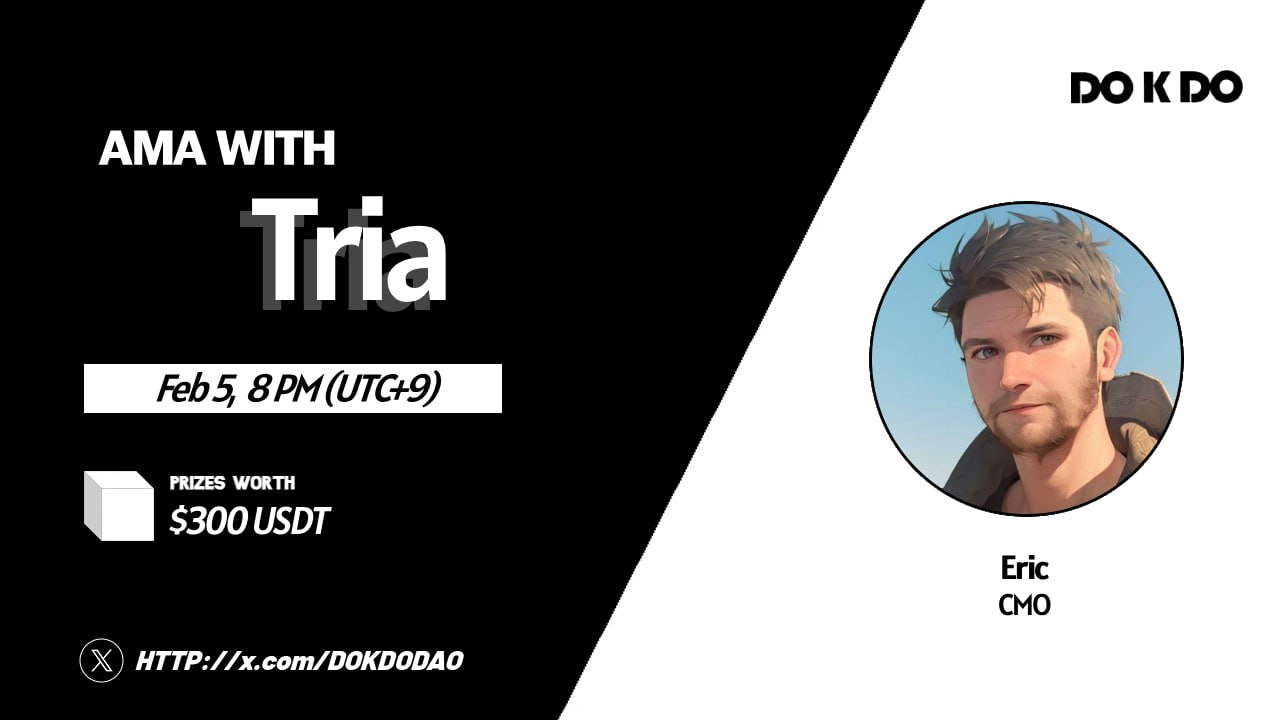
AMA Recap: DOKDO DAO X HEYELSA
26th FEB, 9PM (UTC+9) A : Dhawal Shah(Founder) Q : DOKDO DAO
AMA Recap: DOKDO DAO X HEYELSA

26th FEB, 9PM (UTC+9) A : Dhawal Shah(Founder) Q : DOKDO DAO
HeyElsa is an AI-driven crypto personal assistant project that executes on-chain transactions via natural language commands. Its reliability and market presence have been recently validated through listings on major South Korean KRW-market exchanges, including Upbit and Bithumb.
The platform supports an automated system that allows users to perform complex DeFi transactions — such as swapping, bridging, and staking — through a single chat interface, making the process as easy and secure as an everyday conversation.
INTRODUCTION ABOUT HEYELSA
QToday, we are joined by Dhawal Shah from the HeyElsa project. Dhawal, could you please give us a brief introduction?
A Thanks for having me. I’ve been building in Web3 and fintech for several years, primarily at the intersection of product and DeFi infrastructure.
Previously, I led product at Frontier, where we focused on making DeFi more accessible to everyday users. That experience gave me deep insight into wallet UX, on-chain behavior, and the real friction users face when interacting with DeFi protocols.
I also co-founded Woodstock Fund, which allowed me to work closely with early-stage Web3 projects and understand token design, ecosystem growth, and distribution from the investor side.
That combination — building user-facing DeFi products and working closely with emerging protocols — gives me a strong perspective on both demand and infrastructure. I’ve seen where traditional interfaces break down, and where AI-native experiences can unlock the next phase of adoption.
At HeyElsa, we’re applying those lessons to build an intelligent, outcome-driven financial layer for Web3.
QMoving on to our first question: Could you please introduce and explain the HeyElsa project to our audience?
A Elsa is an intent-native onchain system. At the surface, it looks like an app. Underneath, it’s infrastructure for expressing outcomes, executing them reliably, and settling value between humans, agents, and services. TGE marked the moment Elsa became a public, accountable system rather than an evolving product.
QWhy is Base the home chain for ELSA?
A Base offers reliability, throughput, and alignment with where most Elsa usage already happens. Over time, Elsa may operate across many chains, but Base remains the reference environment where execution quality is measured.
Q What problem were you solving when you started HeyElsa AI?
A We started HeyElsa AI to solve a very simple but brutal problem: crypto is powerful, but using it feels like work.
Even experienced users struggle with: figuring out which chain, bridge, or DEX to use worrying about gas, slippage, or failed transactions jumping between 6–7 tabs just to complete one action repeating the same steps every single time they want to trade, bridge, or manage positions For newcomers, this friction is even worse — most never make it past their first failed swap or confusing bridge flow.
The insight was clear: Crypto doesn’t have a product problem; it has a usability problem. People don’t want to execute transactions — they want outcomes. So we built Elsa to flip the paradigm: Instead of “Which DEX should I use?” users say, “Swap 100 USDC to ETH.” Instead of “Which chain and bridge?” users say, “Send this to Base.” Instead of hours of DeFi juggling, Elsa turns everything into a single instruction.
Our goal from day one was to remove the cognitive load from crypto — make it as simple as talking to an assistant, while still giving users full control and transparency.
QHow does HeyElsa AI differ from traditional crypto tools (wallets, dashboards, etc.)?
A HeyElsa AI isn’t a wallet or dashboard. It’s an intent layer. Traditional tools make you choose chains, bridges, DEXs, gas settings, and click through 6 tabs. Elsa flips that.
You tell it the outcome — “swap,” “bridge,” “open a perp,” “build a portfolio” — and the agent handles routing, execution, gas, and optimization behind the scenes. Wallets show you buttons.
Dashboards show you data. Elsa just gets it done.
QSince you are currently providing the BestPath infrastructure to over 60 top-tier protocols, how do you legally guarantee the security of non-custodial user assets in accordance with the guidelines of local financial authorities when entering new regions?
AWe approach this in a very direct way: in a non-custodial system, the strongest protection is that Tria cannot take possession of user funds in the first place. So our legal and technical design starts from the same principle: user assets stay under user-controlled keys, and Tria provides routing and execution logic without holding customer deposits. There are five layers to how we do this when we enter new regions. First is the legal framework and clear product boundaries. We do not present Tria as a custodian, and we do not create a structure where customer assets become our liabilities. We align our terms, disclosures, and operating model to match what local authorities typically care about: who has control of funds, who can move them, and who bears which risks. Second is architecture. BestPath is infrastructure, not custody. It routes a user’s intent to external venues and smart contracts, and execution happens onchain with the user authorizing the transaction. That means the user remains in control before, during, and after execution. Third is security standards that are verifiable, not just promised. When we expand, we prioritize audited integrations, strict integration review processes, continuous monitoring, and fast response procedures. We treat every new chain, venue, and protocol as a new risk surface, and we only scale what we can secure to a high standard. Fourth is region-by-region compliance readiness. Guidelines differ by market, so we work with local counsel and regulated partners where needed, and we adjust onboarding, disclosures, eligibility, transaction policies, and controls to align with local expectations. The user experience stays simple, but the compliance logic underneath is tailored to the region. Fifth is transparency and user protection. We’re explicit that onchain activity involves smart contract and market risk, and we design the product to reduce preventable risk through safer defaults, clear warnings, and strong controls, rather than hiding complexity. So the honest answer is: we don’t “legally guarantee” outcomes in the way a custodian might claim to, because we don’t take custody at all. What we guarantee is the structure: user-controlled assets, user-authorized execution, rigorous security practices, and a compliance approach that adapts market by market so we can scale globally in a durable way.
Pre Questions
QAI agents like OpenClaw are making huge waves right now.In this landscape, what would you say is HeyElsa’s competitive edge or standout feature as an AI agent?
AHeyElsa is not just an AI chat wrapper over DeFi. Our edge is execution-grade infrastructure.
Many AI agents can suggest trades. Elsa can analyze, optimize, and execute them on-chain — across swaps, perps, portfolio building, lending, and cross-chain flows — all through natural language.
What differentiates us: Intent-based execution — Users describe the outcome. Elsa figures out the optimal path.
Production-scale volume — 11M+ prompts processed and $500M+ in on-chain transactions. Wallet + AI natively integrated — Not an external tool bolted onto DeFi. Micropayment-ready APIs (x402) — Agents can programmatically use Elsa infrastructure.
We’re not building a chatbot. We’re building a transaction layer for AI-native finance.
Q With the Elsa Smart Wallet V2, a wallet is automatically generated just by logging in with an email and OTP. From a security standpoint, is this completely safe? And since there’s no seed phrase involved, I’d like to know if we can still import it to other wallets using just the private key.
A The Elsa Smart Wallet V2 removes seed phrase friction, but it does not remove ownership or security.
Here’s how to think about it: The wallet is created using embedded wallet infrastructure with secure key management. Private keys are not exposed during normal usage. Users authenticate via email + OTP, which abstracts complexity but maintains cryptographic ownership.
On safety: No system in crypto is “risk-free.”
What we focus on is: Secure key storage Encrypted infrastructure Strict permissioning Multi-layer validation before execution
On portability: Yes — users are not locked in. Depending on wallet configuration, private keys can be exported, allowing import into other compatible wallets if needed. We believe in portability and user ownership, not walled gardens.
The goal is: Self-custody UX without self-custody friction.
Q With the AI essentially controlling user wallet permissions. what kind of safeguards have you put in place to securely manage private keys and prevent security breaches?
A The AI does not have unrestricted control. Safeguards include: User-signed permissions — AI operates within explicit authorization boundaries. Transaction simulation before execution. Dry-run previews for swaps and trades. Spending limits and session constraints. On-chain transparency. No blind custody transfer. The AI proposes and constructs. The wallet verifies and signs. This separation is critical. We treat AI as a transaction optimizer — not a custodian.
Q Compared to existing DeFi interfaces, what is the core UX innovation of HeyElsa that will drive mass adoption?
A Traditional DeFi UX forces users to: Choose the protocol. Choose the chain. Bridge manually. Manage gas. Approve multiple contracts. Track fragmented balances. Elsa flips this.
You describe what you want: “Allocate $5,000 across high-liquidity perps with controlled risk.” “Move funds where yield is highest.”
“Swap into BTC exposure with lowest slippage.” And Elsa handles the complexity.
The core innovation is: Outcome-driven finance instead of interface-driven finance. If crypto wants mainstream adoption, users should not need to understand routers, bridges, gas tokens, or RPC endpoints. They should just say what they want.
Q Now that HeyElsa listed on a Korean exchange, does the team have any special events, promotions, or major features in the pipeline specifically for our Korean community?
A First, we’re grateful for the support from Korea. It’s one of the most active and sophisticated crypto markets globally.
Yes — we’re working on: Korean-language AI optimization. Localized community AMAs. Educational campaigns on AI x DeFi. Incentive-driven engagement programs. Korea-focused trading competitions. Community ambassador initiatives. Korea has historically led adoption cycles in crypto.
We want to build long-term community alignment there — not just short-term trading attention.
[HEYELSA Official Links] Twitter :** https://x.com/HeyElsaAI Telegram : [http://t.me/heyelsaKorea](http://t.me/heyelsaKorea) Discord : [https://discord.com/invite/PaRrNjWBPD](https://discord.com/invite/PaRrNjWBPD)**
메타데이터
- post_id
- 334763fe3a2a
- slug
- ama-recap-dokdo-dao-x-heyelsa-334763fe3a2a
- url
- https://medium.com/@cryptodokdo/ama-recap-dokdo-dao-x-heyelsa-334763fe3a2a
- canonical_url
- https://medium.com/@cryptodokdo/ama-recap-dokdo-dao-x-heyelsa-334763fe3a2a
- author_url
- https://medium.com/@cryptodokdo
- status
- ok
- fetched_at
- 2026-07-10 17:18:11