The Myth of the Nice Girl: What Cassie, Angela and Shauna reveal about Female Rage.
Television’s most controversial women show how trauma, sexism and betrayal push “good girls” into rebellion and villainy.
The Myth of the Nice Girl: What Cassie, Angela and Shauna reveal about Female Rage.
Television’s most controversial women show how trauma, sexism and betrayal push “good girls” into rebellion and villainy.
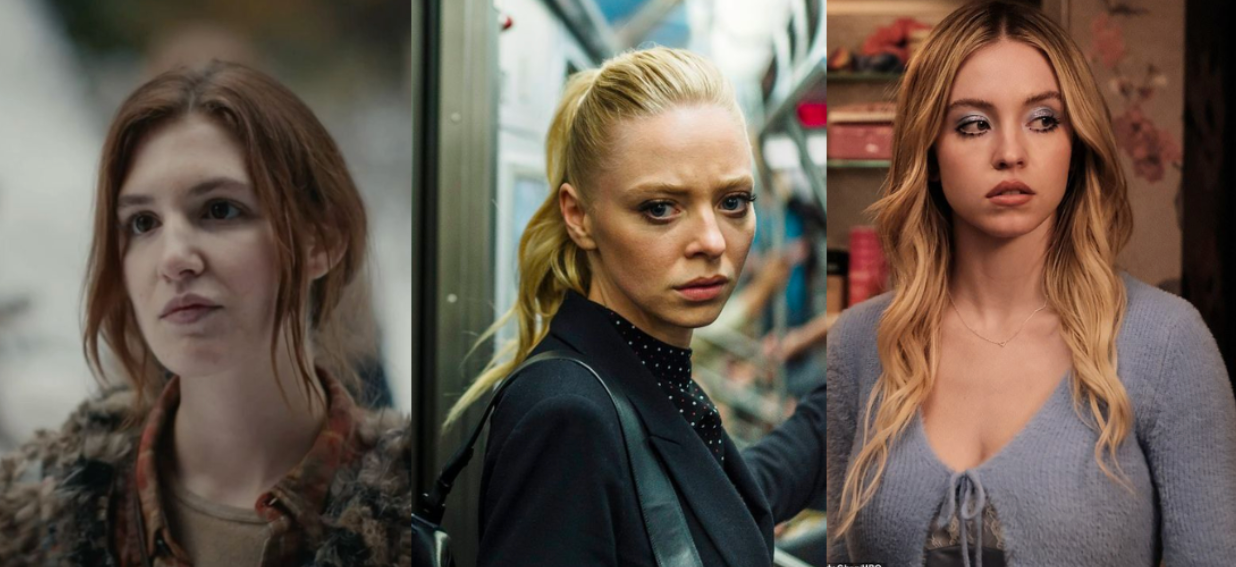
In recent television, a recurring character type has captured the attention of viewers and feminist commentators alike: the “fallen good girl”. These are the female characters who begin as obedient, kind and loyal, all the hallmarks you see in a typical “good girl”, only to transform into something darker and brutal and years of trauma and undermining. It’s a trope that explores how a woman who was taught to play nice finally snaps. HBO’s Euphoria, USA Network’s Mr. Robot and Showtime’s Yellowjackets each offer a striking example through three very different characters: Cassie Howard, Angela Moss and Shauna Shipman. Though their stories unfold in different worlds, be it a suburban high school, corporate America and remote wilderness, all three women channel female rage in unique ways, challenging the notion that women are supposed to be nice, quiet and morally pure no matter what life throws at them.
Cassie Howard (Sydney Sweeney) is introduced in Euphoria as the picture of sweetness. Euphoria itself is a provocative teen drama that focuses on a group of teens that navigate through love, sex and addiction. Amidst this ensemble, Cassie was at first introduced as a sweet, innocent and bubbly girl whose desire is to be loved by the perfect man, so much so she constantly molds herself into what her boyfriend wants. However, after going through a series of traumatic events, such as being slut-shamed, her sexy videos and photos being spread without her consent and undergoing an abortion, by the time we arrive in Season 2, Cassie’s good girl facade breaks down. Her desperation for love causes her to fall into the arms of her best friend Maddy’s abusive ex Nate Jacobs. Cassie, once gentle and sweet, begins to spiral into anger, instability and sadism. She wakes up at 4 AM to perfect her appearance to catch Nate’s gaze. At first we believe that she might also end up being manipulated by him, but Cassie shows off her “Lady Macbeth” side the moment she says she is crazier than Maddy, showing that she can use and manipulate Nate as her boy toy as much as he is doing it to her. Thanks to Nate and the years of contributing trauma and humiliation, Cassie finally drops her gentle good girl image and freely becomes much more rageful, jealous, vindictive and cruel who delights putting her enemies in their place and enjoys dragging them into her misery. This is shown through her cold-hearted betrayal and bullying of both Maddy and her own sister Lexi, in which with the latter she interrupts her school play after Nate breaks up with her, clad in a matching set and a psychotic smile where she finally unleashes her years of pent up rage and jealousy at those she believed to have wronged or betrayed her. This is female rage channeled through romantic chaos: Cassie lashes out by clinging to a toxic romance even if it destroys her and everyone around her. The show doesn’t frame her as a pure villain though, as we’re invited to empathise with Cassie’s pain and see how society’s pressures set her up for this fall. She has, as one article notes, “deep wounds” from past abuse and abandonment, which she masks through the “facade of perfection”. Cassie’s unraveling is a critique of the cruel double standard that demands girls be sexy and good but then punishes them for it. When her bottled-up anger finally explodes into romantic mayhem, it’s a cathartic rejection of the expectation that a young woman must endure mistreatment with a smile.
Angela Moss (Portia Doubleday) from Mr. Robot presents a very different face of the “fallen good girl”. For readers unfamiliar, Mr. Robot is a techno-thriller series about Elliot Alderson and his group fsociety challenging a powerful company called ECORP amid conspiracies and social unrest during Millennial coming of age. Angela begins the series as the ultimate good girl in a cutthroat corporate world: a smart, idealistic woman who believes in doing the right thing. She’s the childhood best friend of the protagonist Elliot Alderson, and initially she’s “relentlessly normal”, with a stable job at a cybersecurity firm and a faith that she can achieve justice through legal means. Angela is kind, law-abiding and optimistic in a society that’s anything but. However, her transformation kicks in after personal tragedies and systematic betrayal. Her mother (and Elliot’s father) died from leukemia due to E Corp’s negligence years ago, and Angela’s quest to hold the company accountable is thwarted at every turn. She faces sexism and judgment at work, her efforts to seek justice are mocked and her personal relationships turn out horrible (her ex boyfriend Ollie cheated on her). Disillusionment, jealousy and anger end up replacing Angela’s idealism. She joins E Corp to change the company from within, but she slowly begins to enjoy the power and value she gets from it. She even becomes quietly jealous of Elliot being the one to lead the revolution against E Corp despite him, in her eyes, not having the same experience as her. By the time Whiterose takes her in in Season 3 and manipulates her into her proud disciple, Angela becomes unrecognizable from the sweet and law-abiding girl we first met her as: she helps execute Stage 2, usurps Elliot as the leader and cooperates with the crime syndicate the Dark Army. Her once bright idealism warps into an obsessive ideology (which ultimately leaves her broken and empty), believing that she can bring back her mother, Elliot’s father and those who died in Stage 2 back from the dead thanks to Whiterose. Angela’s female rage becomes a fixation on power and “justice”. Mr. Robot suggests her fall is not simply personal failure but a response to a system that denied her agency. Within the patriarchal corporate culture, remaining a “good girl” often means accepting defeat, so Angela turns to ruthlessness instead. Her arc highlights how workplace sexism and trauma can force women into impossible choices between power and morality. Ultimately, her descent into obsession reflects the tragedy of a woman whose desire for justice finds no legitimate outlet.
Then there’s Shauna Shipman (Sophie Nelisse as a teen and Melanie Lynskey as an adult) from Yellowjackets, perhaps the most viscerally shocking example of a good girl gone bad. Yellowjackets is a genre-blending series about a high school girls’ soccer team whose plane crashes in the Wilderness in 1996 and it also follows them as adults decades after their rescue. When we first meet Shauna as a teenager, she comes off as a stereotypical good girl — quiet, studious and loyal. In fact she’s the best friend of Jackie Taylor, the team captain and golden girl. Shauna was sort of a girl who got good grades, was on her way to studying in Brown University and followed rules, the one no one imagined would hurt a fly. But after the crash, all bets are off. In the wilderness, Shauna endures trauma that slowly and eventually makes her lose all of her humanity and empathy: she loses Jackie after they had an argument, the baby she never wanted to carry ends up being a stillborn and many more death and cnniblism she witnesses. Bit by bit, this seemingly polite teen is replaced by someone who is shown to be manipulative, vicious, sadistic and cunning and someone who can’t be seen as human anymore. By the time Season 3 comes around, we see Shauna dabble in petty revenge, sadistic games and manipulation against those she believed to have wronged her, especially when she steals the Antler Queen role from Natalie Scattorcio and even spitefully tries to murder Coach Ben and Mari (the latter which she is successful with). By the time we see Shauna in her adult life, she is a suburban mom with a stale marriage, appearing on the surface as a normal, and even boring middle-aged woman. But that mask of normalcy conceals repressed violence. Due to a misunderstanding with her lover Adam, Shauna in a moment of panic and rage, doesn’t hesitate to kill him. Most of the time she displays a chilling composure in covering up violence both as a teen and an adult. In Yellowjackets, the expectation that women must be gentle and nurturing is sharply overturned. Shauna’s rage emerges through violence and thrill-seeking. Once the quiet, dutiful best friend, she becomes the tyrannical leader willing to cross lines no matter what. Her transformation challenges the notion that women are naturally too innocent for brutality. Instead, Shauna’s transformation suggests that the “monster” label applied to the women is forged by trauma and extreme circumstances, not inherent cruelty. Shauna doesn’t turn dark for no reason, she is pushed there and what remains is someone who refuses to be morally pure.
Cassie, Angela and Shauna may live in completely different universes, but they share one thing in common: each of them begin as a good girl before circumstances cause them to snap.Their stories show how women cannot always be morally pure or endlessly patient. Anger builds when people are hurt again and again and used in unhealthy ways. Instead of reducing these women to villains, the shows ask what drove them to that point. Cassie spirals through messy relationships, Angela compromises her ideals for power and Shauna embraces savagery and tyranny. Their arcs expose the pressure placed on women to be “good girls” no matter what. And when that pressure breaks them bad, their anger can be really terrifying.
메타데이터
- post_id
- 337f747d69a2
- slug
- the-myth-of-the-nice-girl-what-cassie-angela-and-shauna-reveal-about-female-rage-337f747d69a2
- url
- https://medium.com/screen-time-diaries/the-myth-of-the-nice-girl-what-cassie-angela-and-shauna-reveal-about-female-rage-337f747d69a2
- canonical_url
- https://medium.com/screen-time-diaries/the-myth-of-the-nice-girl-what-cassie-angela-and-shauna-reveal-about-female-rage-337f747d69a2
- author_url
- https://medium.com/@tanyamalik99
- status
- ok
- fetched_at
- 2026-06-14 11:28:49