Understanding Information Warfare in Sudan: Questions from the hybrid event
This Q&A accompanies the recording of our pre-publication discussion of the key findings from a series of thematic research reports…
Understanding Information Warfare in Sudan: Questions from the hybrid event
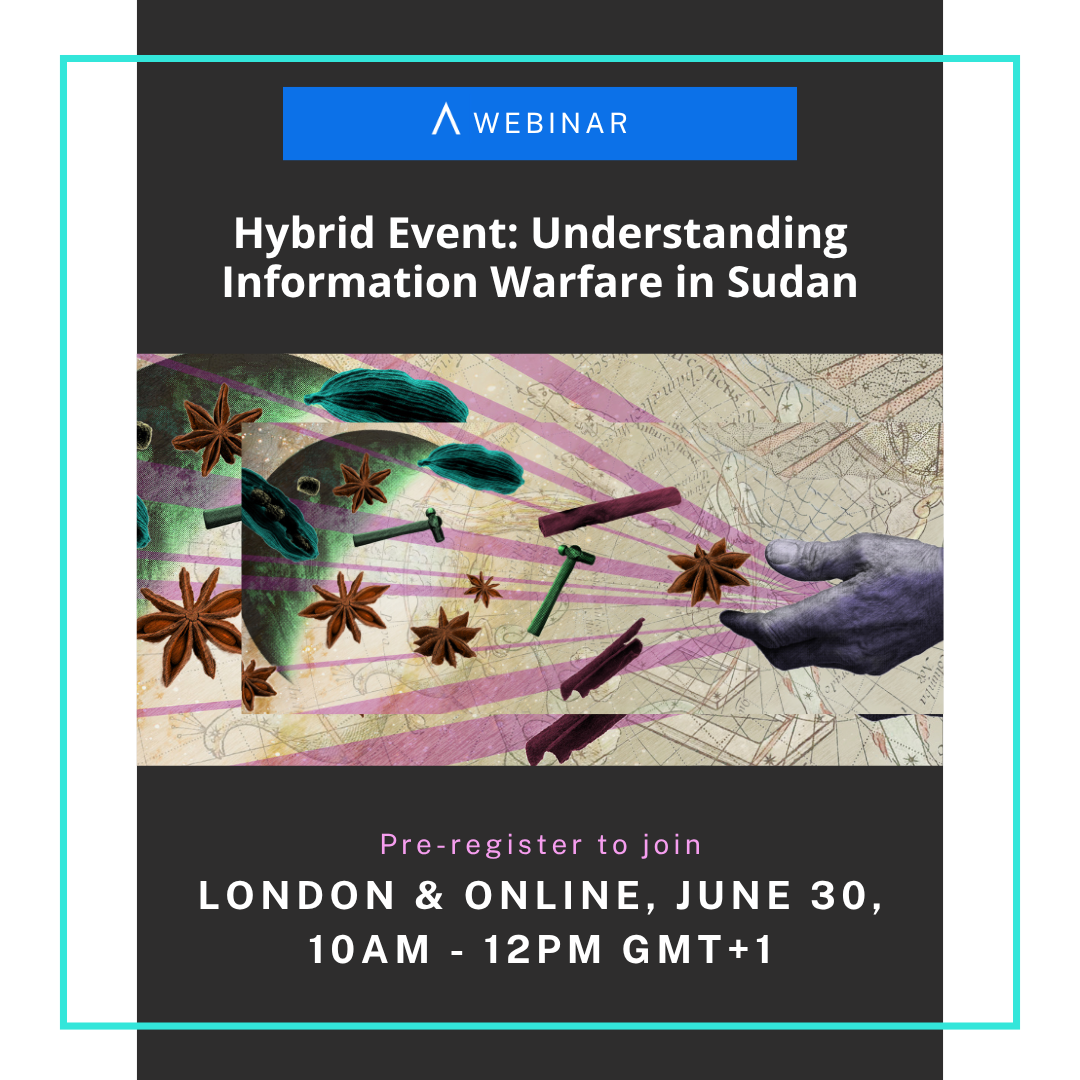
This Q&A accompanies the recording of our pre-publication discussion of the key findings from a series of thematic research reports exploring different aspects of information warfare in Sudan. See a recording of the event below and linked are the slides from the presentation.
[embed]
Over the past year, Build Up has convened a group of Sudanese civil society digital experts to monitor narratives on social media about the war. Our monthly reports track trends in narratives and their impact on offline events. Some of the recurrent narratives identified in these monitoring reports require a deeper analysis to unpack how they emerge, how they evolve, and their impact on offline violence.
The five thematic research reports discussed at this event offer this depth of analysis, and provide an important input to humanitarian and mediation practitioners working towards a peaceful Sudan. Inputs from the discussion at this event will be incorporated in the final reports, to be published later in the summer. If you missed the event, you can comment your feedback here or email us so they can be incorporated.
This event was organized by Build Up with the support of the UK’s Foreign, Commonwealth and Development Office, as part of our collaboration to address digital harms in conflict. With thanks to Conciliation Resources for hosting us!
A note for readers: the discussion references massacres and threats of violence in Sudan.
Do the armed actors have a deliberate communication strategy, and is it organized or paid for?
The coordination is often visible in the data. Twenty accounts will post the same content one or two minutes apart, which only makes sense if the activity is directed. Around major incidents, accounts that are not Sudanese get mobilized to amplify particular narratives and to justify violence happening offline. A clear example is the way the El Fasher massacre was reframed through engineered hashtags, with the language shifted from massacre to “liberation.” This is amplification working as part of the armed effort, where posts reinforce what is happening on the ground.
Are there spaces of hope on social media?
Yes, in specific places. Women-only and closed groups host real conversations, including across disagreement, where people who hold opposing positions still talk to each other. Civilians also began mobilizing differently around the third anniversary of the war on 15 April, trying new tactics and agreeing on shared strategy while letting different groups produce their own content. That moment faded over the following months. A recurring obstacle is that civilian voices often adopt the same language used by the warring parties, which undercuts attempts to shift the narrative.
This work means reading distressing material. How is that handled?
Researcher wellbeing is a real concern. The trauma of sustained exposure to violent content is common among social media researchers working on Sudan and elsewhere, and it is something the team attends to internally.
How do the platforms differ in their role, for example Meta, TikTok, and X?
The differences are mainly about community rules and enforcement rather than competition for users. Facebook designated the RSF as a dangerous entity early in the war and acted on related content, including explicit threats of sexual violence that were later taken down. X has little meaningful enforcement and is difficult to engage, and its tools can surface harmful content rather than limit it. TikTok amplified extreme material, including a live broadcast in which a perpetrator boasted about mass killings without the platform removing it, and is only now beginning to respond. A further gap is annotation. The companies lack Sudanese annotators, and word meanings shift quickly across communities and over the course of the conflict.
Sudan has millions of cellular connections and internet users. Are these figures built into the analysis?
The numbers matter, but they need translation. A count of connections is not a count of people, since one person may hold several SIM cards or accounts. Connectivity is also uneven, with some areas cut off from networks and relying on Starlink or other routes. The diaspora shapes the information war more than many users inside the country, partly because those posting from abroad face fewer consequences for what they share.
What methods are used, and where does AI fit? Have offline approaches to studying the actors been tried?
Offline research into actor incentives is not yet systematic, though there have been some conversations with influencers about what drives them, and this would strengthen the work. On analysis, the Phoenix platform uses keyword and lexicon classifiers as a living aid for analysts, alongside a fine-tuned classifier built for this data. Annotating the data to train that classifier is itself a peacebuilding process, since it requires people to agree on categories. The framing the team prefers is AI inside the peacebuilding loop, with people kept central and the tools assisting. The sheer volume of material makes some automation necessary.
How effective are offline versus online interventions at preventing these narratives?
There are few good systematic evaluations. Digital literacy is hard to make stick, and simply making people aware that manipulation is happening does little to change behavior. Targeting specific behaviors is more effective, which is why the team is interested in the incentives of high-impact influencers. This remains an area that needs more research.
Has any of this come up in peace talks, given that parties often have to rehumanize each other before negotiating?
Online hate speech comes up constantly in conversations with civilian and political actors, and the UN envoy’s team has flagged it as a concern. The thinking behind digital de-escalation is that parties will struggle to come to the table constructively if the online environment has not been calmed at least somewhat. Actors themselves say it will not stop until the war stops, but de-escalation can function as a confidence-building measure that makes talks more possible.
Are new or alternative platforms emerging, and what comes next?
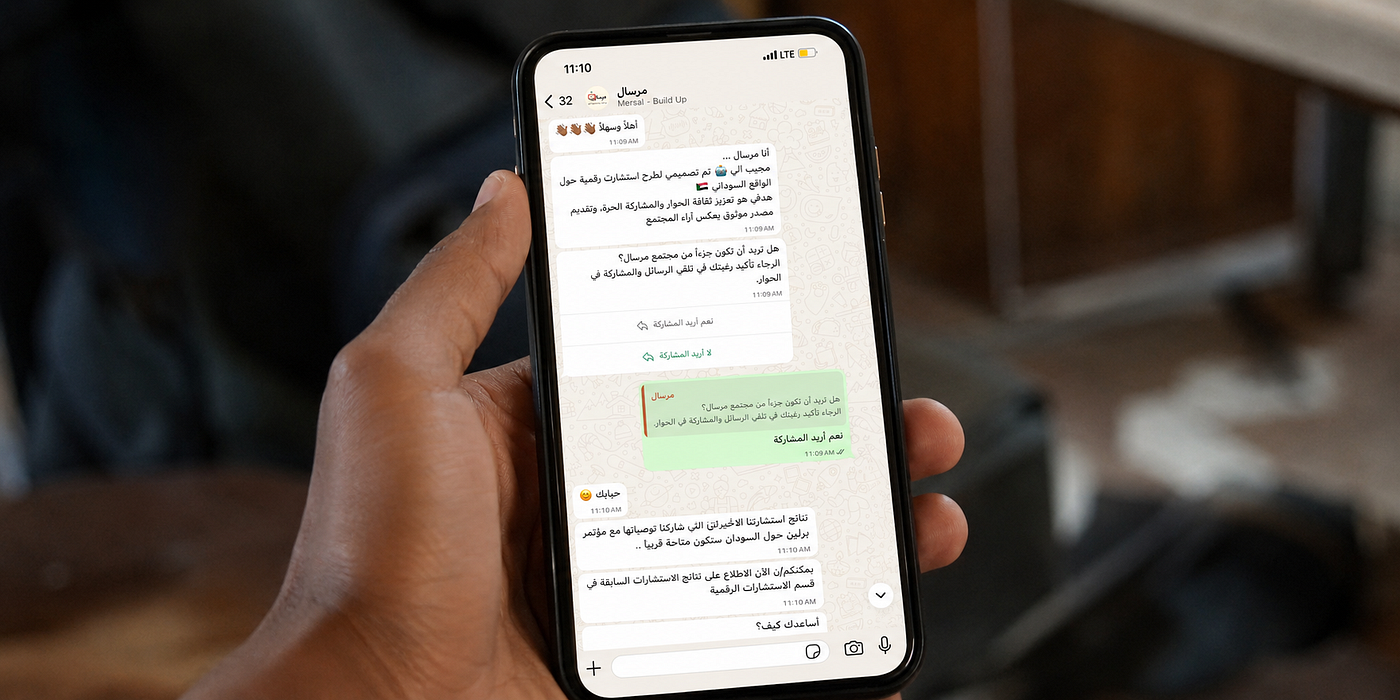
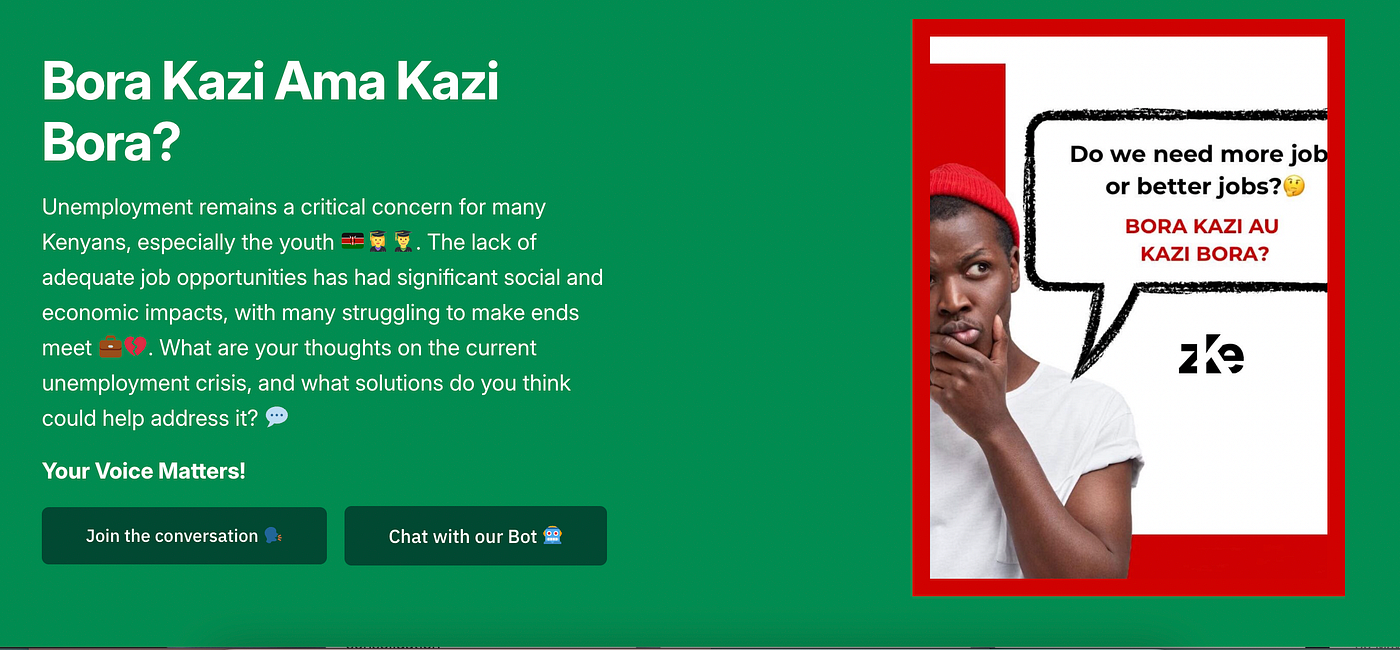
Three systemic levers guide the work. The first is shifting the norms for how people behave on existing platforms, which is why influencer work matters. The second is alternative spaces, where the more practical approach is to meet people where they already are and move them into a more consultative environment, as with the Mersal initiative, rather than expecting wholesale migration to a new platform. The third is influencing platform and technology companies toward conflict-sensitive design. On automated warfare, target review times measured in seconds raise real questions about how far automation has already arrived.
There is a shortage of skilled journalists after so many were displaced. How does that factor in, and is Build Up working with local media?
The capacity gap is real and understandable given the scale of displacement and the loss of funding. Many journalists fled and now have to manage daily survival, which makes sustained reporting work difficult to expect of them. Supporting and funding this work is essential, and while some organizations are doing good work with journalists, more is needed.
Has Build Up engaged in advocacy toward the platforms, and what response came back?
Build Up is a trusted partner of Meta and a trusted flagger for TikTok, while dialogue with X is limited. The current focus is convening Sudanese partners to define a local approach to digital harms and a minimum standard for escalation, so that any ask to the companies comes from that base. One broader idea, developed with colleagues at the Neely Centre, is to press platforms to treat the period around peace processes and ceasefires the way they treat elections, when they already deploy break-the-glass measures.
We had more questions than time during the session! Themes raised but not addressed here included discrimination against Arab communities and the language used toward western tribes, comparisons with the Darfur conflict of the mid-2000s before social media, the persuasive capabilities of large language models on the battlefield, the public’s own adoption of warring-party narratives, and methods for distinguishing accounts run from inside and outside Sudan. We appreciate all of the feedback and additional lines of inquiry, and are taking them all on board as we prepare to publish these reports.
메타데이터
- post_id
- 339abd1069a8
- slug
- understanding-information-warfare-in-sudan-questions-from-the-hybrid-event-339abd1069a8
- url
- https://medium.com/@howtobuildup/understanding-information-warfare-in-sudan-questions-from-the-hybrid-event-339abd1069a8
- canonical_url
- https://medium.com/@howtobuildup/understanding-information-warfare-in-sudan-questions-from-the-hybrid-event-339abd1069a8
- author_url
- https://medium.com/@howtobuildup
- status
- ok
- fetched_at
- 2026-07-09 05:26:43