I Can Usually Tell How a Coastal House Was Built Just By Standing In It in January.
Every builder down here has a house they think about when the wind gets up.
I Can Usually Tell How a Coastal House Was Built Just By Standing In It in January.
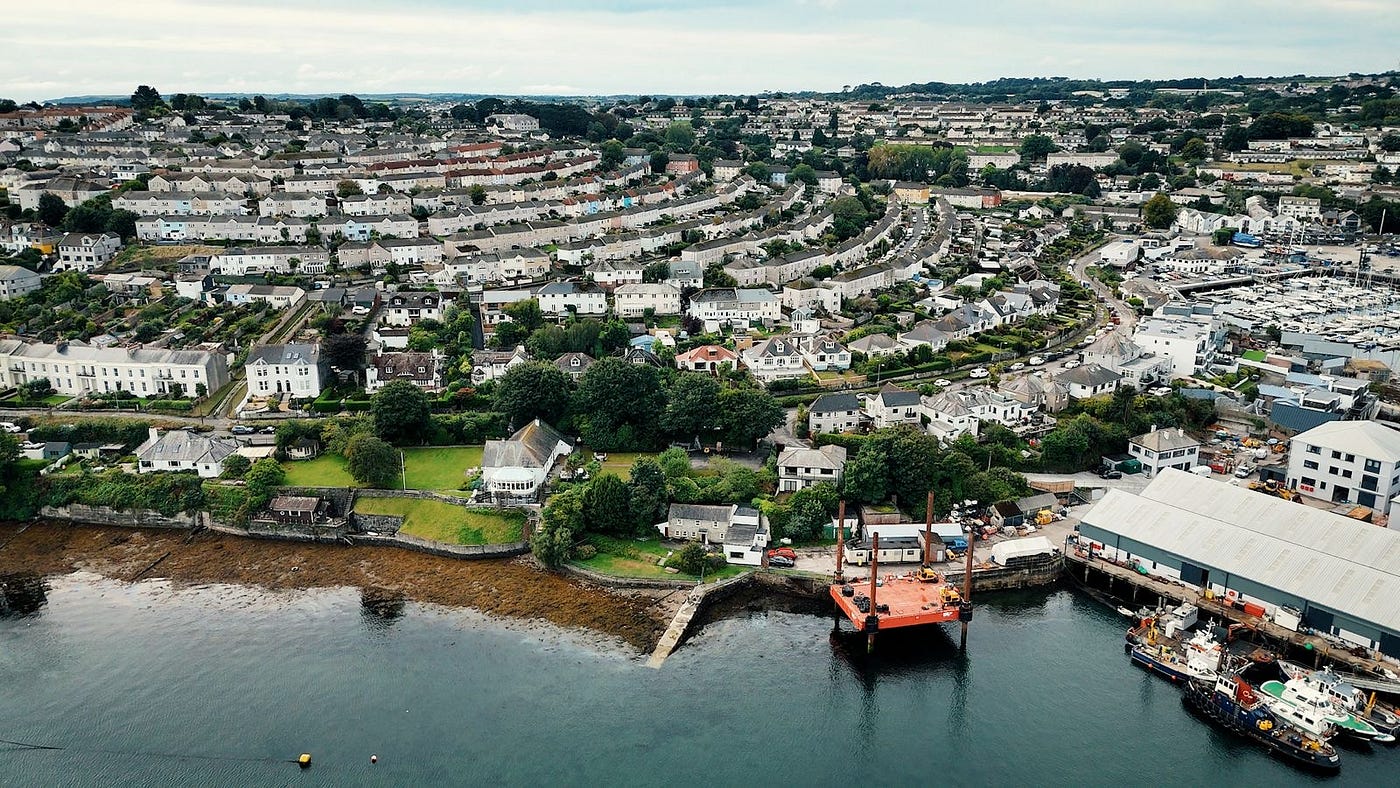
On building to last on the Cornish coast — and why the cheapest quote is rarely what it looks like.
Every builder down here has a house they think about when the wind gets up.
Mine isn’t one of ours, thankfully. It’s one we got called to look at — a few years old, lovely to look at, the kind of place that photographs beautifully on a still summer evening. By the time I saw it, the owners had black mould creeping out of a corner of the master bedroom and no idea why.
The why was simple. Somewhere in the build, a junction had been detailed badly — a thermal bridge nobody could see — and three winters of Atlantic damp had done the rest. The fix meant opening up a wall that should never have needed opening.
That’s the thing about building on this coast. The weather is the inspector. And it doesn’t grade on a curve.
What the Coast Does to a Badly Built House
Inland, a few weak spots in a house cost you a slightly worse heating bill.
Out here, near the sea, they cost you the house.
Wind-driven rain doesn’t fall so much as get fired at the building — sideways, under pressure, hunting for the one gap somebody couldn’t be bothered to close properly. Salt eats fixings that were specified for a sheltered cul-de-sac somewhere up country. The damp finds the smallest cold bridge and just sits there, working away, until it’s a problem you can’t reach.
So when we build to Passivhaus standards, it isn’t because it looks good on the website. It’s because a properly airtight, properly insulated envelope — with the thermal bridges actually designed out — is, as far as I can tell after all these years, the only way to build something on this coastline that’s still doing its job in thirty years.
Warm on almost no energy. Dry through the worst of it. Boring, in the best possible sense. Nothing dramatic ever happens to it in January.
The Part Most People Don’t Want to Hear
When you take a big, one-off, architect-designed coastal house and send it out to three builders for a fixed price, you think you’re comparing builders.
You’re not.
You’re comparing how three different people guessed at a pile of unknowns nobody’s priced before — the awkward groundworks, the bespoke details, the materials that don’t have a tidy rate in anyone’s book. And the builder who guessed lowest tends to win.
Have a think about where that leaves you.
The builder who under-priced the risk — and on a coastal build there’s always risk he’s under-priced — now spends your whole project quietly trying to win it back. A cheaper substitution here. A corner shaved there, usually on exactly the details that keep the weather out. A relationship that goes sour the first time reality costs more than his guess, which it will.
The saving you thought you’d nailed down at the start turns into a year of arguing. And it’s the house that ends up paying
Why We Work Cost-Plus on Bespoke New Builds
On genuinely bespoke new builds, we’d far rather work cost-plus.
You pay what the work actually costs, openly, plus a fee we agree upfront. No mystery margin tucked inside a single number you’ve got no way of checking. No reason for anyone to cut a corner to protect a guess. Nobody’s fighting their own quote — so everybody’s actually pulling the same way, toward the best version of the house, with surprises dealt with out in the open rather than buried in a wall for you to find later.
It asks for a bit more trust at the start, granted. It pays you back with a better house and a build that doesn’t turn into a fight.
Our renovation and extension at Crackington Haven is a decent example of what I mean — about as exposed as it gets in this county. The bit you see is a house that sits right in its setting like it grew there. The bit I’m actually proud of is everything you don’t see: the stuff that means it’ll still be that house long after whatever’s fashionable now has had its day.
Before You Sign Anything
That’s pretty much the whole job, honestly. Build something exciting. Build it so it lasts.
If you’re planning a build down here, do yourself a favour before you sign anything. Ask the questions that actually predict how the house will perform — not the ones about kitchen worktops.
How are they handling the airtightness layer? Where are the thermal bridges, and what’s the plan for each one? How have they priced the unknowns, and what happens when reality doesn’t match the quote?
You’ll learn more from those three answers than from any glossy photo of a finished room.
And if you’d rather just talk it through with people who’ve built on this coast through a fair few proper storms — that’s what we’re here for. [LINK → https://warvenaconstruction.co.uk/contact
메타데이터
- post_id
- 33c7651f2c85
- slug
- i-can-usually-tell-how-a-coastal-house-was-built-just-by-standing-in-it-in-january-33c7651f2c85
- url
- https://medium.com/@warvena-social/i-can-usually-tell-how-a-coastal-house-was-built-just-by-standing-in-it-in-january-33c7651f2c85
- canonical_url
- https://medium.com/@warvena-social/i-can-usually-tell-how-a-coastal-house-was-built-just-by-standing-in-it-in-january-33c7651f2c85
- author_url
- https://medium.com/@warvena-social
- status
- ok
- fetched_at
- 2026-07-22 02:17:40






