Neuromuscular Reeducation Exercises for Functional Movement Recover
Movement is something many people take for granted until injury, surgery, pain, weakness, or neurological challenges make everyday…
Neuromuscular Reeducation Exercises for Functional Movement Recover
Movement is something many people take for granted until injury, surgery, pain, weakness, or neurological challenges make everyday activities harder. Walking, standing, balancing, reaching, bending, climbing stairs, or getting out of a chair all depend on strong communication between the nervous system and the muscles. When that connection is disrupted, movement can become less efficient, unstable, or uncomfortable.
This is where **neuromuscular reeducation exercises** can play an important role.
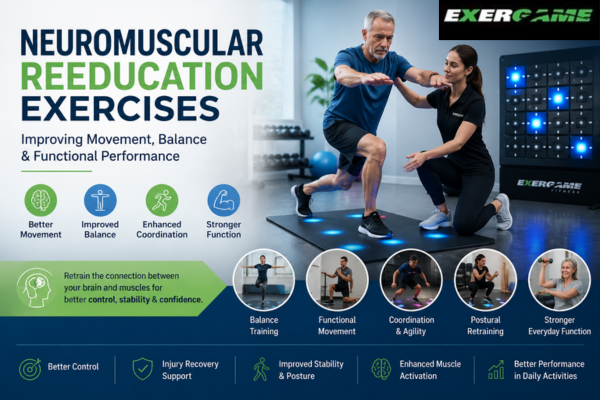
Neuromuscular reeducation focuses on retraining the body to move with better control, coordination, balance, posture, and muscle activation. According to Exergame Fitness, these exercises are designed to help restore movement patterns for people recovering from injuries, surgeries, or neurological conditions by improving the connection between the nervous system and muscles.
What Are Neuromuscular Reeducation Exercises?
Neuromuscular reeducation exercises are movement-based activities that help the brain, nerves, and muscles work together more effectively. The goal is not only to strengthen the body but also to improve how the body controls movement.
These exercises may focus on:
- Balance and stability
- Posture and alignment
- Coordination
- Muscle activation
- Joint control
- Body awareness
- Functional movement patterns
- Reaction time and movement quality
Exergame Fitness explains that neuromuscular control involves the interaction between the nervous system and muscles, especially for dynamic joint stability and smooth purposeful movement. When injuries or neurological issues disrupt that system, retraining can help restore better movement quality.
Why Neuromuscular Reeducation Matters
A person may have muscle strength but still struggle with movement control. For example, someone recovering from a knee injury may be able to stand but may not balance well on one leg. Another person may have enough strength to walk but may move with poor posture, compensation, or instability.
Neuromuscular reeducation matters because it can help improve:
- Movement efficiency
- Balance and coordination
- Muscle timing
- Joint stability
- Postural control
- Functional strength
- Confidence during movement
- Daily activity performance
These exercises are often used in rehabilitation and performance settings because they help improve how the body organizes movement, not just how much force a muscle can produce.
Common Types of Neuromuscular Reeducation Exercises
Different exercises may be used depending on the person’s condition, goals, and ability level. A healthcare provider, physical therapist, or qualified fitness professional can help choose the safest and most effective approach.
Common exercise types include:
- Standing balance exercises
- Seated stability exercises
- Postural retraining
- Isometric muscle contractions
- Proprioceptive training
- Kinesthetic awareness drills
- Functional movement practice
- Coordination-based activities
Exergame Fitness highlights several key components, including standing balance exercises, seated stability exercises, postural retraining, isometric contractions, proprioceptive neuromuscular facilitation, EMG biofeedback, desensitization techniques, and kinesthetic training.
Standing Balance Exercises
Balance exercises are often used to help improve stability, body awareness, and joint control. These movements can be simple at first and then become more challenging as the person improves.
Examples may include:
- Single-leg stands
- Tandem stance
- Weight shifts
- Heel-to-toe standing
- Balance board drills
- Controlled reaching while standing
These exercises help the body learn how to respond to small shifts in position. Over time, they may support safer walking, improved posture, and better confidence during daily activity.
Seated Stability Exercises
Seated exercises can be helpful for beginners, older adults, people recovering from injury, or anyone who needs a lower-intensity starting point. These exercises allow users to work on posture, core control, and movement awareness from a stable position.
Examples may include:
- Seated marches
- Seated leg lifts
- Pelvic tilts
- Seated posture holds
- Controlled arm reaches
- Core bracing exercises
Seated stability exercises are especially useful when standing balance is limited or when a person is rebuilding confidence before progressing to more active movements.
Postural Retraining
Posture affects how the body moves. Poor posture can place extra stress on joints and muscles, while better alignment can support smoother movement and reduce compensation.
Postural retraining may focus on:
- Spinal alignment
- Shoulder positioning
- Hip control
- Head and neck posture
- Core engagement
- Breathing and body awareness
- Proper movement during daily tasks
The goal is not to create stiff posture. Instead, postural retraining helps the body find better alignment during movement and rest.
Proprioception and Body Awareness
Proprioception is the body’s ability to sense where it is in space. It helps people move without constantly watching every step or joint position. When proprioception is reduced, balance, coordination, and joint control can suffer.
Proprioceptive exercises may include:
- Balance drills
- Controlled stepping patterns
- Eyes-closed stability exercises
- Reaction-based movement
- Light touch or cue-based drills
- Direction-change activities
Improving proprioception can help people move with more confidence, especially after injury or periods of reduced activity.
Functional Movement Training
Neuromuscular reeducation should connect to real-life movement. Functional training helps bridge the gap between exercise and everyday activity.
Functional movement examples include:
- Sit-to-stand practice
- Step-ups
- Controlled squats
- Reaching and lifting drills
- Walking pattern training
- Stair-climbing practice
- Carrying light objects safely
Exergame Fitness notes that neuromuscular functional training emphasizes tasks relevant to daily life, such as lifting groceries, climbing stairs, or getting out of a chair.
Interactive Tools for Neuromuscular Training
Technology can make neuromuscular exercises more engaging. Interactive fitness tools can create movement challenges that improve reaction time, coordination, agility, and focus.
Interactive tools may support:
- Reaction speed
- Hand-eye coordination
- Balance challenges
- Agility drills
- Movement accuracy
- Motivation and engagement
- Game-based training
Exergame Fitness mentions interactive products such as Reax Boxes and Reax Lights, which use dynamic and unpredictable stimuli to support reaction time, coordination, and agility training.
Who Can Benefit from Neuromuscular Reeducation?
Neuromuscular reeducation exercises may be useful for many different people, depending on their needs and goals.
They may benefit:
- People recovering from injuries
- Individuals after surgery
- Older adults working on balance
- Athletes improving coordination
- People with movement asymmetry
- Individuals with poor posture
- Patients with neurological challenges
- Anyone needing better movement control
These exercises should be tailored to the individual. A beginner may start with seated or supported balance exercises, while an athlete may use more advanced agility and reaction drills.
Neuromuscular Reeducation for Sports Performance
Athletes often need quick reactions, precise coordination, and strong joint control. Neuromuscular training can help improve athletic performance by refining movement patterns and reducing inefficient movement habits.
Sports-focused benefits may include:
- Better agility
- Faster reaction time
- Improved balance
- Stronger coordination
- Enhanced joint stability
- Better landing mechanics
- Injury prevention support
- Improved body control during competition
Interactive fitness products can also be useful in sports training because they challenge athletes to respond to changing visual or movement cues.
Safety and Professional Guidance
Neuromuscular reeducation should be performed with proper guidance, especially after injury, surgery, or neurological conditions. The right exercises depend on the person’s current ability, medical history, pain level, and goals.
Before starting, consider:
- Consulting a physical therapist or healthcare professional
- Starting with simple exercises
- Focusing on movement quality
- Avoiding painful movements
- Progressing gradually
- Using support when needed
- Prioritizing control over speed
Exergame Fitness also recommends consulting a healthcare professional or physical therapist to tailor neuromuscular exercises to specific needs.
Why Choose Exergame Fitness?
Exergame Fitness focuses on combining movement, technology, and engagement to make exercise more interactive and effective. For organizations, health centers, rehabilitation spaces, fitness facilities, and performance programs, interactive tools can help make movement training more enjoyable and measurable.
Exergame Fitness supports:
- Interactive fitness solutions
- Neuromuscular training tools
- Reaction and agility equipment
- Movement-based games
- Fitness technology for organizations
- Rehabilitation-friendly engagement
- Active training environments
By combining exercise with technology, Exergame Fitness helps create training experiences that encourage participation, movement quality, and long-term engagement.
Conclusion
Neuromuscular reeducation exercises are designed to improve how the nervous system and muscles work together. These exercises can support balance, posture, coordination, joint control, functional movement, reaction time, and confidence during daily activity.
For anyone interested in better movement quality, injury recovery support, or more engaging functional training, neuromuscular reeducation can be a valuable part of a structured program. With the help of professional guidance and interactive tools from Exergame Fitness, movement training can become more effective, motivating, and functional.
메타데이터
- post_id
- 33d09e50bdd2
- slug
- neuromuscular-reeducation-exercises-for-functional-movement-recover-33d09e50bdd2
- url
- https://medium.com/@exergame/neuromuscular-reeducation-exercises-for-functional-movement-recover-33d09e50bdd2
- canonical_url
- https://medium.com/@exergame/neuromuscular-reeducation-exercises-for-functional-movement-recover-33d09e50bdd2
- author_url
- https://medium.com/@exergame
- status
- ok
- fetched_at
- 2026-07-13 06:23:13