What is the SSPX?
In a detailed interview on the Dr. Taylor Marshall Show (from nearly 6 years ago), Fr. Paul Robinson of the Society of Saint Pius X (SSPX)…
What is the SSPX? Who was Archbishop Lefebvre? — Summary of Dr. Taylor Marshall’s Interview with Fr. Paul Robinson (SSPX)
In a detailed interview on the Dr. Taylor Marshall Show (from nearly 6 years ago), Fr. Paul Robinson of the Society of Saint Pius X (SSPX) explains the history, identity, and controversies surrounding the SSPX and its founder, Archbishop Marcel Lefebvre. This summary presents the key points from their conversation as background for readers unfamiliar with the Society or Archbishop Lefebvre.
🌿 This article documents observations from the source below. My goal is not to summarize it completely but to capture the ideas that most influenced my thinking. Future essays on Substack may expand, challenge, or build upon these observations.
Overview: SSPX in a Sentence
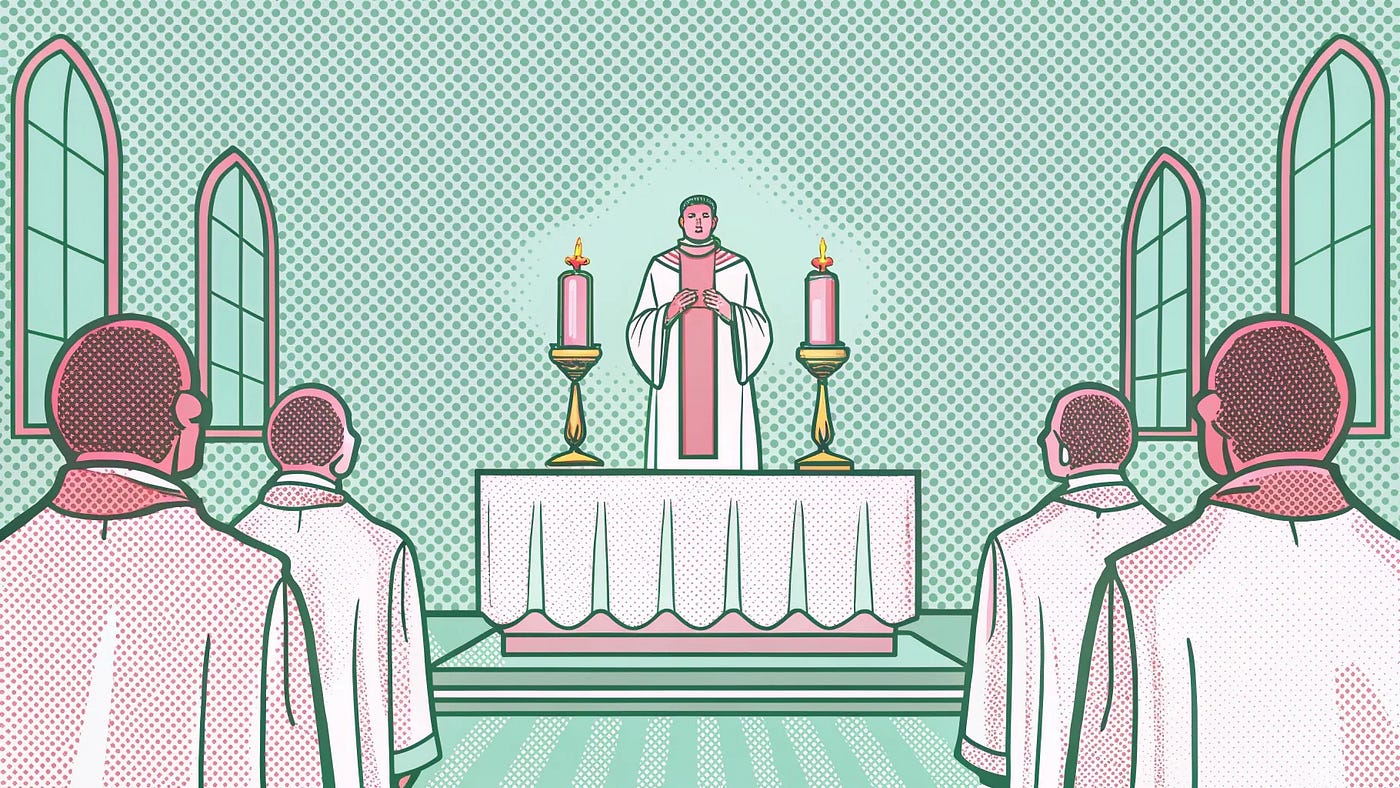
The Society of Saint Pius X is a priestly fraternity founded to form and ordain priests in the traditional Roman Rite (the 1962 Missal) and to preserve what its members regard as the perennial Catholic faith and priestly formation in the face of post‑Conciliar changes.
Who was Archbishop Marcel Lefebvre?
Archbishop Marcel Lefebvre (1905–1991) was a French priest, missionary, and later founder of the SSPX. Fr. Robinson portrayed him as a pastorally energetic, missionary-minded prelate with a deep devotion to Rome, a strong sense of God’s rights, and a desire to hand on the faith intact to future generations.
Family and early formation
- Lefebvre grew up near Lille, France, in a devout family; several siblings entered religious life. His mother, Gabrielle, is described as particularly holy and influential.
- He studied in Rome and was formed on the encyclicals and anti‑liberal teachings of popes such as Leo XIII and Pius IX — a formation that shaped his later stance against modernist tendencies.
Religious life and missionary career
- After a short diocesan assignment, Lefebvre joined the Congregation of the Holy Ghost (Spiritans) and later served extensively as a missionary and administrator in French‑speaking Africa.
- Pius XII appointed him apostolic delegate for French‑speaking Africa. He was seen as a capable builder and administrator who oversaw large numbers of baptisms, conversions, and the founding of churches and religious houses.
- In 1962, Lefebvre was elected Superior General of the Holy Ghost Fathers (a major missionary order), serving until 1968.
Vatican II and Lefebvre’s role
Lefebvre participated in preparatory commissions for the Second Vatican Council and was part of a group of bishops who sought to defend the Church’s traditional teaching during the Council debates. He and like‑minded prelates tried to amend or resist certain modernist trends. The interview emphasized two distinctions:
- The texts of Vatican II itself (some of which the SSPX critiques for errors on topics such as religious liberty, ecumenism, and collegiality).
- The post‑conciliar implementation and reforms (liturgy, seminary formation, theology), which Lefebvre and his supporters saw as a radical and destabilizing aftermath.
From retirement to founding the SSPX (Écône)
After resigning as Superior General in 1968, Lefebvre intended to retire. Seminars and candidates sought his formation because conciliar changes in many seminaries troubled them. A property in Écône, Switzerland, was acquired by lay supporters. With episcopal permission from the local bishop and what Lefebvre read as signs of providence, he founded a seminary there in 1970 to give traditional priestly formation. The society received canonical approval and recognition from 1970 to 1975.
SSPX structure and life
- Rather than isolated chapels, the SSPX organizes priests in priories (community houses) where priests live common life and then serve numerous mission chapels on weekends — reflecting Lefebvre’s belief in fraternal priestly life.
- Fr. Robinson noted the society’s heavy missionary workload: dozens of missions per priest, frequent travel, and global presence in dozens of countries (estimates in the interview: roughly 600+ priests across ~60 countries, with priories in perhaps 30–40 countries).
Sources of conflict with Rome (1970s onward)
After initial canonical approval, tensions rose as Lefebvre publicly opposed perceived modernist influences in seminaries and certain Vatican officials. Key moments discussed included:
- A 1974 declaration by Lefebvre rejecting modernist tendencies and defending tradition.
- A 1975 canonical visitation and subsequent demands from Rome that Lefebvre found incompatible with the preservation of traditional formation.
- A suspension a divinis (1976) and continued exchanges with Pope Paul VI and later John Paul II seeking clarification and permission for traditional practices.
The liturgy and the 1962 Missal
Lefebvre insisted on celebrating the traditional Latin Mass according to the 1962 Missal. During the interview, Fr. Robinson emphasized two points commonly raised by SSPX supporters:
- The 1962 Missal was never formally abrogated; therefore, priests retained a right to celebrate it in certain readings of Church law (a position later echoed in various declarations and actions by other Church authorities).
- Lefebvre’s primary aim was priestly formation and sacraments in the traditional rite, not as an act of schism but as a pastoral and doctrinal stand.
Assisi (1986) and escalation
The Assisi interreligious gatherings of 1986 (and later years) were cited by Lefebvre and his supporters as decisive signs of a crisis — public prayer events that grouped the Pope with leaders of non‑Christian religions. Lefebvre publicly condemned such events as incompatible with the Catholic faith and cited them among the reasons he felt compelled to preserve traditional Catholic worship and doctrine.
The 1988 episcopal consecrations and canonical consequences
In 1988, Archbishop Lefebvre consecrated four priests as bishops without papal mandate. Under canon law, episcopal consecration without pontifical mandate carries an automatic penalty of excommunication. The interview outlined the SSPX position and related canonical nuances:
- Lefebvre sought papal permission to consecrate bishops because he believed bishops were necessary to ensure the continuation of traditional priestly ordinations and sacramental ministry.
- Supporters argue Lefebvre acted under necessity and a grave pastoral motive — an argument which, they contend, can exempt one from canonical penalties under certain conditions.
- The act led Rome to declare the consecrations illicit and impose canonical penalties; the canonical status of Lefebvre and the consecrations has been debated among canonists and theologians since then.
- Later, Pope Benedict XVI took actions viewed as pastoral gestures toward reconciliation — most notably a 2009 lift of excommunications for the bishops consecrated in 1988 (a complex development noted in the interview).
Legacy and current situation
Fr. Robinson summarized the SSPX’s present reality as a global priestly fraternity that continues extensive pastoral work, trains priests, and serves many faithful who seek the traditional Mass and sacramental life. The society remains a focal point in discussions about liturgy, doctrine, and Church discipline. Key contemporary issues include the society’s canonical status, faculties for confession and marriage, and ongoing discussions with the Holy See.
Notable quotes highlighted in the interview
“I have handed on what I have received.”
— Archbishop Lefebvre (inscription cited by Fr. Robinson)
“How can the Mass I said the day after my ordination now be deemed wrong?”
— A typical Lefebvre line framed in the interview to illustrate his argument against sudden liturgical repudiation.
Recommended resources mentioned
- Official biography: Marcel Lefebvre: The Biography (recommended by Dr. Taylor Marshall in the interview).
- Angelus Press documentary on Archbishop Lefebvre (DVD/Vimeo) — useful for historical footage, missionary scenes, and interviews.
- Archbishop Lefebvre’s own writings: Open Letter to Confused Catholics; collections of his interventions and sermons (e.g., The Archbishop Speaks; The Spiritual Life; Priestly Holiness).
- Michael Davies, Apologia pro Papa (and related compilations) — documentary history of the post‑Conciliar period and debates around the SSPX (mentioned in the interview).
Why This Matters
Fr. Paul Robinson’s interview with Dr. Taylor Marshall presents Archbishop Lefebvre as a complex, missionary, and pastorally driven figure who founded the SSPX to preserve traditional priestly formation and the Tridentine rite in turbulent post‑Conciliar decades. The Society’s activities, canonical status, and legacy remain significant for Catholics concerned about liturgy, doctrine, priestly formation, and the Church’s direction since Vatican II.
For readers seeking background on the SSPX, the interview and the resources above provide a comprehensive starting point: biography and documentary material to understand Lefebvre’s life, the Society’s institutional development, the controversies that followed, and the continuing pastoral role of SSPX priests worldwide.
- Want more insights like this? Subscribe to my Substack for original reflections and essays where these ideas are developed further.
- Source: Watch the original video here.
- 📝 Not a Medium member yet? Support my work and get unlimited access when you join through my link — I’ll earn a portion of your membership at no extra cost to you.
메타데이터
- post_id
- 3400057c3cdc
- slug
- what-is-the-sspx-3400057c3cdc
- url
- https://medium.com/@johnricard/what-is-the-sspx-3400057c3cdc
- canonical_url
- https://medium.com/@johnricard/what-is-the-sspx-3400057c3cdc
- author_url
- https://medium.com/@johnricard
- status
- ok
- fetched_at
- 2026-07-18 23:36:47