The S-400 : Hype, Reality, and the Growing Risk of Dependence
The S-400, Russia’s vaunted air defense system, has become a symbol of Moscow’s military might and a coveted export commodity. But beneath…
The S-400 : Hype, Reality and the Growing Risk of Dependence
The S-400, Russia’s vaunted air defense system, has become a symbol of Moscow’s military might and a coveted export commodity. But beneath the veneer of technical prowess and marketing hype lies a complex picture of capability and vulnerability, posing potential risks for both buyers and users. While undeniably a potent system capable of challenging America’s air dominance, the S-400’s effectiveness is often overstated, and its acquisition brings inherent drawbacks that may outstrip the benefits for some nations.
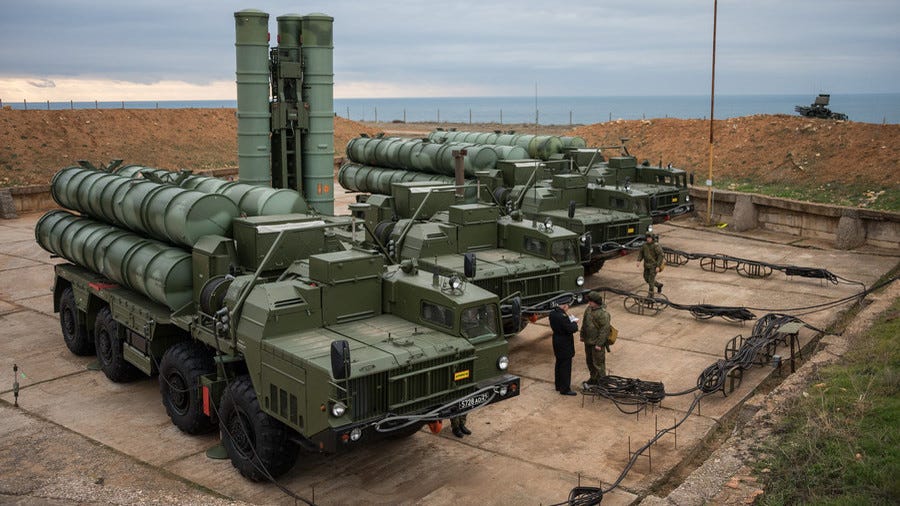
The S-400: A Complex Web of Capability and Vulnerability
The S-400 is a sophisticated system with notable strengths, including:
- Long-Range Engagement: With an estimated range of nearly 250 miles, the S-400 can engage aerial threats at considerable distances, giving it the potential to deter or disrupt enemy air operations.
- Missile Variety: Its arsenal includes missiles capable of tackling a range of targets, from fighter jets to cruise missiles and even ballistic missiles, enhancing its versatility and adaptability.
- Counter-Stealth Capabilities: The S-400 is frequently touted as a counter-stealth system, particularly due to the incorporation of the Nebo-M radar array, which combines three different radar systems broadcasting on different frequency bands to detect, track, and potentially target low-observable aircraft like the F-35.
The Nebo-M System: Hype Versus Reality
While the Nebo-M’s capability of detecting stealth aircraft in certain frequency bands is real, it is not the silver bullet against stealth technology that is often portrayed. Modern stealth aircraft, while not invisible, are designed to minimize their radar signature against high-frequency bands typically used for target engagement. The Nebo-M primarily operates in the lower frequency bands, allowing it to spot stealth fighters but not to provide the precision guidance necessary for an effective engagement.
The F-35 and the AARGM-ER: A Counter-Argument
The F-35, with its small radar cross-section and the addition of the Advanced Anti-Radiation Guided Missile Extended Range (AARGM-ER), further complicates the picture for the S-400. The AARGM-ER, boasting a range of at least 60 miles, poses a substantial threat to the S-400’s radars, potentially allowing the F-35 to strike the system from beyond its engagement range. While the S-400 might be able to achieve a weapons-grade lock during the brief time the F-35’s weapons bay doors are open, the threat posed by the incoming AARGM-ER would likely force Russian operators to power down and relocate the system before a successful intercept.
The Importance of Integration and the S-400’s Achilles’ Heel
The S-400 is undeniably powerful, but its real effectiveness hinges on its integration into a larger air defense network. When used in conjunction with other sensors, like airborne warning and control system aircraft (AWACS), and coordinated with other air defense systems, its capabilities can be greatly amplified.
However, many nations that acquire the S-400, such as Turkey, lack the necessary infrastructure and broader IADS capabilities to fully leverage the system’s potential. In such cases, the S-400’s impact can be diminished, making it a more vulnerable target.
Furthermore, the S-400 is vulnerable to saturation attacks, particularly from high-volume cruise missile strikes or drone swarms. Its limited number of available missiles and its reliance on a fixed location with a line-of-sight range can be exploited by an opponent with air superiority, who could overwhelm the system’s capacity to intercept incoming threats.
The S-400 in the Shadows: A Lack of Transparency and Real-World Performance Concerns
The lack of transparency surrounding the S-400’s testing and real-world performance has raised concerns about the veracity of Moscow’s claims. While Russia boasts a 100% success rate in tests, the lack of independent verification, and a pattern of hiding failures in previous systems, makes it difficult to accept this at face value.
Further fueling skepticism are documented cases where the S-400 and its predecessor, the S-300, have failed to prevent attacks from drones and cruise missiles. The Syrian war and the Nagorno-Karabakh conflict provide notable examples of these failures, demonstrating that even against simpler threats, the S-400 can be breached.
The S-400: A Weapon System with Potential Drawbacks
While undoubtedly a powerful tool, the S-400’s acquisition also carries inherent drawbacks:
- Dependence on Russian Technology: The S-400 necessitates reliance on Russian software, training, and maintenance, creating an implicit dependency on Moscow. This could lead to limitations in flexibility, potentially creating vulnerabilities and bargaining chips for Russia, as evidenced by Turkey’s recent experiences with the S-400.
- Potential Backdoors: Concerns about potential backdoors in Russian software and hardware cannot be disregarded. While Moscow denies the existence of such mechanisms, the possibility remains a significant risk, potentially exposing sensitive information and undermining security.
- High Cost and Complexity: The S-400 is an expensive and complex system to acquire, operate, and maintain. It requires extensive training for personnel and sophisticated logistical support, factors that may strain resources and capabilities for some nations.
The S-400’s Place in a Modern Battlefield: A Complex Reality
The S-400 is a potent weapon system, capable of changing the battlefield dynamics when used effectively. However, its success depends on a range of factors, including the broader IADS infrastructure, operational doctrine, and the overall capabilities of the user.
While the S-400 is not the silver bullet against stealth technology often portrayed, it is a powerful tool in the right context and could prove costly to underestimate in conflict. However, its limitations and the potential drawbacks of its acquisition need careful consideration. The risks of dependence, the potential for backdoors, and the significant logistical burden underscore the need for a nuanced and pragmatic approach to the S-400’s strengths and vulnerabilities.
FAQs
- Does the S-400 have a backdoor? While there are serious concerns about the potential for backdoors within Russian software and hardware, Moscow has repeatedly denied the existence of such mechanisms. The lack of transparency surrounding Russian military technology, however, fuels concerns and makes independent verification impossible.
- Is the S-400 effective against drone swarms? The S-400, like any air defense system, faces challenges against drone swarms. Its ability to intercept these low-cost, small, and highly maneuverable targets can be limited, especially in situations with limited radar coverage and when faced with saturation attacks.
- Why is the S-400 so popular with international buyers? The S-400’s appeal lies in its reputation for advanced capabilities, particularly its perceived counter-stealth potential and its ability to engage a wide range of air threats. It offers nations the potential for enhanced air defense capabilities at a lower cost compared to similar Western systems.
- Does the S-400 pose a significant threat to American airpower? The S-400, while a potent system, does not single-handedly represent a fatal threat to American airpower. The combination of advanced stealth aircraft, long-range precision weapons, and sophisticated tactics can be used to mitigate the S-400’s threat, especially when combined with other elements of American military might. However, underestimating the S-400’s capabilities would be a mistake.
- Is the S-400 a sign of Russian technological dominance? While the S-400 represents a notable step in Russia’s technological development, attributing it as evidence of a dominant position in all sectors of military technology is inaccurate. Russian military technology is complex, featuring strengths in specific areas, such as missile systems, but lagging in other areas like integrated networking and precision guided munitions.
The S-400 represents a fascinating blend of potential and limitations. It is a potent weapon system with undeniable strengths, but its acquisition can create significant risks and vulnerabilities. As nations weigh the benefits and drawbacks, the complex picture of the S-400 demands a nuanced understanding of its capabilities and the implications of its acquisition.
메타데이터
- post_id
- 34025cbdcdfa
- slug
- the-s-400-hype-reality-and-the-growing-risk-of-dependence-34025cbdcdfa
- url
- https://medium.com/@salvacybersec/the-s-400-hype-reality-and-the-growing-risk-of-dependence-34025cbdcdfa
- canonical_url
- https://medium.com/@salvacybersec/the-s-400-hype-reality-and-the-growing-risk-of-dependence-34025cbdcdfa
- author_url
- https://medium.com/@salvacybersec
- status
- ok
- fetched_at
- 2026-06-27 07:40:21


