Persian Carrot Rice :A Colorful Classic from Iranian Cuisine
Among the many treasures of Persian cuisine, few dishes capture the balance of color, fragrance, and flavor quite like Havij Polo, also…
Persian Carrot Rice : A Colorful Classic from Iranian Cuisine
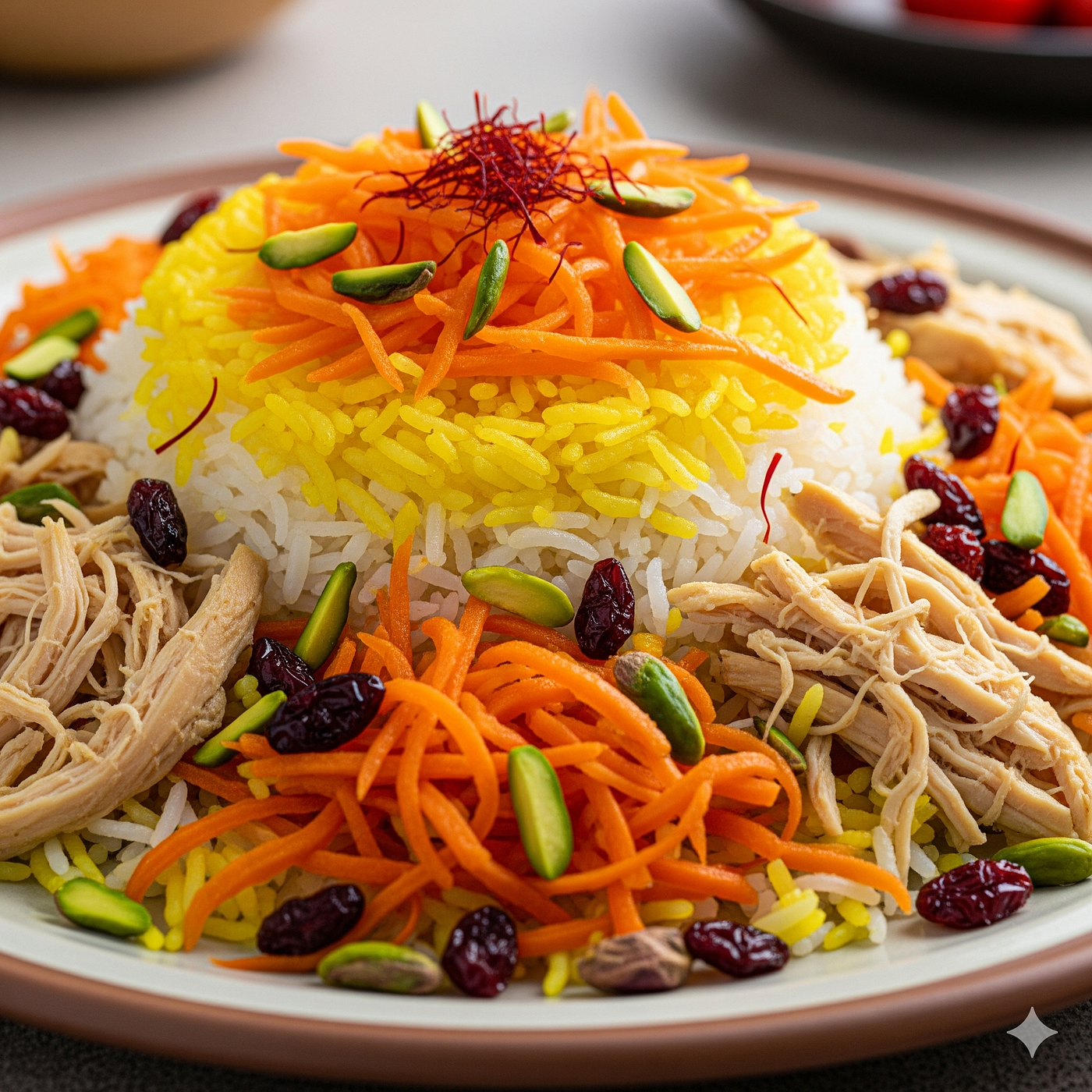
Carrot Rice with Chicken
Among the many treasures of Persian cuisine, few dishes capture the balance of color, fragrance, and flavor quite like Havij Polo, also known as Persian Carrot Rice. This dish combines fluffy saffron rice with sweet caramelized carrots, tangy barberries, and tender chicken. The result is a meal that feels festive yet comforting, making it a favorite on both everyday dinner tables and special occasions.
Havij Polo is traditionally prepared in many Iranian households, and each region has its own version. Some families serve it with juicy meatballs, while others prefer chunks of lamb or beef. In this recipe, we will prepare Havij Polo with chicken, one of the most popular variations. Step by step, I’ll guide you through the process so even if you’ve never cooked Persian food before, you can bring this authentic dish to life in your kitchen.
Ingredients for 4 Servings
▪︎3 cups rice
▪︎1 chicken breast
▪︎5 medium carrots
▪︎1 large onion
▪︎2 to 4 tablespoons sugar (depending on taste)
▪︎½ cup barberries (zereshk)
▪︎Brewed saffron (as needed)
▪︎Salt, black pepper, turmeric (as needed)
▪︎Cinnamon and cardamom (optional)
▪︎Butter or oil (as needed)
▪︎Slivered pistachios and almonds for garnish (optional)
This list may seem simple, but when combined, these ingredients create an extraordinary harmony of flavors. Carrots bring a gentle sweetness, barberries add a sharp tang, saffron infuses aroma and golden color, while chicken provides heartiness.
Step 1: Preparing the Rice
Rice is at the heart of most Persian meals, and its preparation is essential. Begin by rinsing the rice several times until the water runs clear. This washes away excess starch and prevents the grains from becoming sticky. Soak the rice in salted water for at least 30 minutes, or up to an hour if you have the time. Soaking ensures that the grains cook evenly and stay long and fluffy after steaming.
Step 2: Cooking the Chicken
Slice the chicken breast into bite-sized pieces, or if you prefer, cook it whole and shred it later. Chop the onion finely and sauté it in a little oil until golden and fragrant. Add the chicken pieces and stir until they turn opaque.
Season the chicken with salt, pepper, and turmeric. These basic spices are staples in Persian kitchens and bring warmth and depth to the dish. For even more flavor, you can add a splash of brewed saffron and a cup of hot water, allowing the chicken to simmer gently. Cook until the liquid is absorbed and the chicken is tender.
Step 3: Preparing the Carrots
Peel the carrots and cut them into thin matchsticks. You can also grate them coarsely if that’s easier. In a pan, melt some butter or heat a little oil, then sauté the carrots until they soften and turn glossy.
At this stage, sprinkle sugar over the carrots. As the sugar melts, it lightly caramelizes the carrots, giving them a delicate sweetness and golden sheen. Adjust the sugar to your liking—if you prefer a subtler sweetness, use less. For an extra layer of fragrance, stir in some brewed saffron and a pinch of cinnamon. The combination of saffron and carrots is one of the defining features of Havij Polo.
Step 4: Preparing the Barberries
Barberries, known as zereshk in Persian, are tiny ruby-red berries with a tart flavor. They are often used in Persian rice dishes to balance sweetness. Before cooking, rinse the barberries carefully to remove grit.
In a small pan, sauté the barberries in butter with a teaspoon of sugar. Be quick—barberries cook in seconds, and leaving them too long will make them tough and bitter. Once they glisten and puff slightly, remove them from the heat.
Step 5: Steaming the Rice
Now comes the most important stage: layering and steaming. Choose a large nonstick pot and place it on the stove. If you want a crispy bottom layer, or tahdig, line the pot with slices of potato or flatbread. This golden crust is often the highlight of Persian meals.
Drain the soaked rice and parboil it briefly until slightly tender but not fully cooked. Strain it and start layering. Begin with a layer of rice, followed by some of the carrot mixture, chicken, and barberries. Repeat the layers until all ingredients are used. Scatter some slivered pistachios and almonds between the layers if you’d like extra texture and color.
On the top layer, drizzle brewed saffron and melted butter. Cover the pot with a lid wrapped in a clean kitchen towel, which helps absorb steam. Let the rice steam over low heat for 40 to 50 minutes until the grains are fluffy, aromatic, and infused with saffron.
Serving Suggestion

A plate of Carrot Rice with Cucumber yogurt dip
When ready, gently fluff the rice with a spatula and transfer it to a serving platter. Garnish with more barberries, pistachios, and almonds. The dish itself is visually stunning—the golden rice, orange carrots, and ruby-red barberries create a colorful contrast that looks as good as it tastes.
Havij Polo pairs beautifully with a fresh herb platter (sabzi khordan), yogurt, or a crisp cucumber salad. It can be served as a main course for lunch or dinner, and it also shines on festive occasions such as family gatherings and Persian New Year celebrations.
Why Havij Polo is Special
What makes Havij Polo unique is its balance of flavors. The sweetness of carrots is perfectly offset by the tartness of barberries. The savory chicken ties everything together, while saffron lends its unmistakable aroma and vibrant color. Unlike many rice dishes around the world, Persian rice is not simply mixed but layered and steamed, giving it a refined texture and presentation.
Variations
While chicken is common, Havij Polo can also be made with other proteins. Small spiced meatballs (made from ground beef or lamb) are a popular alternative. Some families use lamb chunks for a richer flavor. You can even keep it vegetarian by skipping the meat altogether and focusing on the carrots and barberries.
Optional additions include slivered candied orange peel for a citrusy note or a touch of cardamom for a more aromatic profile. These variations highlight the adaptability of Havij Polo while keeping its essence intact.
Conclusion
Cooking Havij Polo, or Persian Carrot Rice, is more than just making a meal—it’s creating an experience. With its colorful presentation and harmonious blend of sweet, savory, and tangy flavors, this dish captures the spirit of Persian cooking: balance, elegance, and warmth.
Try making Havij Polo in your kitchen, and you’ll see why it’s loved across generations. Whether you’re preparing it for a casual family dinner or a festive celebration, this saffron-scented rice with chicken, carrots, and barberries will always bring smiles to the table.
Soak your rice, slice those carrots, and let the aroma of saffron fill your home. This is Persian comfort food at its finest.
메타데이터
- post_id
- 3416eee614f2
- slug
- persian-carrot-rice-havij-polo-with-chicken-3416eee614f2
- url
- https://medium.com/@shivamanafiazar1381.com/persian-carrot-rice-havij-polo-with-chicken-3416eee614f2
- canonical_url
- https://medium.com/@shivamanafiazar1381.com/persian-carrot-rice-havij-polo-with-chicken-3416eee614f2
- author_url
- https://medium.com/@shivamanafiazar1381.com
- status
- ok
- fetched_at
- 2026-07-20 23:18:48