Gen Z Sindhis: From Hidden to Seen.
Most Sindhis I know grew up with a strange cultural duality: we are everywhere, yet somehow also from nowhere. We blend into Bombay, Dubai…
Gen Z Sindhis: From Hidden to Seen.
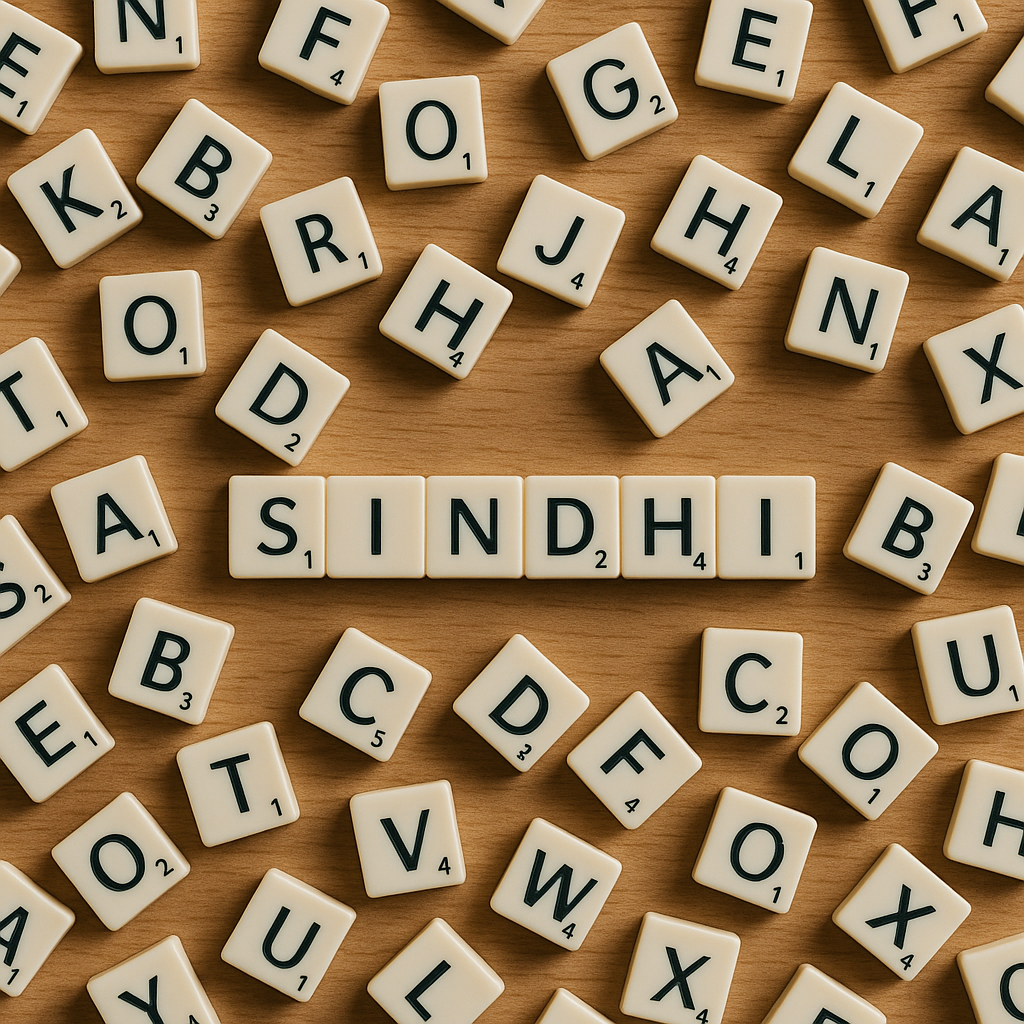
AI Generated
Most Sindhis I know grew up with a strange cultural duality: we are everywhere, yet somehow also from nowhere. We blend into Bombay, Dubai, Hong Kong, London, Spain. We become part of the countries we move to, the markets we build in, the accents we absorb. But ask us who we are, and suddenly there’s a pause. We don’t have a state that reflects us. We have a language but many of us cannot confidently speak it. We don’t have a single pop culture reference or “mainstream moment” that defines us. And this is where the Sindhi contradiction begins — we are possibly the only major community that became diaspora first, and tried to figure out identity after.
In my own case, I grew up feeling like I belonged to a community that only existed in these tiny, hidden pockets of the world. Madrid — where I was raised — had maybe a hundred Sindhi families. We had our own shorthand, our own food, our own way of speaking to each other — and a language that mostly lived inside the walls of our home. I never truly believed we were a large community in the way the world recognises Gujaratis or Punjabis. Patels and Singhs had global brand recall. Sindhis didn’t. I was always proud to be Sindhi — but I also knew that outside of our little bubble… almost nobody had ever heard of us.
The question never came to my mind, as to why this was the case. I went to university and even some of the British Indians had not heard of who Sindhis were. Years later, when I had my own children my identity became a focal point. And here’s the answer.
Survival came first, identity later.
Sindhis diverged from almost every other community that was uprooted in 1947. Because yes — other communities also dealt with displacement and rebuilding. But most of them still had a physical anchor. Punjabis had Punjab. Bengalis had Bengal. Even when they crossed borders, the idea of their homeland still existed — culturally, linguistically, politically, geographically.
Sindhis lost the geography itself.
Sindh — the cultural womb — didn’t remain with us. The cities where our grandparents lived, the shrines, the neighbourhoods, the schools, the temples, the soundscape — all of that stayed on the other side of a new border. And in India, there was no territorial “Sindhi state” waiting for us. No rallying point. No cultural capital city to orbit around.
So while other communities rebuilt from a place — Sindhis rebuilt without one.
Our identity had to be portable. It had to fit into a suitcase. A business ledger. A recipe. A few phrases spoken at home. And that portability — which was initially a survival mechanism — quietly became our defining cultural DNA.
We became a global community before we ever became a recognised cultural one.
That’s the key difference.
Sindhis didn’t get the luxury of stabilising identity first and then leaving home in search of opportunity. We were forced into diaspora first — and only decades later did we start asking the question: “so what exactly makes us Sindhi?”
That’s why the feeling of “from everywhere but nowhere” shows up even today — especially for Gen Z — because the foundation of our identity was never place.
It was migration itself. And this mobile identity is now finally being showcased, there has never been a more visible time to be Sindhi.
The modern Sindhi shift
In the present day, you can literally see this fluid, portable identity play out most obviously in Gen Z Sindhis. They are the first generation who are not ashamed, not hiding, not confused in the same way — they’re actually performing and reconstructing Sindhi-ness in public. And the stage for that reconstruction isn’t a temple, or a community centre, or a Sindhi sabha — it’s Instagram and TikTok.
The “movement-based identity” that our grandparents lived through is now showing up in how Gen Z Sindhis carry themselves — not through monuments, not through language fluency, but through a set of behaviours and cultural expressions that are instantly recognisable if you’re from within the community.
You see it in:
the fluidity of identity — Sindhis can switch accents effortlessly, but Gen Z are really showing up with it: one tone for family, one for college friends, one for work. This shape-shifting is natural to us because adaptation was passed down as survival code.
the lack of traditional symbols — other cultures have architecture, regional dress, iconic folklore. For Sindhis, the cultural artefacts are small: a koki recipe, a family business anecdote, the sound of one unique surname. TikTok creators now joke about these micro markers — which weirdly makes them feel more real.
the entrepreneurial reflex — again something that even my own father did, but today Sindhi Gen Z’s are owning it and gravitate towards side hustles, brand building, marketing, founders’ mindset. Not because of some stereotype — but because mobility once meant: you earn your place wherever you land. That’s muscle memory.
the language erosion — most young Sindhis speak split Hindi-English, not Sindhi. But on reels you’ll see roman-Sindhi captions, or one Sindhi phrase repeated as a punchline. The language is fragile — but it hasn’t died — it just shape-shifted into meme-currency.
And what’s fascinating is this: for the first time in our history — these identity fragments are being stitched together publicly.
There are Sindhi food accounts doing “koki but make it aesthetic”. There are Sindhi last-name reels that decode “what kind of Sindhi you are”. There are videos on “Sindhi moms’ guilt-tripping technique ranking”.
It sounds funny — but it’s actually profound.
Because these small cultural signals — which used to be private and invisible — are now visible to the world.
Gen Z Sindhis are, maybe unintentionally, doing the work that no institution, no government, no archive ever did for us:
They are documenting what being Sindhi looks like today — in real time — for everyone to see.
The identity that once had to survive quietly inside homes is now being displayed, shared, memed, and celebrated on the largest global stage we’ve ever had.
That’s the movement of identity in the modern world:
From portable to digital and finally visible.
The irony
All this new visibility — the TikTok jokes, the Instagram cooking edits, the meme-ified Sindhi mums — is helping stitch together fragments of a community that has never had a solid physical ground to stand on. We are finally seeing each other. We are finally recognising ourselves reflected back to us. The diaspora label — which originally implied scattering, dilution, loss — is now weirdly becoming the container inside which Sindhi identity is being rebuilt.
But that creates a paradox. Because for most communities, the diaspora is the extension of a homeland.
For Sindhis, the diaspora is the homeland.
There is no “back to X city”. There is no “ancestral village we still visit”. There is no “summer vacation in the homeland”.
Our culture lives across cities — not at the centre of any one of them.
So a Sindhi kid in Toronto, and one in Pune, and one in Hong Kong, and one in Dubai — might have more cultural DNA in common with each other than with the non-Sindhi neighbours they actually grew up next to.
That’s the paradox: we have global emotional recognition without territorial recognition.
Which means Gen Z Sindhis are growing up inside this completely new identity type — one where your cultural home is not a place… but a network.
A network of in-jokes. A network of surnames. A network of recipes. A network of shared parental patterns. A network of TikToks that finally make us go: “oh, so it’s not just my family.”
So the question isn’t “which land are we from?” — because that answer has already slipped out of our hands.
The real question — the modern Gen Z question — is:
“which constellation of people do we belong to?”
Because for Sindhis, home isn’t geography. Home is each other.
So maybe the question isn’t “will Sindhi culture survive?” — maybe the question is: what shape will it choose next?
Because if being Sindhi today means having the flex to belong anywhere in the world — then the responsibility of the next generation isn’t to recreate some lost, fixed past. It’s to carry forward the parts that give us soul — in formats that feel alive.
And this can happen with stories that are told and followed through via recipes, inside jokes, names, collaborations and of course businesses built across borders.
Sindhi-ness doesn’t need to be guarded like an artefact in a museum — it needs to be expressed. And Gen Z is already doing that — instinctively — by making culture visible, casual, funny, aesthetic, public.
So the future of Sindhi identity might not look like returning to a physical homeland — it might look like finally belonging to the global one we’ve spent 75 years building.
And if we can continue telling our own stories — online, in pop culture, in how we raise our kids — then our “portable identity” stops being a wound and becomes a superpower.
Which means the most Sindhi thing any of us can do now is exactly what our ancestors unknowingly coded into us since 1947:
keep moving — but take the culture with you.
Jai Jhulelal
메타데이터
- post_id
- 3432d952cdec
- slug
- sindhis-from-everywhere-from-nowhere-3432d952cdec
- url
- https://medium.com/@goldieuttam/sindhis-from-everywhere-from-nowhere-3432d952cdec
- canonical_url
- https://medium.com/@goldieuttam/sindhis-from-everywhere-from-nowhere-3432d952cdec
- author_url
- https://medium.com/@goldieuttam
- status
- ok
- fetched_at
- 2026-07-15 14:54:28




