Does Size Matter?
Human Security, Guns and Nuclear Weapons
Does Size Matter?
Human Security, Guns and Nuclear Weapons

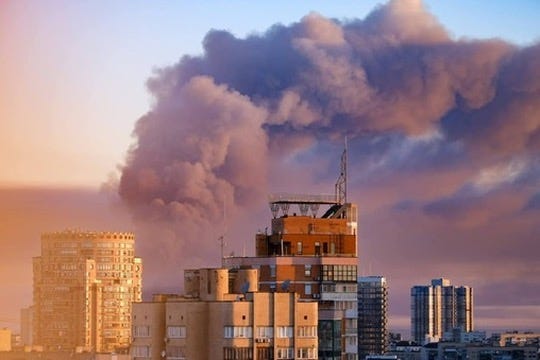
Hwasong-17 test-fire. Source: AP
Disclaimer: This essay was originally submitted as coursework at the University of Melbourne in mid-2023.
Introduction
The study on international security is laden with discourses on the tools that have reshaped how humanity fights its wars, particularly during and after the Cold War. From illicit trade of firearms to the deterrence strategy, guns and nuclear weapons stand out as the primary subjects of discussions, especially in regards to what constitutes a post-Cold War threat. Most of the discourse regarding the two tools of warfare often puts the state as the referent object, focusing on issues that are perceived to be a threat to state security. Despite this well established state-centrism in security, a new, more normative and nuanced approach termed ‘human security’ challenges this by shifting the referent object from state to human lives. With this paradigm shift, what constitutes a threat is redefined and many aspects of the threat in question are also reconsidered. Through this particular approach, both guns and nuclear weapons, while crucial to how we perceive, and thus practise, security, pose an unquestionable threat to human security due to their violent and destructive nature. However, to what degree and which one of these tools of war pose a greater threat to human security is a question worth answering. Considering this new perspective, this essay argues that while nuclear weapons, with their unfathomable destructive capability might seem most threatening to human civilization, it is the ubiquitous guns that present a closer threat to ‘human security’ overall. The first section of the essay explores the two distinct paradigms of security by placing guns and nuclear weapons in their appropriate perspective given the paradigm shift. It is then followed by revealing the underlying frequency vs. magnitude comparison when discussing the threat of guns and nuclear weapons on human security, particularly by tracing the human aspects and the agency of both threats. Lastly, the concluding section will sum up the arguments laid out in the previous sections.
Straddling the Line on Security
Nuclear Weapons and Security
The traditional perspective on international security (IS) is firmly rooted in the concept of state security. It follows the realist understanding that states are the primary actors in the inherently anarchic international politics, and that their actions are driven by their national interest that stems from the struggle for survival. As such, the traditional view on IS puts the state as the referent object and is largely concerned with territorial integrity and sovereignty[1], geopolitical interests, and power to prevent war. Power and how it is measured, that is, by a state’s military capability holds special significance in this perspective as it is the state’s primary tool to protect itself from enemies within and without[2]. The end of the Second World War and the start of the Cold War introduced a new layer of complexity with the introduction of the nuclear weapons as potent tools of war and its subsequent integration to international politics.
The Cold War ushered in a new dimension of state-centric security concerns with the technological advancements and proliferation of nuclear weapons. Their unfathomable destructive capability enables them to become an integral instrument of state defence and deterrence. Possessing advanced nuclear missiles, capable of striking long-distance targets from the safety of one’s border, deters potential aggressors without needing to deploy conventional military forces, fundamentally changing the balance of power. A straightforward explanation for nuclear weapons’ potency as tools of warfare and deterrence can be found in the ‘Mutually Assured Destruction’ (MAD) doctrine that ties in technological advancements in nuclear weapons, its destructive capability and usage strategy. The doctrine, which is deeply rooted in security considerations, posits that no nuclear states will be willing to strike first in fear of retaliation from the opposing state[3]. Such doctrines and strategies illustrate that nuclear weapons, beyond their immediate military utility, have successfully redefined how states perceive and secure their safety in the increasingly complex international stage.
Guns and Human Security
The conception of ‘Human Security’ can best be described as an effort to shift the military-centric and state-centred paradigm of traditional security to an individual-based perspective that considers the myriad of dimensions that can threaten one’s wellbeing. The first and the most prominent definition of ‘Human Security’ can be traced back to United Nations Development Programme’s (UNDP) Human Development Report 1994, in which it is described to have two main aspects: safety from threats such as hunger, disease and repression and protection from hurtful disruptions in daily life[4]. This definition is very broad and is raised in the context of human development, as UNDP includes seven categories of threats. From then on, many scholars have debated on the concept itself, mainly on what appears to be a broad-versus-narrow conceptualization of human security[5]. This includes the critical distinction between actual human security and the broader concepts of human-well being and development. The ‘middle ground’, so to speak, between traditional perspective of IS and human security is the shift from state as the referent object into ‘all human lives’[6]. This shift is narrow enough while also being properly broad to encompass human rights and development while also complementing state security[7]. The concept of ‘vulnerability’ as a defining characteristic of human security proposed by Suhrke[8], also serves as an important mechanism to gauge threats as well. It is this paradigm shift that becomes particularly useful when we consider modern-day threats, such as the pervasive issue of gun violence and proliferation, which represents a clear intersection of state security concerns and the well-being of individuals.
Guns, just like nuclear weapons, are the result of technological advancement in warfare as a force multiplier. They are the result of years and years of improvement on personal projectile-based weapons that are now present in every part of the globe. Looking into the threat of firearms through human security lenses means that one must consider the plethora of threats it poses to the human-well being. These threats are, but not limited to, the direct threat to life, its ubiquity and further proliferation, fuelling conflict, gender violence, ‘misuse’ of Small Arms and Light Weapons (SALW)[9], and the socio-economic impacts of firearms overall in both global-north and global-south countries. This long list of considerations starkly contrasts traditional security consideration of firearms as a post-Cold War threat that is limited to a specific case where a huge influx of firearms flows into a particular state to arm insurgents[10], terrorists[11], separatists[12] or transnational organised criminal groups[13], as in this particular situation, the territorial integrity, political independence, state sovereignty or the general state security is jeopardised.
Frequency vs. Magnitude
Looking into the threat of firearms and nuclear weapons with human lives as a referent object invites a comparison between frequency vs. magnitude. This is due to the fact that there is an underlying contrast of ‘agency’ between the two tools of warfare. Firearms can be found in every corner of the globe, in the hands of states’ law enforcements and military personnel for general control and in the hands of civilians, both for self-defence or other illicit purposes, and private security companies. This ubiquity and human-level agency leads to more and more individuals being vulnerable to gun-related deaths either in conflict zones or general misuse of firearms in day-to-day life. Furthermore, while there are international efforts to limit the proliferation of firearms in conflict zones, their impact leaves a lot to be desired due to a myriad of obstacles including, but not limited to, socio-political and economic aspects, as well as the lack of comprehensive and universal regulations and enforcement. In contrast, nuclear weapon possession is limited to states, and even then only a handful of ‘nuclear states’ exists and proliferation of nuclear weapons to new states are heavily scrutinised by the international community and is strictly regulated by the existing regulation and international system. Nonetheless, nuclear weapons destructive capability poses an existential threat to human security given its current usage strategy that is underpinned by the MAD doctrine. The next subsections of the essay will explore the complexity of gun proliferation and elaborate on the frequency vs. magnitude comparison between the two tools of warfare.
The Universal and Pervasive Tool of Security, Control and Violence
There are many aspects that contribute to the proliferation and ubiquity of firearms that subsequently affect how frequent they threaten human security. The first one is systemic, such as the established international norm and the dual narrative around their use that falls under SALW. This dual narrative is centred on the ‘legitimate’ and ‘proper’ use of SALW and their ‘misuse’. Important distinction needs to be addressed on the ‘proper’ and ‘misuse’ of SALW. The ‘proper’ usage is usually defined in relation to their legal possession, acquisition, and use cases that are recognized and sanctioned by international laws and norms from the Geneva Conventions and the Charter of the United Nations and International Humanitarian Law, to UN Basic Principles on the Use of Force and Firearms by Law Enforcement Officials[14]. In these laws and norms, states and their apparatus such as law enforcers are given the right to employ and use SALW for self-defence and to maintain public order and security. Therefore, based on this background on ‘proper’ usage of SALW, the ‘misuse’ of these weapons are any kind of use cases that are beyond what is universally accepted such as illegal possession, criminal activities, child soldiers and support to non-state armed groups and many more. Subsequently, the sanctioned ‘proper’ use of guns leads to high production rates and global trade that results in the widespread distribution of SALW in every state, both the ones who are capable of producing their own or the ones who lack this capability to arm their law enforcements and military personnel.
While the global norms address and delineate the ‘proper’ and ‘misuse’ of SALW quite clearly, it is important to note that shifting the referent object from state to human lives requires acknowledging that the state can be listed as a possible aggressor to human security[15]. This acknowledgement thus can be used to expand the ‘misuse’ of SALW to include unnecessary use of violence or excessive force conducted by state apparatus towards civilians and the supply of weapons to conflict zones done by states in the name of geopolitical interests, strategic objectives or regional rivalries, and financial gains[16]. Discussion on the former provides an intersection between human security and human rights in the guns discourse, as state, and by extension, its apparatus has ‘legitimacy’ to use violence to maintain order and control based on local laws and regulations as well as the international norms elaborated above that sees the state as one of the legitimate ‘users’ of guns. Some particularly useful example on state-perpetrated violence using firearms can be found in the United States particularly the use of excessive force directed towards civilian minorities[17] and the Philippine’s War on Drugs that started in mid-2016 and has resulted in the death of around 7,742 Philippine civilians[18] due to the sanctioned extrajudicial killing by the government.
Furthermore, another layer that adds to the intricate relations between states and firearms is that different states and different societies have distinct and uneven national laws and regulations regarding the proliferation of guns. This leads to the second major aspect, that is the socio-political and the economic side of the proliferation of guns that underpins why the current international systems and norms are ineffective in controlling gun proliferation. Globally, hundreds of human lives are lost to the use of guns every single day outside of conflict zones[19], these deaths are related to crime, individual violence and suicide. The high numbers are heavily concentrated in the countries located in South America such as El Salvador at 35.5 per 100,000 people, Venezuela at 32.75 per 100,000 people, Guatemala at 28.23 per 100,000 people, Brazil at 20.8 per 100,000 people and the United States at 14.6 per 100,000 people[20]. Meanwhile, states where civilian gun ownership is illegal such as Australia and Japan show a lesser number at 1.0 and 0.2 per 100,000 people respectively[21]. Looking into an explanation of these high numbers requires a deep dive on a case-by-case basis on how guns are perceived, depicted and misused in a particular society. On this particular matter, several analytical lenses have shown their particular efficacy and criticality in understanding the socio-cultural aspect of guns proliferation such as the gendered perspective[22], critical race theory, criminology, and psychological perspective, often in tandem with one another[23]. In addition, economic incentives for states and private arms manufacturers play a significant part in the proliferation of guns, most prominently in conflict prone regions such as Africa and the Middle East. From the Iran-Contra scandal, Viktor Bout, to the conflict in Yemen[24], the allure of profit pierces the established rule of law on illegal arms trade and exacerbates the proliferation problem, thus increasing the already precarious human vulnerability in conflict zones.
The threat that guns pose to human security is ever-present and close. In societies where civilian gun ownership is common, the average citizen’s vulnerability to gun-related violence rises substantially. We will always be reminded of this prevalent issue whenever a firearms-related act of mass violence occurs or a casualty report from a conflict zone is published. Fortunately, in recent years, there are efforts to put an actual ‘cost’[25] on the threat of guns to human well-being by approaching the issue through a public health and public welfare perspective as an attempt to ‘bypass’ the complex intricacies of gun violence and socio-political aspect of it all. Not to mention the discourse on the intangible cost of gun violence such as trauma and the general adverse psychological effect prior, during and after tragedy that it has on many people[26]. A concrete example on the public health and welfare approach is the ‘Cure Violence’ model proposed to reduce gun violence in the United States that views firearms related violence as a “communicable disease that passes from person to person”[27]. This particular model takes the grassroots approach by identifying and educating high-risk individuals in a particular society where gun ownership and violence is prevalent[28]. In short, firearms proliferation and violence is a complex issue that encompasses every level of analysis from the international level to the individual level that is exacerbated by the entanglement of socio-political and economic aspects in gun proliferation.
International Systems and Norms: Why It Matters
The main difference between guns and nuclear weapons that severely limits the latter’s threat to human security is the international systems and norms encompassing its proliferation and usage. For specificity, what this essay means as international systems and norms are the arms control architecture and the normative perception on nuclear weapons. As mentioned in the earlier section of this essay, the deterrence concept underpins the current international system regarding nuclear weapons, lending to the sheer destructive capability of this particular tool of warfare as it poses a latent, existential threat to humanity. Critics speaking out against nuclear weapons, specifically its proliferation, began since the very first demonstration of the atom bomb in 1945[29]. One year later, in 1946, John Hersey published a book tracing the lives of six survivors of ‘Little Boy’ on Hiroshima[30], bringing to light the human cost of humanity’s flashiest invention. As technological advancements on nuclear weapons continued, the critics grew louder from all levels of society further underlining the human cost of nuclear weapons from the 1950s to the 1960s that encompassed grassroots movements such as the ‘Ban the Bomb Movement’ in the United Kingdom and prominent figures such as Albert Einstein and Bertrand Russel[31], to analysts like Herman Kahn and Evan Jones[32]. However, these critiques were overshadowed by the fact that the Cold War was in full-swing and only after the Cuban Missile Crisis in 1962 that substantial treaties regarding nuclear proliferation were signed by the nuclear-armed states such as the Limited Test Ban Treaty (LTBT) in 1963, the Nuclear Non-Proliferation Treaty (NPT) in 1968 and the Strategic Arms Limitation Talks (SALT I & II) in the early 1970s. It is also important to note that prior to the Cuban Missile Crisis, one program called the ‘Atoms for Peace’ proposed by Dwight D. Eisenhower led to the establishment of the International Atomic Energy Agency (IAEA) in 1957, a crucial part in the nuclear control architecture. These critiques and treaties laid out the groundwork for the current international systems and norms regarding nuclear weapons that persists to this day.
The systems and norms in place regarding nuclear weapons that we have right now is suboptimal, as nuclear weapons still pose a threat to human security. There are still non-compliances and loopholes within the established systems that lead to the lack of complete disarmament. However, it is relatively effective in reducing the threat, and subsequently, human vulnerability against nuclear weapons due to the successes of the non-proliferation programmes compared to the systems and norms in place for guns. In addition to the previously explored reasons on why guns are harder to control, it is far easier to regulate nuclear weapons as the agency lies on states only. It is impossible for a single person to create their own nuclear weapon given the complexity, knowledge and the high cost attributed to the effort. In contrast, a person with sufficient know-hows and adequate tools can manufacture their own improvised firearms or ‘zip guns’. Not to mention 3D-printing technology that now enables any individual to assemble their own firearms[33]. This heavily decentralised agency and manufacturing capability, in addition to the complexity of gun proliferation, plays a significant part on why guns pose a greater threat to human security compared to nuclear weapons.
Conclusion
To conclude, the paradigm shift in human security that replaces the state as the referent object to human lives means that size does not actually matter in the context of guns, nuclear weapons and human security. Guns pose a more immediate threat to all human lives as opposed to nuclear weapons due to its ubiquity, misuse, and ultimately the socio-political and economical aspect of firearms in some societies that contributes to the difficulty of establishing an effective international system to control gun proliferation, and ultimately reduce gun violence. In contrast, the international community has largely confined the threat of nuclear destruction through an effective, but flawed system of laws and norms. As long as states, and only states, stay as the main entity that possesses nuclear weapons, the threat of nuclear extinction, while latent, will remain distant. More thorough research and a major push to reduce firearms proliferation by providing tangible and policy-relevant data such as calculating the cost of gun violence through public health perspective or other approaches is crucial to reduce human vulnerability and disarm firearms of its power to threaten human security.
[1] Gary King and Christopher J. L. Murray, “Rethinking Human Security,” Political Science Quarterly 116, no. 4 (2001): 585–610, https://doi.org/10.2307/798222.
[2] Barry Buzan and Lene Hansen, eds., “The Key Questions in International Security Studies: The State, Politics and Epistemology,” in The Evolution of International Security Studies (Cambridge: Cambridge University Press, 2009), 27, https://doi.org/10.1017/CBO9780511817762.004.
[3] Alan J Parrington, “Mutually Assured Destruction Revisited: Strategic Doctrine in Question,” Airpower Journal 11, no. 4 (Winter 1997): 4–19.
[4] United Nations, Human Development Report 1994 (Oxford New York, N.Y: Oxford Univ. Pr, 1994).
[5] Taylor Owen, “Human Security — Conflict, Critique and Consensus: Colloquium Remarks and a Proposal for a Threshold-Based Definition,” Security Dialogue 35, no. 3 (2004): 373–87.
[6] Owen. 383.
[7] Commission on Human Security, ed., Human Security Now: Protecting and Empowering People (New York: United Nations, 2003).
[8] Astri Suhrke, “Human Security and the Interests of States,” Security Dialogue 30, no. 3 (September 1, 1999): 265–76, https://doi.org/10.1177/0967010699030003002.
[9] There is an overlap between the term guns or firearms and SALW. The latter includes ‘Light Weapons’ that are designed to be used by several persons such as heavy machine guns, portable anti-aircraft and anti-tank weapons, and more. However, the ‘Small Arms’ part of SALW includes personal firearms from pistols to rifles that are relevant to this essay. Therefore, an inclusion of the discussion regarding SALW is a worthy addition to the essay.
[10] Steven Metz, “The Future of Insurgency” (Strategic Studies Institute, US Army War College, 1993), JSTOR, http://www.jstor.org/stable/resrep11412.
[11] Colleen M. Traughber, “Terror-Crime Nexus? Terrorism and Arms, Drug, and Human Trafficking in Georgia,” Connections 6, no. 1 (2007): 47–64.
[12] Poltak Partogi Nainggolan, “PENYELUNDUPAN SENJATA KE WILAYAH INDONESIA,” Kajian 16, no. 4 (2016): 793–820.
[13] Phil Williams, “Transnational Criminal Organisations and International Security,” Survival 36, no. 1 (March 1, 1994): 96–113, https://doi.org/10.1080/00396339408442726; Robert J. Bunker, “Strategic Threat: Narcos and Narcotics Overview,” Small Wars & Insurgencies 21, no. 1 (March 1, 2010): 8–29, https://doi.org/10.1080/09592311003589229.
[14] United Nations Office for Disarmament Affairs, “Small Arms: Use & Misuse — UNODA,” September 21, 2018, https://disarmament.unoda.org/convarms/small-arms-use-misuse/.
[15] Owen, “Human Security — Conflict, Critique and Consensus: Colloquium Remarks and a Proposal for a Threshold-Based Definition.” 375.
[16] Anna Khakee, “Sourcing the Tools of War: Small Arms Supplies to Conflict Zones,” 2005.
[17] Andrea J Ritchie and Joey L Mogul, “In the Shadows of the War on Terror: Persistent Police Brutality and Abuse of People of Color in the United States,” DePaul J. Soc. Just. 1 (2007): 175.
[18] Roudabah Kishi and Tomas Buenaventura, “The Drug War Rages on in the Philippines: New Data on the Civilian Toll, State Responsibility, and Shifting Geographies of Violence,” Armed Conflict Location & Event Data Project (ACLED)(Blog) 18 (2021).
[19] Amnesty International, “We Need to Prioritise People over Guns.,” Amnesty International, accessed October 19, 2023, https://www.amnesty.org/en/what-we-do/arms-control/gun-violence/.
[20] Srdjan Ilic, “Gun Deaths by Country 2023: Behind the Numbers,” Southwest Journal (blog), August 4, 2023, https://www.southwestjournal.com/gun-deaths-by-country/; Kaiser Family Foundation, “Deaths Due to Injury by Firearms per 100,000 Population,” KFF (blog), accessed October 21, 2023, https://www.kff.org/other/state-indicator/firearms-death-rate-per-100000/.
[21] The Global Burden of Disease 2016 Injury Collaborators, “Global Mortality From Firearms, 1990–2016,” JAMA 320, no. 8 (August 28, 2018): 792–814, https://doi.org/10.1001/jama.2018.10060.
[22] Vanessa Farr et al., eds., Sexed Pistols: The Gendered Impacts of Small Arms and Light Weapons (Tokyo: United Nations Univ. Pr, 2010).
[23] Brad J Bushman et al., “Gun Violence Trends in Movies,” Pediatrics 132, no. 6 (2013): 1014–18; Yezet Ramos, “Mental Health and Gun Violence,” 2020; Jennifer Carlson, “Police Warriors and Police Guardians: Race, Masculinity, and the Construction of Gun Violence,” Social Problems 67, no. 3 (August 1, 2020): 399–417, https://doi.org/10.1093/socpro/spz020.
[24] Luca Ferro, “Western Gunrunners, (Middle-)Eastern Casualties: Unlawfully Trading Arms with States Engulfed in Yemeni Civil War?,” Journal of Conflict and Security Law 24, no. 3 (December 1, 2019): 503–35, https://doi.org/10.1093/jcsl/krz021.
[25] Madison Muller, “Gun Violence Costs the U.S. $557 Billion a Year,” Time, September 27, 2022, https://time.com/6217348/gun-violence-economic-costs-us/.
[26] Madison Armstrong and Jennifer Carlson, “Speaking of Trauma: The Race Talk, the Gun Violence Talk, and the Racialization of Gun Trauma,” Palgrave Communications 5, no. 1 (October 1, 2019): 112, https://doi.org/10.1057/s41599-019-0320-z.
[27] Jeffrey A. Butts et al., “Cure Violence: A Public Health Model to Reduce Gun Violence,” Annual Review of Public Health 36, no. 1 (March 18, 2015): 39–53, https://doi.org/10.1146/annurev-publhealth-031914-122509.
[28] Butts et al. 40.
[29] Albert Einstein and Raymond Swing, “Einstein on the Atomic Bomb,” The Atlantic, November 1, 1945, https://www.theatlantic.com/magazine/archive/1945/11/einstein-on-the-atomic-bomb/656626/.
[30] John Hersey, Hiroshima, 1st Vintage Books ed (New York, NY: Vintage Books, 1989).
[31] Sandra Ionno Butcher, “Russell-Einstein Manifesto” (Oxford University Press, 2010), https://doi.org/10.1093/acref/9780195334685.013.0630.
[32] Herman Kahn and Evan Jones, On Thermonuclear War, vol. 60 (Princeton University Press Princeton, NJ, 1961).
[33] Vice News, “I 3D-Printed a Glock to See How Far Homemade Guns Have Come.” August 25, 2021. 29:14. https://www.youtube.com/watch?v=C4dBuPJ9p7A.
메타데이터
- post_id
- 346347aaa5cc
- slug
- does-size-matter-346347aaa5cc
- url
- https://medium.com/@eryanpapudi/does-size-matter-346347aaa5cc
- canonical_url
- https://medium.com/@eryanpapudi/does-size-matter-346347aaa5cc
- author_url
- https://medium.com/@eryanpapudi
- status
- ok
- fetched_at
- 2026-06-24 04:09:36