The Fine Print That Changes Everything
We talk a great deal about Africa’s critical minerals. The numbers are staggering and well-rehearsed: seventy per cent of the world’s…
The Fine Print That Changes Everything

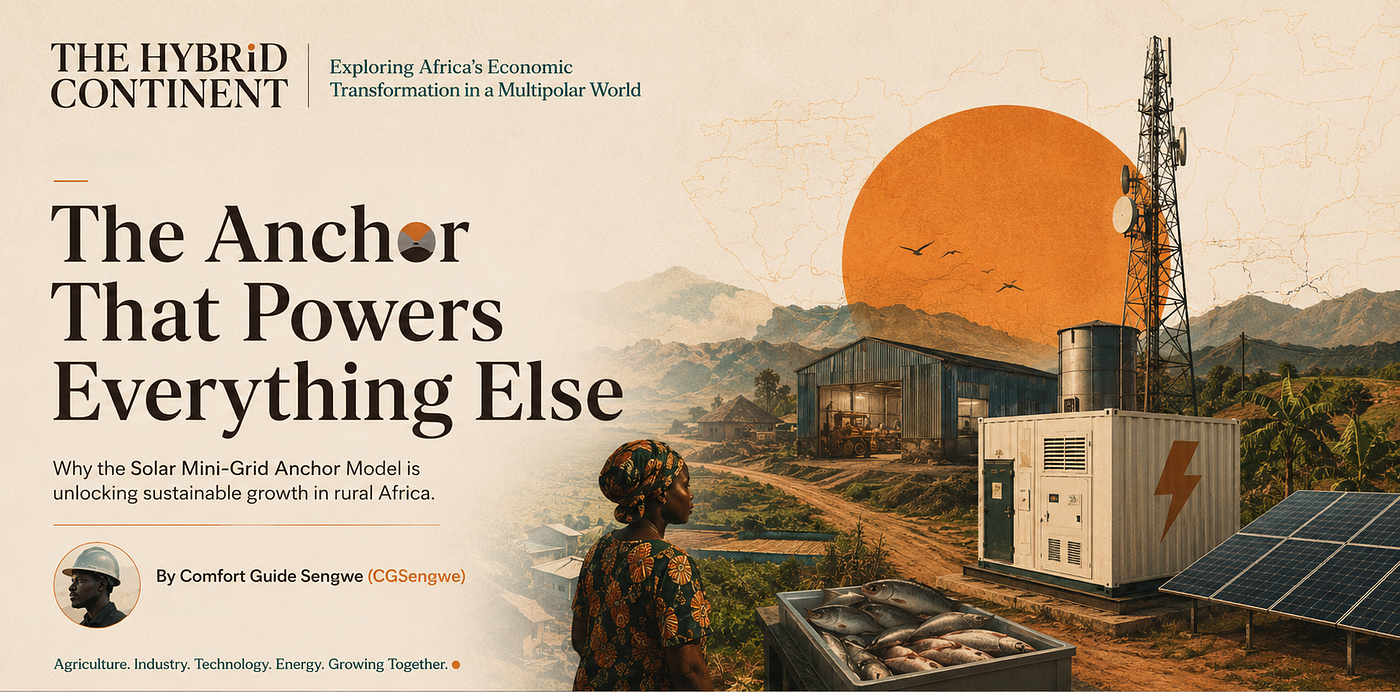
DRC-Zambia Transboundary, Battery and EV SEZ cover generate with with ChatGPT
We talk a great deal about Africa’s critical minerals. The numbers are staggering and well-rehearsed: seventy per cent of the world’s cobalt, significant shares of lithium, manganese, platinum, and graphite. We talk about what these minerals could do if processed locally, if integrated into regional supply chains, if traded under better terms.
But there is a quieter conversation happening in the fine print of a continental framework agreement. And the fine print might matter more than all the headlines.
Let me show you what I mean.

The Fine Print with Teeth
The Requirement No One Is Ignoring
The DRC–Zambia Transboundary Battery and Electric Vehicle Special Economic Zone sits on a strip of land between two countries that together hold most of the cobalt and a great deal of the copper needed for the global energy transition. The zone itself is ambitious in the usual ways: it will process battery precursors, manufacture cells, deploy digital twins, AI-driven quality control, and integrate robotics.
The usual industrial vision, rendered in concrete and capital.
But here is what makes this model different from the dozens of other SEZs I have tracked across the continent.
The continental African Green Minerals Strategy (AGMS) sets a bold benchmark for the sector: companies should spend five per cent of their payroll on local STEM education and skills formation, and one per cent of their sales on research and development. The DRC–Zambia SEZ framework is explicitly designed to operationalise these continental guidelines within the zone.
Not recommended. Not encouraged through tax incentives. Required.
By anchoring the project in this strategy, the services and knowledge economy components are not optional add-ons that companies can quietly drop when margins tighten. They are embedded in the operational and licensing expectations of the zone.
You want access to the world’s most concentrated cobalt supply?
Then help build a generation of Congolese and Zambian engineers.
Now, as always, I should admit a bias here.
I have spent enough time reading SEZ agreements and development frameworks to grow sceptical of mandatory requirements. They look excellent in press releases. They often dissolve during implementation when someone argues that skills formation is not “core business” or that R&D spending can wait until profitability improves.
What gives me a different feeling about this one is the structural leverage involved.
The DRC does not need to offer tax breaks to attract mining companies. It holds seventy per cent of the world’s cobalt. That is not a bargaining chip, the way a tax holiday is a bargaining chip. It is geology. And geology does not negotiate. At least I hope it won’t.
That leverage flows through the entire framework agreement signed by UNECA and Afreximbank. The companies that want to operate in this corridor cannot simply relocate to a more permissive jurisdiction. The minerals are here. The copper is here. The lithium in the broader Southern African region is here. The battery supply chain is being built around these deposits, not the other way around.
So the mandatory spending on STEM and R&D sticks in a way that mandatory spending in other contexts often does not.
It’s a Different Kind of Hybrid Logic
Most hybrid models I have documented connect sectors through infrastructure or markets. The Lobito Corridor carries minerals and agriculture on the same railway. Kenya’s digital-agro-logistics ecosystem grew organically as mobile money and cold chains found each other. Rwanda’s traceability requirements created a market for blockchain firms.
The DRC–Zambia SEZ does something structurally different. It uses the mineral endowment as a forcing mechanism for human capital formation.
The logic runs like this: you cannot access the cobalt without agreeing to help build a knowledge economy. That agreement is enforceable because the cobalt is irreplaceable. So the skills formation happens not as a spillover or a co-location benefit but as a precondition.
I find this worth sitting with because it inverts the usual development story. Typically, you build human capital first, then attract industry. Here, industry is being required to build human capital as a condition of entry. The sequence is reversed. And in a context where the minerals are valuable enough to absorb that requirement without fleeing, the reversal might actually work.
I am careful not to declare success prematurely.
The framework agreement exists. The workshop on MSME and financial institution capacity for battery value chains took place in September 2025. The design documents explicitly incorporate digital twins, robotics, and AI-driven quality control.
But ecosystems of this scale take years to validate.
What I can say is that the architecture is genuinely novel. The reinvestment provisions are not symbolic. The five per cent payroll figure is specific enough to measure. The one per cent of sales on R&D is binding enough to matter. And the involvement of UNECA and Afreximbank gives the framework continental weight rather than bilateral fragility.
The honest assessment, based on the literature and the available documentation, is that this is an intentionally designed hybrid model with teeth. Whether those teeth will bite remains to be seen. But the design is serious.
Here is what I am carrying forward
We spend a great deal of time arguing about whether Africa should industrialise through manufacturing or leapfrog directly to a services-led model. That debate feels increasingly academic when you look at a structure like this one. The DRC–Zambia SEZ does not choose between mineral extraction and digital services. It makes digital services and skills formation a binding constraint on extraction.
The question is not whether the hybrid model will emerge. It is being built. The question is whether other mineral-rich countries will recognise that they have the same structural leverage and choose to use it.
The next time you read about a critical mineral discovery somewhere on the continent, I would invite you to ask one question before the excitement builds:
What is being required in return?
Not encouraged. Not hoped for. Required.
I think that the answer to that question tells you whether you are looking at extraction or transformation.
I am still watching this one. But the fine print gives me a reason to keep watching closely.
—
Comfort Guide Sengwe (CGSengwe)
메타데이터
- post_id
- 3475dee7d79d
- slug
- the-fine-print-that-changes-everything-3475dee7d79d
- url
- https://medium.com/@cgsengwe/the-fine-print-that-changes-everything-3475dee7d79d
- canonical_url
- https://medium.com/@cgsengwe/the-fine-print-that-changes-everything-3475dee7d79d
- author_url
- https://medium.com/@cgsengwe
- status
- ok
- fetched_at
- 2026-06-16 19:09:56