At 67, Finding New Ways To Make Rosh Hashanah Meaningful
And making my 95-year-old father-in-law center stage
ROSH HASHANAH
At 67, Finding New Ways To Make Rosh Hashanah Meaningful
And making my 95-year-old father-in-law center stage
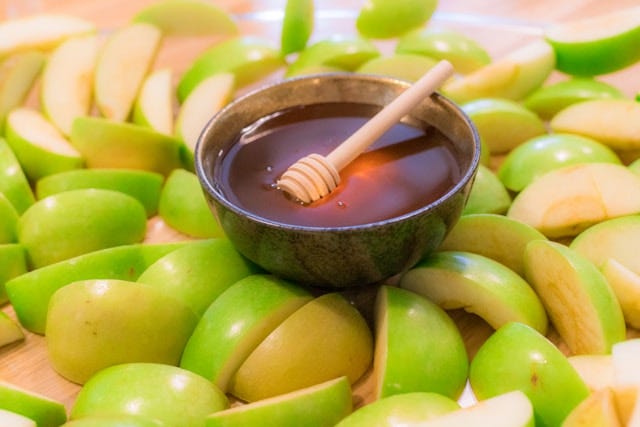
Photo by Igal Ness on Unsplash
Preparing for Rosh Hashanah, the Jewish New Year, is a big job. There are the physical aspects, which, for me, translate to lots of cooking. Imagine a homecooked meal for 20, and the mix is divided between carnivores, pescatarians, and vegetarians. That will be my job in the days ahead.
There are significant emotional aspects to the holiday. I think about my parents and how they brought the holidays to us in a way that marked us then and still now as adults. My parents had to manage six of us, but they made it look easy and feel joyous.
One year, right before Rosh Hashanah, we spent some time playing touch football in our narrow, long hallway. My brother gave too big a shove, and my other brother plopped into the wall and blew out some plaster, creating a large hole. My parents were not happy but their only admonition was, “No more football inside the house.” That was it. Three days later, after Rosh Hashanah, the wall was repaired.
I consider their reaction as I struggle with practical aspects of the holiday. There are the logistics of my kids’ arrival, whether my granddaughter has transitioned from crib to bed, and silly things like whether my husband will hear me when I ask him to go to the basement and bring up the chicken.
The odds are against that because he is too busy singing cantorial melodies in preparation for leading the congregation. I will likely get crickets or lovely Rosh Hashanah prayers, but what I need is the damn chicken to save my knees from another trip down the stairs.
At 67, I manage my body differently. I know I can’t stand in the kitchen for 8 hours and not feel the effects. I am smarter, but not as smart as my sister, who gave me this advice:
“Cook less and take a break from writing. Make your life simpler.”
Much of her advice makes sense. Simpler recipes and fewer of them are smart. Everyone is trying to eat healthier anyway. I practice “simple” elsewhere in my life, so why not here? When I go to the gym, I choose fewer exercises and do them well. When I dress, I wear jeans and one of my many L.L. Bean teeshirts — all the same but in different colors.
So what of my sister’s words did I not accept? Taking a break from writing.
I had a Winnie the Pooh moment where you “think, think, think” to figure out something difficult. Why didn’t I want to suspend writing for one week?
It’s not about the money. I am not a big earner on Medium, and while the payout can be nice, it is not life-altering.
It is not about hearing from my following. I do hear from folks and appreciate the community of friends and writers I’ve met on Medium. They continue to enrich my life, but the feedback comes more in trickles as a nice “add” — not a downpour.
But the “think, think, think” resulted in an “ah-ha” moment. There were two reasons I wouldn’t suspend my writing.
Reason one: It’s how I make sense of my world.
I don’t have a therapist. I do have an excellent husband, but he has only so much energy for conversation. The best way for me to decipher the many peculiar aspects of our world is to write about them.
Writing also provides an outlet where I can place my angst, maybe find some humor, and hopefully not weigh readers down.
In short, the laptop is my therapist.
Hmm… now that’s a discovery.
Reason two: I am planting seeds for my next generation.
I have a lot to say—often more than my kids want to hear. But there is a next generation in process, and I want them to hear me. I want them to know my fictional characters because I think these characters can be a guidepost.
Alfred, Hannah, and Joey — my teen characters — understand why it’s important to hear unspoken words. They know people can feel things strongly and not express them. My characters also understand why humor can boost the mood of tense people and change the vibe. My favorite, though, is why the generosity of spirit is more important than the generosity of things.
Someday, when I’m not here, it is my hope that my kids will honor me by sharing my words with their children and within their community. Maybe someone will say, “Wow! I know what she means.”
Maybe a parent’s job will just have been made easier.
On this Rosh Hashanah, I’ve gone one step further.
Words have been on my mind so much that over the last month, I’ve been interviewing my father-in-law, who is 95 and has lived a very full life. He was ten and living in Stuttgart when Kristallnacht%20or%20the,from%20the%20Hitler%20Youth%20and) occurred. He recalls walking to school and seeing broken glass everywhere. In 1939, his family caught one of the last ships and immigrated to the United States.
Bernie is also a wonderful bassoon player with a deep appreciation of classical music. He knows beauty and lives it. I have been working to capture his voice so that when they are tired of reading me, they can read what Bernie has to say. His story embodies hope, resilience, and survival, which feels perfect for Rosh Hashanah.
My ask for my family
This year, I will ask my thirty-something children to think of Bernie and one of his many stories when they hear the shofar. Specifically, I want them to visualize their Saba (Hebrew for grandfather) on the long last note when the shofar is blown.
Four different shofar sounds are blown on Rosh Hashanah, each with its own significance. The first note a congregant hears is called “tekiah” and is a simple, clean blast. The tekiah is usually interpreted as a call for attention.
After tekiah, a very different note called “shevarim” is sounded, which yields three medium-length blasts. The sound is more plaintive and has been considered a moment to look inward. Some believe the notes are wailing cries from the heart seeking to connect.
After the wistful sound of shevarim, the next blast we hear is “truah,” which is full of energy. Nine staccato notes are blown in quick succession. It is the hardest sound to achieve but is crisp and distinct when done correctly.
The interpretation of truah varies. For some, it represents brokenness and uncertainty and is a natural outflow from shevarim. We have taken stock, felt humility, and are considering what is next. For others, it might be more of a straight shot toward inspiration, beckoning us to take on our world and battle for something better.
The final sound in the sequence is “Tekiah Gedolah,” which in Hebrew means “large tekiah.” It is a long, single, powerful sound that can last as long as a minute when done with enough wind.
When my children hear the Tekiah Gedolah, I want them to think of Bernie. His life is an affirmation, reminding us, “We can do this.” He is the human incarnation of long and powerful in a world that was not kind to his family.
We are in a tough season, and amidst all the noise and challenges of the times, I want my kids to find the note that will restore their faith in the future.
Wishing my friends a meaningful and sweet new year.
*Shanah Tovah U’metukah,* as we say in Hebrew.
메타데이터
- post_id
- 348b7ebf5a7f
- slug
- at-67-finding-new-ways-to-make-rosh-hashanah-meaningful-348b7ebf5a7f
- url
- https://medium.com/crows-feet/at-67-finding-new-ways-to-make-rosh-hashanah-meaningful-348b7ebf5a7f
- canonical_url
- https://medium.com/crows-feet/at-67-finding-new-ways-to-make-rosh-hashanah-meaningful-348b7ebf5a7f
- author_url
- https://medium.com/@jebstein
- status
- ok
- fetched_at
- 2026-07-22 17:47:34