Unique Identity, Distinct Needs: Coastal Karnataka’s Plea for Statehood
As the upcoming delimitation process approaches, I hold the viewpoint that Bharath could greatly benefit from the creation of smaller…
Unique Identity, Distinct Needs: Coastal Karnataka’s Plea for Statehood
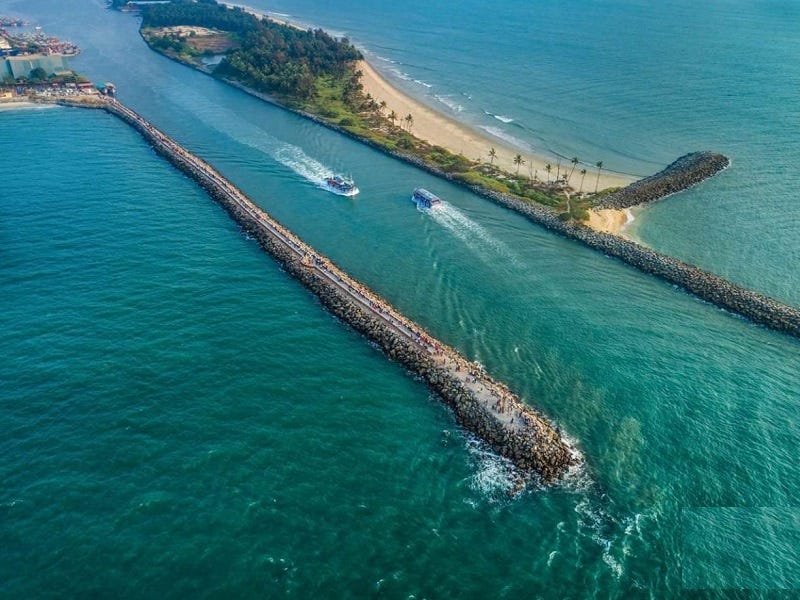
As the upcoming delimitation process approaches, I hold the viewpoint that Bharath could greatly benefit from the creation of smaller states carved out of the current larger ones. This approach could lead to improved administrative efficiency. For instance, states like Uttar Pradesh, Madhya Pradesh, Maharashtra, Gujarat, Tamil Nadu, West Bengal, Bihar, Rajasthan, and Karnataka could be further divided into smaller states in order to increase the approachability of the public representatives to their voters. This division into smaller states would not only enhance the accountability of politicians to their constituents but also provide greater autonomy for local considerations within the administration. The establishment of smaller states could also lead to more effective resource distribution from the central government and heightened responsibility of representatives towards their voters.
Prior to presenting my case for advocating a distinct state for Coastal Karnataka, I want to emphasize that my stance is not one of separatism or secessionism. I firmly believe that the region between the Himalayas and the Indian Ocean belongs to the Hindu Civilization. My advocacy for a separate state is solely grounded in administrative rationale. While there have been previous calls for a Tulunadu State encompassing Tulu-speaking areas within the undivided Dakshina Kannada district, my proposal pertains to a state formed based on geographical and cultural similarities present in the coastal districts of Karnataka.
My affinity for the Tulu language and culture is undeniable, but my appeal for a larger region spanning from Karwar to Sullia in Coastal Karnataka is driven solely by administrative considerations. Additionally, if feasible without complications, I also propose the inclusion of Tulu/Kannada-speaking areas of Kasaragod district in Kerala within this new state, which I’ve referred to as Karavali. While I don’t advocate for linguistic divisions of states, as they could potentially foster division, I am supportive of the concept of smaller states, as it can lead to improved governance and administration.
Before delving deep into the matter, it’s important for us to know the Historical background about the formation of the Karnataka State. Prior to Independence, the present geographical area comprising Karnataka was formed by assembling erstwhile Mysore Kingdom, Kannada speaking areas of Bombay Province, Madras Province and Hyderabad Kingdom. If you travel across the state, you could still see a prominent difference in the political and social demands of the people in these regions despite the unification of the state based on the language. Hence a demand for a separate statehood for Karavali Karnataka arises.
With the exception of the shared Kannada language, Karavali Karnataka lacks cultural similarities with the rest of Karnataka. The presence of the Western Ghats geographically isolates this region from the surrounding areas. Moreover, the communities residing in Karavali Karnataka are distinct and are not found in other parts of Karnataka. This uniqueness has led to an identity crisis concerning the political representation of the people in this region.
As someone deeply interested in politics, I believe that Karavali Karnataka faces challenges as a constituent of the larger state. Notably, Karavali Karnataka contributes a significant share of the state’s revenue per capita, second only to Bangalore. However, it consistently receives a disproportionately low budgetary allocation from the state government, particularly when the INC is in power.
I don’t oppose the concept of redistributing resources from resource-abundant regions to those that lack resources. However, my concern lies in how these resources are often misappropriated by corrupt politicians in these underdeveloped regions, rather than being effectively utilized for the intended development purposes.
Returning to the pivotal reason for my desire for separate statehood for Karavali Karnataka, it’s primarily due to the subpar governance provided by the Karnataka State government. In contrast to the rest of Karnataka, where corruption has unfortunately become an accepted norm, and where corrupt politicians are often re-elected to the assembly, Karavali Karnataka has shown a strong commitment to ensuring that corrupt politicians, regardless of their political affiliation, do not get the chance to represent them again.

Bhootha Kola Culture peculiar to Karavali Karnataka
When we scrutinize the outcomes of the 2023 elections, it becomes evident that Karavali Karnataka chose to remove leaders from the BJP who were mired in allegations of corruption. In contrast, despite a series of successive ED and IT raids on numerous INC leaders in the rest of Karnataka, these actions had little impact on the election results. If you were to inquire why these corrupt politicians are repeatedly re-elected, the standard response is that everyone in politics is tainted by corruption.
One significant impact of corruption is that it often results in government officials from other regions of the state, including inspectors, RTO officers, VAs, Tehsildars, and various state government officials, being appointed in Karavali Karnataka. Furthermore, an examination of government offices in Karavali Karnataka would reveal a striking trend — a minimal likelihood of individuals in Group B or Group A positions being from the region itself, with over 80% of these officials hailing from other parts of Karnataka. In the event of a new state’s formation, these positions could be filled by Kannadigas from Karavali, potentially leading to greater accountability and improved job opportunities for the local population.
The government’s recent approach of offering freebies as part of its appeasement politics did not resonate well with the people of Karavali Karnataka.
The residents of this region firmly believe that the government’s primary focus should be on effective governance rather than engaging in business ventures. This perspective is evident in various sectors across the area. For instance, Karavali Karnataka boasts the most efficient transport system among all South Indian sub regions or zones. Why is this the case? It’s because it’s driven by private businesses. The open market and healthy competition have not only kept prices in check but have also ensured the profitability of these businesses. In contrast, government-run state transport corporations, despite receiving budgetary support, have consistently operated at a loss.
A smaller state could provide greater political opportunities for individuals from Coastal Karnataka. Currently, the dominance of certain communities in larger Karnataka often limits the political aspirations of those from the region. This not only restricts the potential contributions of leaders from Karavali Karnataka to the state but also denies its people adequate political representation in the government.
A notable distinction between Karavali Karnataka and the rest of the state lies in the public’s acceptance of Hindi. Despite its non-constitutional status as a national language, Hindi enjoys widespread acceptance among the electorate in Coastal Karnataka.
Additionally, the region’s inclination towards Hindu Nationalism, in contrast to the rest of Karnataka, serves as another driving force behind the demand for separate statehood. Karavali Karnataka faces notable challenges due to differing preferences in the rest of Karnataka regarding their stance on Hindutva.
Close proximity to ISIS influenced, Muslim Majority districts of Kerala and presence of over 30 % Muslims in 9 of the 16 Assembly constituency in Karavali Karnataka(8 in Dakshina Kannada district, 5 in Udupi district and Karwar, Kumta and Bhatkal of Uttara Kannada district), presents the region with acute security problems in comparison with the rest of the Karnataka. Having a separate state could help in effectively handling the imminent threat from fundamental Islamism.

Kukke Shri Subramanya Temple- Karnataka's largest revenue generating temple
A core demand among Hindu nationalists in Karavali Karnataka centers on the autonomy of Hindu temples. The region is home to numerous revered shrines, yet these are often viewed as mere revenue sources by the Karnataka government. Instances of mismanagement and the diversion of temple funds for non-religious purposes have fueled public discontent. It’s widely perceived that governments maintain control over temples to benefit political cronyism. Separate Karavali Karnataka state would liberate temples from government interference, allowing for greater administrative independence, economic growth within temple complexes, and increased resources dedicated to Hindu religious activities.
With a larger landmass and population than Tripura, the proposed state of Karavali Karnataka is expected to be twice the size of Goa. While the current Gross State Domestic Product (GSDP) of the proposed Karavali Karnataka state is anticipated to be modestly lower than Mizoram’s, there’s potential for substantial growth. A new state government could introduce policies to attract investments, similar to Goa’s success, leading to a significant boost in the GSDP.
Karavali Karnataka stands apart in terms of its distinct requirements when compared to the rest of the state. This region has achieved development across various facets, including infrastructure and Human Development Index (HDI). With this new state formation, there’s an opportunity to harness its resources for energy self-sufficiency by making strategic investments in renewable and clean energy. Given the abundant sunshine and rainfall in this area, it can play a pivotal role in hydro power, tidal, and solar energy.

Roof Top Solar Energy Generation
Furthermore, the state can allocate resources for the establishment of world-class sports infrastructure and research and development institutions as this region produces the highest number of engineers and doctors per capita compared to elsewhere in South India.
While I may have overlooked various other potential advantages of creating the new states, I am firmly convinced that the division of Karnataka into Uttara Karnataka, Dakshina Karnataka, and Karavali Karnataka, with Bengaluru designated as a Union Territory, will usher in comprehensive development for all three regions and provide improved governance to the Kannada-speaking population of Bharath.
Rather than resorting to protests, which often contradict democratic principles, a more effective approach for advocating a separate Karavali Karnataka state lies in leveraging the region’s highly educated populace and strong social media presence. The demand for statehood should be rooted in administrative efficiency and presented as a means to enhance governance nationwide. Given Karavali Karnataka’s history of peaceful and orderly conduct, it is anticipated that the pursuit of this goal will be achieved through dialogue and persuasion, rather than disruptive actions. This article aims to stimulate thoughtful consideration of the potential benefits of a separate state among the people of Coastal Karnataka, ultimately fostering a constructive engagement with the central government.
Consider the scenario where three states primarily speak Kannada. Is this not a favorable situation? This serves as a counterpoint to those who argue that people who share a common language belong to the same state. It prompts the question: Is having a larger number of states with the same language less desirable than having a single state with that language?
메타데이터
- post_id
- 348e5eefb1d6
- slug
- unique-identity-distinct-needs-coastal-karnatakas-plea-for-statehood-348e5eefb1d6
- url
- https://medium.com/@padmarajshetty/unique-identity-distinct-needs-coastal-karnatakas-plea-for-statehood-348e5eefb1d6
- canonical_url
- https://medium.com/@padmarajshetty/unique-identity-distinct-needs-coastal-karnatakas-plea-for-statehood-348e5eefb1d6
- author_url
- https://medium.com/@padmarajshetty
- status
- ok
- fetched_at
- 2026-07-27 15:36:22