Guardians of AI: Nishanshi Shukla of Western Governors University On How AI Leaders Are Keeping AI…
An Interview With Gabriel Borden
Guardians of AI: Nishanshi Shukla of Western Governors University On How AI Leaders Are Keeping AI Safe, Ethical, Responsible, and True
An Interview With Gabriel Borden
The difference is that I am helping build not only technology, but also the guardrails, questions, policies, and frameworks that make technology inclusive and worthy of people’s trust.
As AI technology rapidly advances, ensuring its responsible development and deployment has become more critical than ever. How are today’s AI leaders addressing safety, fairness, and accountability in AI systems? What practices are they implementing to maintain transparency and align AI with human values? To address these questions, we had the pleasure of interviewing Nishanshi Shukla.
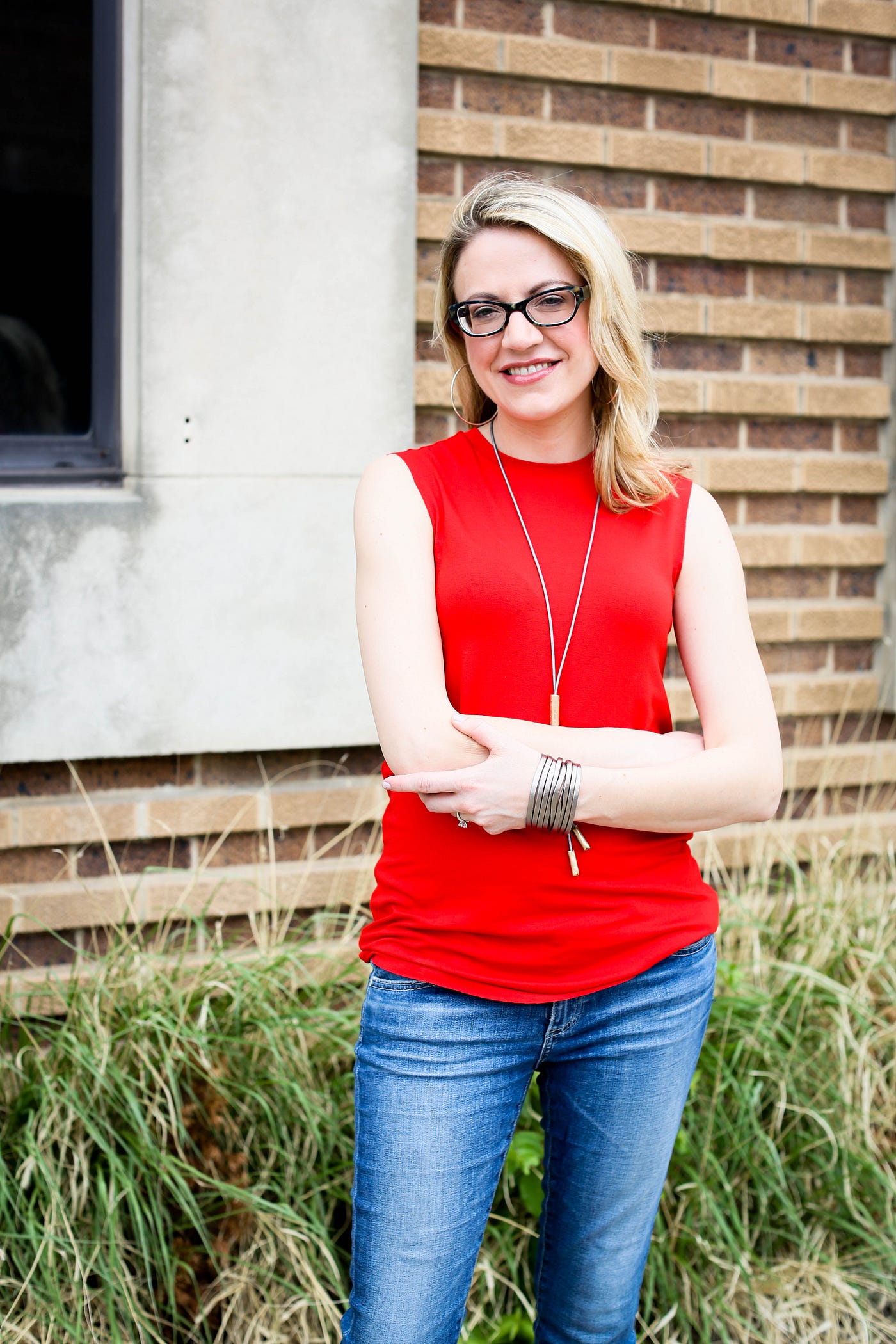
Nishanshi Shukla is an interdisciplinary sociotechnical researcher with a PhD in Critical data/AI studies and a background in computer science. She works as the AI Ethicist at Western Governors University where she undertakes AI ethics and safety research in responsible innovation to ensure student equity.
Thank you so much for joining us in this interview series! I know that you are a very busy person. Before we dive in, our readers would love to “get to know you” a bit better. Can you tell us a bit about your ‘backstory’ and how you got started?
I never set out to become an ethicist. I started my career as a computer science engineer because I loved solving problems and building things. Like many people who enter technology, I was fascinated by what innovation could make possible. I wanted to create systems that enhanced people’s lives.
As my education and research evolved, I became increasingly interested in the socio-cultural side of technology. I found myself asking questions that went beyond performance and efficiency. Who benefits from a technology? Who is the default user? Who might be excluded? What assumptions are built into the systems we create? I started understanding technology as a sociotechnical system.
One of the most important realizations in my career came when I began studying artificial intelligence (AI). I noticed that many AI systems were achieving functional goals that they were designed for, yet they produced unfair and unsafe outcomes for certain groups of people. The technology itself wasn’t necessarily broken, but it was reinforcing the societal fabric and power structures around it. That is, the problem often came from the data, assumptions, processes, and decisions that shaped it.
That realization changed everything for me. I became interested in bias, fairness, safety, and the social impact of emerging technologies. Eventually, that path led me to Western Governors University (WGU), where I serve on the Program Experience Strategy team within Program Development. Today, I still think of myself as a builder. The difference is that I am helping build not only technology, but also the guardrails, questions, policies, and frameworks that make technology inclusive and worthy of people’s trust.
None of us can achieve success without some help along the way. Is there a particular person who you are grateful for, who helped get you to where you are? Can you share a story?
I have been fortunate to learn from many mentors throughout my journey. One professor in particular challenged me to think differently about innovation. Rather than asking whether a technology could be built, they encouraged me to ask whether it should be built, under what conditions, and with which considerations.
At first, that seemed like a simple distinction. Over time, I realized it was one of the most important questions anyone working in technology can ask. That lesson taught me that innovation and responsibility are not competing goals. The most impactful innovations are often the ones that consider varied human realities and differential consequences from the very beginning. That mindset continues to guide my work today.
You are a successful business leader. Which three character traits do you think were most instrumental to your success? Can you please share a story or example for each?
I would have to say curiosity, courage, and care.
Curiosity has shaped every stage of my career. I started in engineering, moved into communications research, and eventually focused on critical studies of AI systems because I was constantly asking questions. I wanted to understand not only how technology works, but how it influences people and society. That curiosity continues to drive me. Every new technology presents opportunities, but it also raises important questions that deserve thoughtful exploration.
Some of the most important moments in my career have required the courage to ask difficult questions. There have been times when a team was excited about moving quickly, and I was the person raising concerns about fairness, accessibility, or unintended consequences. Those conversations are not always easy. But I have learned that trust is much harder to rebuild than it is to protect. Sometimes, responsible innovation requires slowing down long enough to ensure we are getting it right.
Care helps me remember who we are ultimately building for. At WGU, I often think about the students we serve. I think about a first-generation student logging in after work. I think about an English language learner encountering unfamiliar terminology. I think about a military learner balancing school with family and service obligations.
When evaluating AI systems, I ask whether those students will have an equitable experience. Every technology is a sociotechnical system. If it works well for some people but creates barriers for others, then our work is not finished.
Thank you for all that. Let’s now turn to the main focus of our discussion about how AI leaders are keeping AI safe and responsible. To begin, can you list three things that most excite you about the current state of the AI industry?
The three things that excite me the most about current state of AI Industry are:
- The opportunity and the challenge to make this transformational technology equitably beneficial to all publics.
- The opportunity and the challenge to ethically deliver personalized solutions in the remotest parts of the world.
- The opportunity and the challenge to build safe sociotechnical systems that acknowledge and build on mutual dependence of technology and society over one another.
Conversely, can you tell us three things that most concern you about the industry? What must be done to alleviate those concerns?
I would group my concerns into three categories: responsible adoption, transparency, and equitable impact.
Moving Forward Without Governance — Organizations are adopting AI at an incredible pace. Innovation is important, but governance cannot be an afterthought. We need clear accountability structures, risk and impact assessment frameworks, and leadership teams that treat responsible AI as a strategic priority rather than a compliance exercise.
Lack of Explainability and Observability — Too many people interact with AI systems without understanding how decisions are being made. Explainability helps build trust, and observability helps keep systems in check to maintain that trust. People should know when AI is involved, what information is being used, and what limitations exist.
Growing Inequality — AI has tremendous potential to expand access and opportunity. At the same time, it could deepen existing inequalities and produce differential safety if only certain populations benefit. We need to invest in critical AI literacy, inclusive design, equitable access, and thorough safety evaluations so that the benefits of AI are broadly shared.
Leading an AI-driven organization, how do you embed ethical principles into your company’s overall vision and long-term strategy? What specific executive-level decisions have you made to ensure your company stays ahead in developing safe, transparent, and responsible AI technologies?
One thing I appreciate about WGU is that ethics is not treated as a final checkpoint. I am involved in the earliest stages of innovation. As part of the Program Experience Strategy team, I work alongside colleagues who are exploring new approaches to learning, assessment, and student support. Together, we evaluate ideas through multiple lenses, including fairness, accessibility, transparency, safety, and potential unintended consequences.
One of the most exciting areas of our work involves developing synthetic student agents that help us identify where learning experiences may unintentionally create barriers for certain student populations. Our goal is simple. We want innovation to support and benefit all students, not just the dominant idea of a “normative student.” Ethics is not about saying no. It is about asking better questions and embedding procedural checkpoints so that we can build solutions that deserve the trust of all students.
Have you ever faced a challenging ethical dilemma related to AI development or deployment? How did you navigate the situation while balancing business goals and ethical responsibility?
One lesson I have learned is that ethical dilemmas rarely announce themselves as ethical dilemmas. More often, they appear as opportunities. A team may identify a way to automate a process or deploy a new capability that creates efficiencies and exciting possibilities. The challenge is determining whether those benefits come with unintended risks.
In several projects, we have paused to conduct additional testing, improve dataset representation, or introduce stronger oversight mechanisms before moving forward. Those decisions sometimes require more time and effort, but they help ensure that short-term gains do not create long-term harm.
Many people are worried about the potential for AI to harm humans. What must be done to ensure that AI stays safe?
I believe the future of AI will be determined less by the technology itself and more by how we use it and the values we choose to embed within it. First, humans must remain accountable. AI can inform decisions, but responsibility should always stay with people.
Second, organizations need strong and comprehensive governance structures that identify risks early for all stakeholders, continuously monitor oversight and establish clear processes for unintended consequences.
Third, transparency must become standard practice. People deserve to know when AI is being used, what is the extent of its involvement, and how it may affect them.
Finally, we need broader public understanding of AI. An informed society is better equipped to build and use these technologies responsibly and thoughtfully.
Despite huge advances, AIs still confidently hallucinate, giving incorrect answers. In addition, AIs will produce incorrect results if they are trained on untrue or biased information. What can be done to ensure that AI produces accurate and transparent results?
Accuracy starts with data quality and diversity, but it cannot stop there. AI systems should also consider situated experiences of all different stakeholders and not reproduce homogeneity. They should be continuously monitored, evaluated, and tested because performance can change over time. Organizations should conduct regular audits, update ground truth documents, and establish mechanisms for identifying and correcting irregularities.
Clearly defined and executable principles for responsibility and safety are equally important. AI systems need to be built and tested in alliance with these organizational principles to produce outputs that work for all. Moreover, people should be educated with the source of information, the limitations of the system, and the degree of confidence associated with outputs. Trust grows when people can understand not only what a system is recommending but why.
Here is the primary question of our discussion. Based on your experience and success, what are your “Five Things Needed to Keep AI Safe, Ethical, Responsible, and True”? Please share a story or an example for each.
1. Reliability through Multi-disciplinary Teams
AI systems should be built with collaboration between people from different domains and expertise. Responsible and reliable systems are a result of multi-disciplinary collaboration between data scientists, engineers, security specialists, subject matter experts, humanities scholars, social scientists, designers, and ethicists. Products made by people with diverse backgrounds and knowledge often consider and build for their diverse users.
2. Inclusive Design
Building ethical and responsible systems involve challenging normative assumptions and moving away from homogeneity and hegemony. It involves asking hard questions about the assumptions we are making and people we are ignoring. Challenging assumptions right from the design stage and including inputs from users help build more fair and equitable systems.
3. Human Accountability and Oversight
Automation is not offloading decisions or responsibility. Humans with appropriate skills and expertise need to be involved at every stage of building and executing AI systems. A human in the relevant position with the right controls must hold accountability for AI outputs.
4. Fairness and Safety Pipelines
Ensuring ethical and safe AI systems requires carefully designed and thoroughly implemented safety pipelines. It involves well-crafted risk identification practices, harm taxonomies, bias and fairness testing methodologies, context and consequence mapping, risk tolerances, safety evaluations for diverse groups, and continuous monitoring. Safety pipelines ensure that outputs of AI systems are fair, safe, and true for all users.
5. Human-centric
AI systems should be built for specified purposes but with considerations of all humans affected by it. It should be built by keeping reliability, robustness, and usability for humans in mind. It can be done by measuring potential impacts, ensuring consistent outputs backed by grounded logic, and mapping best and worst-case consequences for all user groups in case of any inconsistencies. Designing these systems by keeping humans at the center ensure building systems with safe, ethical, responsible, and true outputs.
Looking ahead, what changes do you hope to see in industry-wide AI governance over the next decade?
I hope that industry-wide governance takes a more cross-disciplinary approach where AI governance considers safety alongside security, harm alongside risk, and different societal impacts of AI alongside policy. I also hope that over the next decade, AI governance transcends from a nice-to-have to an absolute requirement.
What do you think will be the biggest challenge for AI over the next decade, and how should the industry prepare?
The biggest challenge for AI over the next decade is resisting the urge to anthropomorphize or use AI as a replacement for humans. Any technology can serve its purpose best when it stays as a tool and not as an extension of humane presence. In other words, AI is a tool which, when used correctly, can solve many problems. But, if given humane characteristics or thought of as an equivalent to human presence, it can lead to catastrophic harms. Industry should dive deeper into AI safety research and establish robust governance practices.
You are a person of great influence. If you could inspire a movement that would bring the most good to the most people, what would that be? You never know what your idea can trigger. :-)
I would inspire a movement focused on AI literacy for everyone. My hope is that people will feel empowered by AI, rather than intimidated by it. I think about the students we serve every day. Many are changing careers, raising families, serving in the military, or returning to school after years away from formal education. They deserve the opportunity to understand the technologies that are increasingly shaping their futures.
AI literacy is about more than technical knowledge. It is about the combination of skepticism and confidence. It is about helping people ask questions, critically evaluating information, recognizing limitations, and participating in decisions that affect their lives. If we can create a future where more people feel informed, empowered, and included in conversations about technology that impact them, we will create a future that is not only more innovative, but more equitable as well.
How can our readers follow your work online?
Readers can learn more about my work and follow the latest from Western Governors University at wgu.edu.
Thank you so much for joining us. This was very inspirational.
About The Interviewer: Gabriel Borden is an American investor, advisor, and entrepreneur. He is the managing partner of Arrow Fund, a private investment firm. In that role, he has overseen investments spanning technology companies, private markets, media, and special-situations opportunities. Borden attended Loyola Marymount University from 2012 to 2016, where he studied business. At Arrow Fund, Borden leads a firm focused on technology, private markets, and event-driven opportunities. The fund has invested in a number of private companies tied to innovation and growth sectors. Publicly reported investments have included Polymarket, the prediction market platform; SpaceX, the aerospace company founded by Elon Musk; and Valar Atomics, among other private technology businesses. The firm has also expanded beyond minority investments into direct ownership of operating companies. In a recent transaction, Arrow Fund acquired a majority interest in LeVecke, a California-based bottling and beverage manufacturing company. The deal signaled a broader strategy that combines financial investing with hands-on ownership in established industrial businesses. Before launching Arrow Fund, Borden held senior roles managing capital for prominent entrepreneurs and private investors. He previously served as managing director of the family office of Brock Pierce, where he worked on investment management and portfolio strategy across technology, media, and real assets. Family offices, which manage wealth for individuals or families, often invest with longer time horizons than traditional funds and can move across industries with greater flexibility. In that setting, Borden’s responsibilities included evaluating opportunities and overseeing portfolio decisions in multiple sectors. Borden comes from a family involved in creative and design fields. He is the son of filmmaker Bill Borden, a producer known for commercially successful films including the High School Musical series, La Bamba, Desperado, and Kung Fu Hustle. His mother, Melinda Gray, is an architect and the founder of Gray Matter Architecture, a firm focused on modern design. That background placed him in an environment shaped by both entertainment and entrepreneurship, industries that often rely on risk-taking, financing, and long-term project development. While Borden’s own career has centered on investing rather than film or architecture, those influences connect his professional path to a broader family history of business and creative work. He is married to Sydney Borden, and the couple live in Santa Monica, California. As private markets continue to attract more capital and expand their reach into sectors once dominated by public companies or strategic buyers, investors like Borden represent a model of finance that blends traditional portfolio management with direct ownership and operational involvement.
메타데이터
- post_id
- 34ca1140720c
- slug
- guardians-of-ai-nishanshi-shukla-of-western-governors-university-on-how-ai-leaders-are-keeping-ai-34ca1140720c
- url
- https://medium.com/authority-magazine/guardians-of-ai-nishanshi-shukla-of-western-governors-university-on-how-ai-leaders-are-keeping-ai-34ca1140720c
- canonical_url
- https://medium.com/authority-magazine/guardians-of-ai-nishanshi-shukla-of-western-governors-university-on-how-ai-leaders-are-keeping-ai-34ca1140720c
- author_url
- https://medium.com/@gabriel_borden
- status
- ok
- fetched_at
- 2026-06-29 01:02:39