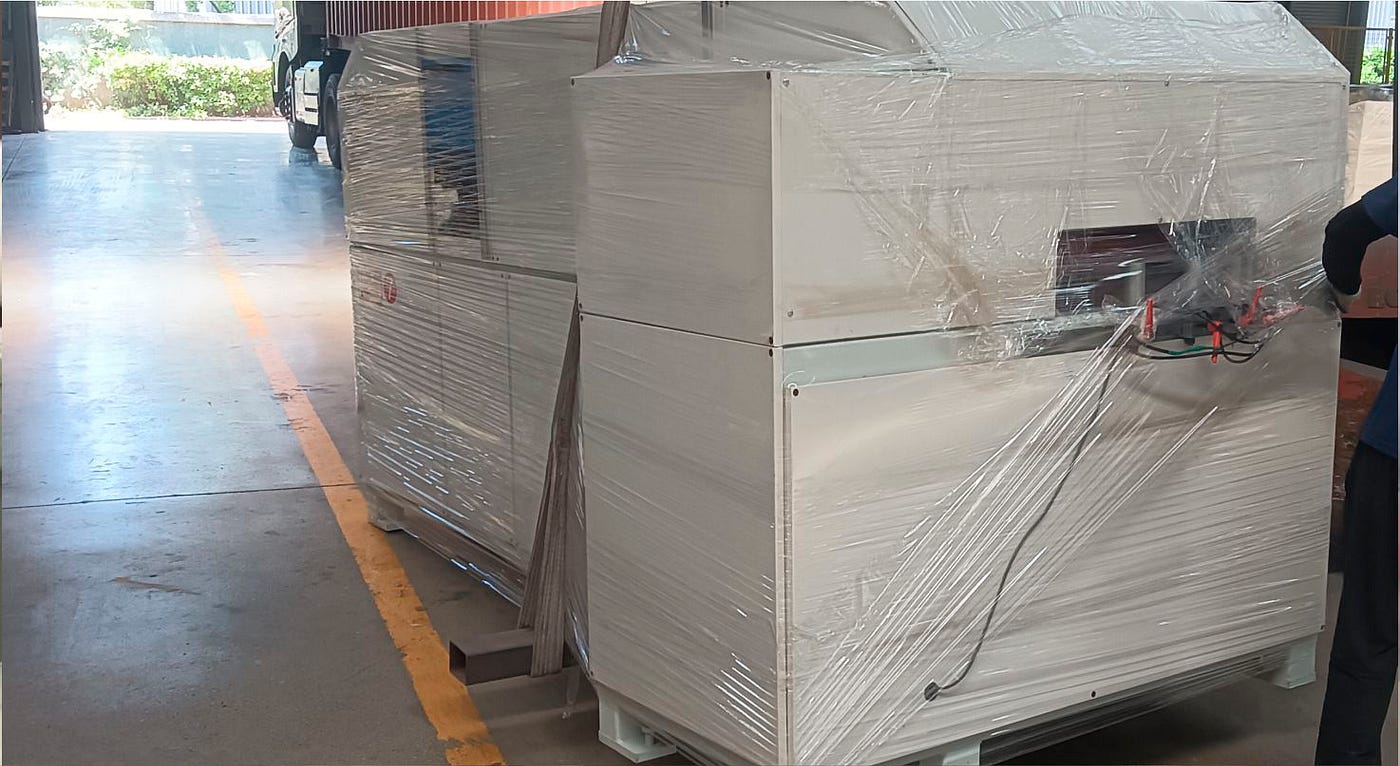
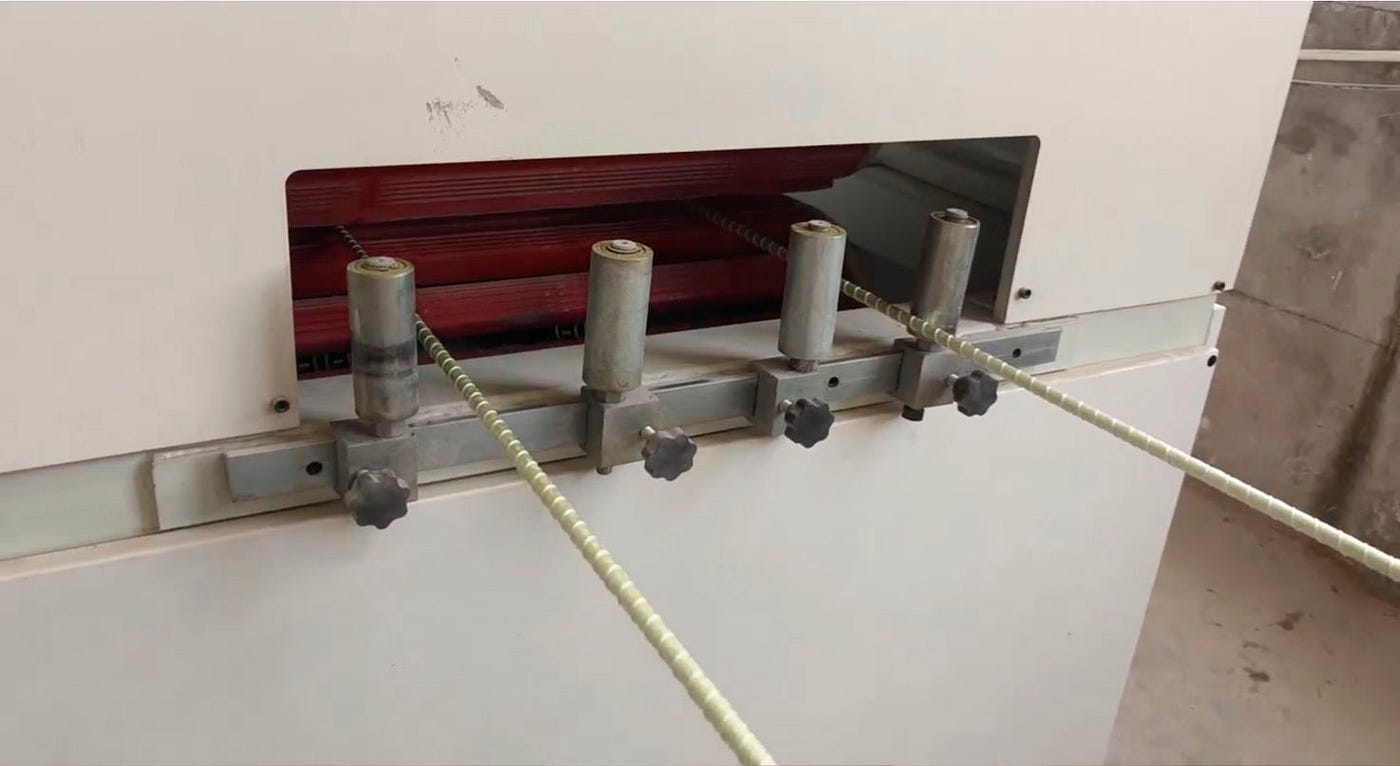
How to Make Fiberglass Rebar: Materials, Process and Production Technology
Introduction
How to Make Fiberglass Rebar: Materials, Process and Production Technology
Introduction
As the construction industry continues to seek stronger, lighter, and more durable reinforcement materials, **fiberglass rebar** has become an increasingly popular alternative to traditional steel reinforcement. Unlike steel, which can corrode when exposed to moisture, chlorides, or aggressive chemicals, fiberglass rebar offers exceptional corrosion resistance while maintaining high tensile strength and a significantly lower weight.
These advantages have led to the widespread adoption of FRP (Fiber Reinforced Polymer) rebar in bridges, tunnels, marine structures, seawalls, water treatment facilities, and other infrastructure projects where long-term durability is a critical requirement. However, many people are familiar with the benefits of fiberglass rebar without fully understanding how it is actually manufactured.
This article provides a complete overview of how to make fiberglass rebar, including the raw materials used, the manufacturing process, and the production technologies that make modern FRP rebar possible.
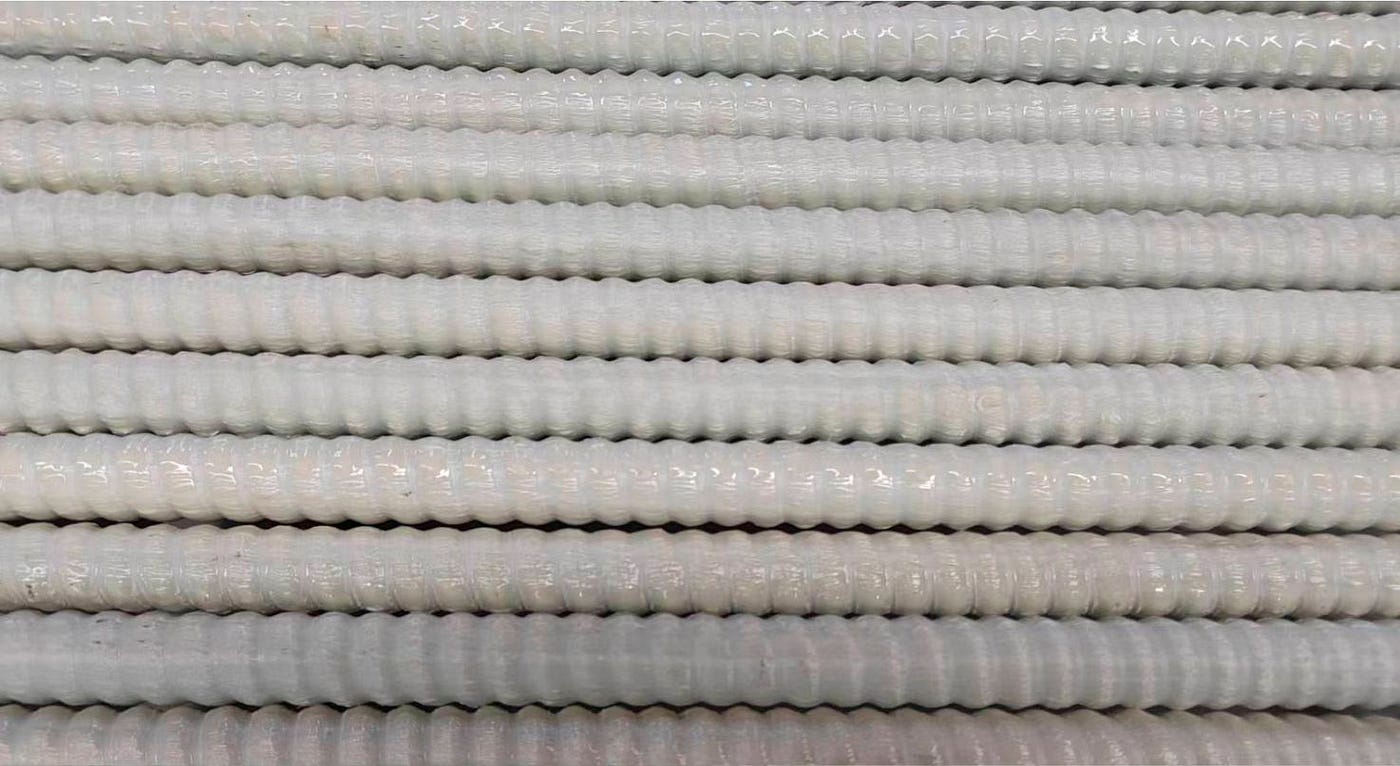
What Is Fiberglass Rebar?
Fiberglass rebar, often referred to as GFRP rebar, is a composite reinforcement material made by combining continuous fiberglass reinforcement with a thermosetting resin matrix. The fibers provide the majority of the tensile strength, while the resin binds the fibers together, protects them from environmental damage, and transfers loads throughout the structure.
Unlike conventional steel reinforcement, fiberglass rebar does not rust, is electrically non-conductive, and offers excellent resistance to chemicals and moisture. These characteristics make it particularly attractive for projects located in coastal regions, industrial facilities, and other environments where corrosion is a major concern.
The performance of fiberglass rebar depends not only on the quality of the raw materials but also on the precision of the manufacturing process used to produce it.
Raw Materials Used in Fiberglass Rebar Production
The manufacturing process begins with carefully selected raw materials. The combination of reinforcing fibers and resin systems determines the mechanical properties, durability, and long-term performance of the finished product.

Fiberglass Reinforcement
Fiberglass serves as the structural backbone of the rebar. Continuous rovings are used because they provide high tensile strength and allow loads to be distributed efficiently along the length of the reinforcement bar.
The most commonly used reinforcement materials include:
- E-glass fiber, the industry standard for most applications
- Basalt fiber, used where additional temperature resistance is required
- Carbon fiber, used in specialized high-performance applications
Among these options, E-glass fiber remains the most economical and widely adopted material in commercial fiberglass rebar production lines.
Resin Systems
The resin matrix is equally important because it binds the fibers into a unified composite structure.
Common resin types include:
- Polyester resin
- Vinyl ester resin
- Epoxy resin
Each resin system offers different levels of chemical resistance, mechanical performance, and production cost. Vinyl ester resin, for example, is often preferred for applications requiring superior corrosion resistance, while polyester resin is commonly selected for its cost-effectiveness.
Additives and Auxiliary Materials
Manufacturers may also incorporate various additives to improve production stability and product performance. These can include curing agents, accelerators, UV stabilizers, flame retardants, pigments, and fillers. Although they represent a relatively small percentage of the overall formulation, these materials can significantly influence processing efficiency and long-term durability.

The Core Technology Behind Fiberglass Rebar Manufacturing
Modern fiberglass rebar manufacturing is primarily based on pultrusion technology, a continuous composite production process that allows reinforcing fibers and resin to be combined into a finished profile with consistent dimensions and mechanical properties.
Pultrusion differs from many traditional manufacturing methods because the material is continuously pulled through the production system rather than pushed. This approach allows manufacturers to achieve high production efficiency, stable product quality, and excellent repeatability.
Today, virtually every industrial-scale FRP rebar production line relies on pultrusion as its core manufacturing technology.
Step 1: Fiber Preparation and Feeding
The manufacturing process begins at the fiber creel system, where multiple spools of fiberglass rovings are mounted and organized for production.
At this stage, the fibers must be carefully aligned and fed into the line under controlled tension. Proper tension control is essential because uneven fiber distribution can affect the strength and consistency of the finished rebar.
Modern production lines often include tension-control devices and guiding systems that ensure the fibers remain properly positioned throughout the manufacturing process. Since the reinforcing fibers carry most of the structural load, maintaining alignment at this stage is one of the most important factors in achieving high product quality.
Step 2: Resin Impregnation
After leaving the creel system, the fibers enter the resin impregnation unit, where they are thoroughly saturated with resin.
The goal of this stage is to ensure complete wet-out of the fibers so that the resin can effectively transfer loads between individual filaments after curing. Incomplete impregnation may create voids or weak areas within the composite structure, reducing both strength and durability.
Several process parameters must be carefully controlled during impregnation, including:
- Resin viscosity
- Temperature
- Fiber-to-resin ratio
- Wet-out efficiency
- Air bubble removal
A properly designed impregnation system ensures that every fiber strand receives a uniform coating of resin before moving to the next stage.
Step 3: Forming and Shaping
Once impregnated with resin, the fibers are guided through a series of forming devices that gradually shape the material into the desired rebar diameter.
This stage serves multiple purposes. It aligns the fibers, consolidates the composite structure, and establishes the final dimensions of the product. Accurate forming is critical because any variation in diameter can affect both mechanical performance and compliance with industry specifications.
Manufacturers producing multiple rebar sizes often use interchangeable forming components that allow quick adjustments without major modifications to the production line.
Step 4: Surface Formation and Bond Enhancement
One of the key challenges in composite reinforcement is achieving strong bonding between the rebar and surrounding concrete.
Because fiberglass rebar naturally has a smoother surface than steel, manufacturers typically incorporate additional surface treatment processes to improve mechanical interlock.
Common methods include:
Helical Fiber Wrapping
Additional fibers are wrapped around the rebar to create a spiral profile that improves concrete adhesion.
Sand Coating
Quartz sand is applied to the surface while the resin remains partially uncured, creating a rough texture that enhances bond strength.
Molded Surface Profiles
Specialized dies can be used to form ribs or textured patterns directly into the rebar during production.
These surface treatments play an important role in ensuring that fiberglass rebar performs effectively in reinforced concrete structures.
Step 5: Thermal Curing
After shaping and surface treatment, the composite enters a heated curing die where the resin undergoes polymerization and hardening.
This stage transforms the material from a flexible resin-saturated bundle into a rigid structural reinforcement bar. The curing process determines many of the final mechanical properties of the product, including strength, stiffness, and dimensional stability.
Several factors influence curing quality:
- Die temperature
- Heating uniformity
- Pulling speed
- Residence time
- Resin formulation
Careful control of these variables is essential for achieving consistent product performance.
Step 6: Continuous Pulling
The entire production process is driven by a pulling machine, which continuously moves the material through the line at a controlled speed.
The pulling system must remain synchronized with all other production stages. If the speed is too high, the resin may not cure completely. If the speed is too low, productivity decreases and manufacturing costs increase.
Modern fiberglass rebar machines often utilize servo-driven pulling systems that provide precise speed control and stable operation.
Step 7: Cutting and Length Control
Once fully cured, the fiberglass rebar is automatically cut to the required length.
Advanced cutting systems are capable of maintaining high accuracy while operating continuously alongside the production line. Automated length control improves production efficiency and ensures that finished products meet customer specifications.
Depending on project requirements, manufacturers may produce standard commercial lengths or customized dimensions.

Step 8: Quality Inspection and Packaging
Before shipment, finished rebar undergoes a series of quality inspections to verify compliance with production standards.
Inspection typically includes:
- Diameter measurement
- Surface quality evaluation
- Tensile strength testing
- Resin curing verification
- Visual defect inspection
After approval, the products are packaged, labeled, and prepared for transportation. Proper packaging helps protect the rebar from mechanical damage and environmental exposure during storage and delivery.
Advantages of Modern Fiberglass Rebar Production Technology
Modern FRP rebar production technology offers several significant advantages:
- Continuous high-efficiency manufacturing
- Consistent product quality
- Lower labor requirements through automation
- Flexible production of different diameters
- Excellent material utilization
- Stable long-term production performance
These benefits have made automated pultrusion systems the preferred solution for industrial-scale fiberglass rebar manufacturing.
Conclusion
Understanding how to make fiberglass rebar requires more than simply knowing the raw materials involved. The process combines advanced composite materials, precision pultrusion technology, controlled curing systems, and automated manufacturing equipment to produce a reinforcement material capable of outperforming steel in many demanding environments.
From fiber preparation and resin impregnation to curing, cutting, and quality inspection, every stage contributes to the final performance of the product. As global demand for corrosion-resistant infrastructure continues to grow, modern fiberglass rebar production technology will remain a key driver of innovation in the construction and composite materials industries.
메타데이터
- post_id
- 34dfa970e01f
- slug
- how-to-make-fiberglass-rebar-materials-process-and-production-technology-34dfa970e01f
- url
- https://medium.com/@pipejiang888/how-to-make-fiberglass-rebar-materials-process-and-production-technology-34dfa970e01f
- canonical_url
- https://medium.com/@pipejiang888/how-to-make-fiberglass-rebar-materials-process-and-production-technology-34dfa970e01f
- author_url
- https://medium.com/@pipejiang888
- status
- ok
- fetched_at
- 2026-06-15 20:49:13