TiO₂ Prices Will Go Up, Along with Sulfur and Sulfuric Acid Trends
In late March, the titanium dioxide market saw an incredible surge.
TiO₂ Prices Will Go Up, Along with Sulfur and Sulfuric Acid Trends
In late March, the titanium dioxide market saw an incredible surge.
LB Group announced 3 price increases in a single month, with a total rise of about USD 350/ton. More than 20 producers across China, including Annada, Haifengxin, and Taihai, followed with their own price increase announcements by March 27. That’s something we’ve rarely seen in the past 20 years.
The main drivers remain the same as last week: strong order backlogs on the supply side and firm prices of key raw materials such as sulfur and sulfuric acid.
Raw Material Pressure Remains Strong
Producing one ton of TiO₂ requires about 4 tons of sulfuric acid or 1.3 tons of sulfur. There are three main types of sulfuric acid used in the production of titanium dioxide: sulfur-based acid, smelter acid, and pyrite-based acid.
In 2025, global sulfuric acid consumption reached around 302 million tons, with sulfur-based acid accounting for 59%. China consumed about 110 million tons, representing 36.4% of global demand.
Although smelter acid has a cost advantage and a large supply, it cannot fully replace sulfur-based acid. Supply is often unstable due to its link with metal smelting cycles. Transportation is also limited because of safety concerns and regional constraints. In addition, higher impurity levels make it less suitable for high-end applications.
By comparison, sulfur-based sulfuric acid offers more flexibility in plant location and easier logistics, which makes it more widely used.
Supply and Cost Situation
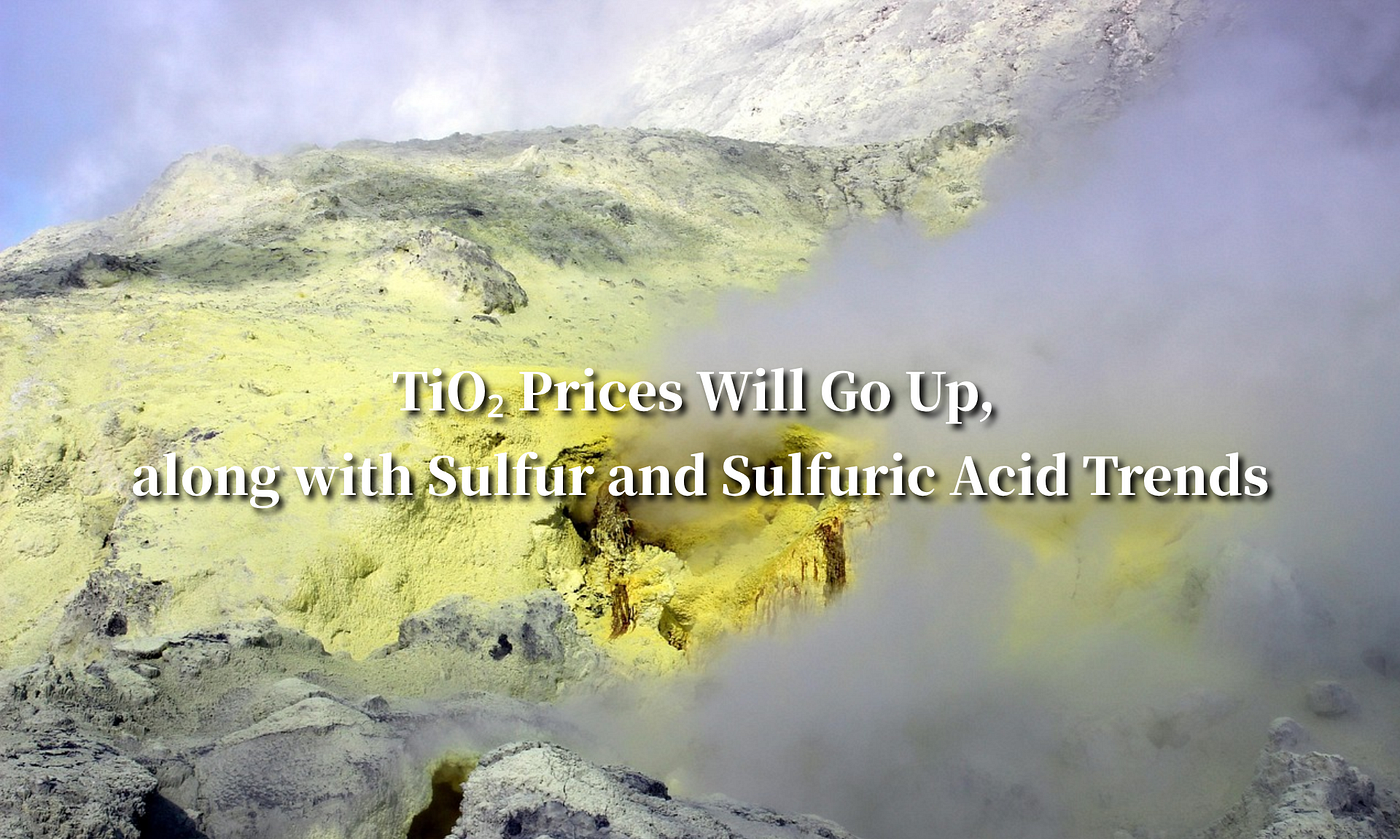
China produces about 11 million tons of sulfur a year, or 16% of the world’s total. But it consumes around 21 million tons, so it relies heavily on imports. Supply from the Middle East plays an important role, so geopolitical factors continue to affect the market.
TiO₂ costs will stay high as long as sulfur and sulfuric acid prices don’t drop. At the same time, producers have tried to ease cost pressure by pushing down titanium ore prices. However, the impact has been limited. Instead, profits from by-products such as ferrous sulfate have helped support overall margins.
In some areas, producers can’t get enough sulfur or acid, so they have to run their plants at lower operating rates.
Market Behavior Is Changing
In previous years, the TiO₂ market was often weak, and buyers tended to wait for lower prices. Now the situation is different.
With producers actively raising prices, the market is shifting toward an upward trend. More buyers are entering the market, and inquiries are increasing, which reflects tighter spot supply.
Titanium dioxide prices have fluctuated quite sharply recently. Here’s what’s changing:
-
Producers are less willing to sell quickly, expecting higher prices ahead;
-
Low-priced goods are becoming scarce, and premiums for spot cargo are more common;
-
Quotation validity periods are getting shorter;
-
More producers are suspending orders or facing shipment delays;
-
Given these conditions, buyers may need to adjust their purchasing strategies and make decisions faster.
Outlook
This week, domestic TiO₂ prices continue to move up firmly. According to analysts at Shanghai Titanos, buyers are getting tired of chasing prices. The supply-demand balance is tilting in favor of sellers. Even if current orders are pulling some demand forward, looking at the order backlog and raw material costs, prices are unlikely to soften in April or May. Sulfate process rutile TiO₂ could reach USD 2600 per ton.
Some producers are still not taking new orders, waiting for higher prices. The market is quite messy. Price differences for the same product can reach up to USD 150/ton depending on specific deals.
In the short term, one thing is clear: prices will go up. Supply will stay tight. Actual transaction prices have already risen significantly. The key things to watch are sulfur and sulfuric acid costs, and export demand. As always, final prices will depend on order volume, delivery terms, and payment method.
메타데이터
- post_id
- 34dfd302dc25
- slug
- tio₂-prices-will-go-up-along-with-sulfur-and-sulfuric-acid-trends-34dfd302dc25
- url
- https://medium.com/@eveveff2024/tio%E2%82%82-prices-will-go-up-along-with-sulfur-and-sulfuric-acid-trends-34dfd302dc25
- canonical_url
- https://medium.com/@eveveff2024/tio%E2%82%82-prices-will-go-up-along-with-sulfur-and-sulfuric-acid-trends-34dfd302dc25
- author_url
- https://medium.com/@eveveff2024
- status
- ok
- fetched_at
- 2026-07-14 23:28:58